
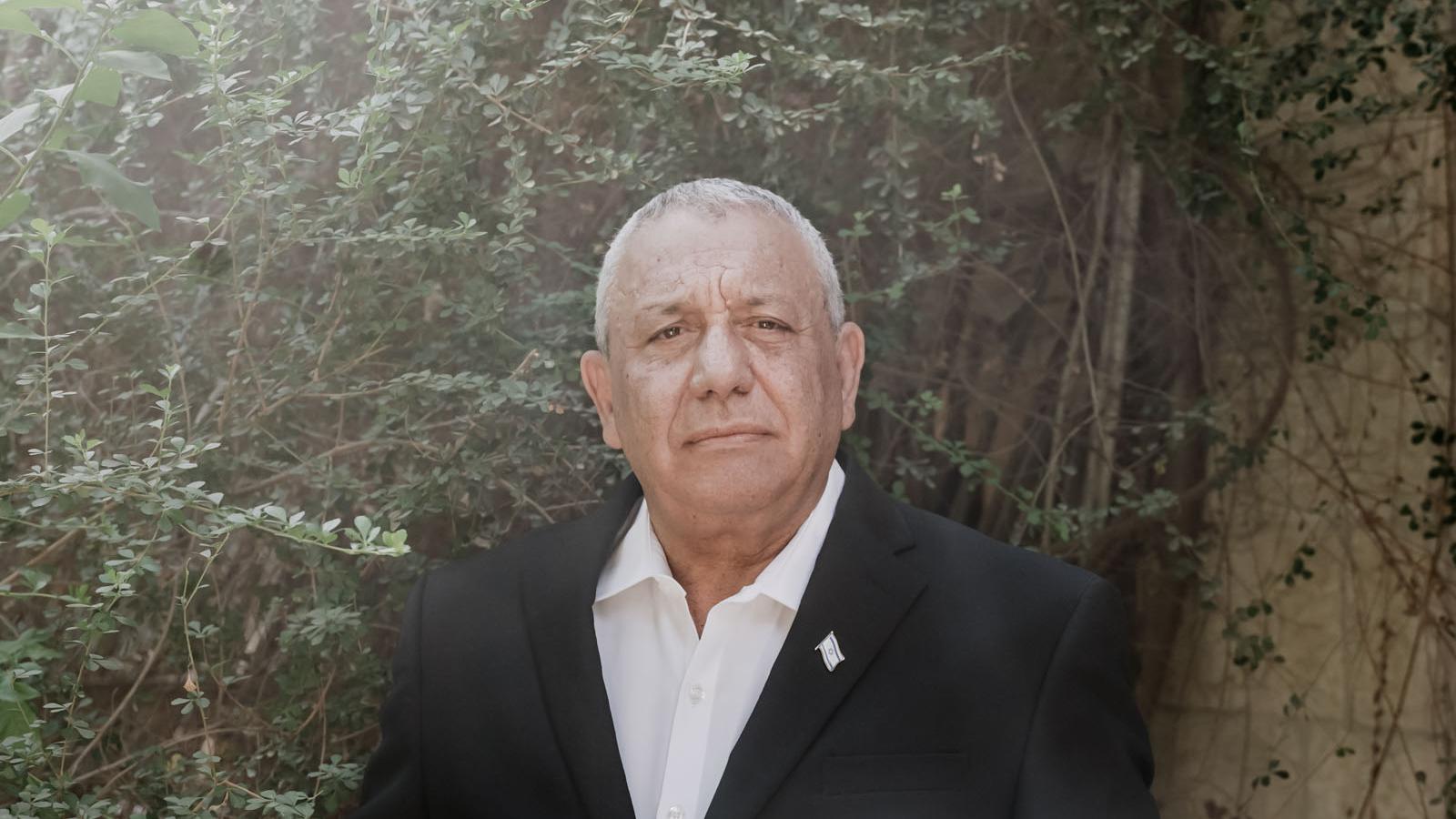
The office of Gadi Eisenkot is small, sparsely furnished, and conspicuously devoid of ostentation. There are no gleaming medals on display, no framed photographs with foreign dignitaries or political luminaries, and none of the conventional trappings associated with a decorated general who rose through the ranks to become the chief of staff of Israel’s military. Tucked quietly inside an unassuming commercial building in the Tel Aviv suburb of Ramat HaSharon, the minimalist workspace reflects a man who has long preferred operational substance over public pageantry. Yet, the emotional weight of contemporary Israeli history is present in every corner of the room.
Beside his desk sit three photographs, each serving as a stark reminder of the seismic fractures that have reshaped both his personal life and the nation he once commanded. One is a portrait of his 25-year-old son, Gal, who was killed in combat in Gaza in December 2023, just two months after the war began. Another is a family portrait captured during a visit to Washington, D.C., years earlier—a snapshot of a family still whole, before the unimaginable trauma of war shattered it. The third photograph shows Gal standing alongside one of his closest comrades from their military unit, who also fell in the line of duty.
“He was a settler,” Eisenkot remarks softly, pointing to his son’s fallen friend. The image captures a complex, poignant microcosm of contemporary Israel: the son of a centrist military commander and a young man from a West Bank settlement, products of vastly different worlds, serving, fighting, and ultimately dying side by side.
As he speaks, Eisenkot pauses to pick up the photographs, his fingers tracing their edges. He recalls the agonizing days immediately following his son’s death. After observing three nights of shiva, the traditional Jewish mourning ritual, he left his grieving household to attend a high-stakes meeting of Prime Minister Benjamin Netanyahu’s war cabinet. “I decided to go forward,” he says simply.
Now, Eisenkot hopes to propel not only himself forward, but his entire country. The former military chief has emerged as the most formidable challenger to Benjamin Netanyahu, Israel’s longest-serving prime minister. Public opinion polls indicate a tight, fiercely contested race, with Eisenkot seeking to construct a viable political coalition capable of ending Netanyahu’s extended tenure. This political reckoning arrives three years after Netanyahu presided over the worst security failure in modern Israeli history, launched the devastating war in Gaza, and steered the nation into an unprecedented degree of international isolation.
Throughout his public life, Eisenkot has cultivated a steadfast reputation for personal integrity, professional competence, and moral rectitude, forging constructive relationships across Israel’s deeply fractured political spectrum. Yet, his most powerful political asset in this pivotal moment is his profound personal loss. In a nation universally scarred by the psychological trauma of October 7 and the prolonged conflict that followed, Eisenkot’s raw grief resonates with countless Israeli families. His determined effort to persevere mirrors a traumatized nation’s ongoing struggle to heal.
The upcoming national election will serve as a much broader referendum than a simple judgment on Netanyahu’s political survival. It will test whether the Israeli electorate is prepared to chart a radically different course after years of intense bloodshed, bitter recriminations, and deep cultural fractures. The country remains severely polarized, increasingly criticized by international allies, and confronted with a troubling global resurgence of antisemitism. Voters will ultimately determine not only who governs the state, but what kind of nation Israel will become—and whether its next leadership can successfully mend the internal divisions leaving the world’s only Jewish democracy facing its gravest historical crisis.
Netanyahu, however, can never be prematurely dismissed. As a consummate political survivor, he has weathered numerous corruption charges, legislative scandals, and electoral defeats over decades. While his public credibility has taken severe hits, a significant portion of the Israeli electorate still regards him as the sole leader capable of protecting the country in a volatile and dangerous region.
If Eisenkot succeeds in his bid, he could potentially assemble a centrist-leaning coalition alongside other prominent opposition figures, including former Prime Minister Naftali Bennett, Yair Lapid, Avigdor Lieberman, and Yair Golan. Conversely, Netanyahu’s path to retaining power depends heavily on his alliance with far-right parties led by Itamar Ben-Gvir and Bezalel Smotrich, whose ultra-nationalist ideology has found a receptive and growing audience among younger, right-wing Israelis.
Israel’s notoriously fragmented parliamentary system offers no guarantee of a decisive electoral outcome. Coalition negotiations could easily drag on for weeks or collapse entirely, plunging the country back into successive rounds of voting. Eisenkot is unequivocal about his red lines, stating firmly that he will not serve in a unity government led by Netanyahu under any circumstances. Instead, he has framed his political ambitions around the fundamental preservation of the Zionist enterprise: ensuring the ability of Jewish people to live safely and securely in an independent state within their ancestral homeland.
In Eisenkot’s vision, safeguarding that future requires directly confronting the existential threat posed by Iran, restoring Israel’s diplomatic standing across the globe, preserving the nation’s dual character as a Jewish democracy, and finding a sustainable political accommodation with Palestinians who share the same land and harbor their own aspirations for self-determination.
“What holds the country together is the Jewish and democratic ethos of the majority of Israelis,” observes Yossi Klein Halevi, a bestselling Israeli author and senior fellow at the Shalom Hartman Institute in Jerusalem. “That’s what we’re going to have to try to repair. That is really what Eisenkot is offering the country.”
For Eisenkot, the primary challenge extends far beyond merely replacing a prime minister; it requires leading Israel out of the psychological abyss that has consumed the national consciousness since October 7. He perceives a country caught in a perpetual tug-of-war between the acute imperative to defend itself militarily and the equally vital necessity to recover the democratic values, national solidarity, and international legitimacy essential for long-term survival.
“I feel like it’s a historic mission—to save the state of Israel,” he says, his voice carrying the weight of his son’s memory and the countless other soldiers who perished defending the nation. “We owe it to them to be worthy of the sacrifice they made.”
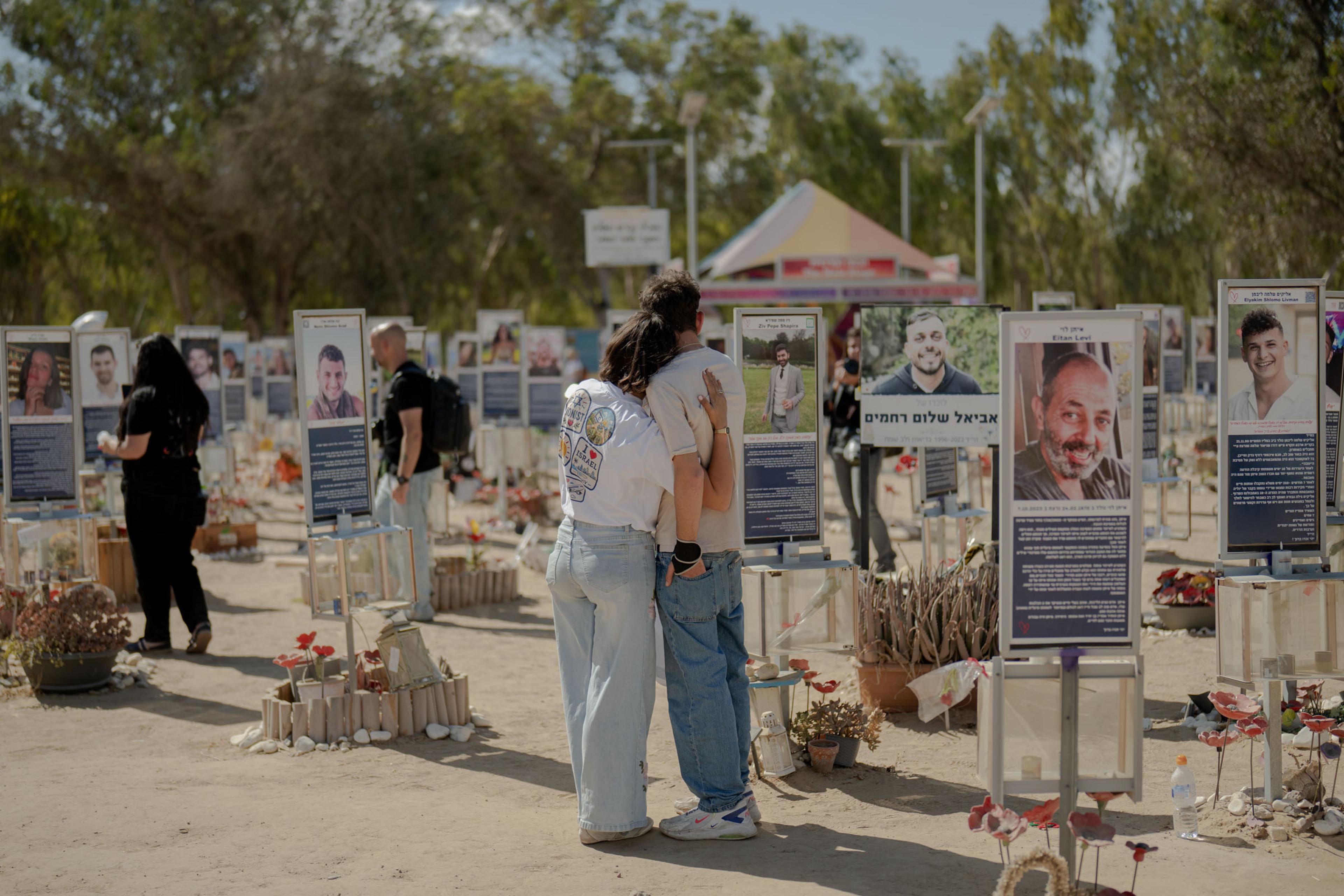
The origins of this national trauma trace directly back to the morning of October 7, 2023. Eisenkot awoke shortly after 6 a.m., stirred simply by his internal circadian rhythm. Upon switching on the television, he was confronted with the horrific opening images of an unfolding catastrophe just a short drive south of his home. Thousands of Hamas-led militants breached the border, pouring into southern Israel by land, air, and sea. They rampaged through peaceful kibbutzim and the streets of Sderot, descended upon the Nova music festival—where they murdered civilians, committed widespread sexual violence, desecrated bodies, and dragged hundreds of hostages back into the Gaza Strip.
Many of the attackers filmed their atrocities, broadcasting the carnage in real time. Desperate Israeli citizens flooded emergency lines, pleading for military assistance that in many areas did not arrive for hours. By the time security forces finally re-established control, entire communities had been devastated in what marked the single deadliest day for Jewish people since the Holocaust.
Eisenkot’s son, Gal, a 25-year-old bioinformatics student at Tel Aviv University, was staying at the family home in Herzliya for the holiday of Simchat Torah rather than his nearby apartment. Eisenkot woke him immediately. “Gal, come to see the TV,” he told him. “There are trucks of Hamas inside Sderot. This means war. Where is your military equipment?”
Having completed his compulsory military service, Gal was a trained combat medic in the reserves. Eisenkot personally drove him to his unit’s base, where long lines of civilian vehicles were already converging as reservists rushed to answer the call. “I knew right away that Israel, that the world, would never be the same,” Eisenkot recalls.
Four days later, with a massive ground invasion of Gaza looming, Netanyahu invited Eisenkot to join a newly formed emergency war cabinet. Although Eisenkot had previously served under Netanyahu as chief of the general staff from February 2015 to January 2019, the two men were political adversaries. Netanyahu hoped the inclusion of the respected former general would project a vital image of unity to a deeply skeptical public, much of which had grown to distrust his leadership following months of mass protests against his judicial overhaul efforts.
Within the war cabinet, Eisenkot’s immediate priority was preventing the opening of a catastrophic second front against Hezbollah, the Iranian-backed militant group stationed across Israel’s northern border in Lebanon. Several senior ministers, notably Defense Minister Yoav Gallant, advocated for a preemptive military offensive against Hezbollah, disregarding strong warnings and objections from the Biden Administration. Eisenkot strongly argued that Israel needed to concentrate its finite military resources on dismantling Hamas in the south before embarking on another full-scale war. On that strategic debate, Eisenkot’s counsel prevailed.
However, on another matter that Eisenkot considered even more urgent, Netanyahu proved far less receptive. Hamas had abducted 251 people during the October 7 onslaught, and Eisenkot insisted that securing their release through negotiations should take precedence over an immediate, unyielding ground campaign. In his view, recovering the hostages was a fundamental moral obligation and a core component of the unwritten covenant binding a nation to its citizens. He feared that plunging directly into an extensive ground war would severely jeopardize the chances of bringing the captives home alive. “My idea was to do the hostage deal, and after that, defeat Hamas,” Eisenkot explains.
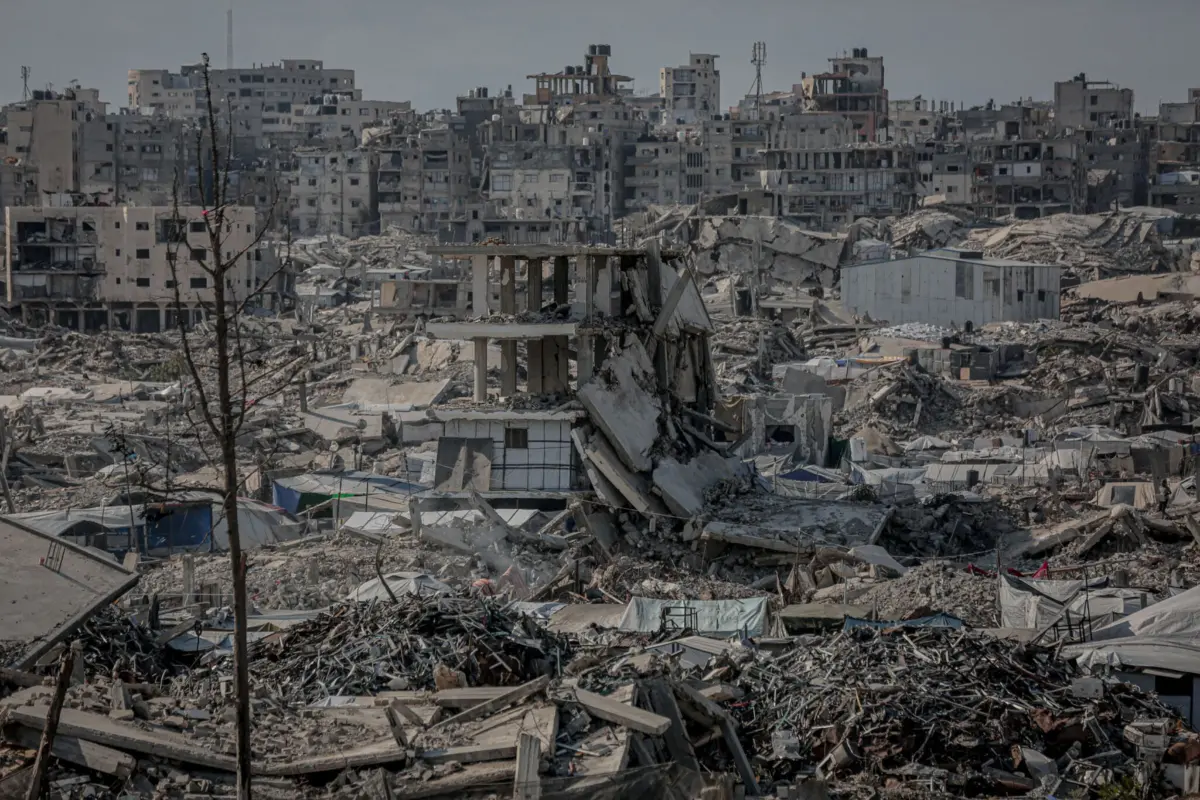
Netanyahu chose a different trajectory. Following an intense aerial bombardment designed to dismantle Hamas’s vast subterranean tunnel network and military infrastructure, Israel launched a full-scale ground invasion. Because Hamas deliberately embedded its combat operations within densely populated civilian areas, the resulting military campaign caused massive destruction and a staggering civilian death toll, with Gaza’s health ministry reporting over 70,000 Palestinian fatalities, without distinguishing between combatants and non-combatants.
Barely two months into the war, Eisenkot’s own life was struck by tragedy. While standing inside a military command center, studying satellite maps tracking Israeli battalions near the fiercest combat zones in Gaza, a major general who had once served under his command approached him.
“Gadi, come to me,” the officer said quietly. “Gal is critically injured. Go home.”
Having spent more than four decades in uniform, Eisenkot instantly understood the coded language of military notification. If his son had survived his wounds, instructions would have directed him to a hospital, not his residence. “I understood he was dead,” he says.
Gal was killed in combat alongside his close friend Eyal Berkowitz, a young man hailing from a West Bank settlement—the very companion whose photograph Eisenkot proudly keeps on his desk. Thousands mourned at Gal’s funeral, which was broadcast live on national television, offering Israelis a harrowing glimpse of one of their most celebrated military commanders publicly mourning his own child. Delivering a trembling eulogy at the graveside, Eisenkot vowed, “I promise you that we will continue to be a united and happy family, so that your sacrifice and that of the other fallen will not be in vain and that we will be worthy of it. I salute you, beloved son.”
Three days after burying his son, Eisenkot returned to Netanyahu’s war cabinet. He watched with mounting distress as the prime minister’s prosecution of the war increasingly isolated Israel internationally, transforming the nation into a diplomatic pariah. Daily social media feeds displayed graphic images of children killed as collateral damage in strikes across Gaza. As Netanyahu resisted facilitating adequate humanitarian aid into the enclave, international accusations mounted that Israel was utilizing starvation as a weapon of war and committing war crimes against a trapped population of two million civilians.
The friction culminated in late June 2024 during a closed-door meeting with Netanyahu before a special intelligence committee in the Knesset. Eisenkot pressed the prime minister on his long-term strategy, asking directly, “What is your exit plan?” According to Eisenkot, Netanyahu offered no concrete political horizon, insisting instead that the military would continue fighting indefinitely until achieving “total victory.”
Reaching into his briefcase, Eisenkot pulled out a book: Master of the Game: Henry Kissinger and the Art of Middle East Diplomacy, a 2021 study by Martin Indyk detailing the legendary diplomat’s statecraft. Indyk, who had served in senior diplomatic posts under Presidents Bill Clinton and Barack Obama, was a personal friend of Eisenkot and a vocal critic of Netanyahu. “Have you read this?” Eisenkot asked the prime minister. When Netanyahu replied that he had not, Eisenkot urged him to study it, arguing that unbridled military force divorced from a coherent diplomatic strategy could never deliver a lasting peace.
“Gadi,” Eisenkot recalls Netanyahu answering, “I have a different view about the meaning of the word strategy.”
Eisenkot grew increasingly enraged by Netanyahu’s persistent refusal to prioritize the return of the hostages. Critics frequently suspected that Netanyahu feared any negotiated ceasefire deal would fracture his fragile right-wing governing coalition, triggering early elections that could oust him from power and spark a formal state commission of inquiry into the failures of October 7—paralleling the Agranat Commission established after the 1973 Yom Kippur War, which ultimately led to the political downfall of Golda Meir. In Eisenkot’s estimation, Netanyahu consistently prioritized personal political survival over the lives of the citizens he was sworn to protect. “He neglected them,” Eisenkot states bluntly.
A spokesperson for the prime minister declined multiple requests to respond to Eisenkot’s assertions.
On June 9, 2024, Eisenkot formally resigned from the emergency government, bringing his turbulent eight-month effort to influence the war from within to an end. His departure, alongside fellow opposition leader Benny Gantz, effectively dissolved the national unity framework and dismantled the war cabinet. Tragically, the conflict had not finished exacting its personal toll on Eisenkot’s extended family: one nephew had already been killed in combat in Gaza on the exact day of Gal’s funeral, and a second nephew was killed eleven months later.
Over the subsequent two years, Netanyahu presided over a series of high-profile military operations. Israel successfully assassinated Yahya Sinwar, the Hamas leader who masterminded the October 7 massacre, along with Ismail Haniyeh, the group’s long-serving political chief. The military also eliminated Hezbollah leader Hassan Nasrallah and severely degraded the Iranian-backed militia in Lebanon through coordinated operations, including an audacious intelligence maneuver that detonated thousands of Hezbollah communication pagers. Following Donald Trump’s return to the White House, Netanyahu persuaded the U.S. administration to join a 12-day military campaign against Iran in June 2025, which saw American forces strike three of Iran’s primary nuclear facilities.
Yet, these significant military triumphs represented only a partial narrative. The prolonged conflict in Gaza devastated the Palestinian territory, claimed tens of thousands of lives, and left Israeli hostages languishing in captivity for years. Ultimately, in October 2025, under intense domestic and international pressure, Netanyahu agreed to a comprehensive ceasefire and hostage-release deal that halted the active fighting and secured the release of the remaining living captives. “Netanyahu dragged it out,” Eisenkot says. “President Trump pushed him to do it.”
The subsequent confrontation with Iran soon escalated into a more perilous phase, drawing the U.S. deeper into a regional war with the Islamic Republic that proved difficult to conclude. The prolonged hostilities further strained Israel’s standing abroad, particularly in the United States, where public opinion polls indicated that roughly 60% of American adults held an unfavorable view of Israel.
Now, facing the electorate for the first time since the trauma of October 7, Netanyahu must account for his stewardship. Eisenkot argues that the prime minister has done little to help the nation recover, choosing instead to cultivate an enduring siege mentality and an atmosphere of perpetual conflict that allows him to cast himself as the indispensable wartime leader. “I don’t know how Netanyahu wants to close the story,” Eisenkot reflects.
He decided that he would attempt to write the ending himself.
To achieve that, Eisenkot’s political strategy has centered on forging a broad, unified electoral bloc. To his political right, he envisioned alliances with Bennett and secular nationalist Avigdor Lieberman; to his left, figures like Yair Golan—leader of the Democrats, successor to Israel’s historic Labor Party—and Yair Lapid, the former television host and prime minister. “I told them, let’s build a big party,” Eisenkot notes.
Although he held extensive discussions with Bennett regarding a joint run, Eisenkot ultimately calculated that separate campaigns would provide the broader opposition bloc a better statistical chance of expanding total voter turnout. While Bennett ultimately joined forces with Lapid, Eisenkot chose to lead his own distinct party, Yashar. “I thought I had the ability to unite Israel, unite this divided country,” Eisenkot explains, emphasizing his extensive military background and cross-partisan relationships. “It’s not from arrogance, but from a deep commitment to bring change and defeat Netanyahu.”
Eisenkot’s personal background carries profound cultural significance in Israeli politics. Born in Tiberias to Moroccan Jewish immigrants and raised in the southern port city of Eilat, he belongs to Israel’s Mizrahi community—Jews of Middle Eastern and North African descent who have historically faced marginalization from the nation’s predominantly Ashkenazi political establishment. Should he win, Eisenkot would make history as Israel’s first Mizrahi prime minister.
His platform focuses heavily on restoring public trust in government institutions, strengthening national security, dismantling illegal outposts in the West Bank, cracking down on extremist settlers who target Palestinians, and expanding national service requirements across all segments of Israeli society. He has also pledged to repair frayed international relationships, address the threat from Iran, and pursue a realistic political framework for resolving the Palestinian conflict.
Traveling across Israel, the psychological scars of October 7 remain palpable. They manifest in the palpable impatience of drivers on congested highways, the fierce intensity of political arguments, and the restless energy of a society still suspended in the shadow of a collective nightmare. In many respects, the country remains psychologically trapped in the immediate aftermath of the tragedy.
Discussing this national condition during his interview, Eisenkot references the work of Harvard psychiatrist Bessel van der Kolk, whose bestselling book, The Body Keeps the Score, explores how overwhelming traumatic experiences leave individuals psychologically trapped in the past. Trauma, van der Kolk notes, can persist long after immediate danger has passed, inhibiting the brain from integrating painful memories and moving forward.
Eisenkot firmly believes that Netanyahu has deliberately exacerbated this national paralysis. Nearly three years after the catastrophe, Israel has still failed to establish an independent state commission of inquiry to investigate the systemic military and intelligence failures that enabled the attack. Without an authoritative, transparent accounting, Eisenkot argues the country cannot begin to heal. He has pledged to establish such a commission within his first 14 days in office, granting it a broad mandate to investigate not only the failures of October 7 but the preceding decade of political decisions—including his own tenure leading the military.
He points to persistent, baseless conspiracy theories suggesting the attack involved a form of internal betrayal—rumors he attributes partly to Netanyahu and his allies attempting to shift culpability onto military and intelligence chiefs. Netanyahu and his inner circle have frequently promoted disputed claims that intelligence officials deliberately withheld warnings prior to October 7, including allegations that they intentionally failed to wake the prime minister as the assault began.
Recent polling indicates a closely contested race, with Eisenkot’s Yashar party running competitively against Likud. However, neither Netanyahu’s right-wing bloc nor the diverse opposition coalition appears assured of securing the 61 seats required for a parliamentary majority in the 120-member Knesset.
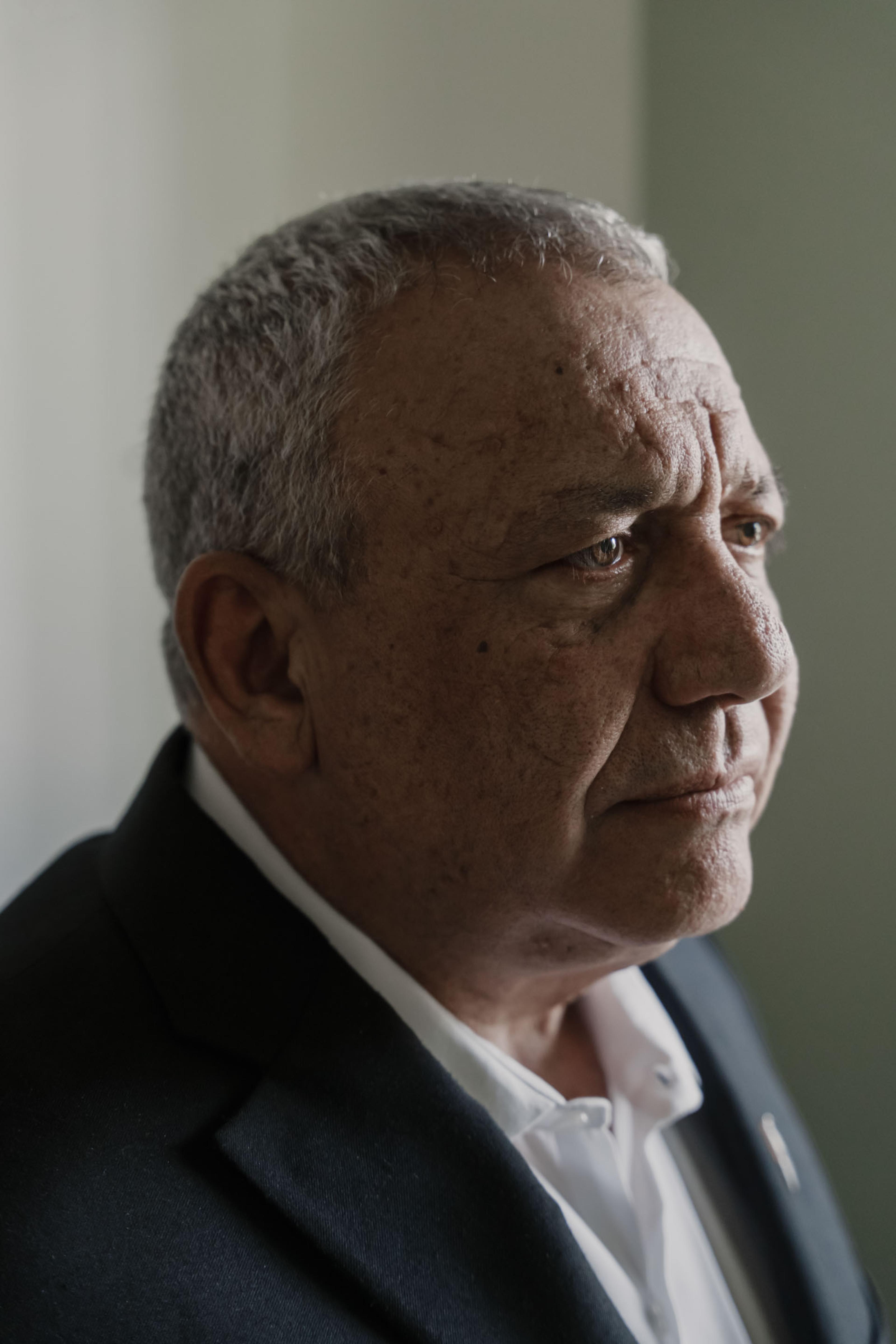
“I think the chances for a unity government are high because we will be more than happy to have Eisenkot joining our coalition,” says Ohad Tal, a Knesset member representing Smotrich’s Religious Zionism party. “If the other side will have a majority with the Arabs, God save us.”
Forming an alternative majority coalition could potentially require indirect support from Arab-led parties—a deeply fraught prospect in modern Israeli politics. Eisenkot has refused to commit to bringing Arab factions directly into his government, instead establishing four non-negotiable conditions for any prospective coalition partner: formal recognition of Israel as a Jewish and democratic state; strict adherence to the principles of the nation’s Declaration of Independence; acceptance of a universal national service obligation for all citizens, featuring civilian alternatives to military service; and explicit agreement that Hamas is a designated terrorist organization that must be entirely dismantled. To date, none of the Arab political parties have accepted the latter tenet.
“I understand that in the Israeli system we must have a big bloc,” Eisenkot acknowledges. “It’s a huge challenge. I’m doing my best from morning till night. I’m convinced we’ll defeat Netanyahu.”
If successful, Eisenkot intends to fundamentally dismantle Netanyahu’s signature political strategy: cultivating an ongoing siege mentality that casts Israel in perpetual opposition to the rest of the world. “The main challenge is to break Netanyahu’s method with them and us,” Eisenkot says. “This is poison to our society.”
Nowhere is the cost of that strategy more evident than in the United States, where bipartisan support for Israel has eroded significantly, particularly among younger generations of Americans. “Netanyahu knows the United States better than all of us, but today he can’t improve Israel’s relationship with the U.S.,” Eisenkot asserts. “He may have a good relationship with the administration today, but the situation in universities, with American Jewry, and with bipartisan relations are at their lowest.”
Among Eisenkot’s most provocative proposals is a plan to gradually wean Israel off American military assistance. He argues that perpetual financial dependence has become an unnecessary source of diplomatic friction in Washington and directly contradicts the core Zionist ideal of a sovereign Jewish state fully capable of guaranteeing its own defense. “Maybe it will take five to 10 years,” he says, “and it is our interest to do it.”
While Eisenkot opposes the creation of an independent Palestinian state—a goal long championed by the international community—he is equally clear-eyed about the catastrophic dangers of a permanent one-state reality. Such a scenario would force Israel into an impossible choice between granting millions of Palestinians full citizenship and voting rights, thereby ending its Jewish majority, or maintaining indefinite military rule over a disenfranchised population, which would fatally undermine its democratic foundations. Condemning the annexationist vision advanced by right-wing ministers like Smotrich and Ben-Gvir, Eisenkot warns, “Smotrich’s vision for one state will be the end of our country.”
To avert that outcome, Eisenkot favors maintaining a degree of territorial separation in the West Bank, allowing a reformed Palestinian Authority to manage local civil administration while Israel retains ultimate security control. His approach to Gaza differs, as he endorses the framework of Trump’s 20-point peace plan, which envisions a technocratic Palestinian administration governing the enclave alongside a conditional pathway toward future self-determination.
“We have two options: the 20 points of President Trump, or to use force,” Eisenkot says. “I prefer the diplomatic option—and I believe I can do it. But if not, I know how to dismantle Hamas with force.”
Despite his confidence in navigating relations with Washington, Eisenkot and his advisers were privately surprised when President Trump ultimately endorsed Netanyahu during the campaign, bypassing opportunities to remain neutral. Close aides to Trump, including his son-in-law Jared Kushner, had previously grown frustrated with the Israeli leader, though figures such as Fox News host Mark Levin and U.S. Ambassador to Israel Mike Huckabee reportedly urged Trump to back Netanyahu in the final stretch. “Israeli society is independent and will make its own decision,” Eisenkot says. “I have no doubt Trump will accept every democratic choice in Israel.”
Netanyahu’s political campaign has frequently utilized aggressive tactics, including circulating AI-generated videos attacking Eisenkot. One such digital ad depicted Eisenkot in a field approaching a young Israeli soldier bearing a striking resemblance to his fallen son, only for the digital avatar of Eisenkot to push the soldier aside to embrace Arab politician Mansour Abbas. “I felt contempt,” Eisenkot says regarding the video. “That is the lowest he could go.” Verbal attacks have also surfaced on right-wing media outlets, where commentators have hurled severe insults, while Netanyahu waited days before issuing a mild condemnation calling the remarks “highly inappropriate.”
For Eisenkot, the election represents a profound referendum on whether Israel can reclaim the democratic and national ideals of the Zionist movement or drift permanently away from them. “My goal is that the Israeli people will be united and proud of their country,” he states. “That global Jewry will be proud of Israel as the national home of the Jewish people.” With polls showing up to 23% of Israelis considering emigration if Netanyahu secures another term, the stakes for the nation’s demographic future could not be higher.
While Eisenkot may lack Netanyahu’s polished English rhetoric and decades of international exposure, he argues those traditional political advantages have lost their utility as the incumbent prime minister grows increasingly divisive both at home and abroad. For many critics, distinguishing between the nation of Israel and its long-serving leader has become nearly impossible. “We need to return to speaking about sharing the same values,” Eisenkot says. “Nobody speaks about values right now. Everything is about interest, power, more power, and more power.”
As the interview concludes, Eisenkot returns once more to the theme of trauma—the defining force that has shaped his personal grief and, he believes, the trajectory of his country. “Netanyahu is unwilling to show the courage needed to end the war from a position of strength,” he concludes. “It will take years to close the trauma, but we must start now.”








No comments yet. Be the first to join the conversation!