
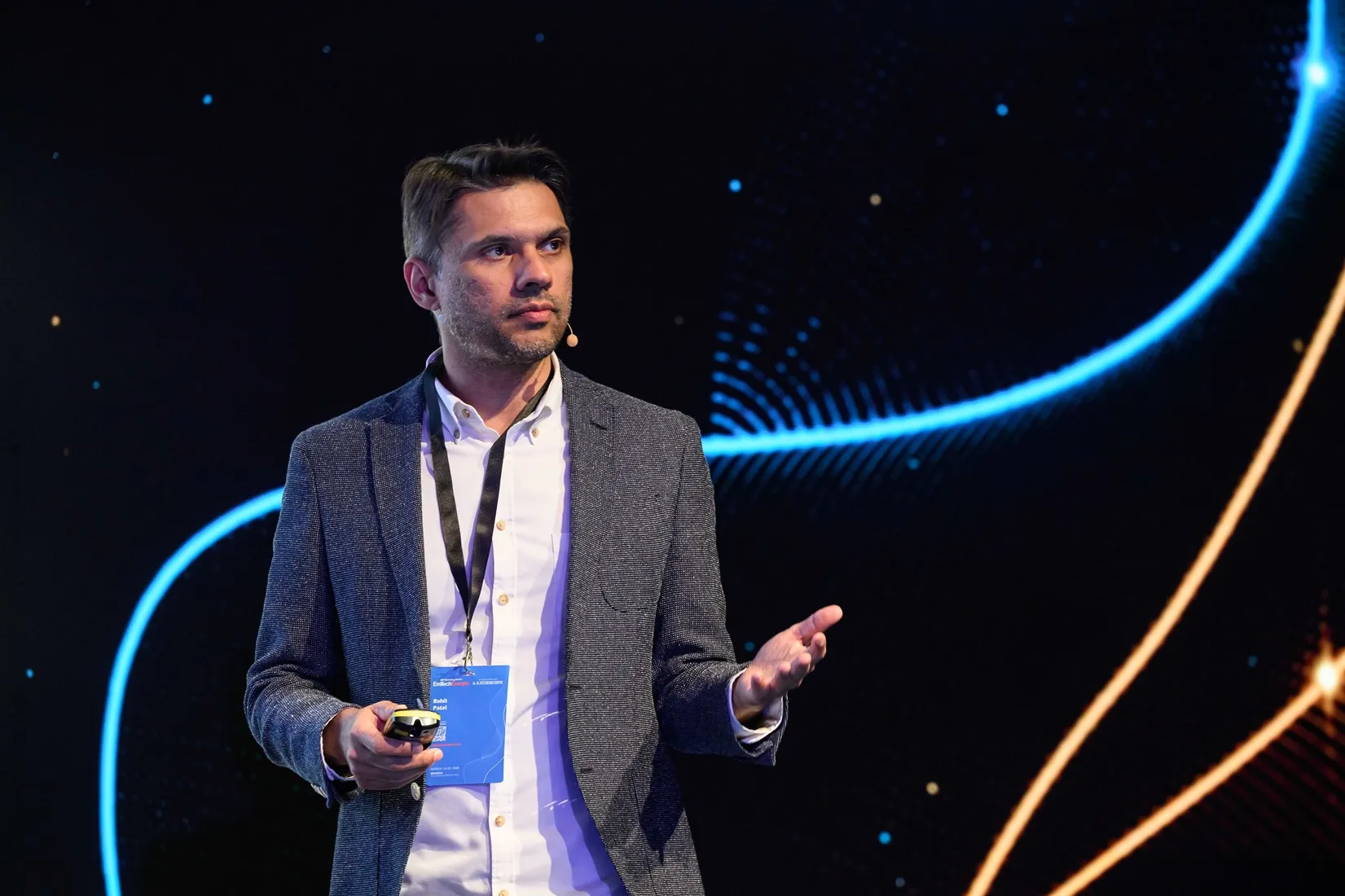
After eight years spent developing artificial intelligence technologies for Meta, Rohit Patel is departing the company to embark on an ambitious entrepreneurial journey. Patel, a former director at Meta Superintelligence Labs, has launched Ndoc, a brand-new startup he is pitching as an AI-native replacement for traditional productivity ecosystems like the Microsoft Office suite and Google Workspace. His departure marks the latest in a wave of high-profile exits from Meta, following closely behind the departures of Chief Global Affairs Officer Joel Kaplan, prominent AI researcher Andrew Tulloch, and Emily Dalton Smith, the former head of product for AI-for-work transformations.
Patel designed Ndoc to be much more than just another superficial AI layer or chatbot addon tacked onto existing enterprise workflows. Instead, the overarching goal of the platform is to completely eradicate the fragmented, multi-app way that modern professionals work. Rather than bouncing awkwardly between disparate tools like Excel, Word, PowerPoint, Tableau, Replit, and the ubiquitous habit of "ChatGPT copy-paste," Ndoc offers a single, unified workspace. Crucially, the platform allows colleagues to access and interact with shared work even if they are not active subscribers or signed-up users of Ndoc themselves.
A Unified Layout Rooted in Transparency
The structural design of Ndoc directly reflects Patel’s professional background and technical philosophy. During his extensive tenure at Meta, Patel focused heavily on reinforcement learning—a specialized branch of machine learning where autonomous AI agents learn to make complex sequential decisions through trial and error to maximize specific rewards—as well as the rigorous evaluation of whether AI-generated outputs can actually be trusted by human users.
Patel firmly believes that if generative AI systems are going to be trusted with building the core spreadsheets, analytical models, and slide decks that corporations rely on to make high-stakes business decisions, human stakeholders must be able to thoroughly check the machine’s underlying work. To achieve this, Ndoc brings three distinct components together into one cohesive layout.
The Stage tab serves as the home for presentations of key findings, housing polished slide decks, visual dashboards, interactive simulations, and lightweight mini apps. The Narrative tab features deep-dive analyses, numbered citations, automatically generated figures, and the contextual "why" behind raw numerical data. Finally, the Model tab houses the foundational datasets and underlying Python scripts that power the analytics.
This transparency is intentional. Patel points out that even if a business user does not know how to write Python code, they can simply ask the platform’s integrated AI chat interface to explain a script in plain English. Users can ask questions like what a specific script does or which line contains a particular formula, allowing them to verify the math directly. As Patel puts it, there is nothing hidden behind the curtain.
Reimagining Enterprise Workflows and File Formats
In daily practice, users can upload a raw dataset and prompt Ndoc to execute a complete data analysis while simultaneously writing a comprehensive narrative explaining the findings. Furthermore, users can enrich the platform by adding document-specific context, including details regarding the target audience, preferred tone, and persistent memory parameters. According to Patel, the system maintains a continuity of memory across individuals, specific documents, entire teams, and the broader company.
Under the hood, Ndoc is constructed and fine-tuned using a careful mixture of open-source artificial intelligence models. Because the entire platform was engineered from scratch rather than being built on top of expensive commercial application programming interfaces, Patel notes that it costs considerably less to operate than alternatives built entirely on resource-heavy frontier AI models. Initially, he assumed potential enterprise users would be primarily excited by these structural cost efficiencies. However, early trial users revealed a different priority: they were simply captivated by the ability to manage their end-to-end workflows in a single, unified location.
Patel’s broader, long-term ambition extends to completely reinventing the traditional digital file format. Under his vision, complete documents can be exported as a single .ndoc.html file capable of being opened seamlessly in any standard web browser. He plans to open source this proprietary file format so that other independent developers can build external applications that integrate with it, preventing users from being locked into closed ecosystems the way corporate consumers have been locked into Microsoft and Google products for decades.
A Race Against Big Tech and Autonomous Giants
This desire to champion open-source standards was a major catalyst behind Patel’s decision to leave Meta and venture out on his own. Within a massive organization like Meta, trying to achieve consensus on a universal open-source file format would inevitably require navigating the opinions and bureaucracy of hundreds of internal stakeholders. Patel preferred velocity over corporate consensus, noting that human beings can only move at a human pace, whereas he wanted to move at the speed of what AI technology can accomplish.
Attempting to establish a dominant enterprise platform is an exceptionally bold gamble for a founder operating with a lean team of three people and zero external funding, especially when major AI laboratories are aggressively pursuing the exact same market space. Industry heavyweights including OpenAI, Anthropic, Meta, SpaceXAI, and Google have all rolled out enterprise-grade AI tools designed to connect directly with Google Workspace, Microsoft 365, and other legacy workplace applications, enabling their models to execute tasks directly inside those established environments. OpenAI further intensified the competition by launching Space, a shared collaborative workspace embedded directly inside ChatGPT that acts as a direct challenge to traditional office suites.
While Patel acknowledges that platforms like OpenAI’s Space represent a legitimate competitive threat, he contends that incumbent AI labs fundamentally misunderstand the true nature of enterprise productivity. In his view, major tech companies are simply bolting AI onto spreadsheets in a way that automates superficial tasks like filling in individual cells. He compares this narrow approach to discovering electricity and deciding that its ultimate use case is strapping lightbulbs onto oxen to plow fields, arguing instead for a fundamental rethinking of the tools themselves.
Building for Rigorous Standards and Fast Execution
Recognizing that changing deeply ingrained enterprise habits and replacing entire corporate workflows is notoriously difficult, Patel built dedicated connectors that allow customers to import existing data smoothly from the productivity tools they already rely on daily. His personal quality threshold for the project was uncompromising. He vowed never to release anything that he did not personally love using, pointing to a personal graveyard of software tools that failed to meet his rigorous optimization standards for daily workflows.
Patel maintains a similarly strict standard when it comes to securing customer validation before attempting to raise venture capital funding. He deliberately chose not to take outside money until he had concrete proof that real users genuinely loved the product.
As part of this rollout strategy, Ndoc is currently conducting a targeted enterprise pilot while simultaneously opening an alpha version to a limited group of customers drawn from its waitlist. While signing up for the platform is free, customers will incur usage-based costs tied to token consumption. Patel anticipates releasing a broader beta version in the coming weeks, followed by a full commercial launch planned for next year. For Patel, maintaining aggressive execution speed remains far more important than achieving a flawless product right out of the gate. In his view, execution is cheap, meaning founders should execute on a suboptimal plan immediately rather than waiting to formulate a perfect strategy that someone else will inevitably implement first.










No comments yet. Be the first to join the conversation!