
By Gene Frieda
October 27, 2026
Brazil’s economic landscape remains a study in contrasts. On one hand, the country possesses a robust defensive architecture that shields it from the kind of external shocks that have historically crippled emerging markets. Its floating exchange rate, substantial foreign-exchange reserves, and a powerful export engine—particularly in commodities—provide a significant buffer against global volatility. Furthermore, because the vast majority of its public debt is denominated in the Brazilian real rather than foreign currencies, the country is largely insulated from the classic balance-of-payments crises that often force sovereign defaults in the developing world. Yet, despite these structural strengths, the country faces a persistent and deepening internal challenge: a trend of fiscal deterioration under President Luiz Inácio Lula da Silva that threatens to impose heavy costs on the domestic economy.
Brazil has, for decades, cultivated an unfortunate habit of disappointing both domestic and international observers. Despite the nation’s exceptional natural-resource endowment, which should theoretically underpin long-term, sustainable prosperity, its growth trajectory often resembles what Brazilians wryly describe as the flight of a chicken (voo de galinha). Like the bird, the economy experiences a brief, energetic flutter of activity—a burst of growth or investment—only to face an inevitable and gravity-defying fall back down to earth. With President Luiz Inácio Lula da Silva’s recent re-election, many market participants and economic analysts are increasingly concerned that the country is once again setting itself up for a letdown, albeit one driven more by domestic policy choices than by international market forces.
To understand the current predicament, one must look at the disconnect between Brazil’s external resilience and its internal fiscal reality. The mechanisms that keep Brazil safe from a balance-of-payments crisis are formidable. The Central Bank of Brazil has, over many years, managed the country’s foreign-exchange reserves with a prudence that has earned it credibility among global investors. These reserves act as a massive war chest, capable of defending the currency against speculative attacks or sudden capital flight. When combined with a floating exchange rate that allows the market to adjust to shocks naturally, the risk of a disorderly collapse in the value of the real is significantly mitigated.
Furthermore, the structure of Brazil’s debt has fundamentally changed since the volatile periods of the late 20th century. By moving away from reliance on dollar-denominated debt, the government has eliminated the "original sin" that plagued many emerging economies—the inability to borrow in one’s own currency. Because the government owes its creditors in reals, it is theoretically impossible for it to run out of the money needed to service its debt, provided it retains the capacity to tax and print. This provides a level of sovereign stability that makes a traditional debt crisis unlikely.
However, the fact that Brazil is unlikely to experience a sudden, explosive crisis of the kind that leads to IMF bailouts does not mean the economy is performing well. On the contrary, the current fiscal deterioration poses a different, perhaps more insidious, risk: a slow-motion erosion of economic potential.
The core of the issue lies in the government’s fiscal trajectory. Under President Lula, the focus of economic policy has shifted toward expansive public spending programs aimed at bolstering social welfare and stimulating demand. While these programs have political resonance and address genuine needs, they have come at the expense of fiscal discipline. As the government continues to run significant deficits, the ratio of public debt to GDP has begun to climb, raising concerns about the long-term sustainability of the current path.
The domestic cost of this deterioration is already beginning to manifest. When a government consistently spends more than it collects, it must either borrow more or rely on the central bank to monetize the debt. In the current Brazilian context, the preference has been for higher levels of public borrowing. This creates a "crowding-out" effect, where government demand for credit drives up real interest rates. High interest rates, while necessary to keep inflation in check and maintain investor confidence, act as a drag on private sector investment. Businesses, faced with high borrowing costs and uncertainty regarding future tax burdens, are less likely to commit to the long-term capital expenditures that are necessary to drive productivity and sustained growth.
This is the essence of the voo de galinha. Every time the government attempts to stimulate the economy through fiscal expansion, it creates a short-term boost in consumption and economic activity. However, because this spending is not matched by structural reforms that would enhance the supply side of the economy—such as improving the business environment, investing in infrastructure, or simplifying the tax code—the growth is unsustainable. Eventually, the fiscal pressure leads to higher inflation expectations or higher interest rates, which then force the economy to contract, bringing the brief period of growth to an end.
The challenge for the Lula administration is that the window for meaningful reform is narrow. The political coalition required to pass significant fiscal legislation is notoriously difficult to manage in Brazil’s fragmented political system. Moreover, there is a deep-seated ideological preference within the current government for state-led growth, which often views fiscal conservatism as a constraint rather than a necessary foundation for stability.
The international community, while largely unconcerned about the prospect of a Brazilian default, is watching these domestic trends with increasing caution. The perception of Brazil as a "flight of a chicken" economy is damaging to its long-term investment appeal. Investors are increasingly demanding a higher risk premium to hold Brazilian assets, not because they fear the government will run out of cash, but because they fear the government will continue to mismanage the economy, leading to lower growth and weaker returns over the long term.
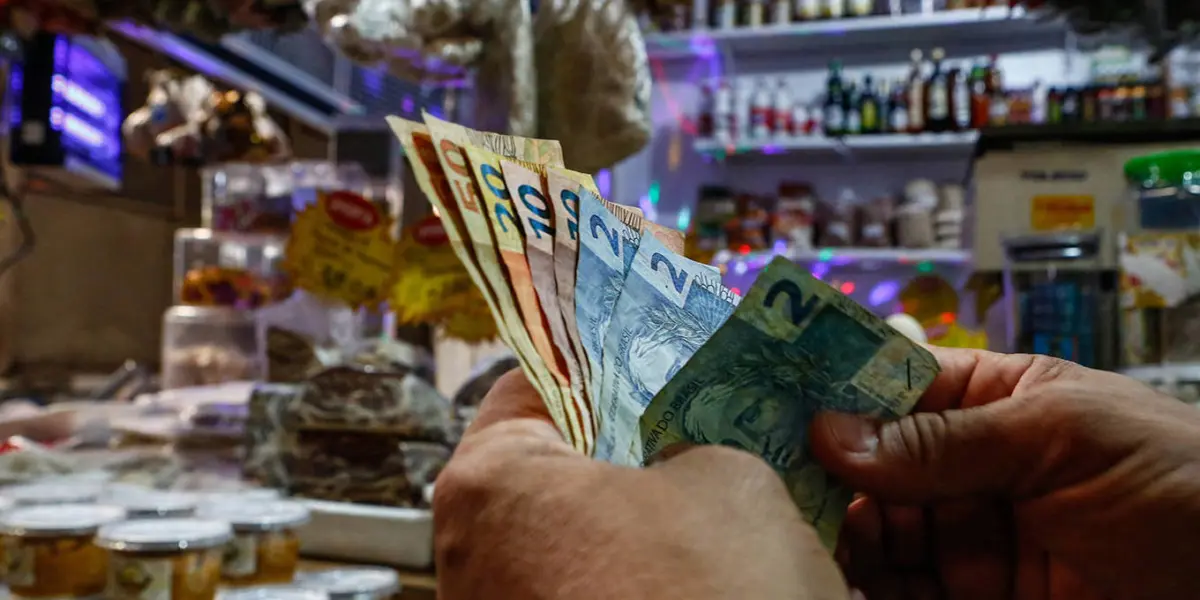
For the average Brazilian citizen, the impact of this fiscal deterioration is felt through a combination of stagnant wages, higher costs of living, and a lack of quality job creation. When the economy fails to achieve escape velocity, the opportunities for upward mobility are limited. The reliance on commodities, while providing a necessary inflow of foreign currency, also leaves the country vulnerable to fluctuations in global demand. Without a more diversified and productive economy, Brazil remains tethered to the boom-and-bust cycles of the international commodity markets, unable to fully capitalize on its own internal potential.
As the administration moves forward, the primary risk is not a dramatic collapse or a sudden market panic. Instead, the risk is a continuation of the status quo: a cycle of fiscal imbalance, high interest rates, and mediocre growth. The defensive buffers that have been built up over decades provide a safety net that protects the nation from catastrophe, but they also provide the government with a false sense of security. They allow for the continuation of policies that, while not immediately disastrous, are undeniably suboptimal.
The history of Brazil’s economic development is marked by these missed opportunities. It is a nation of immense potential, supported by abundant natural resources and a resilient institutional framework. Yet, the persistent failure to reconcile fiscal reality with political ambition continues to hold the country back. Whether President Lula can break this cycle and foster an environment that encourages sustainable, long-term growth remains the central question for the future of the Brazilian economy. For now, the "flight of the chicken" appears set to continue, with the nation waiting for a policy shift that can turn a brief, hopeful flutter into a sustained ascent.










No comments yet. Be the first to join the conversation!