
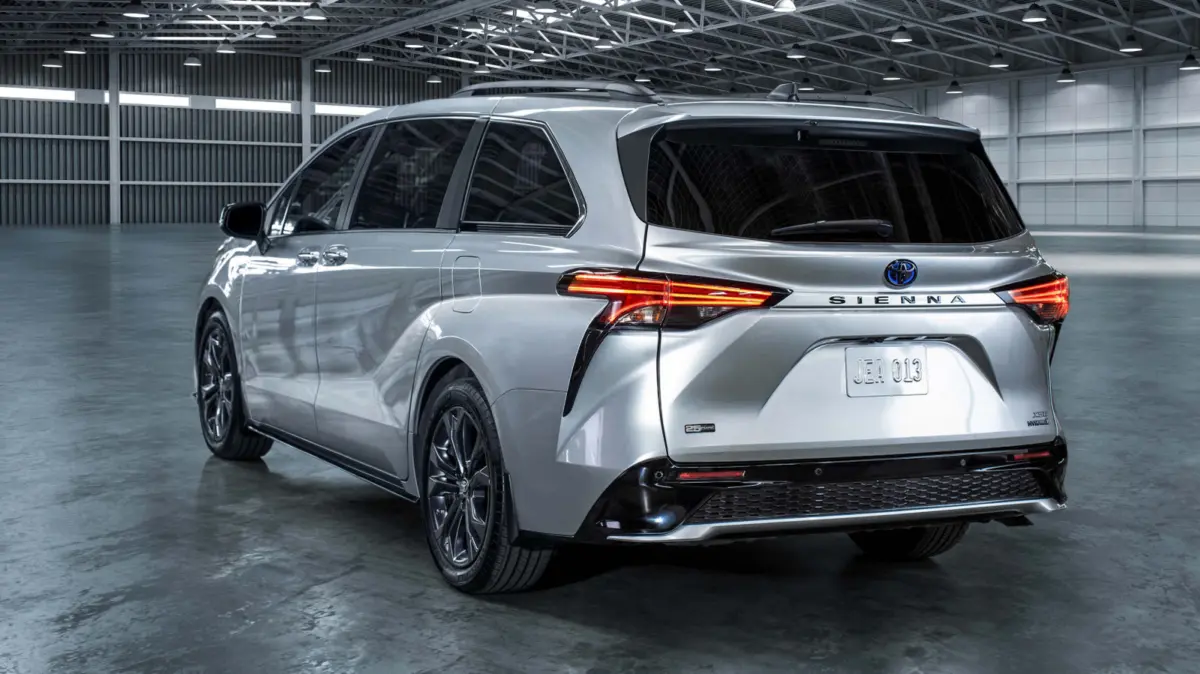
When it comes to practical, everyday family transportation, a hybrid Toyota minivan stands virtually unmatched as one of the most rational and sensible vehicles a consumer can purchase. Combining exceptional fuel economy, everyday utility, and modern safety features, the modern Sienna has long served as a staple for families seeking reliability and efficiency. However, a newly announced recall from the Japanese automaker has introduced an unexpected complication into an otherwise stellar reputation for family-oriented dependability.
According to safety documents filed with the National Highway Traffic Safety Administration, Toyota is officially recalling a massive fleet of 228,367 Sienna minivans spanning the 2022 through 2026 model years. The affected vehicles were manufactured over a lengthy production window, stretching from September 16, 2021, through July 20 of this year. Because the current, hybrid-only iteration of the Toyota Sienna was officially introduced for the 2021 model year, this recall successfully bypasses the very earliest examples of the fourth-generation van, but it captures nearly every subsequent model year produced up to the summer.
The official regulatory documents filed with federal safety authorities describe the root cause of the recall with a heavy dose of bureaucratic phrasing. According to the NHTSA report, the issue originates with "certain recliner assemblies by a certain supplier during a certain production period equipped with a seat containing a certain seat belt pretensioner by a certain supplier." While the phrasing reads like a masterclass in corporate legal hedging—sounding remarkably like a cautious friend divulging insider gossip after one too many mimosas at a weekend brunch—the underlying mechanical concern is a serious matter that demands immediate attention from the manufacturer and vehicle owners alike.
The seat belts are pushing on the recliner mechanism
The core defect specifically impacts current-generation Toyota Sienna models configured with two individual captain’s chairs in the middle row, which is the standard layout for seven-passenger variants. In these vehicles, the second-row seats are designed to recline for passenger comfort and are equipped with advanced seat belt pretensioners that are engineered to forcefully tighten the occupant against the seat back in the event of a sudden collision.
Through rigorous engineering investigations, Toyota discovered a troubling interaction during specific types of crashes. In certain frontal collisions, the intense physical load produced by the second-row seat belt pretensioner can inadvertently create unwanted mechanical "oscillation" within the seat recliner mechanism. This unexpected vibration and force can, in turn, cause the second-row seat backs to potentially shift or move around during the critical moments of a crash. For vehicle occupants seated in the second row, unexpected seat movement during a collision can compromise the intended protective geometry of the seat and seat belt system, thereby posing a notable safety risk.
Toyota reportedly uncovered this hidden vulnerability last year while conducting prototype sled testing for an entirely new second-row seat and seat belt design intended for an upcoming, future vehicle platform. Recognizing the potential implications for vehicles already out on public roads, the manufacturer initiated a comprehensive investigation. This process involved performing extensive additional testing and even recovering second-row seat assemblies directly from vehicles in the field to evaluate how the recliner mechanisms have held up over extended periods of real-world use.
Despite the broad scope of the recall, regulatory filings indicate that Toyota currently lacks a precise estimate regarding how many of the roughly 228,000 vehicles included in the recall campaign actually possess the physical defect. The one percent figure frequently cited at the beginning of regulatory recall documents serves primarily as a placeholder rather than a confirmed defect rate. Furthermore, the company has confirmed that, to date, there have been no Field Technical Reports, customer complaints, or warranty claims filed that are directly related to this specific seat recliner defect.
To resolve the issue safely and efficiently for vehicle owners, Toyota has devised a straightforward, no-charge remediation plan. For the vast majority of the vehicles involved in the recall campaign, the fix will not require physical mechanical replacements. Instead, dealerships will update the software that controls the operation of the seat belt pretensioner, recalibrating the system to prevent the excessive loads that trigger the mechanical oscillation in the recliner mechanism.
A small subset of the recalled vehicles, however, will require a more hands-on physical repair. Approximately 200 Sienna minivans that are specifically equipped with the Mobility as a Service Package will receive brand-new second-row seat backs featuring an alternative recliner mechanism designed to withstand the operational forces without risk of oscillation. Toyota will notify owners of the affected vehicles through official mailings, detailing the necessary steps to have the free software update or hardware replacement performed at authorized dealerships.






No comments yet. Be the first to join the conversation!