
The limited partners who supply capital to venture capital firms—often described as the "money behind the money"—are experiencing a remarkably lucrative moment, even as they navigate uncharted waters. Traditionally, institutional LPs spread their financial bets across a wide array of firms to diversify their portfolios carefully. They write checks to emerging managers alongside established institutions, balancing generalist firms with niche specialists. The primary objective has always been striking a balance between strong returns and rigorous risk mitigation.
Yet, that conventional venture playbook has been largely pushed aside in the current market. The meteoric rise of artificial intelligence titans like OpenAI and Anthropic has driven valuations upward at an unprecedented speed. As a result, nearly every major player in the venture ecosystem has piled into the exact same two companies on the way up, frequently doing so inside the very same venture firms. This trend flies in the face of longstanding venture conventions that traditionally discourage backing competing investments that might conflict with one another.
Despite breaking traditional rules, few voices are expressing concern. LPs speaking about the current landscape appear remarkably unbothered by these high-stakes gambles, drawn in by the staggering potential returns and anticipating an impending financial bonanza. Even so, these institutional backers do recognize potential hazards ahead, characterizing the current climate as a "yellow light" scenario. They are growing increasingly uneasy regarding how rapidly venture capitalists are returning to the market to raise subsequent funds.
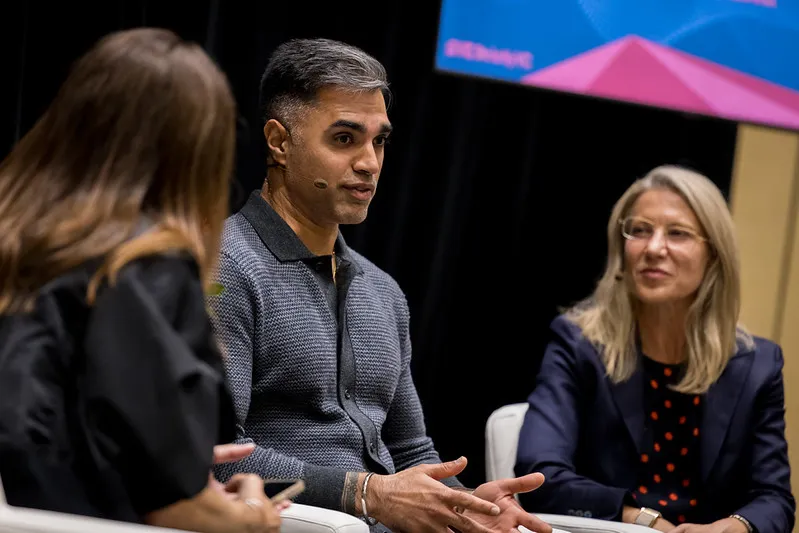
To explore these dynamics, a recent conversation brought together Beezer Clarkson of LGT Capital Partners, a diversified asset manager based in Zurich, and Amit Bhatti of TrueBridge, a Chapel Hill-based firm dedicated entirely to venture capital.
Strange Days: Exciting Yet Complex Markets
Navigating the current startup ecosystem presents a unique mix of high excitement and underlying tension. For seasoned professionals like Beezer Clarkson, the pace is undeniably hectic, yet it falls short of being genuinely alarming. With decades of industry experience under her belt, Clarkson views market cycles through a historical lens that helps demystify the chaos.
"It’s very busy, but I wouldn’t say it’s scary," Clarkson notes. "There’s a lot of change and a lot of variables at play. I love venture, so I find the chaos fun. I’ve been doing this for a couple of decades, so seeing the cycles makes it less scary. You appreciate that these things happen, and that we should enjoy the upside, because sometimes there’s downside, and the up is a lot more fun than the down."
Amit Bhatti shares a similarly optimistic perspective, pointing out that the mainstream obsession with artificial intelligence has thrust the venture asset class firmly into the global spotlight. Rather than viewing the current environment with trepidation, Bhatti sees it as a defining moment for the sector.
"If anything, it’s exciting," Bhatti explains. "Venture is sometimes looked at as a niche, and now that AI is all-consuming, all the attention is on venture. This feels like our moment more than it is like, ‘Oh gosh, what’s going to happen?’ The pace of investing and the valuations may be different, but really meaningful stuff is happening, and all the attention is focused on this corner of private equity."
Portfolio Concentration and the Power Law
A prominent feature of the modern venture landscape is portfolio overlap. Funds across the board now hold stakes in the exact same household brands, such as OpenAI and Anthropic, multiplied across multiple portfolios backed by the same institutional LPs. This phenomenon raises critical questions about how institutional investors maintain proper portfolio diversification when their underlying assets converge on a handful of mega-winners.
Bhatti argues that this concentration aligns perfectly with the fundamental nature of venture capital, which has historically operated as a power law business where a tiny fraction of investments generates the vast majority of returns.
"Venture has always been a power law business, so I actually view the concentration as a good thing," Bhatti says. "If we were getting to the maturity of one of our funds and there were still lots of tiny positions, something’s gone wrong. Our funds that are 10-plus years old are starting to consolidate into a few names. There’s a lot of Databricks, a lot of SpaceX, a lot of Stripe. In this generation of funds, I would hope there’s a lot of Anthropic and a lot of OpenAI. That’s a feature, not a bug. Not every one of these companies is going to work out, but that consolidation is typical. What’s different is how quickly it’s happened. I don’t view it as an immediate panic signal."
At the earliest stages of venture investing, however, portfolio dynamics look somewhat different. Clarkson points out that early-stage funds deal with smaller sums of capital and a broader variety of opportunities, preserving a degree of natural diversity before capital aggregates into late-stage giants.
Accelerating Fund Pacing and Yellow Lights
Historically, venture funds operated on predictable four-year investment cycles. Over time, that cadence compressed to three years, then two years, and in some recent instances, down to 18 or even 12 months. This accelerated deployment pace has sparked debate among institutional backers regarding sustainability and market health.
Clarkson notes that seeing managers return to the market on a one-year vintage cycle is notably swift, noting that the historical norm typically hovered around two to two and a half years. Deploying capital at such an aggressive rate while writing massive, concentrated checks introduces distinct risks, making it difficult to execute vintage strategies correctly.
Bhatti echoes these concerns, identifying the compressed timelines and mid-cycle fund size increases as classic "yellow light" indicators that induce mild heartburn for institutional allocators. Rounds have expanded dramatically, requiring larger checks to secure allocations in massive financing events. Furthermore, seed round sizes have roughly doubled, forcing lead investors to commit significantly more capital right out of the gate.
At the same time, both investors emphasize a crucial distinction between the current market and previous speculative frenzies, such as the zero-revenue crypto boom of prior years. Today’s market features high-growth companies successfully scaling from zero to substantial revenue milestones at unprecedented velocities.
Managing Relationships and Capital Calls
When star venture managers return to the market on shortened one-year cycles while their underlying returns remain largely unrealized on paper, LPs face delicate strategic choices. Pushing back or attempting to sit out a fund can damage long-term relationships and jeopardize an institution’s seat at the table.
To manage these accelerated capital calls without sacrificing access, LPs often adjust their commitment sizes. During previous market peaks, such as in 2021, investors frequently halved their check sizes to account for the compressed timing. Managers, meanwhile, have increasingly opted to upsize existing funds mid-cycle rather than launching entirely new vehicles prematurely.
This relentless pace of capital calls, however, places distinct financial strain on endowments, hospitals, and foundations, particularly when capital continues to flow outward without corresponding distributions flowing back in.
The Evolution of Liquidity and Secondary Markets
Liquidity remains a central challenge and opportunity within the ecosystem. While the past couple of years experienced a slower IPO market, significant liquidity has been unlocked through massive mergers and acquisitions, alongside standout exits by companies like SpaceX and Cerebras.
Crucially, the secondary market for venture capital has evolved into a sophisticated and institutionalized third pillar of liquidity alongside traditional IPOs and M&A activity. Once viewed as a sign of distress, secondary transactions have become an accepted and widespread tool for both venture managers and LPs looking to realize gains.
"Secondaries have become much more sophisticated in venture over the last, call it, five years," Clarkson observes. "It’s localized in the top handful of companies, but it’s much more prevalent than before, which I think is good, because the ecosystem needs liquidity options. Venture is predicated on that, and if you wait 20 years for an IPO, that is not what structurally we all thought it could be."
Bhatti notes that managers are now utilizing secondaries more judiciously. While core power law holdings are rarely liquidated entirely, trimming a position by a fraction can successfully return an entire fund, offering a prudent risk-management strategy.
Emerging Managers and the San Francisco Ecosystem
Even as top-tier venture funds capture a massive share of institutional capital, emerging managers continue to secure funding by establishing clear differentiation and specialized theses. While fundraising has grown more challenging, smaller micro-funds ranging from $5 million to $50 million continue to find support from institutional allocators willing to back young or first-time generalists.
At the same time, discussions persist regarding the long-term geography of the tech industry. Soaring real estate costs in San Francisco have raised questions about whether the next generation of founders might be priced out, potentially shifting the epicenter of innovation to regions like New York or suburban technology hubs.
Despite cost pressures, institutional backers maintain that the dense talent networks, historical momentum, and deep-seated culture of innovation rooted in the Bay Area will remain difficult to replicate elsewhere in the near term.










No comments yet. Be the first to join the conversation!