
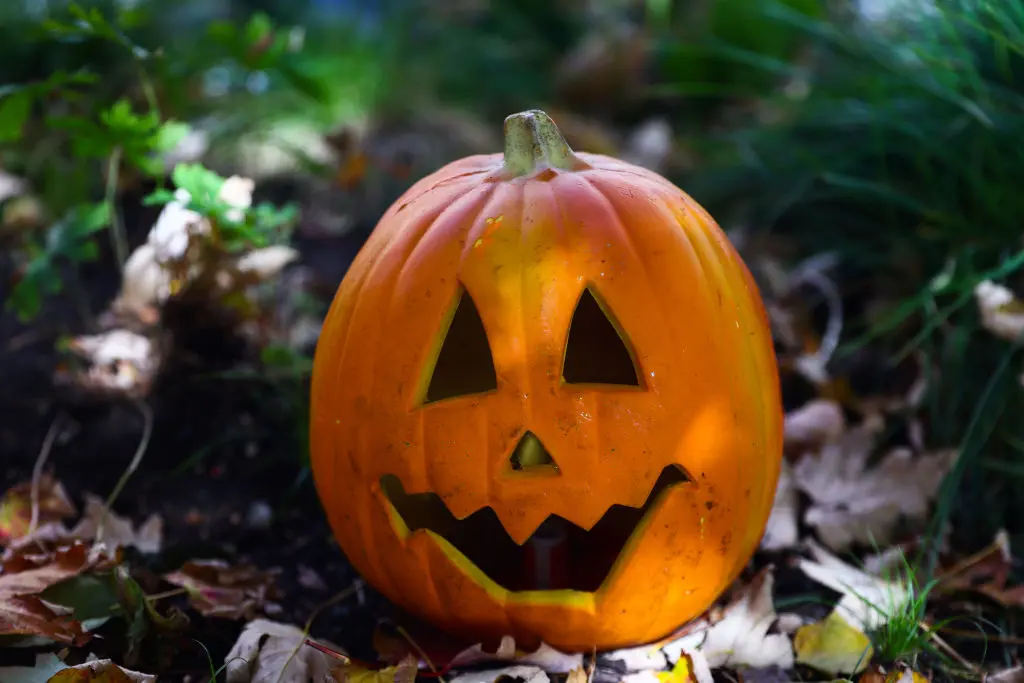
The only thing scarier than Halloween itself might just be the morning-after reality of what to do with a sad, deflating jack-o’-lantern. When confronted with a rotting, collapsing carved pumpkin sitting on the front porch, the average person’s first instinct is to make a beeline straight for the garbage can and get rid of the messy vegetable as quickly as possible. However, environmental experts are cautioning against doing so, warning that tossing pumpkins into the standard household trash and sending them to landfills can release harmful greenhouse gases directly into the atmosphere, contributing significantly to seasonal carbon and methane spikes.
The post-Halloween cleanup period triggers a massive wave of organic waste disposal across North America. Millions of households scramble to clear their porches of decaying gourds, creating a concentrated surge of waste right as autumn transitions into the winter holiday season.
"Everybody throws them out from Halloween to right after Thanksgiving," says Kay McKeen, executive director at Scarce, an environmental education non-profit organization focused on sustainability and waste reduction. "It’s a huge burst of methane gas that’s going into the landfill all at one time."
This seasonal disposal pattern presents a hidden environmental challenge that often goes unnoticed amidst the broader conversations about holiday waste, consumerism, and energy consumption. While individuals view a single discarded pumpkin as an insignificant piece of biodegradable yard waste, the collective impact of a nation discarding hundreds of millions of decorative gourds simultaneously creates a systemic environmental burden for municipal waste management operations.
Why shouldn’t you trash your pumpkin?
The core of the problem lies in the mechanics of modern landfills. When organic materials like pumpkins are sent to a landfill, they are buried deep beneath layers of other household refuse and synthetic materials. This environment is largely devoid of oxygen, which fundamentally changes how the organic matter decomposes.
Instead of breaking down naturally through aerobic decomposition, the pumpkins rot anaerobically—meaning they decompose without oxygen. This anaerobic breakdown process releases methane, a potent greenhouse gas. According to environmental data from institutions like Yale University, methane is exceptionally powerful at trapping heat in the atmosphere, measuring around 80 times more potent than carbon dioxide over a 20-year timeline.
Furthermore, pumpkins possess a very high water content. When this massive volume of moisture-heavy organic matter mixes with general household waste and ongoing moisture inside a landfill, it creates leachate. Leachate is a toxic liquid sludge that forms as water percolates through waste, and it carries the potential to pollute local groundwater systems and the surrounding environment if landfill liners and collection systems fail.
While a single pumpkin left to rot in a backyard would break down harmlessly, the sheer scale of modern agricultural production and autumn holiday traditions transforms a natural process into an industrial waste dilemma.
"Maybe if we had a handful of pumpkins going into that waste stream, that might be one thing," explains Chris Enroth, a horticulture educator with the University of Illinois Extension, an organization that helps coordinate annual "Pumpkin Smash" events to assist local residents in recycling and composting their old jack-o’-lanterns and pumpkins. "But we have millions of people who buy multiple pumpkins. We’re talking about hundreds of millions of pumpkins that need to be disposed of post Halloween, and it’s just a massive amount of organic material that goes into the landfill system."
The sheer volume overwhelms the capacity of natural systems to absorb the waste harmlessly, turning a symbol of autumn bounty into a contributor to global climate pressures.
How do I get rid of my pumpkin?
Fortunately, composting offers a direct and effective way to sidestep many of the environmental harms associated with sending food waste, including pumpkins, to traditional landfills. Composting alters the chemical and biological reality of decomposition by ensuring the organic material interacts with the right elements.
"When we compost something, it’s really a whole system that we’re creating that introduces both water and oxygen, [and uses] microbes, bacteria, fungi, all the little decomposers," notes Enroth. "When we introduce those things, we get that aerobic composting process, so we don’t produce methane, and we’re able to turn those pumpkins back into organic matter that has nutrients and can be put back out into the garden."
Navigating the disposal process requires looking beyond the municipal trash can and finding localized alternatives. For individuals who already utilize a curbside compost bin or have access to a designated composting program through an apartment building or neighborhood association, dropping the old jack-o’-lantern into that stream is the simplest solution.
For those without direct curbside access, a variety of community-based alternatives exist. Checking for local drop-off composting sites or independent community gardens can reveal viable options for organic waste diversion. Many municipalities and regional environmental groups have recognized the scale of the post-Halloween pumpkin problem and now organize dedicated community events specifically designed for residents to bring in their old pumpkins for mass composting.
These grassroots efforts have proven remarkably successful at scale. Since launching coordinated "pumpkin smashes" in 2014, environmental non-profit Scarce and the Illinois Extension have successfully diverted and saved over 1,600 tons of pumpkins from ending up in local landfills.
At the same time, experts urge well-meaning residents to avoid certain common disposal misconceptions, such as leaving pumpkins out in public parks or wooded areas for local wildlife to consume. While pumpkins are generally non-toxic and safe for many native species to eat, dumping them haphazardly can create unintended ecological complications. Small animals, such as hedgehogs, can occasionally become sick from eating decaying or moldy cultivated squash, and the sudden accumulation of food waste can cause different animal species to congregate in unnatural numbers, increasing the risk of disease transmission among wildlife populations. Furthermore, leaving dense concentrations of food waste in open areas frequently attracts predators and pests to residential neighborhoods, creating localized nuisance issues.
The broader conversation around pumpkin disposal also highlights a much larger systemic challenge regarding food waste in the United States and globally. Food is currently the single most common material sent to municipal landfills in the U.S., and wasted food overall is responsible for an estimated 58 percent of all landfill-generated methane emissions.
For households that have weighed the environmental cost of traditional waste management and considered adopting more sustainable habits, experts suggest that autumn provides the ideal psychological and practical moment to begin home composting.
"We often recommend to folks thinking about starting a compost pile, to try it in the fall because we usually have leaves, grass clippings, things to get that pile started. And you could incorporate that pumpkin into that compost pile," Enroth says. "It’s a really good combination of materials for you to get compost out of it next year."






No comments yet. Be the first to join the conversation!