
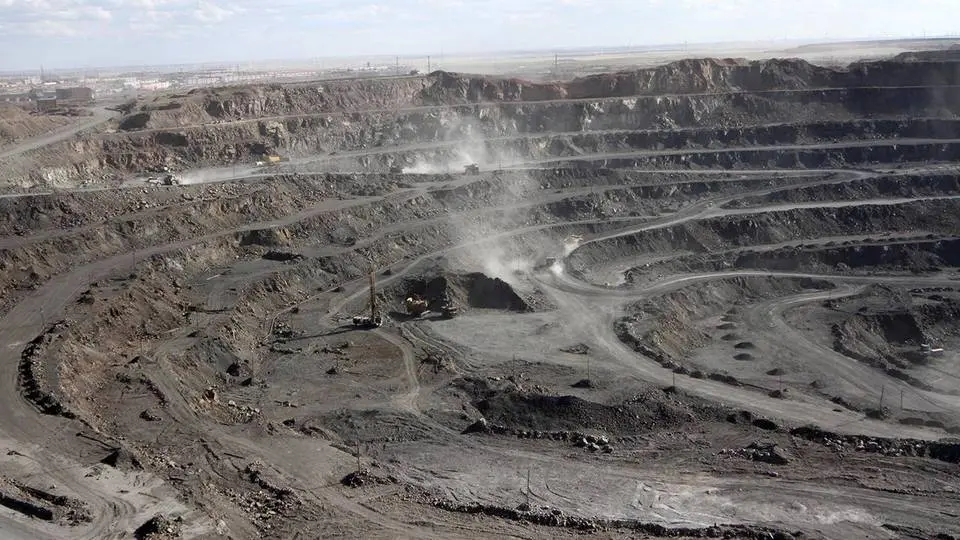
The global economic landscape is undergoing a profound transformation as governments shift their focus from the pursuit of unfettered efficiency to the urgent necessity of economic security. In capitals from Washington to Brussels, the rhetoric of "de-risking" has moved from abstract policy discussion to concrete, multi-billion-dollar initiatives. At the heart of this transition lies the critical sector of rare-earth elements—a group of minerals essential for everything from electric vehicle batteries and wind turbines to advanced military guidance systems. While the prospect of a full-scale Chinese embargo on these materials remains a low-probability event, the persistent threat of such an action serves as a powerful instrument of leverage, forcing Western powers into a cycle of expensive capacity duplication and strategic stockpiling.
The current situation is defined by a delicate dance of brinkmanship. China, which currently maintains a dominant position in the processing and refining of rare-earth elements, is unlikely to trigger a total export ban, as such a move would accelerate the very diversification efforts it seeks to deter. Instead, Beijing is expected to keep the specter of an embargo alive, using it as a persistent shadow over global supply chains to maintain influence. For the West, the challenge is equally complex. Achieving true, comprehensive self-sufficiency in the rare-earth sector is a practical impossibility in the short to medium term, given the environmental, regulatory, and capital-intensive hurdles involved in establishing domestic mines and refining facilities. Consequently, the United States and the European Union are pursuing a pragmatic, if costly, middle path: reducing their acute vulnerability to supply shocks by diversifying sources and building redundant capacity, even when doing so defies the logic of traditional market economics.
This pivot toward economic security has become the defining feature of modern statecraft. For the world’s largest economies, the strategy involves a two-pronged approach: leveraging regulatory power to compel economic partners to alter their trade behaviors, and investing heavily in domestic or "friend-shored" alternatives. This is not merely a matter of industrial policy; it is a fundamental reassessment of how globalization is structured. For decades, the global order operated on the assumption that supply chains would remain open and that market efficiency was the highest virtue. Today, that assumption has been replaced by a realization that concentrated supply chains are a strategic liability that can be weaponized during times of geopolitical friction.
The European Union and the United States, in particular, are leading this charge, albeit with different internal pressures and policy instruments. In the U.S., the emphasis has been on leveraging the Defense Production Act and various tax incentives to encourage the development of a domestic rare-earth supply chain. The goal is to insulate critical defense and green-energy industries from the volatility of international markets. Similarly, the European Union has moved to address its vulnerabilities through the Critical Raw Materials Act, aiming to reduce dependency on any single third country for strategic resources. These measures are expensive, requiring significant public subsidies and the acceptance of higher commodity prices, yet they are increasingly viewed by policymakers as a necessary insurance premium against the risk of coercion.
However, the perspective changes significantly when shifting the focus from global superpowers to smaller, more vulnerable economies. For these nations, the luxury of implementing sweeping industrial policies, subsidizing domestic production, or establishing vast stockpiles simply does not exist. They lack the fiscal space to duplicate supply chains and the geopolitical weight to force their partners to alter their behaviors. For smaller economies, the only viable strategy for mitigating the risks of bullying and coercion is a rigorous and disciplined approach to diversification.
This reality highlights the inherent inequality in how the global economy is responding to the current era of instability. While the United States and the European Union can attempt to "near-shore" or "friend-shore" their critical mineral needs, smaller countries are often forced to navigate the geopolitical currents without the benefit of a robust domestic industrial base. Their survival in the global market depends on their ability to cultivate multiple trade relationships, avoiding an over-reliance on any single dominant supplier. This diversification is not merely an economic preference; it is a survival strategy designed to ensure that they are not left isolated should a major power decide to exert economic pressure.
The persistence of the rare-earth issue underscores a broader, more uncomfortable truth about the future of international trade. We are moving toward a bifurcated or "multipolar" economic system where security concerns frequently override the principles of comparative advantage. The expensive duplication of capacity that the West is currently undertaking is a departure from the globalized ideal, yet it is a rational response to the weaponization of trade. By building these redundancies, the West is signaling to the world that it is willing to pay a premium to ensure its strategic autonomy.
Whether these efforts will ultimately succeed in neutralizing the threat of supply shocks remains to be seen. The technical expertise, the geological access, and the capital required to build a sustainable rare-earth supply chain outside of the existing dominant hubs are immense. Mining and refining are not just expensive; they are environmentally taxing and require a highly skilled workforce, factors that can lead to significant delays in implementation. As these projects move from the drawing board to reality, the cost of these materials is likely to remain elevated, creating a drag on the very green-energy transitions that these materials are intended to support.
Furthermore, the geopolitical environment is not static. As Western nations move to build out their own supply chains, China is likely to respond, not necessarily through direct embargoes, but through a more sophisticated mix of market-based interventions, investment in foreign mining projects, and the continued cultivation of its dominant position in the mid-stream processing sector. This ensures that the specter of an embargo remains, keeping the pressure on Western governments to maintain their expensive, redundant infrastructure.
For smaller economies, the path forward is one of cautious navigation. They must balance the need for affordable access to these critical materials with the reality that their primary suppliers may be the target of geopolitical pressure from the world’s major powers. This requires a level of diplomatic dexterity that is difficult to sustain. They must remain open to investment from all quarters while ensuring that their national interests are not compromised by the competing agendas of the superpowers.
The international community is currently caught in a cycle where the threat of coercion dictates policy, and policy, in turn, dictates the shape of the global market. The "specter" of an embargo is, in some ways, more powerful than an actual embargo would be. An actual embargo would force an immediate, desperate pivot that might, over time, lead to a more stable, albeit fragmented, supply chain. The threat of an embargo, however, keeps the international order in a state of permanent tension, preventing the formation of a stable, long-term equilibrium.
As the global economy continues to grapple with these challenges, the distinction between economic policy and national security will continue to blur. The era of believing that trade could remain separate from power politics has effectively come to an end. Whether it is the European Union’s push for strategic autonomy or the United States’ efforts to secure its industrial base, the message is clear: the cost of vulnerability is now deemed too high to ignore.
The coming years will likely be defined by the friction between these competing interests. The West will continue to pour resources into infrastructure that may never be as efficient as the one it seeks to replace, while China will continue to use its market dominance as a quiet, ever-present warning. Meanwhile, the rest of the world will continue to look for ways to maneuver through this landscape, seeking security in diversity and hoping to avoid being caught in the crossfire of a contest that is, at its core, a struggle for the technological and industrial foundations of the 21st century.
This new reality requires a sober assessment of what is possible. Self-sufficiency is a siren song that promises stability but often delivers inefficiency and high costs. Diversification, while challenging, remains the most grounded strategy for those without the capacity to reshape the world in their own image. As the dust settles on this current period of transition, it is clear that the global economy will remain deeply interconnected, yet significantly more cautious, defined by a heightened awareness of risk and a perpetual preparation for the next supply chain disruption. The goal of economic security is no longer just about growth—it is about the preservation of national agency in a world where trade has become a primary tool of power.









No comments yet. Be the first to join the conversation!