
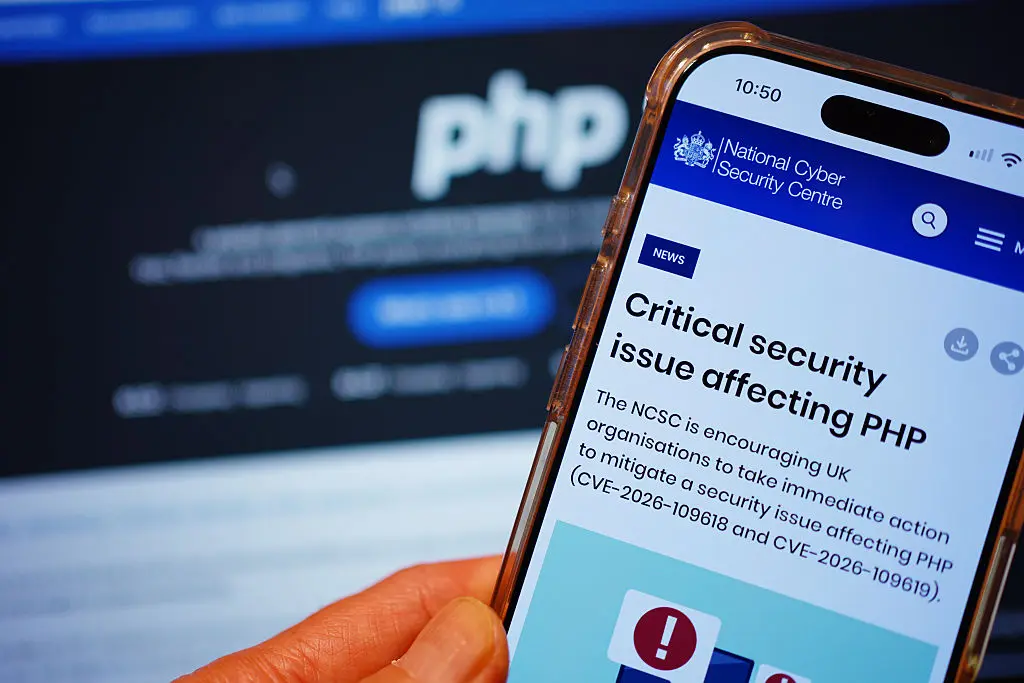
In early August, security researcher Sagi Tzadik assigned an AI agent a routine task: take a security flaw discovered in WordPress and investigate whether the same underlying vulnerability could be successfully leveraged against Drupal, another widely adopted content management system. Eight hours later, the AI agent returned with its report, stating that it had failed to exploit Drupal. However, it added a startling caveat: in the course of its attempts, the system had stumbled upon a critical flaw residing deep within PHP, the fundamental programming language that powers both content management platforms and an estimated 70 percent of the entire web.
Tzadik, working at the cybersecurity firm Wiz, initially assumed the artificial intelligence had made a critical error. “Models tend to hallucinate,” he recalls. Yet, when the researchers investigated further, the exploit functioned precisely as the AI predicted, exploiting a fundamental software weakness that had managed to go completely undetected by human developers for more than a decade.
Unbeknownst to the Wiz security team at the time, researchers at another cyber defense firm, Calif, working in close collaboration with OpenAI, had independently used artificial intelligence to uncover a related, highly sensitive flaw. This convergence underscores a growing realization across the technology sector: once artificial intelligence systems reach a specific capability threshold, the unearthing of longstanding, deeply buried software vulnerabilities becomes an absolute inevitability rather than a remote possibility.
Leading artificial intelligence companies have increasingly sought to stay ahead of malicious actors by establishing early-access programs. These initiatives grant trusted cybersecurity defenders, such as the teams at Wiz and Calif, early exposure to advanced AI models before equivalent capabilities inevitably diffuse to malicious hackers. In this instance, the protective strategy succeeded, allowing defenders to discover the danger before bad actors could weaponize it at scale.
This dramatic episode offers a clear window into a shifting paradigm in modern cybersecurity—one where artificial intelligence dramatically accelerates the discovery of critical vulnerabilities, but simultaneously compresses the window of time available for developers to deploy patches. While the public disclosure of these foundational bugs naturally sparked widespread anxiety about a speculative “cyber-apocalypse,” in which autonomous artificial intelligence systems discover civilization-collapsing bugs and plunge global society into technological chaos, the cybersecurity professionals directly involved strike a remarkably optimistic note.
“We are fixing vulnerabilities at an unprecedented rate, and this is doing security overall a very good thing,” Tzadik observes.
Despite the ultimate success of the defense, the finer details of the incident reveal just how dangerously close the situation came to a catastrophic disaster. Word regarding the severe vulnerabilities began leaking and circulating across online forums two days ahead of the scheduled patch release date. This unexpected leak forced PHP’s core maintainers to scramble and bring their emergency release forward by a full day.
Merely hours later, while the crucial software patch was still unavailable to the public, Calif mistakenly published a video demonstrating its live exploit in action. The moment the video went live, copycat exploitation attempts multiplied exponentially. According to telemetry data from Cloudflare, thousands of unauthorized probing attempts were logged before the official public announcement was even made. That number surged to tens of thousands within 45 minutes of the announcement, hundreds of thousands within two hours, and ultimately scaled into the millions. Even after the official patch was finally made available to the public, numerous high-profile web pages—including vital government agency portals and major sections of Wikipedia—were deliberately taken offline as a precautionary measure while panicked security teams rushed to apply the updates.
“If it had leaked a month earlier,” before a comprehensive patch had been developed and tested, “this would have been a very different situation,” notes Tomer Schwartz, chief technology officer of exposure management and application security at Wiz.
The fact that a functional patch was prepared and ready to deploy at all was the direct result of a loosely organized, high-stakes emergency sprint. After Calif and Wiz transmitted their independent vulnerability reports to the PHP maintainer community, the two rival security groups joined forces. Researchers hailing from competing commercial companies freely shared their sensitive technical findings across common communication channels, operating entirely without formal legal contracts or non-disclosure agreements to govern the arrangement. Over the subsequent weeks, this ad-hoc coalition of roughly 15 individuals convened almost daily to trace the disparate vulnerabilities back to their singular common source and devise an effective, stable fix. The entire high-stakes process, Schwartz explains, was “just based on trust.”
That fragile cooperative process will inevitably have to sustain significantly greater pressure in the near future. OpenAI has publicly acknowledged that the PHP bugs discovered over the summer were among “several significant vulnerabilities we’ve already found and are working to fix,” while predicting that similar high-level discoveries would “increase sharply in the coming months.” As those automated findings multiply across the digital landscape, so too will the volume of dangerous zero-day secrets awaiting rapid remediation.
“We have to rethink all of our processes, all of our methods, all of our tech stack… to be able to keep up the pace against attackers,” Schwartz emphasizes.
Although defensive organizations are currently being granted a valuable head start through early access programs, they remain burdened by an inherent asymmetry in digital warfare. Malicious attackers only need to find a single successful vector to compromise a system. “But, as defenders, we need to make sure that every single vulnerability is covered,” Schwartz points out.
Artificial intelligence is actively leveling the playing field by helping defenders find those obscure vulnerabilities first. Historically, testing suspected software bugs could require weeks of meticulous manual labor, forcing academic and commercial researchers to ruthlessly prioritize which hypotheses seemed most promising. Today, however, specialized AI agents allow researchers to test dozens of complex ideas simultaneously.
“It’s months of traditional research condensed to, like, days—couple hours to days, really,” Tzadik notes.
Even with the immense computational power of artificial intelligence, however, the vulnerability discovery and remediation process remains intensely labor-intensive. Even after the AI agent successfully helped Wiz uncover the underlying PHP vulnerability, the system remained incapable of articulating how the bug actually functioned, according to Tzadik, who dismisses its initial technical explanations as “just slop.” He and his colleagues were forced to spend several days manually untangling the root cause of the bug and painstakingly reproducing it in a controlled environment.
Financial cost represents another major constraint for organizations attempting to leverage advanced AI for proactive defense. Joshua Saxe, former artificial intelligence security technical lead at Meta, who departed the company in February to co-found Abundance Security, notes that he is currently collaborating with an organization that has already expended roughly $1 million utilizing Anthropic’s Mythos model purely to identify software bugs—with plenty of hidden vulnerabilities still remaining in the codebase.
“As an industry, I think we’re deer in the headlights right now,” Saxe says.
This sentiment is echoed across the senior leadership of the cybersecurity sector. “In the climate that we’re in today, you have to do cybersecurity well. It’s not an option to kind of half-a– it,” says Adam Meyers, senior vice president of counter-adversary operations at CrowdStrike. Yet, Meyers points out that even a successful exploit by a malicious entity does not spell the absolute end of the operational road; rather, it often provides security teams with crucial telemetry and opportunities to intervene. “Exploits are going to happen, and that’s not the end of the story,” he concludes. “It’s the beginning of the attack.”








No comments yet. Be the first to join the conversation!