
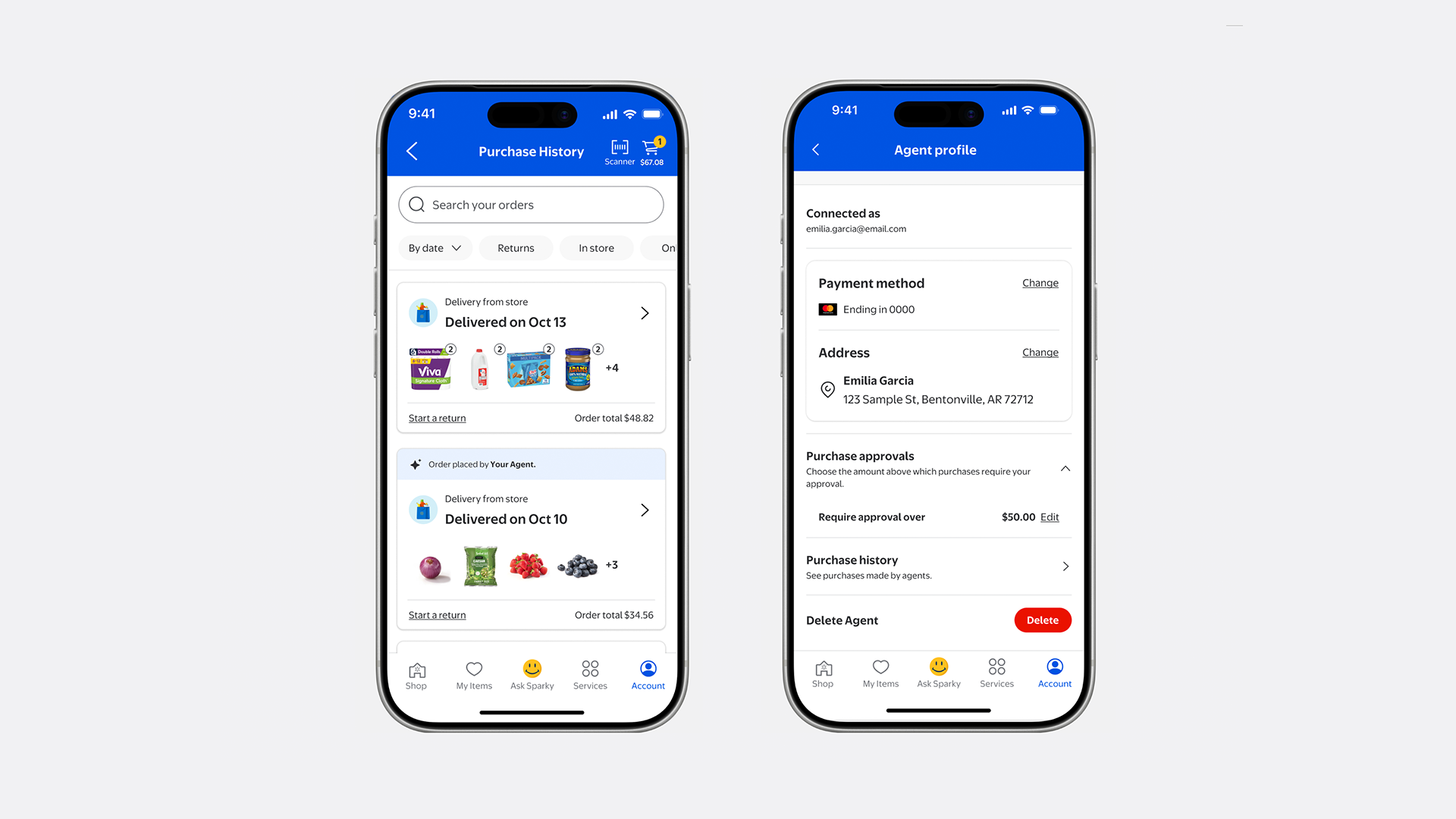
Walmart is taking steps to ensure its customers retain control over their digital lives as autonomous artificial intelligence agents assume an increasingly prominent role in the ecommerce landscape. The retail giant is rolling out a suite of innovative tools designed to let shoppers oversee AI-driven purchases, streamline the way digital assistants shop on their behalf, and establish firm boundaries regarding what these systems can and cannot do.
Announced on a Wednesday in October, the strategic updates are engineered to support the growing phenomenon of agentic commerce across both Walmart and Sam’s Club properties. While acknowledging that not every consumer will immediately embrace shopping through artificial intelligence, Walmart emphasized that its overarching objective is to build the most trusted experience in the industry by embedding rigorous safeguards directly into the purchasing process. To achieve this, the company is introducing specialized user profiles, setting clear parameters for AI behavior, and developing a streamlined technical gateway for third-party systems. Beyond these consumer-facing changes, the retail corporation is actively assisting its marketplace sellers in preparing for AI-driven product discovery, potentially unlocking powerful new avenues for brands to reach targeted audiences.
This latest move significantly expands Walmart’s existing artificial intelligence shopping initiatives. Previous efforts have included the deployment of the Sparky AI shopping agent, as well as high-profile integrations with Meta’s Muse, OpenAI’s ChatGPT, and Google’s Gemini. Although Walmart has not yet specified which exact third-party agents will natively support the new features at launch, the infrastructure represents a major leap forward for the company, which ranks No. 2 in Digital Commerce 360’s Top 1000 Database tracking North America’s largest online retailers by annual ecommerce sales. It also holds a prominent position at No. 37 in Digital Commerce 360 and ReFiBuy’s specialized AI Commerce Rankings.
How Walmart’s AI Agent Profiles Will Work
Set to debut within a month of their announcement, Walmart’s new Agent Profiles provide shoppers with a much-needed mechanism to oversee automated, AI-led transactions. Under current industry standards, purchases executed by artificial intelligence agents typically blend into a customer’s standard purchase history alongside items bought personally, making it difficult to distinguish between human and machine orders. The upcoming feature changes this dynamic entirely by enabling agents to shop through dedicated profiles linked directly to a master customer account.
According to Daniel Danker, Walmart’s executive vice president of AI acceleration, product and design, this architecture gives shoppers the ability to approve individual purchases, set strict spending limits, and easily identify which transactions were executed by an algorithm. Through these profiles, consumers can dictate whether they want to manually review and greenlight every single AI-driven purchase before it goes through, or grant agents the autonomy to spend up to a predetermined threshold, such as fifty, one hundred, or two hundred dollars. When these agents browse Walmart’s digital storefront, they encounter the exact same pricing structure that a human shopper would face, with all promotional offers, discounts, and associated fees clearly displayed prior to final checkout.
What Protections Apply When AI Agents Shop?
The introduction of these safeguards comes at a crucial time, as consumer hesitation remains a significant hurdle in the adoption of autonomous retail technology. Many shoppers are reluctant to surrender financial control to machines. Recent research published by payments technology provider NMI in August surveyed one thousand U.S. adults regarding their attitudes toward artificial intelligence in retail. The findings underscored widespread caution: merely eleven percent of respondents reported having actually used AI to complete a financial transaction. Conversely, seventy percent expressed a strong desire to review or completely override an AI purchasing decision prior to checkout, while a meager ten percent indicated a willingness to hand over full purchasing control to an algorithm.

To address these very real consumer concerns, Walmart is establishing comprehensive expectations for how software agents must interact with customers and the platform itself. Danker noted that the retailer’s new terms of service mandate that customer approval remains the default state for agentic transactions. While shoppers can pre-authorize spending within specific financial limits, Walmart retains the authority to demand secondary human confirmation whenever necessary.
Furthermore, the strict rules prohibit software agents from acting outside the explicit instructions provided by the shopper, accessing unauthorized personal information, or receiving direct payment-card details. Agents are strictly barred from adding new payment methods or altering existing ones. In the event that an automated assistant completes an unintended purchase, Walmart’s standard return policies will apply. However, any software agent found violating the company’s terms of service will be permanently blocked from accessing the website. At the same time, Walmart clarified that sensitive data shared directly by shoppers with third-party artificial intelligence applications will continue to be governed strictly by those external providers’ individual privacy policies.
Walmart Builds a Direct Connection for AI Agents
In tandem with user-facing profiles, Walmart is engineering a proprietary infrastructure known as the Agent Gateway, which provides artificial intelligence systems with a faster, more direct method to interact with the retailer’s inventory and systems. Traditionally, software agents have relied on web browsers to navigate digital storefronts designed specifically for human eyes—a method that Danker described as frequently slow, error-prone, and susceptible to digital roadblocks where agents become stuck.
The Agent Gateway resolves these inefficiencies by leveraging the Model Context Protocol, an open standard originally developed by Anthropic that allows artificial intelligence applications to securely connect with external tools and services. This gateway underpins core functions including product discovery, cart management, purchasing, and order tracking. Crucially, the system is engineered to help software agents locate products that customers buy on a recurring basis without exposing the agent to broader, sensitive customer history. For example, the gateway can assist an AI assistant in identifying a consumer’s preferred brand of milk or bread without sharing the entirety of their past purchasing habits. The gateway is scheduled for a limited beta rollout targeting select companies and developers, though Walmart has yet to establish a definitive timeline or participant roster for the launch.
How Agentic Shopping Could Benefit Walmart Marketplace Sellers
As agentic commerce reshapes how consumers discover and evaluate merchandise, the shift is creating unprecedented dynamics for third-party marketplace sellers. Speaking at Morgan Stanley’s Technology, Media and Telecom Conference, Danker revealed that vitamin and protein supplements emerged as the top two product categories purchased from Walmart via ChatGPT, noting that these transactions likely originated from open-ended conversational prompts rather than targeted text searches for specific brand names.
This evolution represents a potential paradigm shift for independent merchants, according to Manish Joneja, senior vice president of Walmart Global Marketplace and Walmart Fulfillment Services. Joneja stated that agentic commerce has the power to generate fresh avenues for sellers to place the right merchandise directly in front of interested consumers, including emerging brands and specialized items that might otherwise lack broad market awareness.
At the same time, this transition raises the operational bar for merchants aiming to capture automated sales. Joneja emphasized that maintaining hyper-accurate product information, competitive pricing, consistent inventory availability, and reliable delivery fulfillment promises will become critical factors for success. To help merchants navigate this transition, Walmart is actively collaborating with its marketplace vendors to refine product listings and enhance catalog quality, ensuring that third-party merchandise is fully optimized for machine readability and AI-powered recommendations.









No comments yet. Be the first to join the conversation!