
As federal and state policy landscapes continue to evolve regarding social safety net programs, significant administrative changes are on the horizon for both the Supplemental Nutrition Assistance Program (SNAP) and the Medicaid program. Central to these upcoming shifts are strict work requirements and the complex processes designed to exempt vulnerable individuals who are physically or mentally unable to meet them. With new federal mandates, shifting financial error penalties, and varied state-level discretion, administrators, healthcare providers, and enrollees alike are facing a challenging operational environment as they prepare for sweeping transformations.
The Supplemental Nutrition Assistance Program, which serves as the primary federal aid initiative addressing food insecurity among low-income households, has long incorporated work mandates as a baseline condition for participation for specific demographics. This framework is set to expand dramatically. Starting January 1, 2027, or even sooner at the option of individual states, 44 states will also be required to condition Medicaid eligibility for adults in the Affordable Care Act expansion group, alongside enrollees in certain waiver programs, on fulfilling rigorous community engagement and work requirements.
However, both programs recognize that work mandates are not universally appropriate. Federal law specifies mandatory exclusions from these requirements, most notably for individuals classified as medically frail. To qualify for this specific medical frailty exemption in Medicaid, a person must possess both a qualifying medical condition and demonstrate that the condition actively impairs their ability to fulfill the mandated work requirements. The Centers for Medicare & Medicaid Services recently released information detailing an approach that states can use to verify these medical frailty exclusions. Yet, states are under no federal obligation to adopt this specific model, leaving substantial uncertainty regarding the exact administrative processes individual jurisdictions will ultimately deploy.
Given the ambiguity surrounding how state agencies will verify the Medicaid medical frailty exclusion, a look at how SNAP has historically managed parallel administrative hurdles provides valuable context. Much like the upcoming Medicaid exemption, individuals who are deemed unable to work due to physical or mental limitations have long been excused from SNAP work requirements. Approaches to verifying work capacity vary considerably among state SNAP agencies. Furthermore, these methodologies are currently undergoing potential shifts in response to provisions within recent federal reconciliation legislation. These provisions require states to shoulder a portion of SNAP benefit costs if their payment error rates cross specific thresholds, forcing a re-evaluation of how administrative integrity and verification are balanced against operational burdens. While the SNAP framework offers insightful lessons for Medicaid administrators, fundamental differences in how the two programs determine eligibility mean that Medicaid verification processes will ultimately diverge from SNAP in several key ways.
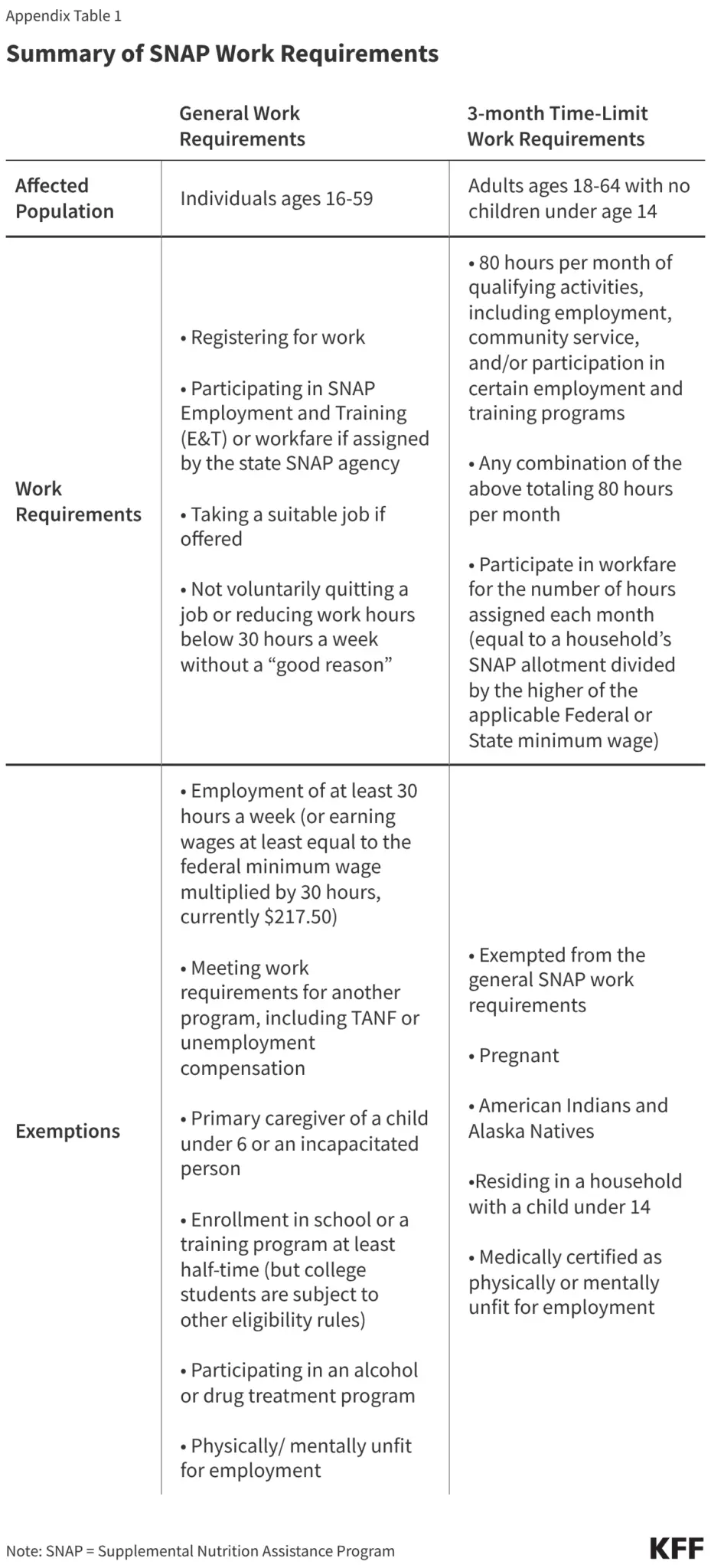
Historically, state agencies have enjoyed broad flexibility in defining the precise parameters of the exemption for individuals deemed physically or mentally unfit for employment within the SNAP framework. Most adults under the age of 65 participating in SNAP must comply with general work requirements. These baseline rules typically involve registering for employment, accepting a suitable job if one is offered, participating in designated SNAP Employment and Training programs or workfare assignments if directed by the state agency, and avoiding voluntary job resignations or unauthorized reductions in work hours below 30 hours per week without a legally recognized good reason.
In addition to these general rules, time-limited work requirements apply strictly to certain non-exempt individuals. These enrollees must work or participate in qualifying work programs for at least 80 hours per month, or fulfill specific hourly requirements in workfare, in order to maintain their SNAP benefits for more than three months within a rolling 36-month period. Federal regulations deliberately leave it to state agencies to define physical and mental fitness and establish internal procedures for verifying exemptions from general work rules. Regulations governing time-limited work requirements offer only slightly more specificity, outlining baseline criteria for exemptions.
Because of this broad administrative discretion, definitions of physical and mental limitations vary widely across state lines. Some states maintain expansive definitions that encompass chronic homelessness or survivors of domestic violence when those difficult life circumstances directly and negatively impact an individual’s physical or mental condition. Moreover, states are federally mandated to exempt individuals who receive any form of temporary or permanent disability benefits, including Supplemental Security Income, Worker’s Compensation, Department of Veterans Affairs benefits, Railroad Retirement benefits, developmental disability services, or private disability assistance, though documentation and verification protocols for these statuses can differ from state to state.
A mandatory component of the standard SNAP application and recertification workflow is a formal phone or in-person interview conducted by an eligibility worker tasked with screening enrollees for potential exemptions. According to recent data, most states report screening for physical or mental limitations at the initial application stage, while others initiate this screening during the required interview conducted prior to final SNAP certification. More than half of all state agencies also report granting frontline staff significant discretion regarding the types of physical or mental limitations that can be considered valid grounds for an exemption. For instance, direct visual observations made by eligibility workers during an interview, such as noting that an applicant relies on an oxygen tank, can serve as the foundational basis for determining an exemption.
When evaluating whether an applicant is obviously unfit for employment, state practices diverge. Some jurisdictions consistently demand formal medical documentation of an individual’s physical or mental limitations, whereas many others readily accept client statements or only require verification when an eligibility worker explicitly deems the situation questionable or unclear. Evaluations of SNAP work requirement exemption procedures indicate that some eligibility workers believe mandatory documentation reduces internal staff burden and personal decision-making liability by fostering greater consistency and lowering subjectivity. However, regularly enforcing strict documentation requirements inevitably increases the administrative workload for program enrollees, healthcare providers, and the caseworkers responsible for processing the paperwork and requesting additional clarifications. Enrollees are typically re-evaluated for work exemptions during routine recertifications every six to twelve months, though evaluations reveal that the information gathered at recertification rarely differs significantly from the data originally collected at the initial application.
When an applicant’s unfitness to work is not immediately obvious to an eligibility worker, states are required to obtain a formal statement from a licensed medical professional to verify the exemption status, although internal procedures for collecting these provider attestations vary widely. Some states go a step further by mandating formal documentation, such as a standardized provider form, for every single individual seeking an exemption. The specific information requested from medical providers to substantiate an exemption also differs significantly by jurisdiction. States may additionally accept alternative forms of provider documentation, including written statements or direct phone calls to eligibility workers. Because medical providers are rarely provided with detailed regulatory guidance regarding how to assess functional fitness for employment, their independent determinations of who qualifies for an exemption inherently vary in consistency.
States may choose to make further adjustments to their SNAP verification protocols in response to a new mandate from recent reconciliation legislation requiring most states to cover a portion of SNAP benefit costs based on their payment error rate. Beginning in October 2027, the law dictates that states must pay a fraction of benefit costs if their payment error rate, which measures overpayments and underpayments driven primarily by administrative mistakes rather than outright fraud, exceeds six percent. The state’s financial share increases incrementally as the error rate rises up to a defined cap. Prior to these new requirements, state SNAP verification procedures reflected distinct local choices regarding how to balance rigorous documentation to promote program integrity and avoid fiscal penalties against the administrative barriers additional paperwork creates for participants. In light of much larger financial liabilities tied to error rates, states may rebalance these considerations. For instance, to proactively prevent administrative errors and associated financial penalties, Arizona recently instituted new requirements for additional documentation in areas where client statements were previously accepted unless deemed questionable.
In direct contrast to traditional SNAP procedures, the Medicaid process for verifying individuals who qualify for the medical frailty exclusion will require states to systematically utilize available administrative data before directly requesting documentation from enrollees or their healthcare providers. Medicaid possesses access to extensive claims data that SNAP programs typically lack. An interim final rule released by federal regulators instructs states to utilize claims and encounter data spanning the preceding 12 months to attempt automatic verification of medical frailty status prior to reaching out to the individual. Federal health officials recently outlined a tiered medical frailty framework designed to enable states to identify eligible individuals using claims data alone in the first tier, utilizing claims data combined with encounter or other data in the second tier, or deploying an individualized manual process requiring additional documentation in the third tier when state data files are absent or insufficient. While this tiered approach will successfully automate verification for many, data limitations—such as a lack of historical records for newly minted applicants and recent enrollees, or instances where healthcare providers inconsistently code conditions—mean states will still require supplemental documentation for a portion of the population.
Similar to SNAP operations, states will ultimately rely heavily on medical providers to verify an individual’s work capacity and Medicaid medical frailty status, particularly in scenarios where comprehensive claims data or other administrative records are unavailable. Because standard Medicaid policy does not incorporate mandatory enrollment interviews, eligibility workers will play a significantly less prominent role in the Medicaid verification workflow. However, in states where SNAP and Medicaid programs are jointly administered or where robust data-sharing agreements exist between the two programs, Medicaid agencies may be able to leverage specific information collected during SNAP interviews and verification processes. When unable to verify medical frailty through existing data repositories, states will likely need to rely on direct confirmations from treating medical providers. Current federal rules offer minimal detail regarding the exact type of information states must collect from providers, suggesting that absent additional guidance, states will develop divergent forms and collect disparate data points, mirroring the historical variation observed in SNAP. Some states may even utilize unified provider attestation forms for both Medicaid and SNAP exemptions, as seen in North Carolina, which developed a single form to determine eligibility across both safety net programs. Relying on healthcare providers to assess work capacity without standardized clinical guidance, however, risks introducing substantial inconsistency into the determinations.
Starting in January 2028, the ability of states to accept self-attestation within the Medicaid program will become significantly more restricted than current practices allow under SNAP. While states vary in their use of client statements to establish work unfitness under SNAP, federal rules mandate that they seek secondary verification only if the provided information is deemed questionable, without capping self-attestation entirely. Conversely, the upcoming Medicaid regulation sharply curtails reliance on self-attestation beginning in January 2028. The rule permits states to accept self-attestation throughout the entirety of 2027 in instances where no reliable electronic information is available. However, starting January 1, 2028, states may only accept self-attestation of medical frailty status a single time during an individual’s continuous enrollment period. For subsequent renewals, states will be required to verify medical frailty using existing data sources or mandate formal documentation from enrollees, introducing a more time-consuming and burdensome verification cycle. Prior to the publication of the interim final rule, a majority of states had expressed strong interest in utilizing self-attestation as a primary verification source for the medical frailty exemption.
State Medicaid medical frailty verification policies will inevitably diverge, and local policy decisions will likely be heavily influenced by the looming threat of federal financial penalties. Operating with limited federal guidance, states are bound to adopt fragmented approaches to operationalizing the medical frailty exclusions. The Medicaid regulations stipulate that states could face formal noncompliance findings if federal audits reveal frequent approvals of individuals as medically frail without sufficient clinical support demonstrating that the condition impedes their ability to work. Driven by the high stakes of potential audits, state administrators face a difficult balancing act: operationalizing the medical frailty exemption in a manner that protects the state from severe financial penalties while minimizing administrative friction, all without improperly denying health coverage to individuals who legitimately qualify for the exemption. Furthermore, states are tasked with implementing these complex Medicaid eligibility and enrollment policy alterations simultaneously as they prepare for significant overhauls to the Medicaid Payment Error Rate Measurement program. These concurrent program changes will heighten the financial consequences of eligibility error rates exceeding three percent, ultimately influencing how state officials weigh the imperative of mitigating financial risk against the administrative burden of increased documentation requirements across all Medicaid determinations.







No comments yet. Be the first to join the conversation!