
By Kenneth Rogoff
October 28, 2026
CAMBRIDGE—Is China’s economy currently in the midst of a historic boom, or is it succumbing to a long-term, structural stagnation? This is the defining question for global markets as we navigate the closing months of 2026. The answer, as it turns out, is not a simple binary. China’s economic landscape has become increasingly polarized, characterized by a striking juxtaposition of world-leading industrial dynamism and deep-seated, systemic fragility.
On one side of the ledger, China’s export engine continues to roar with impressive efficiency. Its industries, ranging from advanced electric vehicles (EVs) and cutting-edge solar panel manufacturing to a vast, sophisticated array of consumer and industrial goods, remain the envy of the international community. In the realms of artificial intelligence and high-tech development, China has firmly established itself as a global powerhouse, second only to the United States. While Europe struggles to maintain its competitive edge and Japan grapples with its own long-term demographic and economic constraints, China’s ability to scale technology and production remains formidable.
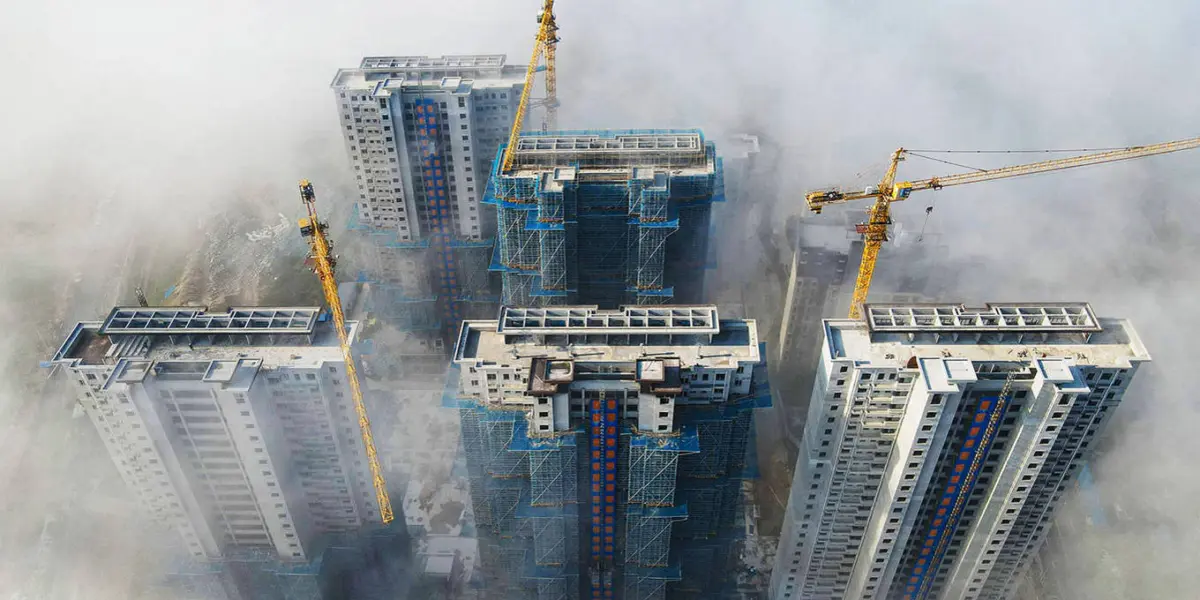
Yet, this veneer of high-tech dominance masks a more troubling reality beneath the surface. As I have noted in my previous analyses over the past several years, China is now deep into the sixth year of a full-blown, Japan-style real-estate crisis. This is not merely a localized correction; it is a structural pivot point that has fundamentally altered the trajectory of the Chinese growth model. The real-estate sector, once the primary engine of the country’s domestic investment and local government revenue, has become a significant anchor dragging down the broader economy.
The question of whether China can be both booming and stagnating simultaneously is no longer theoretical. It is the lived reality of the Chinese economy today. The country is navigating a deeply unbalanced transition, where a battered property market and chronically weak household consumption coexist with a hyper-competitive tech and export sector. The central tension lies in whether the state can manage this internal friction without triggering a broader collapse in social and political stability.
The roots of this instability are structural. For decades, China’s growth was fueled by massive investment in infrastructure and urban real estate. This model worked exceptionally well during the country’s rapid urbanization phase, lifting hundreds of millions of people out of poverty and creating a robust middle class. However, that phase has reached a point of diminishing returns. The property market crisis, characterized by excessive debt, unfinished projects, and falling land values, has eroded household wealth and severely dampened consumer confidence. When a nation’s primary store of wealth—real estate—is under siege, consumption naturally retreats.
Despite the government’s various attempts to stimulate the economy, the underlying structural issues remain stubborn. Standard stimulus packages, which have historically focused on infrastructure spending or credit expansion, are proving increasingly ineffective. They are akin to trying to jump-start an engine that has fundamental mechanical failures. The issue is not a lack of liquidity, but a lack of structural demand and a legacy of debt that prevents capital from being allocated effectively.
Meanwhile, the disparity between regions in China has become more pronounced. While the coastal hubs and Tier-1 cities continue to incubate global-class tech giants and export-oriented firms, the interior and rural regions often face significantly different economic realities. This creates a dual-track economy where hundreds of millions of citizens remain trapped in low-income brackets, largely disconnected from the high-tech, AI-driven growth that headlines state media. The dream of "common prosperity" remains a distant target, challenged by the realities of a slowing national GDP and the high costs associated with an aging population.
This leads to the crucial role of political stability. The Chinese leadership is acutely aware that its legitimacy is tied to the delivery of economic progress. If the government can maintain tight control and prevent the economic slowdown from translating into widespread civil unrest, it may well navigate this transition. A highly centralized state possesses tools that other nations do not—the ability to direct capital, stifle dissent, and manage the pace of industrial restructuring. Under this scenario, China could continue to exert significant influence on the global stage, functioning as a "global powerhouse" even as it struggles with the internal contradictions of its development model.
However, the risk remains that the stagnation in the property sector will prove to be a more permanent fixture than many policymakers hope. If the real-estate sector continues to serve as a drain on capital rather than a contributor to growth, the burden will shift entirely to the tech and export sectors. Can these sectors carry the weight of an entire nation of over 1.4 billion people? The history of economic development suggests that sustaining growth purely through high-tech exports is an incredibly difficult feat, especially as global trade tensions rise and protectionism becomes more prevalent in Western markets.
The European Union and the United States have already begun to signal that they will not remain passive as Chinese exports flood their markets at prices that domestic industries cannot match. Trade barriers, tariffs, and security concerns regarding AI and critical tech are creating a more hostile international environment for China’s industrial champions. This adds yet another layer of complexity to the "boom or bust" debate. China is effectively trying to innovate its way out of a debt-driven stagnation while simultaneously facing a more restrictive global trade environment.
Ultimately, the narrative of China’s economy is one of intense contradiction. It is a nation that has mastered the art of industrial scaling and technological adoption, yet it remains hampered by the excesses of its own past growth model. The real-estate crisis acts as a constant reminder that even the most dynamic economies are not immune to the laws of debt and cycle management.
As we look toward the future, the global economy will continue to watch China with a mix of awe and anxiety. If the political apparatus can successfully balance the competing needs of its various regions and industries, China will remain a central player in the global order. But if the stagnation in the property sector continues to bleed into the broader consumer economy, the "boom" may eventually become a faint echo of the past. For now, the world must accept that China is neither simply booming nor simply stagnating; it is in a volatile state of flux, navigating a precarious path between its past successes and an uncertain future. The outcome of this experiment will define the global economic landscape for decades to come, proving that even a superpower can be deeply conflicted by the very forces that drove its rise.










No comments yet. Be the first to join the conversation!