
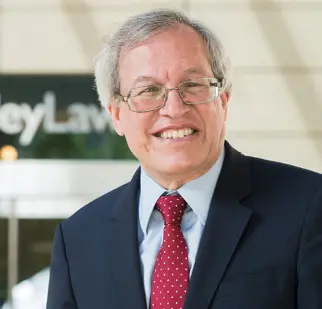
By Erwin Chemerinsky
The U.S. Supreme Court is set to hear oral arguments in a high-stakes legal battle that could redefine the boundaries of First Amendment protections and anti-discrimination mandates. The case, St. Mary Catholic Parish v. Roy, places the conservative majority’s ongoing expansion of religious freedom directly up against state-enforced civil rights protections. Over the past decade, the high court has consistently broadened constitutional safeguards for religious expression. This upcoming case could either accelerate that trend significantly or signal a willingness to permit government intervention to halt discrimination, even when those efforts infringe upon deeply held religious doctrines.
Facts of the Case
At the center of the dispute is a universal preschool education program launched by Colorado in 2023. Under the state-funded initiative, tuition is covered for children attending any participating public school, secular private school, or religious institution. To qualify for and receive these public funds, participating schools must formally agree not to discriminate against children or their families based on race, ethnicity, religion, sexual orientation, gender identity, disability, income, or housing status.
St. Mary Catholic Parish in Littleton, Colorado, alongside another Catholic preschool operating under the Archdiocese of Denver, declined to sign the required agreement. The religious institutions argued that the nondiscrimination clause directly contradicts church teachings on marriage, sex, and gender. Specifically, their objections focus on the requirement to enroll children whose parents identify as gay, lesbian, or transgender. By refusing to sign, the schools are excluded from the universal preschool program, which they contend amounts to a denial of a public benefit solely because of their religious beliefs.
The legal challenge brought by the parishes was initially rejected by a federal district court and subsequently upheld by the Denver-based 10th U.S. Circuit Court of Appeals. Both lower courts based their rulings on the landmark Supreme Court precedent Employment Division v. Smith (1990). In that foundational ruling, the high court held that the Free Exercise Clause of the First Amendment cannot be invoked to demand exemptions from neutral laws of general applicability.
The Smith ruling famously involved Native Americans who sought a legal exemption from an Oregon statute criminalizing the consumption of peyote, arguing that the substance was a central element of their religious rituals. Writing for the majority, Justice Antonin Scalia concluded that as long as a law is neutral, lacks any discriminatory motive targeting religion, and applies universally to all citizens, it cannot be successfully challenged under the Free Exercise Clause.
Applying this standard, the federal district court and the 10th Circuit determined that Colorado’s preschool nondiscrimination policy was indeed a neutral law of general applicability. The courts also rejected the argument that the state was unlawfully discriminating against religious schools regarding public funding access. Over the last several years, the Supreme Court has ruled in a trio of cases—Trinity Lutheran v. Comer (2017), Espinoza v. Montana Department of Revenue (2020), and Carson v. Makin (2022)—that the government violates the Free Exercise Clause when it denies public funding to religious schools simply because of their faith, while simultaneously offering those funds to secular private institutions.
However, the lower courts found that the Colorado framework did not discriminate against religious entities; rather, it made funds available to faith-based preschools and secular schools on identical terms.
Following these defeats, the plaintiffs petitioned the Supreme Court for a writ of certiorari, which the justices granted to address two specific questions: first, whether proving a lack of general applicability under Employment Division v. Smith requires demonstrating unfettered government discretion or categorical exemptions for identical secular conduct; and second, whether Carson v. Makin displaces the Smith rule only when the government explicitly and overtly excludes religious people and institutions from public programs.
The Application and Future of Employment Division v. Smith
The most recent major Supreme Court decision addressing the application and viability of Employment Division v. Smith was Fulton v. City of Philadelphia (2021). That case involved the City of Philadelphia’s contracting system with private social service agencies to place children into foster homes. City contracts explicitly prohibited participating agencies from discriminating on the basis of race, sex, religion, and sexual orientation.
Catholic Social Services (CSS), a long-standing participant in the foster care program, ultimately stopped taking part because of the contractual prohibition against sexual orientation discrimination. CSS argued that its religious convictions prevented it from evaluating home environments or placing foster children with same-sex couples. When the agency challenged the nondiscrimination mandate as a violation of its First Amendment rights, both the federal district court and the Philadelphia-based 3rd U.S. Circuit Court of Appeals ruled against the agency, relying heavily on Employment Division v. Smith.
In a unanimous decision, the Supreme Court reversed the lower courts and ruled in favor of Catholic Social Services. Chief Justice John Roberts authored the majority opinion, asserting that under Employment Division v. Smith, a law fails to be generally applicable if it "invite[s]" the government to weigh the specific justifications behind an individual’s conduct by establishing a "mechanism for individualized exemptions." Because the Philadelphia ordinance granted city officials discretionary authority to issue exceptions to the nondiscrimination rule, the court held that the policy was subject to strict scrutiny—regardless of the fact that no such exceptions had ever actually been granted and no evidence of anti-religious animus existed. The city ultimately failed to satisfy strict scrutiny, rendering the policy unconstitutional.
While the ruling was unanimous in its outcome, deep ideological divisions over the future of Smith itself were laid bare in concurring opinions. Justice Samuel Alito, joined by Justices Clarence Thomas and Neil Gorsuch, authored a sweeping 77-page concurrence explicitly calling for the court to overturn Smith altogether. Justice Alito argued that the 1990 precedent is indefensible, disconnected from the original public meaning of the Free Exercise Clause’s text, and inconsistent with historical understandings of religious liberty at the time of the First Amendment’s adoption.
Meanwhile, Justice Amy Coney Barrett filed a separate concurring opinion joined by Justice Brett Kavanaugh. While expressing substantial agreement with Justice Alito’s criticisms of Smith, Justice Barrett cautioned that determining an appropriate replacement test presents complex legal challenges. She maintained that the court did not need to resolve the fate of Smith in that particular litigation because Philadelphia’s policy was unconstitutional regardless of whether the precedent stood or fell.
Although the Supreme Court did not grant certiorari in St. Mary Catholic Parish v. Roy specifically on the question of whether to overrule Employment Division v. Smith, that foundational precedent looms large over the entire proceeding.
Petitioner St. Mary’s Catholic Parish is explicitly urging the court to discard Smith. In its primary legal brief, the parish contends that the high court rarely applies the precedent in practice, noting that out of 18 free exercise cases resolved by the court since 1990, Smith has been utilized to rule against religious objectors only twice—one of which was the Smith decision itself.
This dynamic brings to the forefront a profound constitutional dilemma: should personal or institutional religious beliefs serve as a valid legal basis for securing exemptions from civil rights and anti-discrimination statutes? Decades ago, in Newman v. Piggy Park Enterprises, Inc. (1968), the court summarily dismissed the notion that private religious convictions could justify violating public accommodations laws prohibiting racial discrimination. If the current court chooses to overrule Smith, or if it mandates strict scrutiny review under existing exceptions, it will be forced to confront the broader question of whether the free exercise of religion entails a constitutional right to engage in conduct that harms or discriminates against others.
The Denial of Funding
For generations, the Supreme Court’s jurisprudence surrounding government aid to religious institutions was dominated by concerns over the Establishment Clause of the First Amendment. However, over the past decade, the ideological balance of the court has shifted this focus dramatically toward the Free Exercise Clause. The justices have repeatedly ruled that withholding public funding from religious schools while making those same funds available to private secular schools violates the First Amendment.
A prime example is the court’s 2022 ruling in Carson v. Makin, which held that Maine violated the Free Exercise Clause by excluding sectarian religious schools from a tuition assistance program designed for families living in rural districts lacking public high schools.
In the Colorado preschool case, the district court and the 10th Circuit defended the state’s law by pointing out that the funding program treats all eligible preschool providers—public, secular private, and faith-based—on identical terms. St. Mary’s Catholic Parish counters that the practical effect of the law is to penalize the school for living out its religious tenets, effectively denying it public funds because it refuses to comply with mandates concerning sexual orientation and gender identity.
Previous funding cases considered by the high court involved state programs that explicitly singled out and excluded religious institutions by name. The Colorado statute contains no such explicit exclusion. The central question before the justices is whether the mere effect of a neutral funding program denying resources to a school with religious objections to non-discrimination terms constitutes a standalone violation of the Free Exercise Clause.
Conclusion
In recent years, the conservative majority on the Supreme Court has systematically narrowed the scope of the Establishment Clause while substantially expanding the protections afforded by the Free Exercise Clause. The court has demonstrated a growing willingness to accommodate individuals and institutions seeking exemptions from anti-discrimination laws on religious grounds. St. Mary Catholic Parish v. Roy will serve as a critical indicator of whether the judiciary is prepared to push this constitutional doctrine even further down that path.
Erwin Chemerinsky is dean of the University of California at Berkeley School of Law. He is an expert in constitutional law and the author of numerous books, including Campus Speech and Academic Freedom: A Guide for Difficult Times and The Supreme Court October Term 2024: Taking Sides.







No comments yet. Be the first to join the conversation!