

By Ana Palacio
October 29, 2026
The current generation of young Europeans finds itself at a unique historical juncture. Possessing freedoms, material resources, unparalleled opportunities to traverse borders, and technological capabilities that would have seemed like science fiction to their grandparents, they are, by any objective measure, the most empowered cohort in the history of the continent. Yet, beneath this veneer of modern prosperity lies a profound sense of disenfranchisement. Their demands are not ideological crusades for a radical new world; they are, in their simplicity, hauntingly urgent: they want decent schools, secure jobs, affordable housing, and the fundamental ability to raise a family without the crushing weight of existential economic anxiety.
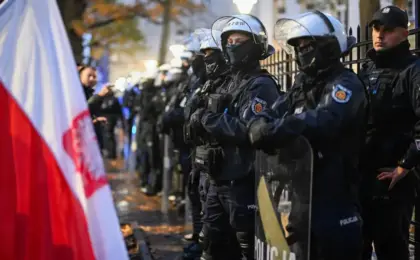
Across France, a wave of student-led protests has surged through the streets, creating a spectacle that, to the casual observer, bears a striking resemblance to the seismic events of May 1968. The imagery is eerily familiar: vast, surging crowds of demonstrators marching through historic boulevards, demanding sweeping education reform, openly challenging the legitimacy of the government, erecting barricades to halt the flow of urban life, and finding themselves in direct, often violent, confrontations with riot police. As in the past, these protests have also drawn the presence of casseurs—agitative elements who exploit the chaos of the crowd to engage in destruction, looting, and vandalism, thereby muddying the message of the peaceful majority.
However, beneath these aesthetic and tactical echoes of the past, the core motivation driving these protests represents a fundamental shift in the European social contract. While the students of 1968 were defined by a revolutionary fervor aimed at dismantling the established order to build a utopian society, today’s protesters are driven by a far more conservative, if equally desperate, objective: they want the established order to actually function. They are not looking to burn the system down; they are demanding that the system finally deliver the promises of stability and mobility that it has long touted but increasingly failed to provide.
The historical gravity of the May 1968 protests remains a potent symbol in the French psyche. It was a moment of cultural rupture, a time when youth culture sought to overthrow the paternalistic structures of the post-war era. Those protesters were fueled by a rejection of materialism and an aspiration for radical personal and political liberation. Today’s demonstrators, conversely, are not questioning the validity of the state or the mechanisms of capitalism; they are questioning why those mechanisms are no longer accessible to them. The disconnect is not one of ideology, but of opportunity.
The modern European landscape is one of high expectations and hardening realities. The generation currently filling the streets has been raised on the promise of a meritocratic, interconnected Europe. They have been educated to believe that with the right degree, the right skills, and the right attitude, they would inherit a stable professional life. Yet, as they step into adulthood, they are met with a rigid labor market that frequently relies on precarious, short-term contracts. The "secure job," a staple of their parents’ generation, has increasingly become a luxury.
This professional insecurity is compounded by the housing crisis. In major urban centers across Europe—and particularly in cities like Paris—the cost of living has skyrocketed, far outpacing wage growth. For many young people, the prospect of purchasing a home or even renting a stable, independent living space has become a distant, if not impossible, dream. When the fundamental pillars of adulthood—a reliable paycheck and a place to call home—are unreachable, the social contract effectively dissolves.
This disillusionment is particularly acute in the realm of education. Students are increasingly questioning the return on investment of their academic pursuits. As they witness the disparity between the skills they are acquiring in institutions and the realities of a shifting, volatile economy, the demand for "decent schools" has taken on a deeper meaning. It is not just about curriculum or funding; it is about relevance and the promise of a future that matches the effort invested in their education.
The presence of the casseurs in these protests poses a significant challenge for the student leaders and the government alike. Their destructive actions often dominate the headlines, distracting from the core grievances of the demonstrators and providing a pretext for authorities to delegitimize the movement through the use of force. The recurring cycle of demonstration, property damage, and police intervention creates a polarized environment where the real issues—stagnant wages, housing shortages, and education reform—are pushed to the periphery of the public discourse.
Furthermore, the government’s response to these protests reflects the broader tension between maintaining public order and addressing the underlying socio-economic discontent. The deployment of riot police and the use of heavy-handed tactics can provide a short-term sense of control, but they do little to resolve the grievances of a generation that feels left behind. If the state continues to focus solely on the symptoms of the protest—the blockades and the destruction—rather than the root causes, the potential for sustained social friction will only increase.
This is not merely a French phenomenon. Across Europe, we are seeing the symptoms of a generation that feels it is being denied the path to a conventional life. From the housing protests in Spain to the youth-led climate and labor movements in Germany and Italy, the common thread is a sense of exclusion. The "European Dream"—the promise of a stable, prosperous, and secure future—is being put to the test.
For the current leadership, the challenge is clear: they must find a way to reconcile the needs of the younger generation with the constraints of a complex, globalized economy. This will require more than just rhetoric; it will require concrete policy shifts that address the structural barriers to social mobility. It requires a rethink of how we prepare students for the labor market, how we regulate housing to ensure affordability, and how we ensure that the next generation has a stake in the success of the society they are inheriting.
The students currently marching are not asking for a revolution; they are asking for an inclusion. They are asking why, with all the technological and economic progress that has defined their lives, the basic milestones of adulthood—work, home, family—are slipping out of reach. They are demanding that the institutions that claim to represent them finally recognize the reality of their struggles.
As the smoke from the protests begins to clear in the streets of France, the question that remains is whether this movement will lead to a productive dialogue or whether it will fade into the background, leaving the underlying frustrations to simmer until the next eruption. History shows that when a generation feels that the established order no longer serves them, they will eventually find a way to make themselves heard. Whether those in power choose to listen or to suppress will define the social and political trajectory of Europe for years to come.
Ultimately, the demands of these young people are a testament to their belief in the system. They still believe that the system can provide for them; they are simply demanding that it start doing so now. It is a plea for stability in an age of uncertainty, a request for a future that is not just promised, but attainable. The challenge for modern European governance is to prove that this promise is not a relic of the past, but a viable reality for the future.








No comments yet. Be the first to join the conversation!