
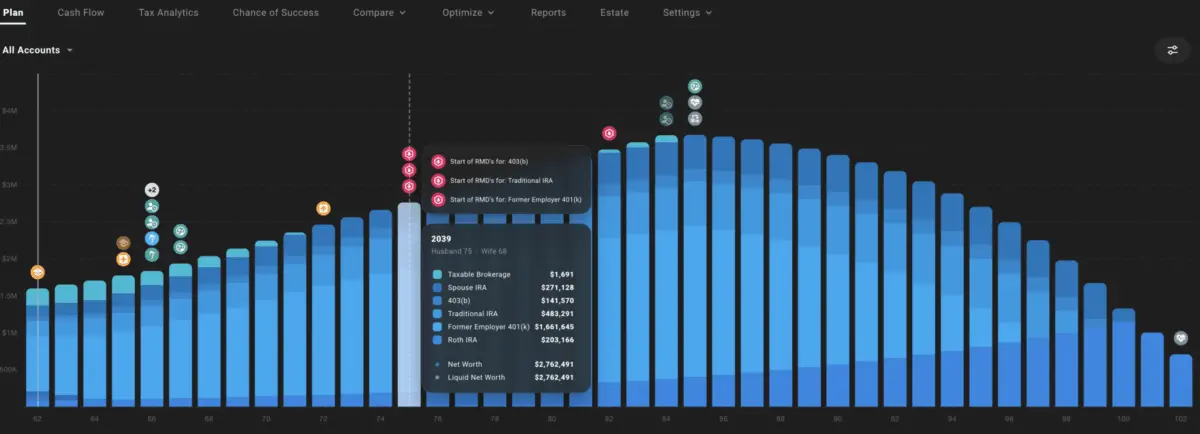
Since launching in April 2021, retirement and financial planning software ProjectionLab has evolved from an early-stage tool into a mature, deep planning platform. Created by Kyle Nolan, the platform allows individuals to build a detailed model of their financial lives, project net worth year by year, and stress-test their future against various market conditions and life events.
Over five years of steady development, the software has expanded far beyond basic forecasting. While maintaining its core mission of helping users map out financial independence, early retirement, and long-term security, it has incorporated advanced capabilities covering tax optimization, cash-flow visualization, estate planning, and international support.
What Is ProjectionLab?
ProjectionLab is built for individuals who want to map out their financial future in granular detail without relying on complicated spreadsheets. Users enter their current financial standing, including accounts, income streams, and regular expenses, along with future milestones. The software then projects net worth, income, expenses, and taxes year by year, spanning all the way through retirement and to the end of a given plan.
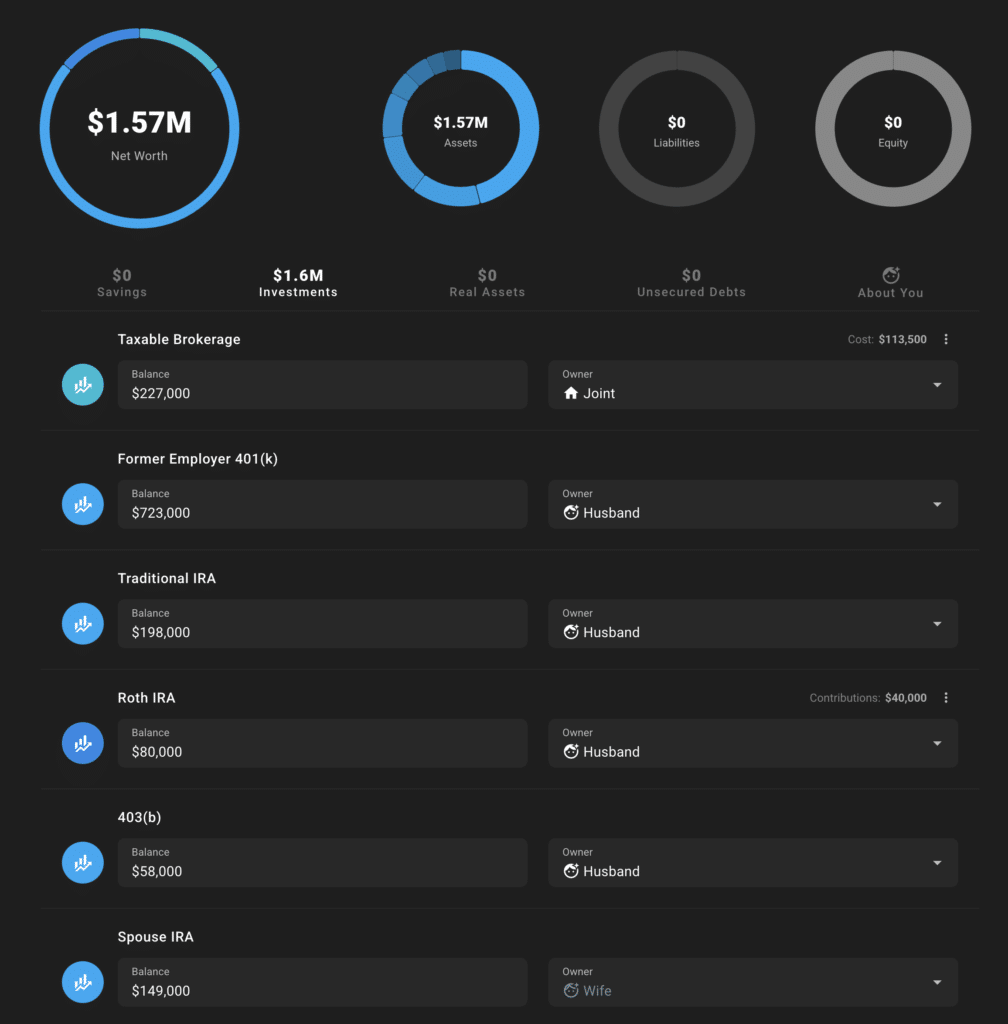
One of the defining aspects of ProjectionLab is its privacy-first approach. Unlike many budgeting and financial aggregation tools on the market, it does not require users to link their bank and brokerage accounts. Instead, users enter and update their figures manually on their own schedule. The company’s philosophy centers on treating the user as the customer rather than the product, meaning it does not sell user data or display advertisements. For many privacy-conscious planners, this minor trade-off in manual data entry is well worth the added security.
How ProjectionLab Works
Users can access ProjectionLab without creating an account via a free Basic version. This tier allows individuals to build a preliminary plan and run core forecasting, Monte Carlo simulations, and historical backtesting. However, the Basic version does not save data between sessions, and more advanced tools—such as cash-flow projections, tax optimization, withdrawal strategies, and estate planning—require a paid Premium subscription.
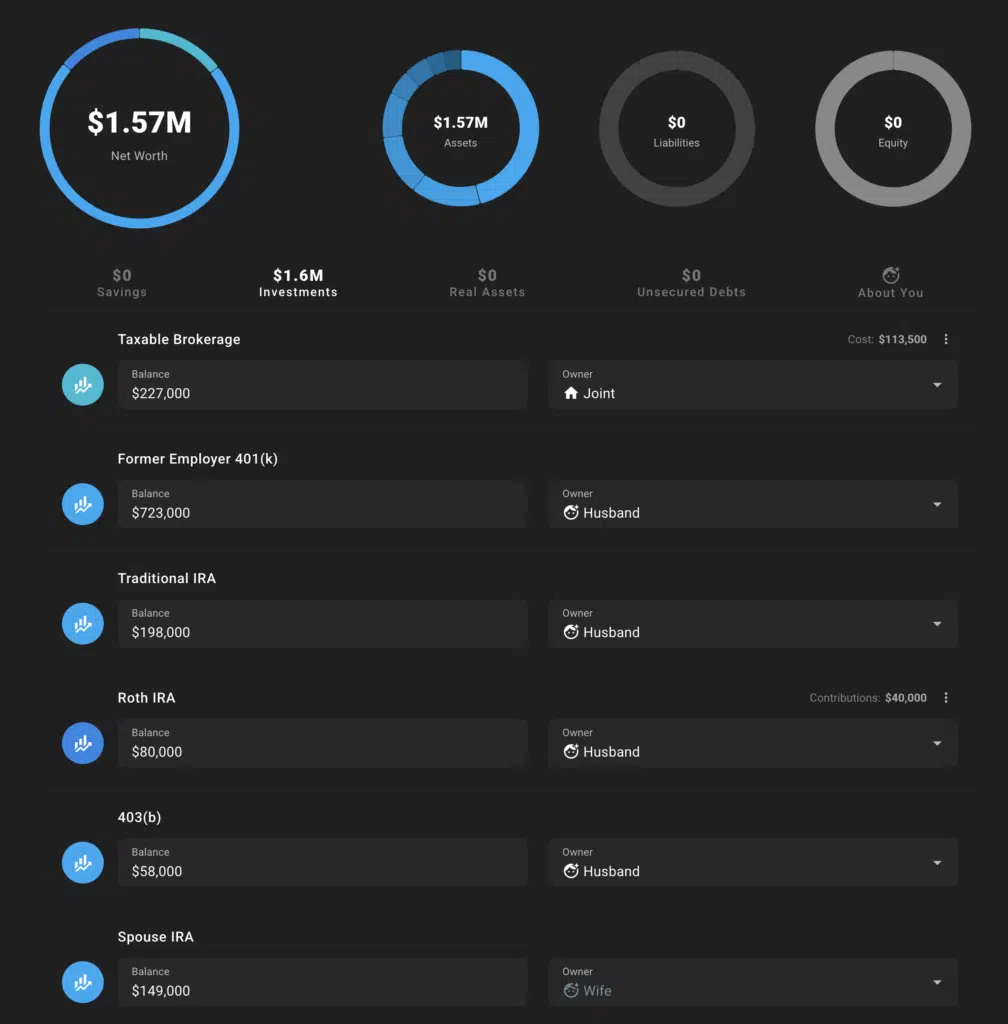
Building a plan follows a logical progression, beginning with the entry of current assets. Users input savings, taxable investments, retirement accounts, health savings accounts, 529 plans, real assets like real estate, and digital assets such as cryptocurrency. The platform supports a wide array of specific U.S. account types, including traditional and Roth variants of 401(k), 403(b), 401(a), and 457(b) accounts, providing the necessary detail for subsequent tax calculations and required minimum distributions.
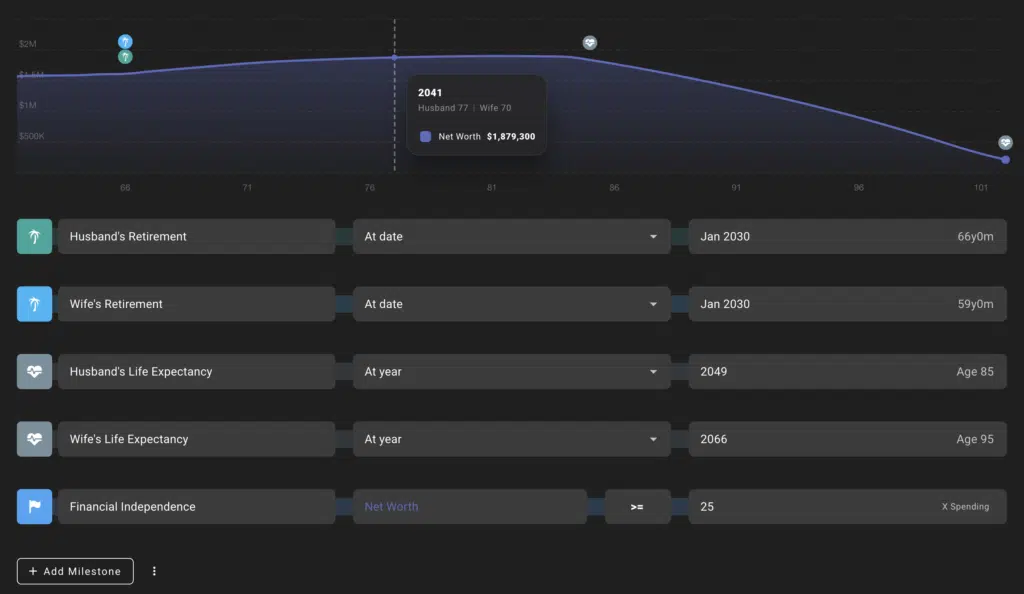
The next phase involves setting milestones, which represent major life events such as retiring, purchasing a home, having a child, relocating, or transitioning a spouse out of the workforce. Users assign an age or year to each event to shape their trajectory toward financial independence. Following milestones, users input income sources—ranging from salaries and side hustles to Social Security and pensions—alongside expenses, which can be categorized as essential or discretionary to facilitate flexible spending models.
Cash flow is managed through a dedicated section where users establish priority orders for their capital. This dictates how surplus funds are allocated each year, whether toward paying down debt, building an emergency fund, maximizing retirement accounts, or contributing to taxable portfolios. Once these inputs are established, ProjectionLab generates a comprehensive timeline of the user’s financial future, allowing them to instantly observe the impact of altering assumptions.
Key Features and Capabilities
ProjectionLab has significantly broadened its feature set since its initial release, transforming from a simple projection utility into a full planning suite.
For risk assessment, the platform runs Monte Carlo simulations that process thousands of simulated market scenarios to calculate a percentage chance of success, defined as the likelihood of not running out of money. It also provides historical backtesting, evaluating plans against real historical market sequences to help users compare different strategies under varying economic conditions.
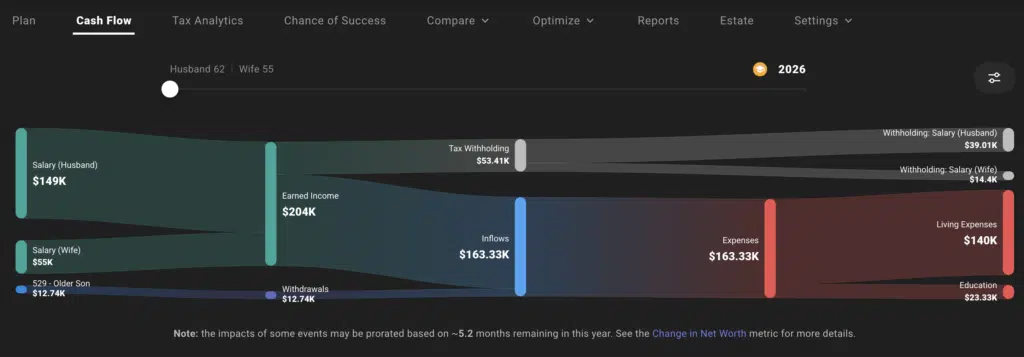
To visualize day-to-day finances, a cash-flow visualization feature uses Sankey diagrams to map out how money moves through a plan in any given year. Users can trace incoming funds directly to taxes, expenses, and savings, offering a clear picture of overall cash management.
Tax planning has grown into one of the platform’s primary strengths. The software models federal and state income taxes, capital gains thresholds, Roth conversions, and capital gains harvesting. This level of modeling enables users to actively manage their tax liabilities throughout retirement, a critical component of long-term wealth preservation.
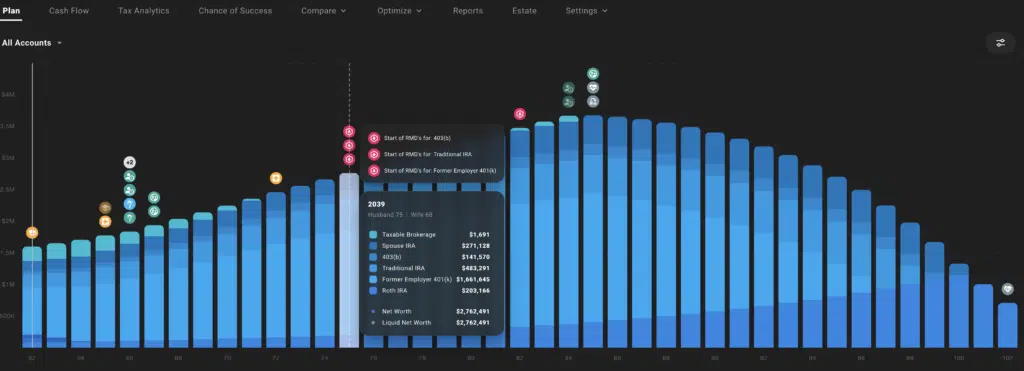
Additional capabilities include customizable withdrawal strategies that allow users to define the exact order of account drawdowns, alongside variable spending methods that adjust based on portfolio performance. The estate planning component estimates end-of-life legacies, models federal estate taxes, and incorporates charitable giving strategies like Qualified Charitable Distributions and Donor-Advised Funds. Furthermore, a Compare and What-If mode enables users to overlay multiple plans side by side to evaluate alternative paths—such as retiring early versus working longer, or paying down a mortgage versus investing.
Beyond the United States, ProjectionLab has introduced international support, featuring tax presets and account types for a growing list of countries, including Canada, the United Kingdom, Australia, the Netherlands, and Germany.
Pricing Structure
ProjectionLab operates on an annual billing model across three tiers, with no monthly or lifetime options available.
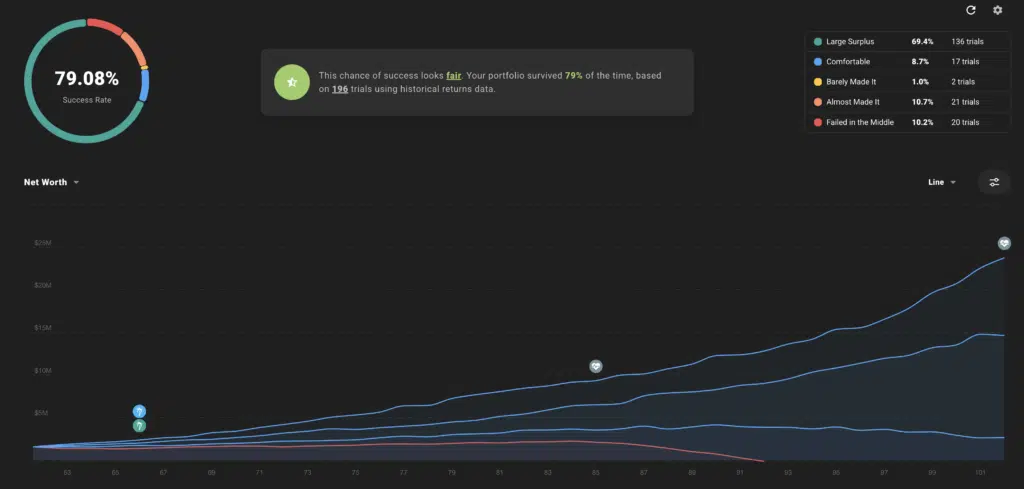
The Basic tier is free and provides access to forecasting, Monte Carlo simulations, and historical backtesting, though it lacks data persistence and advanced planning features.
The Premium tier is priced at $129 per year and is designed for individual planners. It preserves user data between sessions and unlocks cash-flow projections, tax optimization tools, withdrawal strategies, estate planning, Compare mode, international planning options, and downloadable reports. Both paid tiers include a seven-day free trial.
A Pro tier is also available at $549 per year, tailored specifically for financial advisors and coaches. It includes a client dashboard and ten initial client seats, with options to scale further.
Alternatives and Target Audience
While ProjectionLab is widely regarded for its depth and flexibility, it exists alongside other financial planning tools. Platforms like Empower focus heavily on automated account aggregation and net worth tracking, whereas traditional financial planning software often targets certified professionals or relies on complex spreadsheet models. ProjectionLab carves out a distinct space by offering advanced analytical capabilities within a consumer-friendly interface, making it especially popular among the financial independence and early retirement (FIRE) community.
The platform is best suited for hands-on planners who prefer managing their own financial models and testing various scenarios in detail. Conversely, it is less ideal for individuals seeking automated budgeting or those who prefer a completely hands-off approach managed by a third party. Support is provided through online channels, including an active Discord community, email, and optional paid one-on-one video consultations.









No comments yet. Be the first to join the conversation!