
In the volatile lead-up to the midterm elections, artificial intelligence giant OpenAI made a strategic maneuver that signaled a broader shifting tide in Silicon Valley: the company hired Jessica Schumer, the daughter of prominent Democratic Senator Chuck Schumer. Simultaneously, OpenAI announced it would begin referring to its massive data center hubs as "compute campuses," a rebranding effort that mirrors a wider corporate push to soften the image of infrastructure projects facing mounting local scrutiny.
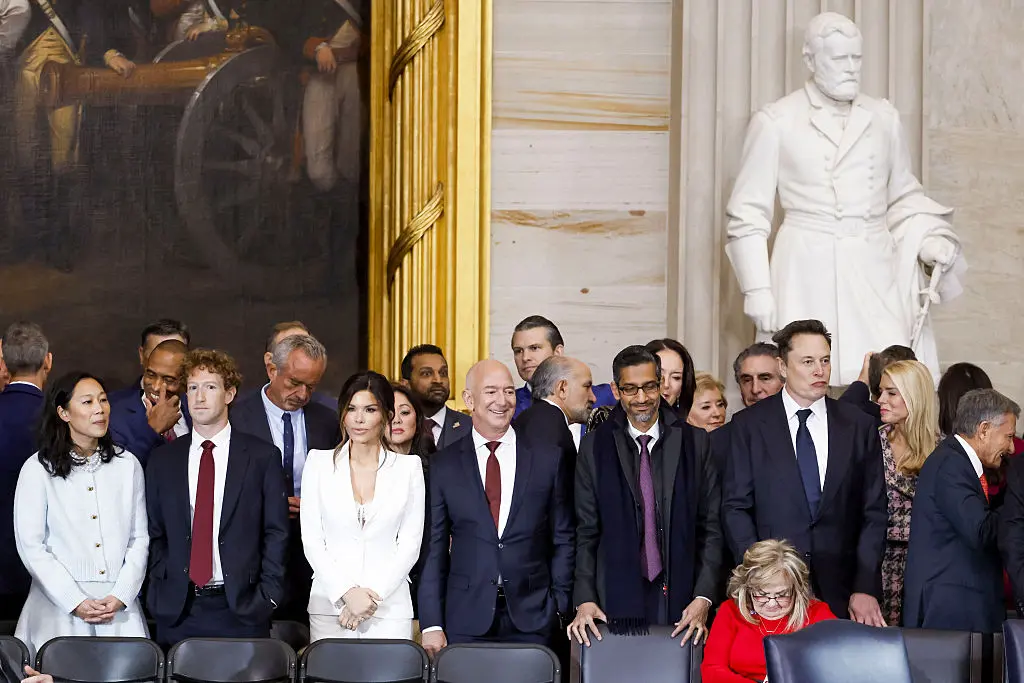
These moves are part of a larger, calculated pivot across the technology sector. For the past two years, many of Silicon Valley’s most influential companies and executives leaned heavily into a cozy relationship with President Donald Trump and his administration. During this period of alignment, several tech leaders attended exclusive White House events, scaled back internal diversity, equity, and inclusion (DEI) initiatives, and poured millions of dollars into super PACs supporting the president’s campaign and allied congressional candidates.
This corporate realignment paid dividends for the industry. The Trump administration delivered tangible policy benefits, including lucrative tax breaks, the pausing of several federal antitrust and regulatory investigations, and a generally permissive approach to AI oversight. While smaller tech firms and traditional media enjoyed a friendly regulatory climate, some major players still faced friction—Meta wrestled with high-stakes lawsuits and billion-dollar fines, and OpenAI confronted legal challenges alleging its generative models harmed everyday users.
Now, with the midterms shifting the balance of political power in Washington, those exact same companies are scrambling to rebuild bridges with Democrats. Democratic lawmakers have long pledged to implement much stricter oversight of artificial intelligence, consumer data privacy, and corporate market power. However, industry insiders note that how far these sudden diplomatic efforts will get tech companies may depend less on superficial image-polishing and far more on the actual battlegrounds where the real fights are taking place: in state capitols, in local communities debating whether to host massive data centers, and on Wall Street, where jittery markets are closely monitoring the financial health of the artificial intelligence boom.
J.B. Branch, director of federal AI governance and technology policy at Public Citizen, a nonprofit advocacy group that operates on a nonpartisan basis, argued that the technology sector is facing an undeniable public relations crisis.
"They realize they have an optics problem," Branch said, characterizing recent maneuvers like the Schumer hire and corporate infrastructure rebranding as little more than "PR washing." He warned that observers should expect to see significantly more of these corporate cosmetic changes moving forward, pointing to a range of pre-existing and newly minted initiatives. These include OpenAI’s high-profile partnership with the American Federation of Teachers announced last year, Anthropic’s recently launched Claude Corps, and Meta’s America’s Workforce Academy. "I would imagine more of that sort of investment in these corporate, private-public partnerships," Branch added.
These calculated outreach efforts did not materialize overnight. According to industry insiders, Meta and other major tech conglomerates quietly began seeking pathways to strengthen their relationships with Democratic lawmakers as polling and political indicators made Democratic gains in the midterms increasingly likely.
Asked about the direct impact of the midterm election outcomes on Meta’s policy and lobbying strategy, a company spokesperson directed attention toward remarks made by Meta President Dina Powell McCormick at the recent WSJ Tech conference.
"You have to work with the government that the American people elect," McCormick said during the event. "I have seen it across the board that you have to be bipartisan, and you want to be, because you want buy-in on the things that you’re trying to do."
Despite these diplomatic overtures, skepticism remains high regarding whether Big Tech can successfully court a political party increasingly critical of its business practices. Alice Marwick, director of research at the tech policy nonprofit Data & Society, suggested that while major technology corporations are eager to pivot back toward the political center—or even court the left—the strategy may ultimately fall flat.
"It’s a little too late," Marwick said. "Tech companies should be asking themselves how their products can make people’s lives better, because right now, it doesn’t seem like they are."
If congressional Democrats follow through on their campaign pledges to establish rigorous oversight of artificial intelligence and hold major technology platforms accountable, the industry could quickly find itself navigating a significantly more hostile federal environment. Already, local moratoriums on massive data center developments are gaining serious traction nationwide, while a massive wave of state-level AI regulation bills awaits drafting and debate.
During the same WSJ Tech event where Meta’s Dina Powell McCormick emphasized the necessity of bipartisanship, she also addressed the growing grassroots pushback against data center expansion. Meta wants to demonstrate that communities welcoming its massive investments will witness "an enormous amount of benefit," she argued, while communities that reject the projects "will of course have the right to stop them."
Yet, political analysts warn that the next two years could easily bring profound political gridlock to Washington, potentially rendering federal legislative action difficult. Aryan Ranjan, founder of Baraza, a political campaign management software company, suggested that the vast majority of meaningful regulatory action will likely play out at the state level, particularly given that state attorneys general have already launched lawsuits against tech giants and enacted independent regulations.
"A coalition built on newer, working-class voters is likely to push Democrats to frame AI around electricity bills, data-center siting and jobs rather than abstract AI safety," Ranjan said, forecasting the primary vectors of political pressure at the federal level.
This tension between state and federal authorities has been brewing for months. Last December, the Trump administration signed an executive order establishing the AI Litigation Task Force, a specialized federal group explicitly designed to challenge and invalidate state-level artificial intelligence laws. The administration has consistently maintained the position that U.S. artificial intelligence companies "must be free to innovate without cumbersome regulations." Despite the federal push for deregulation, numerous states have successfully passed their own independent laws, implementing strict rules governing consumer chatbots, deepfakes, and automated decision-making systems.
It remains to be seen precisely how President Trump will respond to the changing legislative landscape, including whether he will utilize executive orders to bypass Congress or veto bipartisan bills that the technology industry views as hostile to innovation. What remains clear, however, is that voters across the political spectrum are increasingly demanding stronger regulatory guardrails around rapidly advancing technologies.
In an official statement provided to TechCrunch, a White House spokesperson defended the administration’s overarching posture toward the sector.
"American leadership in super intelligence is essential for our national security, economic prosperity, and the quality of life of the American people," the official said. "President Trump is committed to ensuring America continues to lead the world in super intelligence while protecting American consumers. As the President has said, he’s willing to work with anyone to continue delivering victories for hardworking Americans."
However, Public Citizen’s J.B. Branch cautioned that President Trump’s own political fortunes are now inextricably tied to the volatile financial health of the artificial intelligence industry. The day following the midterm elections, a staggering trillion-dollar market sell-off rattled investors across Wall Street, with some financial institutions reportedly reconsidering their participation in Anthropic’s rumored trillion-dollar initial public offering.
"There’s a very strong likelihood that there will be an AI bubble pop, and it’ll happen on Trump’s hands," Branch said, predicting a potential market correction or collapse. "Does he want to sink or swim along with the AI industry?"
For the immediate future, technology companies navigating this shifting political and economic terrain may find that national debates matter far less than local realities. As Ranjan noted, for the next two years, a company’s operational rules and restrictions may depend far more on the specific jurisdiction where it operates than on any overarching legislation passed in Washington.






No comments yet. Be the first to join the conversation!