
Meta’s Superintelligence Lab has officially entered the frontier AI arena, unveiling a pair of advanced models dubbed Muse Wonder and Muse Wonder Full. Released on Monday, the high-performance systems represent the company’s first definitive attempt at a true frontier model, signaling a significant shift in its artificial intelligence strategy following a period of internal reorganization and a focus on lightweight efficiency.
Where earlier iterations like Muse Spark were engineered primarily as lightweight, low-latency models for rapid task execution, the new Wonder models are substantially larger and considerably more capable. According to benchmark testing released alongside the models in Meta’s official model card, the Wonder systems deliver higher benchmark scores and significantly better results on complex computational tasks, including advanced software coding.
In internal and standardized evaluations, Wonder and Wonder Full achieve competitive benchmark scores that place them on par with industry counterparts such as Fable 5.1 and GPT-6 Astra. Meta executives and researchers view this release as a pivotal milestone in the company’s long-term roadmap.
“Together, they mark the next step on our scaling ladder and a major leap toward personal superintelligence,” Meta stated in its official blog post introducing the models.
This substantial increase in scale and capability is directly reflected in the commercial pricing structure for the software. Accessed via the Meta Model API, the standard Wonder model will cost developers $4 per million input tokens and $20 per million output tokens. This pricing tier positions the model as roughly equivalent in cost to competitor offerings like GPT-6 Sol or Opus 5.5.
However, distribution for the flagship system differs. Muse Wonder Full will not be served through the standard API; instead, access will be restricted exclusively to Muse Code subscribers. Furthermore, both Muse Wonder and Muse Wonder Full will serve as the underlying intelligence powering the broader Muse agent ecosystem.
In keeping with Meta’s long-standing strategic interest in developing autonomous personal assistants capable of executing complex tasks over extended periods, the company placed particular emphasis on the new models’ ability to retain and synthesize user information over time. Meta refers to this proprietary capability as “active memory.”
To achieve superior recall and long-term context retention, Meta highlighted the MemoryBench benchmark, a rigorous evaluation framework designed to challenge continual learning and memory construction in artificial intelligence systems. According to the company’s testing data, Muse Wonder now achieves higher performance scores on MemoryBench than competing frontier models such as Fable, Opus, or Astra.
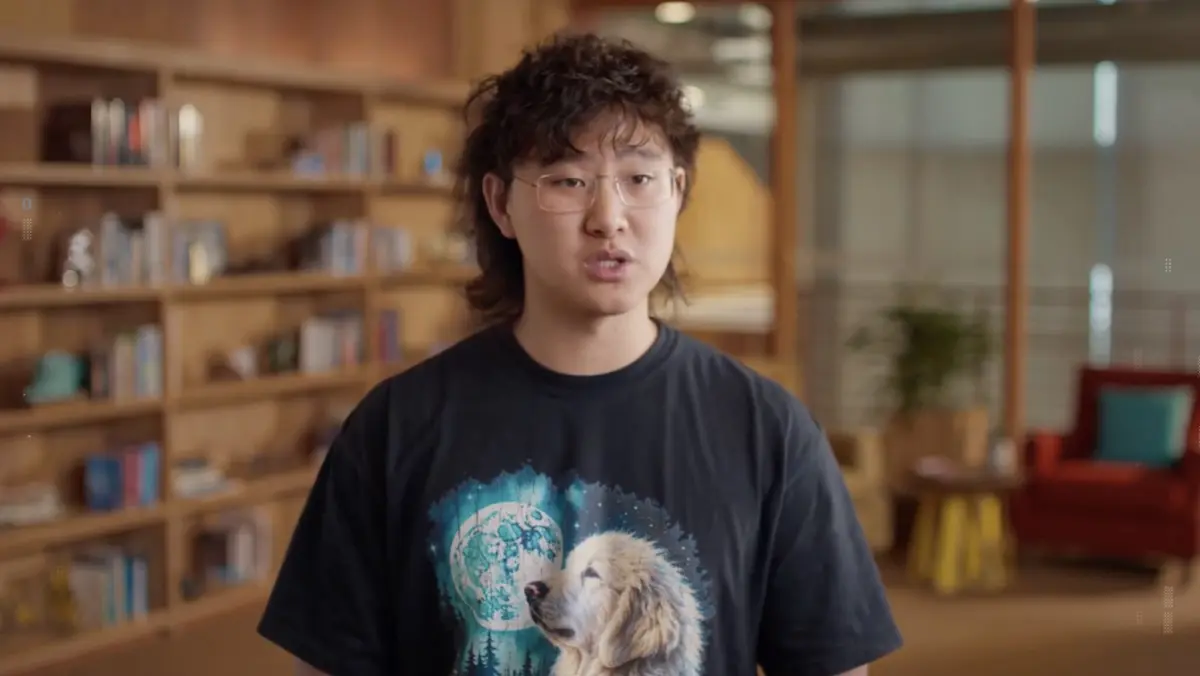
“We put a tremendous amount of effort into making sure your model can remember what’s important to you over days, weeks, months, and beyond,” said research scientist Kavya Kopparapu in an accompanying video released for the launch.
The debut of the Muse Wonder models marks the first major frontier release since Scale AI founder Alexandr Wang restructured Meta’s overarching artificial intelligence efforts in August of last year. Following that strategic reorganization, Meta concentrated its public-facing deployments on lightweight infrastructure, releasing the Muse Spark model and the Muse agent while deliberately avoiding the high-end, state-of-the-art frontier model releases that have defined the commercial strategies of rivals like OpenAI and Anthropic.
The training process for the new models required immense computational power, drawing on the infrastructure of Meta’s Prometheus data center located in central Ohio, which officially came online earlier this year. As the highest-capacity data center in Meta’s growing network, the Prometheus facility provided the necessary computational throughput to train models of this scale and complexity.
As these systems roll out to developers and subscribers, they will test the market appetite for Meta’s vision of active memory and long-term personal assistance, setting the stage for the next competitive phase in the rapidly evolving landscape of artificial intelligence.










No comments yet. Be the first to join the conversation!