
The political honeymoon between Europe’s nationalist figures and the White House is showing unmistakable signs of strain. Following a wave of severe Republican losses in the U.S. midterm elections, some of Europe’s most prominent right-wing and populist leaders have begun visibly distancing themselves from President Donald Trump and his policies.
These tactical retreats, though measured, mark a striking departure from how eagerly Europe’s right-leaning figures previously celebrated their ideological ties with Washington. When Trump returned to the White House in January 2025, Italian Prime Minister Giorgia Meloni and Santiago Abascal, the leader of Spain’s far-right Vox party, were among the prominent European lawmakers invited to celebrate his Inauguration Day.
Yet, the political tide appears to be turning. While left-leaning European leaders have openly celebrated the Democrats’ gains in the U.S. midterms, far-right figures across the continent are showing a sudden and keen interest in separating their domestic fortunes from Trump and the broader MAGA platform.
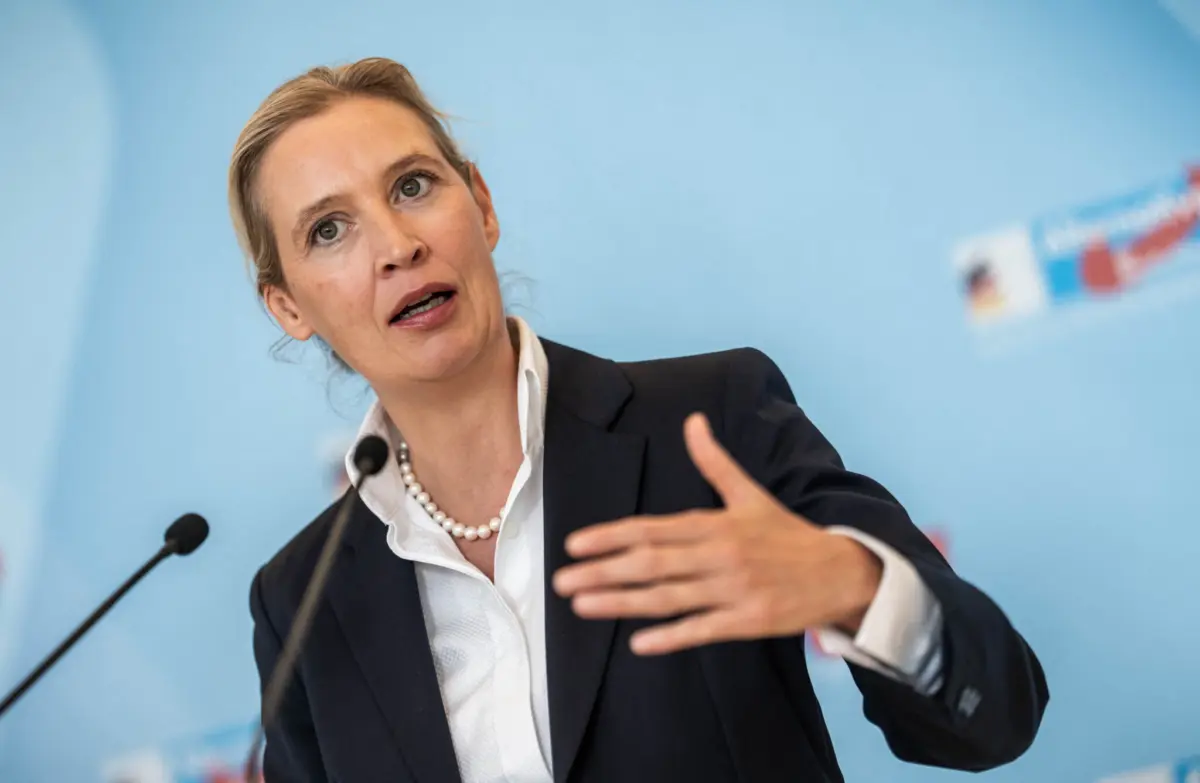
The immediate catalyst for this growing friction is foreign policy. When Trump campaigned for his second term, he promised voters a non-interventionist foreign policy that would avoid dragging the United States into costly foreign conflicts, focusing instead on domestic prosperity. However, the U.S. war with Iran, which is now stretching into its ninth month, has directly contradicted that foundational campaign pledge. This broken promise became a central talking point for Alice Weidel, co-leader of Germany’s far-right Alternative for Germany (AfD) party, as she assessed the fallout from the GOP’s midterm defeats.
"Trump had promised his voters he would not pursue an interventionist foreign policy," Weidel told Germany’s T-online outlet. "This broken campaign promise has now come back to haunt the Republicans."
While Weidel acknowledged the historical trend that the political party controlling the White House typically loses congressional seats during midterm cycles, she argued that the sheer scale of the Republican defeat "is remarkable" and can be explained primarily by the "devastating consequences of the Iran war."
Her commentary signaled a notable tonal shift for a party that has frequently welcomed the support of the Trump administration, both overtly and covertly. Weidel met with Vice President J.D. Vance in February 2025, just days before a pivotal German election. During that diplomatic trip, Vance addressed the Munich Security Conference, using his platform to criticize Germany’s "firewall" approach—the long-standing agreement among mainstream German political parties refusing to cooperate with the AfD.
In another high-profile display of transnational backing, billionaire Elon Musk, while leading the Trump administration’s now-defunct Department of Government Efficiency (DOGE), made a virtual appearance at an AfD campaign event. Following an AfD state election victory in September, Trump himself praised the outcome, criticizing Germany’s immigration policies by declaring, "The populist party in Germany just had a really big night. They finally got tired of the absolutely horrible immigration rules and regulations, which have hurt Germany."
A Political Shift From Europe
Further efforts to create daylight between European populists and the MAGA brand emerged from France. Jordan Bardella, president of France’s far-right National Rally, was asked about the Republicans’ midterm setbacks during a French radio broadcast. He pointed directly to the "American intervention in Iran" as having carried "very heavy consequences" for international economies.
"What is certain is that Donald Trump’s second term differs quite significantly, in its philosophy and foreign policy, from his first, during which his political ambition was to withdraw the United States from major global conflicts," Bardella noted.
Georgios Samaras, an assistant professor of public policy at King’s College London, told TIME that the magnitude of the Republican defeat sent "shock waves across the continent."
"After two years of catastrophic economic management, [Trump’s] international standing is gone. It’s practically like the far-right [is] losing their global leader," Samaras said, adding that Trump’s electoral setback will likely be interpreted across Europe as "a gift to all liberals."
In Spain, Santiago Abascal—who faces a high-stakes snap election at the end of November—simultaneously sidestepped questions regarding the U.S. midterms.
"I’m not in Michigan to analyze an election, I’m in Ciudad Real. And considering the November 29th elections, I couldn’t care less about what happens in other countries," he told reporters.
Abascal’s current reticence contrasts sharply with the close alliance he nurtured with Washington just last year. During the 2025 Conservative Political Action Conference, Trump publicly praised Abascal for doing a "great job" in Spain. Furthermore, in 2022, Trump made a virtual appearance at one of Abascal’s major political rallies in Madrid.
When approached for comment regarding how Europe’s far-right leaders have reacted to the GOP’s midterm losses, White House deputy press secretary Anna Kelly defended the administration’s record, telling TIME: "President Trump has effectively restored American strength on the global stage and strengthened relationships with world leaders."
Aurlien Mondon, a professor of politics at the University of Bath who specializes in reactionary politics, noted that far-right parties in Europe have historically benefited from "transnational cooperation" with the MAGA movement. This cooperation has spanned years, ranging from Trump ally Steve Bannon’s early efforts to bolster right-wing parties in Europe to the Trump administration’s overtly antagonistic posture toward Europe’s mainstream political establishments. Trump’s ideological influence has also stretched into regional campaigns, with British ally and Reform UK leader Nigel Farage staging MAGA-style rallies during local elections in England.
"These kinds of transnational networks have served [the far-right] well in many ways, and it allowed them to mainstream their politics," Mondon observed. However, he warned that such alliances are fundamentally transactional, opportunistic, and limited in scope. "At the end of the day, these parties are about the nation, and so they can very easily detach themselves from the failures of their counterparts elsewhere."
Signs of Strained Relations Between Trump and European Allies
The growing distance between the White House and its far-right European counterparts is not entirely unprecedented, as underlying tensions have simmered for months.
Mujtaba Rahman, managing director for Europe at Eurasia Group, a political-risk consultancy, observed that "far-right leaders across the European continent have been distancing themselves from MAGA for quite some time."
"It’s been clear to different persuasions of the far-right in the E.U. that association with the Trump brand, the MAGA brand, is an electoral liability," Rahman explained. "That happened in the aftermath of Trump’s Greenland pronouncements, and the aftermath of the war in Iran, and the impact that’s having on cost-of-living issues, which is a key political issue."
Back in 2024, Jordan Bardella openly stated that his "heart leans toward Trump." Yet, he has since broken ranks to criticize key presidential directives. In January, when the White House ramped up threats to annex Greenland, Bardella urged the European Union to unite against what he categorized as "a direct challenge to the sovereignty of a European country." AfD leadership similarly distanced itself from the administration’s annexation rhetoric, while Italian Prime Minister Meloni denounced Trump’s threats to impose steep tariffs on European allies over the Greenland dispute as a "mistake."
Beyond foreign policy disagreements, personal friction has also emerged. Meloni—once dubbed Europe’s "Trump Whisperer"—clashed with the U.S. President in June after he claimed she had "begged" for a photograph with him during a G7 summit, a claim Meloni firmly dismissed on social media as "completely fabricated."
The Divide Over Trump’s War With Iran
The ongoing conflict with Iran has intensified hostilities between Washington and Europe’s nationalist factions by hitting European markets with soaring energy costs, thereby worsening cost-of-living pressures across the continent.
Matteo Salvini, Italy’s deputy Prime Minister and leader of the far-right League party, publicly expressed hope that the Republicans’ midterm losses would be interpreted as a firm stop "to interventionism around the world." He added that the American election outcome was heavily influenced by ongoing wars, international tensions, and rising living costs, the consequences of which fall directly onto everyday families.
Similarly, Rupert Lowe, leader of the far-right Restore Britain party, argued that Trump’s military engagement with Iran directly caused the Republican election defeats, characterizing the conflict as a "catastrophic" mistake. "What has this war achieved? Absolutely nothing of worth," Lowe remarked.
While these diplomatic fractures had been developing for months, Rahman argues that the midterm results have definitively tarnished the broader appeal of the MAGA brand.
"I think [Europe’s far-right] were hoping the Trump Administration would legitimize their own political identity. It would produce a tailwind that would help them, in the context of elections next year," Rahman said, pointing to upcoming high-stakes political contests, including France’s presidential race in 2027.
During recent protests in France, Trump praised far-right figure Marine Le Pen as a strong "conservative voice." Le Pen, who was convicted of misusing European Union funds last year, saw her sentence shortened by an appeals court in July, clearing the path for her to run in the April 2027 presidential election, where she currently leads in national polls. Asked by reporters in the Oval Office if he planned to formally endorse Le Pen, Trump replied, "Well, I don’t know her, I haven’t met her. But I thought she was badly treated. It would look like a weaponization to me."
The Trump administration has previously engaged directly in pivotal European elections. In Hungary, Viktor Orbán received a strong endorsement and active campaign trail support from Vice President J.D. Vance. However, this high-profile display of U.S. backing failed to sway voters, as Orbán was defeated by Péter Magyar in April, bringing an abrupt end to his 16-year rule and costing Washington a key European ally.
Given these geopolitical miscalculations, political analysts question whether a public association with the United States will remain politically desirable in Europe.
"I think the conclusion, given the chaos, the turbulence, and incompetence of the Administration, is actually that MAGA and Trump are a liability, and if there is any association, it is better to be covert, not overt," Rahman argues.
At the same time, Mondon suggests that while outward cooperation between the White House and European far-right movements may decline, it is unlikely to vanish entirely.
"I don’t think they will radically distance themselves from Trump or anything like this," Mondon concluded. "लेकिन I think they will cool down the kind of links between the U.S. and their own parties and countries, at least [for] the moment."









No comments yet. Be the first to join the conversation!