
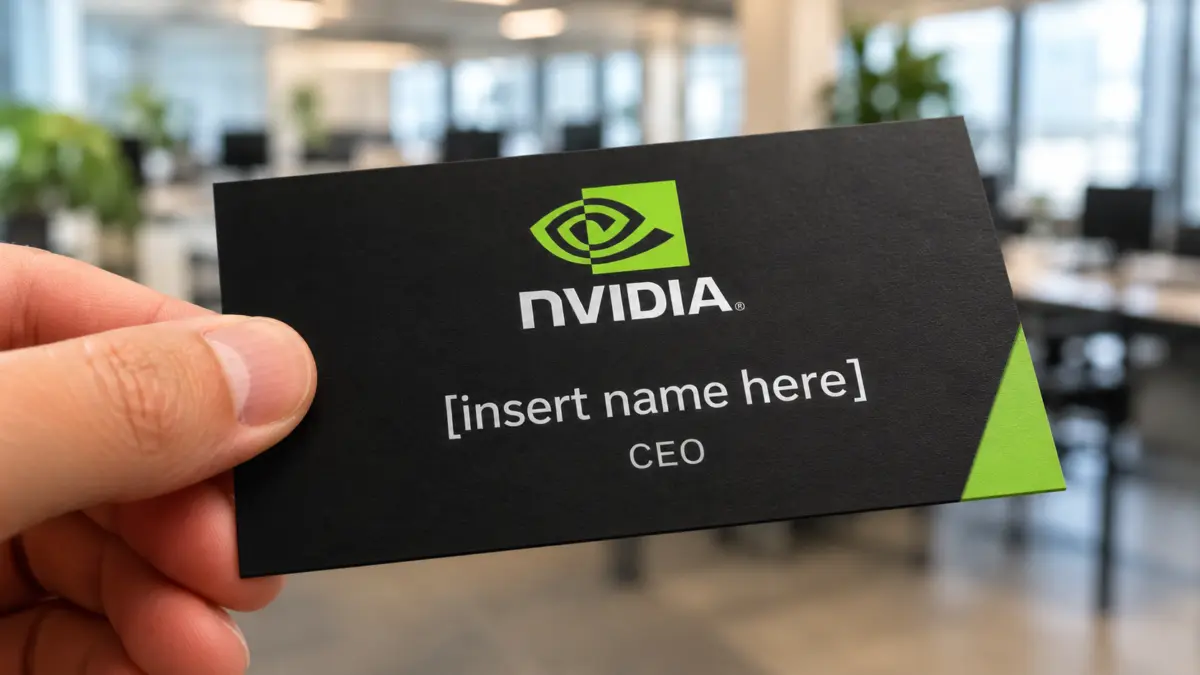
It is almost inconceivable that Nvidia would ever part ways with its rock star chief executive officer, Jensen Huang. Yet, the tech industry now finds itself standing on the precipice of that very reality. On prediction markets like Kalshi, the odds of Huang surviving the week as the head of the semiconductor giant have plummeted to a lowly 30%. Even though he built one of the world’s most valuable—and, as many market observers and analysts argue, dangerously powerful—companies, the tides have turned against him with astonishing speed.
The crisis began unfolding after Huang confessed to an extramarital affair. However, the exact details of the situation have only added to the corporate chaos. As of Wednesday afternoon, public and internal confusion reigns regarding the identity of the individuals involved. Reports have pointed toward Alice Huang, a Chinese executive who has faced suspicions from U.S. intelligence regarding potential spying activities for her country, as well as Kimberly Powell, an Nvidia executive reporting directly to Huang. According to an explosive report published by The New York Times, citing five anonymous sources familiar with the matter, Powell was also a paramour, plunging the company deeper into a governance and reputational crisis.
Even if Huang is ultimately pushed out of the chief executive seat by an increasingly pressured board of directors, the members of that board—many of whom were made exceptionally wealthy under his decades-long leadership—are unlikely to cut ties with him entirely. Barring any further damaging disclosures or unexpected developments, the board could theoretically keep him on in the role of chairman, a position that Nvidia does not currently occupy in its corporate hierarchy.
Nevertheless, someone must still run day-to-day operations at the heart of the artificial intelligence boom, and the lack of an apparent, formalized succession plan has left Wall Street, industry insiders, and the public to speculate wildly while waiting for the next shoe to drop. While Huang’s roughly 60 direct reports are undoubtedly receiving heightened scrutiny, the unfolding corporate drama has transformed into a high-stakes parlor game across Silicon Valley, centering on a mix of obvious and unconventional candidates to steer the ship.
Lisa Su
Among the most frequently discussed names is Lisa Su, the chief executive officer of Advanced Micro Devices, or AMD. Su runs Nvidia’s most credible commercial rival in the high-performance processor and AI accelerator market, and she also happens to be a distant cousin of Huang. While market intelligence publication The Information floated her name this week as a potential successor, industry analysts immediately question the underlying logic: why would Su abandon her current post to rescue a competitor in crisis?
In reality, AMD stands to benefit commercially from every single day that Nvidia spends distracted by internal investigations, congressional briefings, and the cascading series of corporate dramas sure to follow. For Su, the most advantageous strategic move might simply be to send a polite note of well-wishes while comfortably maintaining her current corner office as her competitor navigates turbulence.
Eric Schmidt
Another prominent name entering the conversation is Eric Schmidt, the former Google chief executive. Schmidt was the preferred choice of Jeffrey Sonnenfeld, senior associate dean for leadership studies at the Yale School of Management, during discussions regarding Huang’s job security. Sonnenfeld suggested that Schmidt could effectively parachute into the company tomorrow and perform a very competent job managing the fallout.
Schmidt certainly brings a massive, multifaceted resume to the table. He led Google through a decade of monumental growth from 2001 to 2011, chaired the National Security Commission on Artificial Intelligence from 2018 to 2021, and currently runs the aerospace manufacturer Relativity Space. Spanning enterprise software, government advisory boards, microchips, and rocket engineering, his professional range is undeniably impressive.
However, bringing Schmidt aboard would introduce significant reputational baggage of its own, particularly given public scrutiny surrounding his own past extramarital dalliances. Given the sensitive nature of Nvidia’s current governance crisis, it remains difficult to envision Schmidt smoothly clearing a wary board of directors for that exact reason.
Lip-Bu Tan
Intel Chief Executive Officer Lip-Bu Tan represents another intriguing possibility, especially given that he might currently welcome a strategic escape hatch. Last month, Intel reported a positive third-quarter revenue increase of 21% to reach $16.5 billion, only to issue a sobering warning that its fourth-quarter results would fall significantly short of Wall Street forecasts.
The broader artificial intelligence boom has triggered a severe memory-chip shortage across the global supply chain, driving up personal computer prices and subsequently dampening overall consumer PC sales. Because traditional PC chips remain a major component of Intel’s core business model, the warning hit the company hard, causing its stock price to plunge 20% in after-hours trading, compounding a slide of more than 30% since September. For Tan, stepping away to helm a company that has been dominating the entire semiconductor landscape would represent a remarkable career transition.
Bret Taylor
When corporate boards require an unflappable, universally respected adult in the room during periods of intense volatility, they frequently turn to Bret Taylor. The former Salesforce co-chief executive and OpenAI board chair currently runs the artificial intelligence startup Sierra, boasting a resume deeply intertwined with Silicon Valley’s biggest technology brands.
Taylor co-created Google Maps, served as the chief technology officer of Facebook, and chaired Twitter’s board of directors through its tumultuous sale to Elon Musk. Furthermore, he stepped in to take over as OpenAI’s board chair in the immediate aftermath of "The Blip"—the dramatic firing and rapid reinstatement of chief executive Sam Altman. Taylor possesses deep familiarity with nearly every major enterprise customer currently driving Nvidia’s business, making him an exceptionally steady hand if the board opts for an external crisis manager.
Ian Buck
If the board of directors feels strongly about maintaining a product-focused builder at the helm, they could look internally toward Ian Buck. As an Nvidia vice president, Buck played a pivotal role in developing CUDA, the proprietary parallel computing platform and chip software that became the foundational bedrock of Nvidia’s absolute dominance in artificial intelligence.
Market analysts and former employees have floated Buck as a viable successor, and traders on prediction platforms like Kalshi accord him a middling shot at the role. While he lacks the household name recognition of an external executive, the Stanford Ph.D. graduate represents a much more organic choice if Jensen Huang manages to retain a chairman title and advocate for a successor with whom he shares a collaborative history.
Internal Leadership Down the Hall
Other internal candidates have also drawn attention from industry watchers. Andrew Bell, Nvidia’s senior vice president of hardware engineering, arrived at the company a quarter-century ago as a fresh Cornell University graduate and has maintained a steady upward trajectory ever since. Like Buck and numerous other executives currently facing internal scrutiny, Bell reports directly to Huang.
While Nvidia Chief Financial Officer Colette Kress is the internal figure most frequently named by financial analysts, observers note that she is not necessarily a natural successor in terms of technological innovation and visionary product engineering. Bell, by contrast, carries deep chip-design pedigree.
The Ultimate Wild Card
A final possibility, though largely unmentioned in mainstream speculation, points toward Lori Huang. Having met Jensen Huang as lab partners at Oregon State University, she has been professionally and personally intertwined with his endeavors since before Nvidia was even incorporated. Following her graduation, she worked at Silicon Graphics as a microchip engineer—earning a higher salary than her husband during the early days of their marriage, as Huang has frequently recounted—before eventually scaling back her career to raise the couple’s family. Today, she co-leads the family trusts.
If the board’s primary objective is absolute institutional continuity combined with profound technological literacy, turning to a familiar, highly intelligent figure from the company’s foundational roots remains an unconventional path. Whatever direction the board ultimately decides to take, the resolution of Nvidia’s leadership crisis is expected to arrive swiftly.








No comments yet. Be the first to join the conversation!