
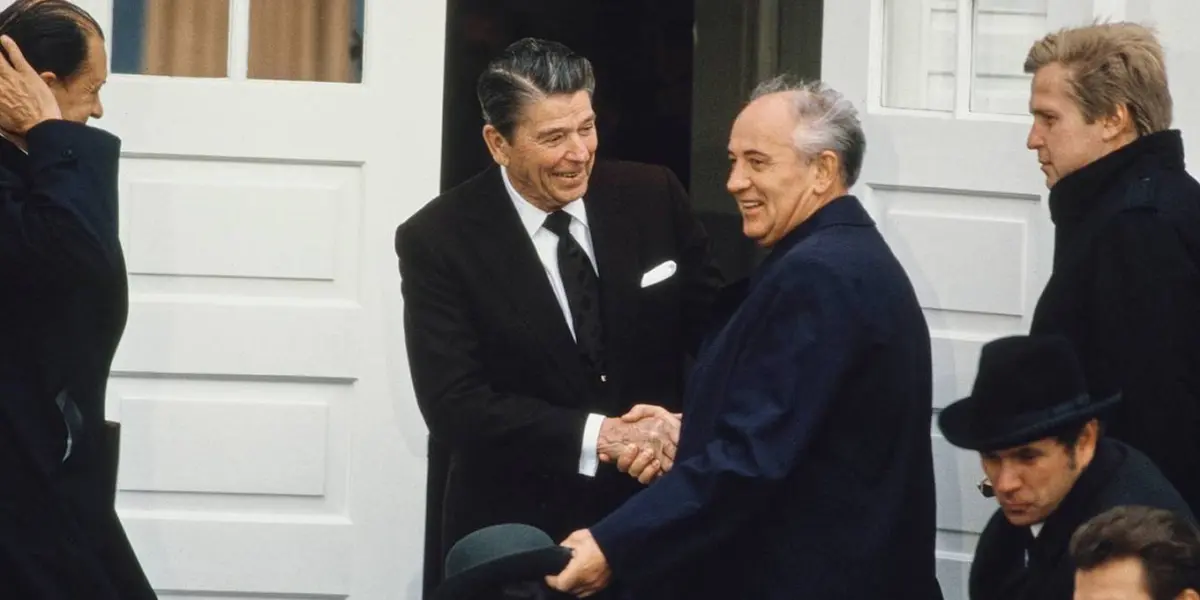
REYKJAVÍK — Humanity currently stands at a precarious juncture, possessing a dual capacity that has defined the modern era: the unprecedented power to shape a prosperous future and the equally potent ability to imperil its own existence. As the global landscape shifts under the weight of mounting nuclear tensions, the unchecked acceleration of artificial intelligence, and the steady erosion of international legal frameworks, the world finds itself in a state of profound uncertainty. At this critical threshold, observers and historians alike are increasingly looking back to the landmark 1986 summit in Reykjavík, where then-U.S. President Ronald Reagan and Soviet General Secretary Mikhail Gorbachev engaged in a dialogue that, despite its lack of a formal agreement at the time, fundamentally altered the trajectory of the Cold War and provided a template for how adversaries can navigate existential threats.
The challenges facing the international community today are multifaceted and deeply interconnected. The nuclear specter, long thought to be a relic of the late 20th century, has returned to the forefront of global security discourse. Alongside this, the eruption of regional conflicts has devastated countless lives and communities, challenging the stability of sovereign borders and humanitarian norms. Simultaneously, the rapid evolution of artificial intelligence is unfolding at a pace that often outstrips the ability of regulators and policymakers to comprehend its implications. While AI promises breakthroughs in medicine, climate science, and productivity, it also introduces systemic risks that remain largely unmapped. These risks—ranging from the automation of misinformation and cyber warfare to the potential for autonomous weapon systems—create an environment of volatility that demands immediate, high-level attention.
Yet, there is a palpable irony in the current geopolitical climate: at the precise moment when international cooperation is most urgently required, its foundational pillars appear to be crumbling. The rules-based international order, a structure painstakingly built over many generations following the catastrophes of the early 20th century, is now facing its most significant challenge since its inception. International law, designed to provide a predictable framework for diplomacy and conflict resolution, is being bypassed or violated with increasing regularity. This erosion of norms has left the global community in a state of fragmentation, making the task of collective problem-solving exponentially more difficult.
To understand why a return to the spirit of the 1986 Reykjavík summit is being touted as a necessary step, one must look at the climate of the mid-1980s. When Reagan and Gorbachev met in the Icelandic capital, the world was trapped in a seemingly intractable ideological struggle. The arms race was at its zenith, and deep-seated mutual distrust defined the relationship between the two superpowers. Despite the gravity of their differences, the two leaders chose to engage in direct, high-stakes dialogue. The Reykjavík summit did not produce a signed treaty on the final afternoon, but it succeeded in ways that were arguably more important: it humanized the "other" and established a baseline of communication that prevented the Cold War from spiraling into a hot, nuclear conflict.
The lessons from that summit are particularly resonant today. The primary takeaway was the recognition that even in an era of deep hostility, leaders have a responsibility to seek common ground for the sake of global survival. Reagan and Gorbachev demonstrated that personal rapport and the willingness to discuss the "unthinkable"—such as the complete elimination of nuclear arsenals—could shift the boundaries of what was considered politically possible. In the current era, where digital platforms often incentivize polarization and diplomatic channels are frequently obstructed by performative posturing, the ability to engage in quiet, substantive, and persistent dialogue is a rare but vital commodity.
The modern challenge, however, is arguably more complex than that faced in 1986. While the Cold War was a bipolar struggle with a clearly defined adversary, today’s world is multipolar, characterized by a complex web of alliances, economic interdependencies, and non-state actors. The introduction of AI adds a new layer of instability, as the technology itself is not confined to the control of two superpowers. It is decentralized, dual-use, and evolving in real-time, making it harder to regulate through traditional treaty-based approaches. Nevertheless, the principle established in Reykjavík holds: technology and security threats must be managed through human-led dialogue that prioritizes the stability of the international system over narrow national interests.
Furthermore, the decay of the international order is not merely a matter of failing institutions; it is a crisis of legitimacy. When international law is perceived as being applied selectively or ignored by powerful nations, the entire architecture of global governance weakens. Rebuilding this foundation requires a renewed commitment to the principles of equality, transparency, and multilateralism. Just as the 1986 summit forced the United States and the Soviet Union to reckon with the consequences of their actions on a global scale, contemporary leaders must face the reality that no nation can insulate itself from the spillover effects of nuclear proliferation, regional instability, or the misuse of emerging technologies.
Observers note that the "Reykjavík spirit" was not about total agreement; it was about the rejection of fatalism. Reagan and Gorbachev did not succumb to the belief that conflict was inevitable. They engaged with the possibility of a different future, one where the existential threat of nuclear war could be managed, if not entirely eliminated. Today, adopting such a posture requires moving past the rhetoric of "great power competition" to identify areas where cooperation is not only possible but necessary for the survival of the global commons.
This is not a call for a return to the past, but an invitation to modernize the mechanisms of diplomacy. In 1986, the focus was on physical weaponry—missiles, silos, and warheads. Today, the focus must expand to include the digital and cognitive domains. The infrastructure of peace must be updated to address the speed of algorithmic decision-making and the fragility of the information ecosystem. Without such an update, the rules-based order will continue to struggle to keep pace with the realities of the 21st century.
As the international community navigates this volatile period, the history of the 1986 summit remains a poignant reminder that leaders have the agency to change the course of history. It serves as a testament to the idea that even when the world feels as though it is tipping toward catastrophe, the tools of statecraft—patience, curiosity, and the willingness to look an adversary in the eye—remain the most effective instruments for preserving peace. The current challenges are undoubtedly severe, and the erosion of international norms presents a hurdle that will not be easily cleared. Yet, the necessity of a renewed commitment to dialogue remains the only viable path forward. By revisiting the lessons of the past, leaders today may find the resolve to construct a new framework for security, one that accounts for the technological advancements and geopolitical realities that define our fragile modern age. The echo of the conversations held in that small house in Reykjavík nearly four decades ago continues to remind us that the future is not a predetermined destination, but a construct that must be negotiated, one conversation at a time.










No comments yet. Be the first to join the conversation!