
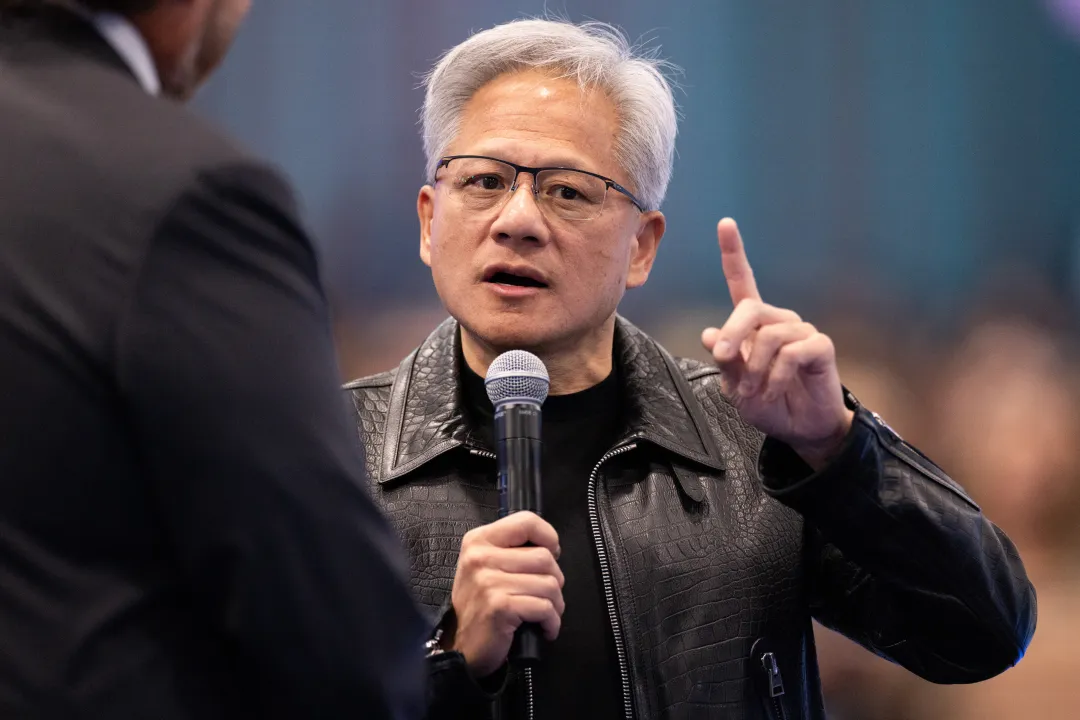
The tech world was left reeling following the sudden and dramatic ouster of Nvidia CEO Jensen Huang. Just a week prior to the breaking news, industry observers and insiders largely assumed Huang’s position at the helm of the world’s most critical artificial intelligence hardware provider was secure, despite mounting whispers and emerging investigations into the company’s executive inner circle.
The developments were dissected on an episode of TechCrunch’s Equity podcast, where hosts Anthony Ha, Rebecca Bellan, and Tim De Chant gathered to analyze how Huang’s resignation unfolded and what the massive leadership vacuum means for the broader global AI economy. While the panel held varied perspectives on how rapidly the crisis escalated, consensus quickly formed around a singular reality: Jensen Huang was synonymous with Nvidia, and virtually the entire modern technological infrastructure of the AI boom has been built upon his company’s foundation.
Reflecting on the shocking turn of events, Rebecca Bellan admitted on the podcast that she initially believed Huang’s departure was entirely out of the question. "Jensen is Nvidia, right? And so much of this economy is riding on Nvidia," Bellan remarked, pointing out that recent years of corporate governance data have often suggested that tech billionaires operate with few constraints. For Bellan, the eventual resignation served as an unexpected moment of accountability.
Anthony Ha noted that until recently, Huang was widely placed in a category similar to other untouchable tech luminaries, though no executive quite matches the singular status of figures like Elon Musk. Nevertheless, Nvidia’s unprecedented market dominance—commanding approximately 80% of the AI graphics processing unit (GPU) market—placed Huang in a position of immense, arguably systemic, economic influence. For most observers, Jensen Huang was Nvidia. He stood as the company’s largest individual shareholder, maintained family ties within the corporate ranks, and most critically, left the enterprise with no formal succession plan in place to handle an emergency departure of this magnitude.
A Rapid Descent Rooted in National Security and Personal Scandals
The sequence of events that brought Huang down accelerated at a breathtaking pace following months of underlying tension. Huang officially submitted his resignation after details came to light regarding a romantic relationship with a former executive at an Nvidia customer firm known as Megaspeed, an individual who has been alleged to possess ties to Chinese intelligence services. Compounding the PR and corporate governance nightmare, subsequent reports surfaced detailing an additional affair involving an internal Nvidia executive.
With Huang stepping down, Nvidia’s board moved quickly to stabilize the ship, appointing longtime board member and Chief Financial Officer Collette Kress as interim CEO. The appointment of a CFO to the highest executive office immediately signaled a defensive pivot toward cost management and financial discipline rather than long-term strategic expansion. Ha observed that Kress’s placement in the role feels explicitly like a caretaker appointment, designed to provide temporary stability while the board figures out a permanent path forward.
What made the collapse particularly jarring to industry analysts was the realization that the core national security concerns underlying the scandal were not entirely new. Intelligence circles had reportedly been aware of questions surrounding Huang’s relationship with Alice Huang for close to a year. According to discussions on the podcast, even high-level political figures such as former U.S. President Donald Trump had previously received intelligence warnings regarding the affair and its potential intersections with foreign intelligence, though initial reactions from leadership appeared indifferent.
The turning point, however, arrived when geopolitical friction intersected with domestic corporate governance. For years, Huang had been a prominent and vocal advocate for loosening U.S. chip export controls to China. This advocacy created a deep fault line, as critics and national security officials argued that granting Chinese artificial intelligence companies unhindered access to high-performance American chips would drastically accelerate their technological capabilities and pose a direct threat to U.S. national security. For Huang, critics suggested, the primary objective remained clear: selling advanced silicon to anyone and everyone, treating geopolitical and national security concerns as secondary priorities.
The situation escalated past personal indiscretions into institutional jeopardy earlier in the week when a Bloomberg report revealed that Nvidia’s chief attorney had intervened or made inquiries regarding the Department of Commerce’s ongoing investigation into Alice Huang. Tim De Chant pointed to this specific November disclosure as the definitive catalyst that shattered whatever protective barrier remained around the CEO. The revelation that the company’s legal apparatus may have become entangled in a federal probe created a daunting realization within both government circles and the corporate boardroom that the scandal extended far beyond personal misconduct.
The Future of the "Bank of Nvidia" and the AI Circular Economy
As Nvidia navigates this unprecedented leadership transition, the broader technology sector is left grappling with profound uncertainty. Because Nvidia’s influence permeates nearly every corner of the artificial intelligence landscape, any internal turbulence at the chipmaker threatens to send shockwaves through the entire ecosystem.
Beyond its manufacturing dominance, Nvidia under Huang operated as a massive venture capital engine, pouring unprecedented sums of money into the very startups that purchase its hardware. This dynamic, frequently described as an AI circular economy, has relied heavily on Nvidia’s willingness to fund and fuel infrastructure projects across the industry.
The financial scale of Nvidia’s commitments under Huang is staggering. The company accounts for roughly 80% of the AI GPU market and has reported approximately $99 billion in direct investments, alongside an additional $25 billion in financial commitments and $36 billion in cloud service obligations. These capital allocations have directly supported major industry players, prominent data center initiatives, and high-profile AI developers including CoreWeave, Nebius, OpenAI, and Anthropic. Nvidia’s financial footprint has touched virtually every major venture in the modern AI boom.
With Huang gone and an interim leadership team stepping in to lock down operations, industry analysts are questioning whether the "Bank of Nvidia" will maintain its aggressive investment strategy or pull back as the company reevaluates its governance and risk exposure. Even a minor contraction in Nvidia’s expansive funding and infrastructure commitments could trigger dramatic repercussions for startups and cloud providers that depend entirely on the steady flow of capital and hardware.
While a faction of prominent tech executives—including Elon Musk—has reportedly signed petitions calling on Nvidia to reinstate Huang, the board’s immediate focus remains fixed on navigating the fallout of the investigations and charting a new course for a company that has defined the modern era of artificial intelligence.









No comments yet. Be the first to join the conversation!