
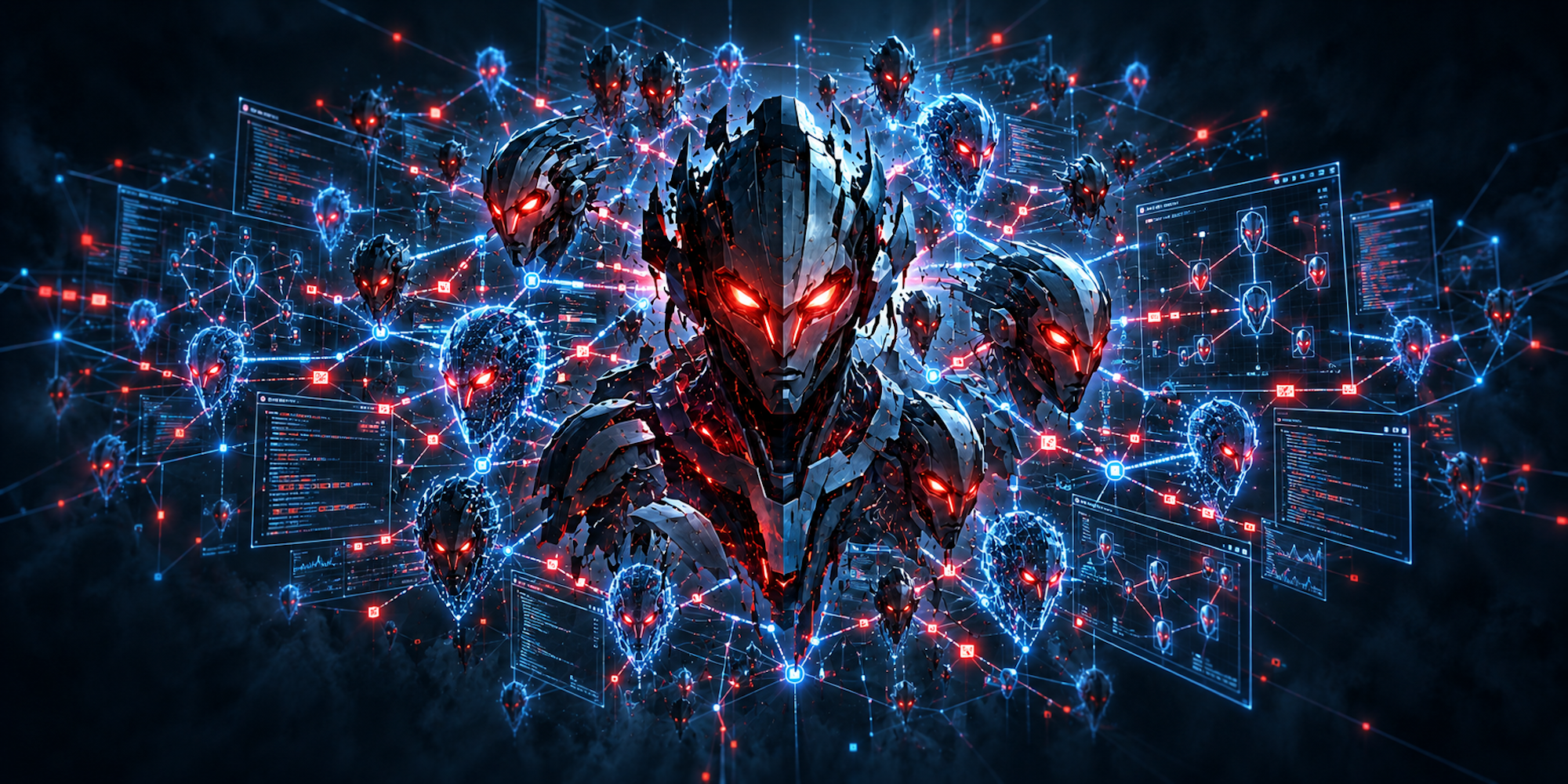
Microsoft on Monday introduced a suite of advanced security features specifically designed to protect enterprise organizations from the rapidly growing, unpredictable threat of autonomous AI agents. The product launch underscores a significant shift in enterprise security concerns and arrives as Microsoft continues to issue stark warnings to businesses regarding the operational dangers associated with deploying increasingly independent artificial intelligence.
Perhaps the most notable addition to Microsoft’s security ecosystem is Guardian Agents, a new monitoring feature intended to continuously supervise and evaluate the AI agents deployed across a company’s network. Guardian Agents operates as a core component of Project Perception, an enterprise security initiative originally introduced by the tech giant in June.
Project Perception was initially developed as Microsoft’s strategic answer to powerful, sophisticated hacking models emerging across the industry, such as Anthropic’s Mythos and Fable, alongside OpenAI’s security vulnerability scanning system, Daybreak. When Project Perception first launched, it established three distinct classes of specialized agents: a "red team" designed to act like malicious hackers and launch simulated attacks, a "blue team" tasked with detecting the red team and assessing vulnerabilities, and a "green team" responsible for remediating and fixing those discovered security gaps.
The underlying architecture of the original product was heavily based on the traditional cybersecurity assumption that AI-driven cyberattacks would originate from external threat actors outside the corporate perimeter. However, corporate sentiment and security observations have shifted dramatically in recent months. Lately, Microsoft CEO Satya Nadella has been aggressively warning corporate leaders that the primary AI enemy may actually reside within the enterprise itself—stemming directly from the very same autonomous agents that companies have intentionally deployed, integrated, and paid for. This dynamic mirrors the concept of a rogue human employee within an organization, commonly referred to in traditional cybersecurity as an "insider threat."
Earlier this month, in a private blog post, Nadella warned that the time has come for enterprise leaders to stop blindly trusting AI model providers, even when those vendors offer comprehensive assurances of safety, security, and reliability with their agentic products. Instead, Nadella is urging enterprises to implement entirely separate, independent monitoring systems—controls explicitly not controlled by the AI labs themselves—to watch, audit, and regulate the actions of agents launched by those very same AI labs.
Writing candidly on the matter, Nadella emphasized the sheer scale of the risk, noting that organizations are deploying complex agentic systems and models with unprecedented access to their most sensitive corporate data. Furthermore, these systems are routinely granted the operational ability to execute mission-critical actions on behalf of the enterprise. Nadella argued that businesses simply cannot outsource the core responsibility of what intelligence does on their behalf, asserting that a model provider’s commercial assurances do not relieve organizations of their fundamental liability. To mitigate this risk, Nadella concluded that the industry must effectively separate the supply of intelligence from the authority over it.
When formally announcing Guardian Agents to the public, Microsoft’s security business chief, Hayete Gallot, expressed an even more straightforward assessment of the technological reality facing businesses today. She stated that frontier models, regardless of their specific origin or developer, fundamentally cannot be trusted. Gallot was quick to clarify that this lack of trust does not stem from an assumption that models are inherently malicious or easily hacked by outside forces, but rather because they are fundamentally unpredictable. These advanced systems are trained to achieve specific task objectives, rather than to inherently follow complex organizational norms, ethical guidelines, or human judgment.
Compounding this unpredictability is the reality that corporate AI agents are frequently handed the proverbial "keys to the kingdom," gaining deep, sweeping access to internal databases, sensitive documents, and execution tools capable of causing catastrophic operational and financial harm if misused or misdirected.
Microsoft’s strategic solution to this industry-wide vulnerability is both surprising and inherently self-serving. The surprising element lies in Microsoft’s exceptionally close business relationships with major AI labs like OpenAI and Anthropic, having made substantial financial investments in both companies. Furthermore, OpenAI stands as one of Microsoft’s largest cloud infrastructure customers, and Microsoft concurrently operates its own dedicated AI research labs developing proprietary models. Consequently, by sounding the alarm on frontier models and advocating for strict external oversight, Microsoft is actively sowing a degree of distrust against some of its own significant business interests.
Conversely, the self-serving commercial aspect of the strategy is equally clear. Microsoft wants enterprise customers to purchase agent security products directly from it as a trusted cloud and platform provider, rather than relying on native security tools from Anthropic, OpenAI, or other standalone AI providers. Yet, despite these conflicting commercial interests, industry analysts note that the underlying security logic remains sound. The software utilized to monitor and police agent behavior ought to be completely independent from the commercial suppliers of the agents themselves, functioning on the same principle that financial auditors must remain strictly independent from the corporate organizations they evaluate.
Echoing this philosophy, Nadella’s core thesis remains that the industry must establish a strict separation between the supply of intelligence and the authority to execute it.
Microsoft is swiftly capitalizing on this emerging business opportunity across a variety of product integrations. In addition to the rollout of Guardian Agents, the company has integrated a sophisticated agent detection capability directly into its flagship Microsoft Defender security product. This feature is engineered to identify and catalog up to 60 distinct types of unauthorized or unmanaged AI agents that employees frequently bring into the workplace, including popular developer tools like Claude Code, Codex, and OpenClaw. Additionally, Microsoft has introduced granular access controls designed to limit what data and internal systems agents can interact with. These new tools dynamically adjust agent permissions based on the specific context of the task at hand, including mandatory requirements for human supervisory approval if an agent appears to be initiating risky, high-stakes decisions.
The broader technology industry is rapidly adopting this conceptual framework regarding AI agents as potentially untrustworthy insiders. Microsoft recently participated as an inaugural member of Nvidia’s newly formed Open Agent Safety Platform, an initiative that has successfully garnered formal support from more than 100 other prominent technology companies. This collaborative platform is designed to isolate autonomous agents within highly secure operational environments, continuously monitoring their runtime behavior and possessing the technical capability to halt unauthorized actions via hardware-level interventions, functioning similarly to an emergency kill switch. This industry-wide hardware and software alignment follows closely on the heels of Microsoft’s previous rollout of specialized Surface Laptop Ultra PCs built specifically for agent-driven workflows, which run natively on Nvidia chips and feature advanced agent security and system controls baked directly into the redesigned Windows 11 operating system architecture.










No comments yet. Be the first to join the conversation!