
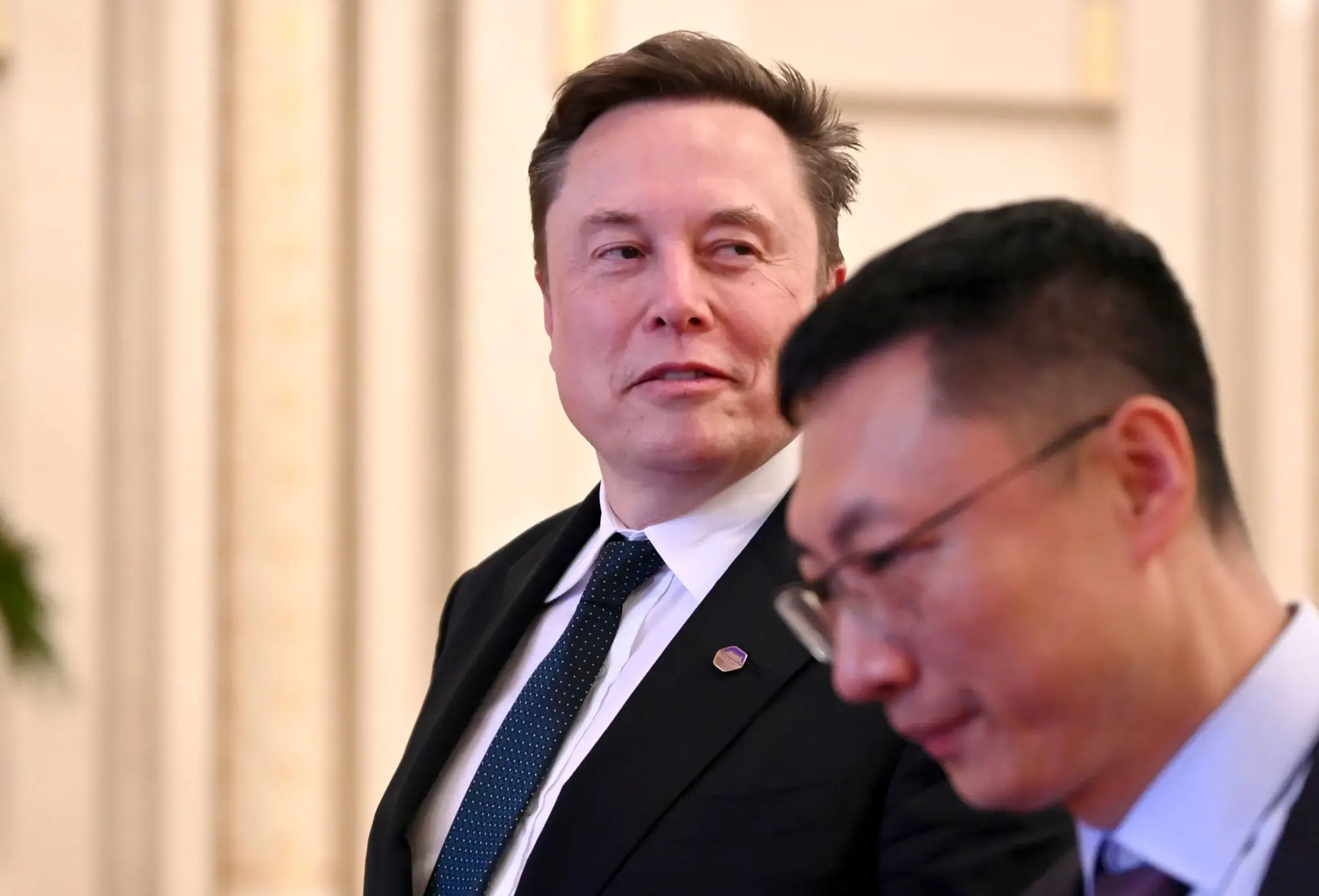
The high-stakes battle between billionaire tech entrepreneur Elon Musk and Indian industrialist Mukesh Ambani has reached a new level of intensity. As SpaceX continues to face prolonged delays in launching its Starlink satellite internet service in India, Musk has stepped up his public criticism of the Reliance Industries chairperson. In a series of sharp remarks on social media, Musk mockingly referred to Ambani as India’s "prime minister" to suggest that the billionaire wields outsized, undue control over the nation’s government, while directly accusing him of actively blocking Starlink from entering the market to protect his own corporate interests.
The friction intensified when Musk took to the social media platform X, formerly known as Twitter, to continue his sustained critique of one of India’s most powerful business leaders. In his posts, Musk argued that Starlink holds the potential to revolutionize connectivity by bridging the digital divide, bringing reliable internet access to remote and underserved areas that remain entirely unconnected. He emphasized that such connectivity could give children expanded opportunities to learn and help small businesses reach customers on a global scale.
Directly addressing the Reliance chairman, Musk wrote on X, "Naturally, you would prefer to maintain your monopolistic exploitation of the great people of India, but would you nonetheless consider allowing Starlink to compete?" Reliance Jio, the telecommunications arm of Reliance Industries, did not immediately respond to requests for comment regarding Musk’s remarks.
Musk’s latest broadsides follow accusations he made earlier in the week, during which he claimed that unnamed "oligarchs" were deliberately stalling Starlink’s regulatory clearance in India to safeguard their domestic business dominance. Those initial allegations were swiftly rejected by India’s Ministry of Communications, which maintained that the country’s regulatory framework governing satellite communications is entirely fair and non-discriminatory. Undeterred by the government’s pushback, Musk doubled down on Thursday by questioning Ambani’s political and economic leverage in a separate post, pointedly asking his followers and officials, "Is Ambani the real boss of India?"
The public feud highlights the deep frustrations surrounding SpaceX’s prolonged efforts to bring Starlink to the world’s most populous nation. Over the past several years, SpaceX has invested heavily in navigating India’s complex regulatory landscape. In a surprising turn last year, the company even struck commercial distribution agreements with both Ambani’s Reliance Jio and Bharti Airtel, India’s second-largest telecom operator, establishing a framework to offer satellite broadband services to consumers once all necessary government approvals were secured.
However, despite successfully clearing several key regulatory hurdles over the past year—leading many industry watchers to view the launch as a matter of when rather than if—Starlink has still not received the final green light from New Delhi to commence commercial operations.
Addressing the delays and the mounting public accusations, the Indian communications ministry issued a clarifying statement on Thursday. The ministry explained that Starlink and two other licensed satellite operators are currently undergoing mandatory security assessments. These evaluations must be fully completed before any of the entities can be formally assigned satellite spectrum. Furthermore, the ministry noted that all three competing companies are positioned at broadly the same regulatory stage, directly rejecting Musk’s assertions that Starlink was being unfairly singled out or targeted for obstruction.
The competitive landscape in India’s emerging satellite broadband sector involves major players positioning themselves for market dominance. Alongside Starlink, domestic giants Jio and Airtel are aggressively pursuing their own satellite internet offerings. Reliance Jio has established a joint venture with Luxembourg-based SES, while Airtel serves as a major shareholder in Eutelsat OneWeb, which has also been striving to roll out satellite connectivity across the vast expanse of the country.
India represents a crucial market for Musk’s business empire, boasting over a billion internet users and standing as the world’s most populous nation. However, expanding into this massive economy requires navigating a complex political and corporate ecosystem dominated by powerful business figures. Mukesh Ambani’s Reliance conglomerate not only owns India’s largest telecom operator in Jio but also works closely with Prime Minister Narendra Modi’s government on various national infrastructure and economic projects.
The current clash over satellite internet is not the first time Musk and Reliance Jio have found themselves at loggerheads. Before Musk’s recent attacks on social media, Starlink and Jio engaged in a protracted policy debate over the most appropriate method for allocating satellite spectrum in India. Musk’s SpaceX strongly advocated for spectrum to be assigned through an administrative allocation process, which is standard practice in many global markets for satellite services. In contrast, Jio aggressively pushed for the spectrum to be distributed through an open auction. Ultimately, New Delhi decided to proceed with administrative spectrum allocation, a move that aligned with Starlink’s preference but left domestic operators concerned about a level playing field.
Despite that earlier policy outcome, Starlink’s actual market entry remains trapped in administrative limbo. Indian Telecom Minister Jyotiraditya Scindia pushed back firmly against Musk’s monopoly allegations, asserting that the country strictly prohibits monopolies across all economic sectors and operates under an objective regulatory regime.
Compounding Musk’s strategic challenges in India is the performance of Tesla, his electric vehicle manufacturer. Tesla finally entered the Indian market last year following years of intense speculation and prolonged negotiations over import duties. However, the initial rollout has faced significant headwinds. According to delivery data cited by industry trackers, Tesla registered fewer than a thousand vehicles—specifically 699 units—during its first 12 months of local deliveries.
Steep import tariffs have been a major barrier, pushing the launch price of the Tesla Model Y in India to nearly twice its retail price in the United States. Although Tesla implemented price reductions earlier in the year to stimulate demand, its vehicles remain considerably more expensive for Indian consumers than their American counterparts.
As regulatory reviews continue and public rhetoric intensifies, the timeline for Starlink’s commercial debut in India remains uncertain, leaving SpaceX to navigate both governmental oversight and formidable domestic competition.










No comments yet. Be the first to join the conversation!