
The devastating financial crisis of 2007-2008 fundamentally reshaped the global economic landscape, sparking an intense and enduring international debate over whether—and, if so, how—taxation can be effectively deployed to stabilize the financial sector. Beyond acting as a safeguard against future systemic collapses, policymakers viewed these fiscal measures as a vital mechanism to generate public revenue, helping to partially cover the massive costs associated with bailing out and stabilizing troubled financial institutions.
While the urgency of the post-2008 era gradually evolved, the issue has roared back into the global spotlight. Since 2023, commercial banks have enjoyed a substantial boost in profitability, largely driven by a rapid escalation in global interest rates. At the same time, governments worldwide have found themselves grappling with fiscal strain and actively seeking new, reliable sources of public revenue in the wake of the severe 2022-2023 inflation shock. This inflationary pressure—often described as a hidden tax that reduces consumer purchasing power and increases government spending demands—has prompted a fresh look at how the financial sector contributes to public coffers.
Following both the historic financial crisis and the more recent surge in inflation, policymakers and various international organizations have continually explored several approaches to balance financial stability with equitable taxation. As governments weigh their options, understanding the current geographic and structural landscape of these levies provides critical insight into modern fiscal policy.
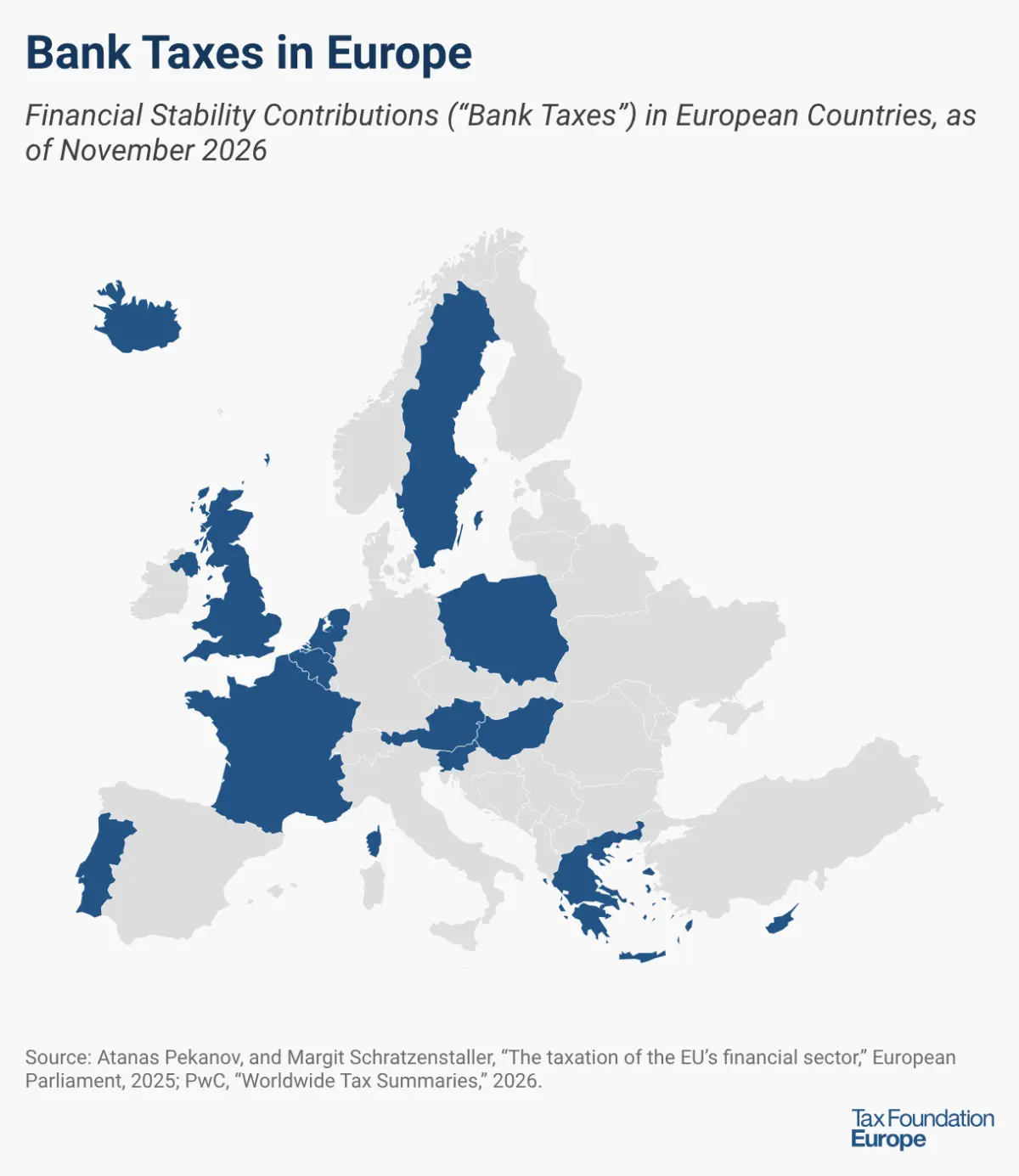
To map this landscape, a recent financial review highlights which European countries have successfully implemented financial stability contributions (FSCs), more commonly referred to as "bank taxes."
A select group of European nations currently levy these specialized bank taxes. This roster includes Austria, Belgium, Cyprus, France, Greece, Hungary, Iceland, the Netherlands, Poland, Portugal, Slovenia, Sweden, and the United Kingdom. Interestingly, the historical timing of these measures reveals a clear correlation with systemic global shocks. Almost all of these countries implemented their respective financial sector levies in the direct aftermath of the 2007-2008 financial crisis, as governments scrambled to rebuild public trust, recover bailout costs, and insulate their economies from future shocks.
Greece stands out as the sole historical exception to this post-2008 trend, having instituted its own banking levy as far back as 1975, long before the modern wave of financial stability contributions swept across the continent. While the motivations behind Greece’s early tax may have differed from the post-crisis reforms, its long-standing presence demonstrates that sector-specific banking levies are not entirely a modern invention.
When examining how these taxes are structured, a distinct pattern emerges regarding the choice of the tax base—the total amount of economic activity subject to taxation by a tax authority. A broad tax base generally reduces administrative costs and allows governments to raise more revenue at lower rates, whereas a narrow tax base can sometimes be less neutral and less efficient. Across Europe, most countries choose to levy their bank taxes based on a measure of a financial institution’s liabilities, such as short- and long-term debt, or on a comprehensive measure of its total assets. By targeting the balance sheet liabilities or assets of large financial institutions, governments aim to capture the systemic risk generated by excessive leverage and balance sheet expansion.
However, not all European nations follow this standard model. Some countries have opted for a different tax base entirely to better align with their specific regulatory frameworks and economic goals. A notable example of this structural divergence is France. Rather than taxing total assets or general liabilities, France levies its contribution based on the minimum amount of capital necessary for a financial institution to comply with prevailing regulatory requirements. This alternative approach ties the tax burden directly to the regulatory capital adequacy rules designed to keep individual institutions solvent, offering a different pathway for fiscal integration and financial sector oversight as European policymakers continue to navigate the complex intersection of banking regulation and public finance.











No comments yet. Be the first to join the conversation!