
Managing a modern investment portfolio has evolved far beyond simple spreadsheets and annual brokerage statements. Today’s ideal investment tracking app does more than just show a digital balance; it provides deep insights into portfolio performance, uncovers hidden management fees, maps out asset allocation, and projects future wealth growth. For investors juggling multiple retirement accounts, taxable brokerages, real estate holdings, and digital assets, the right financial software can turn administrative chaos into a streamlined, automated experience.
Financial commentators and long-term personal finance practitioners have spent years testing dozens of digital platforms to determine which tools truly deliver on their promises. While personal preferences shift as financial technologies introduce new features—particularly the integration of artificial intelligence—certain platforms consistently stand out for their reliability, depth of data, and user experience.
Summary of Best Investment Tracking Apps
When evaluating the vast landscape of portfolio management software, several key contenders emerge at the top of the market, each catering to different investor needs based on cost, feature depth, and usability.

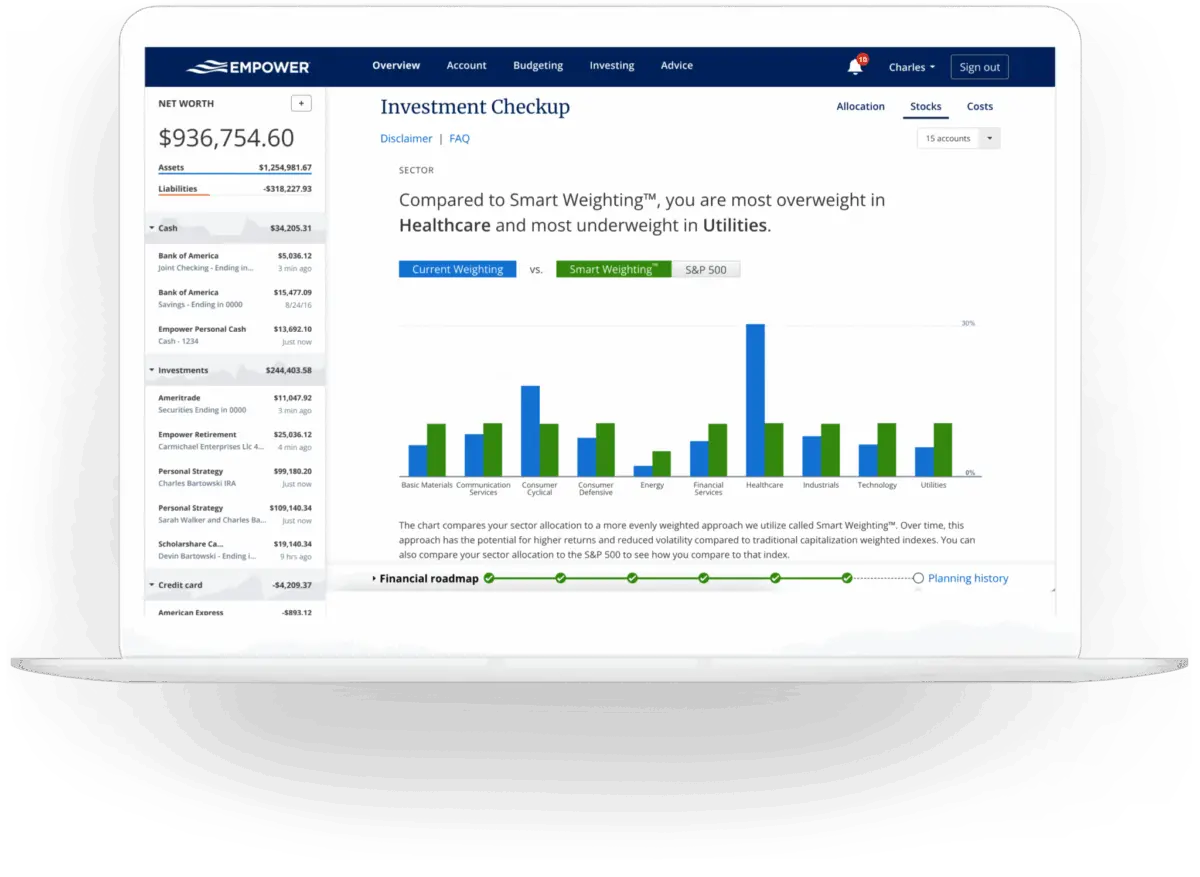
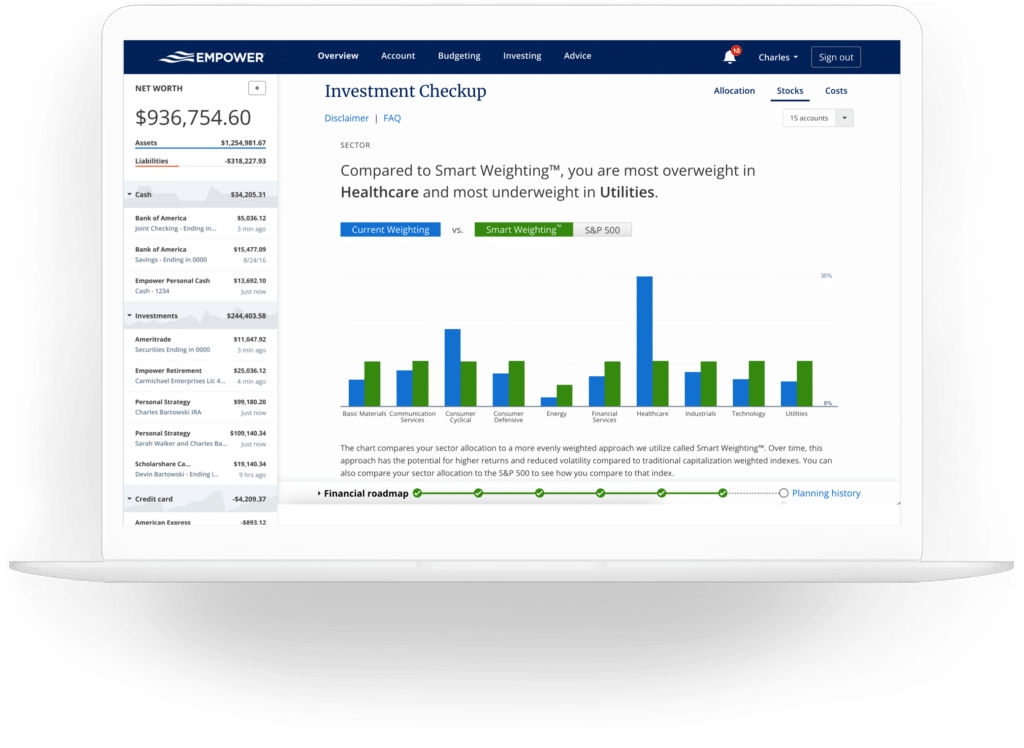
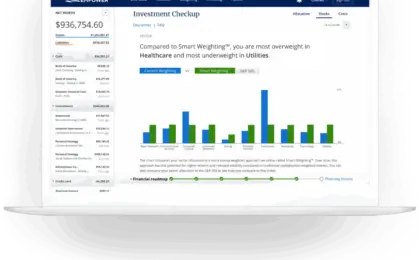
Empower remains the undisputed champion in the category of free investment trackers. It combines ease of use with robust, interactive charts and graphs that break down asset allocation, performance metrics, and portfolio fees without requiring a subscription.
For those seeking an all-in-one solution, Monarch Money bridges the gap between everyday budgeting and investment monitoring. It simultaneously tracks net worth, asset allocation, and investment performance alongside a full suite of bill management and cash flow tools.
High-net-worth individuals and complex asset holders often turn to Kubera, a highly sophisticated platform that utilizes multiple industry-standard data aggregators. Kubera stands out for its ability to track a vast array of non-traditional assets, including cryptocurrencies, domain names, vehicles, and multi-currency real estate holdings.

Meanwhile, investors focusing heavily on portfolio rebalancing and dividend tracking frequently lean toward Snowball Analytics. Offering both free and reasonably priced paid tiers, it simplifies the process of monitoring dividend yields, future income projections, and asset weightings across various brokerages.
1. Empower
For the vast majority of retail investors, Empower—formerly known as Personal Capital—offers the most comprehensive and accessible platform on the market. Having served as a staple portfolio tracking tool for over a decade, it has earned its widespread popularity through reliable automation and powerful analytical capabilities.
Once users link their retirement accounts, brokerage portfolios, and banking institutions, Empower automatically downloads all transaction histories and balance updates. Beyond historical performance data, the application excels at fee transparency. Its dedicated retirement fee analyzer scans every mutual fund and exchange-traded fund across linked accounts, clearly displaying individual expense ratios and projecting how those ongoing costs will impact total wealth over a multi-decade investment horizon.

Furthermore, Empower integrates this data into an interactive asset allocation graph and a robust retirement planner. By allowing users to link external assets such as credit cards, bank accounts, and even real estate valuations via Zillow, the platform functions as an all-encompassing financial command center rather than a narrow stock tracker.
Best Investment Trackers for ETF and Mutual Fund Analysis
Investors who rely heavily on exchange-traded funds and mutual funds often discover that basic balance tracking is insufficient. Evaluating these instruments requires a deep understanding of underlying expense ratios, benchmark comparisons, and true asset diversification. Many long-term investors remain unaware of how severely compounding management fees erode wealth until those percentages are translated into actual dollar amounts over time.
Empower serves as an exceptional tool for this specific purpose due to its fee analysis engines. For deeper qualitative and quantitative fund research, platforms like Morningstar Investor provide industry-standard star ratings, analyst commentary, and rigorous historical benchmarks. For dividend-oriented portfolios, Snowball Analytics offers specialized tools to forecast upcoming payouts and manage asset rebalancing efficiently.

2. Kubera
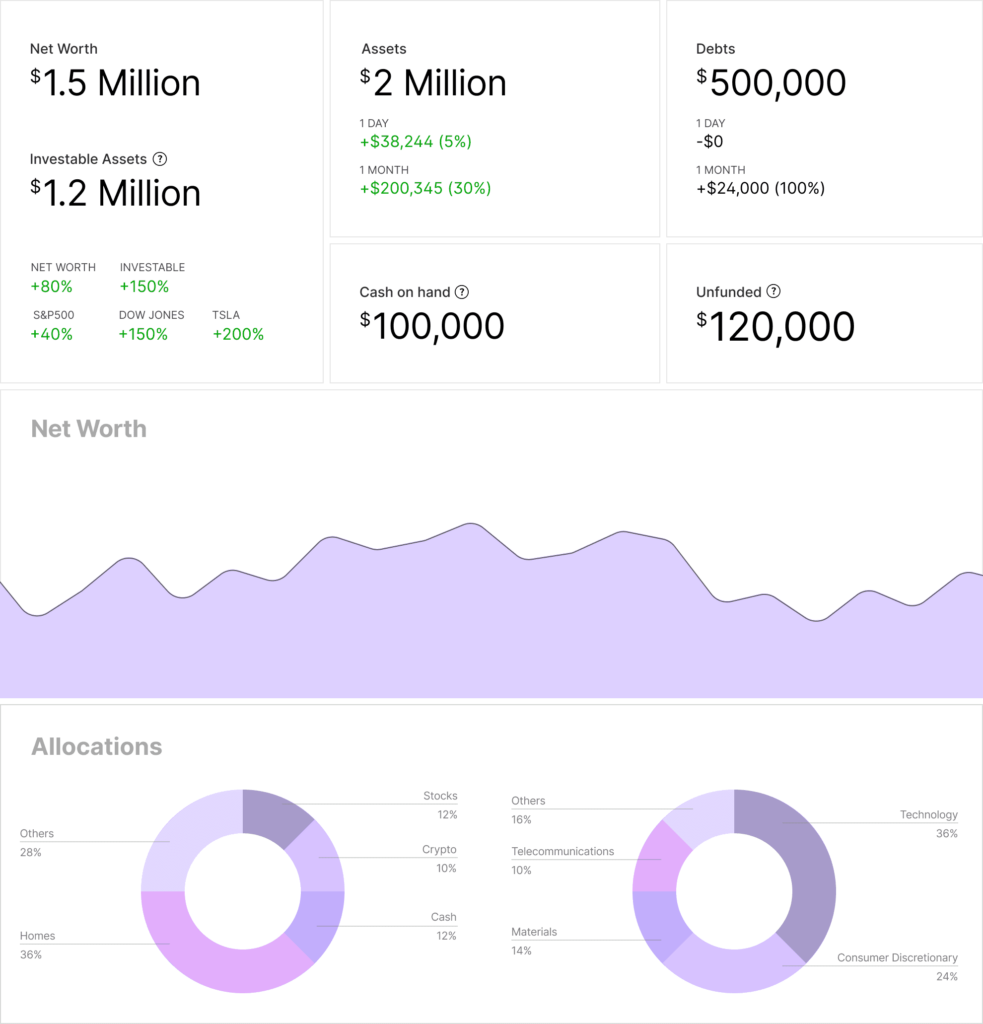
For investors managing a multifaceted web of assets across different classes and geographies, Kubera offers a level of sophistication unmatched by standard budgeting apps. Operating on a clean, spreadsheet-inspired visual interface, it allows users to organize their financial lives into distinct sheets covering retirement accounts, taxable holdings, health savings accounts, and real estate.
What sets Kubera apart is its technical architecture. Rather than relying on a single data aggregator, the platform integrates multiple industry-standard tools to ensure reliable account connections and accurate balance updates. It accommodates an expansive range of asset types, allowing users to track automobile values via a vehicle identification number, digital domains, and physical real estate using multiple valuation sources rather than relying solely on automated estimates.
In addition to supporting diverse cryptocurrency wallets and exchanges, Kubera accommodates multi-currency tracking, spanning major global fiat currencies alongside commodities like crude oil and gold. Security and estate planning are also prioritized through features like a virtual safe deposit box for storing critical documents and a designated beneficiary system to ensure loved ones can access necessary financial information if needed.
3. Monarch Money
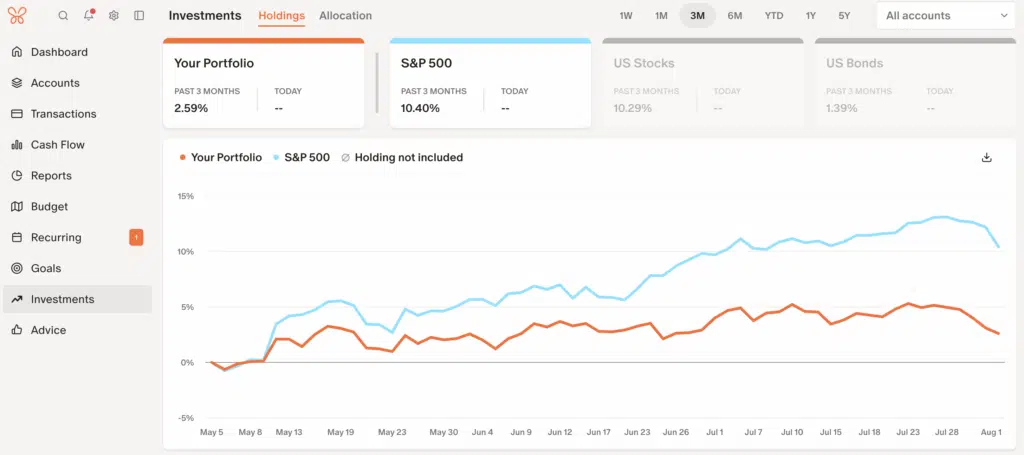
While primarily recognized as one of the leading budgeting and cash flow applications on the market, Monarch Money also includes a dedicated investment tracking infrastructure. Setting up portfolio monitoring within Monarch mirrors the process of linking a standard checking account or credit card; the system automatically recognizes brokerage connections and segregates them into a dedicated investment dashboard.
Monarch effectively tracks individual investment returns, cash balances within brokerage accounts, and historical performance trends. While its asset allocation tools are more streamlined compared to specialized institutional platforms, its strength lies in its ability to present investment data alongside daily household budgeting. This unified view makes it an appealing choice for families seeking to monitor their net worth growth without juggling multiple specialized applications.
4. Stock Rover
Investors managing complex, individual stock portfolios often require analytical depth that goes far beyond simple net worth tracking. Stock Rover is designed specifically for this audience, offering extensive fundamental data, financial statements, analyst ratings, and customizable screening tools for stocks, ETFs, and mutual funds.
Although the platform features a steeper learning curve than consumer-facing budgeting apps, it provides extensive video guides and educational resources to help users navigate its dense information architecture. Investors can link their brokerage accounts for automated updates or maintain portfolios manually, utilizing pre-set model portfolios and earnings calendars to conduct thorough research on individual equities like Apple or diversified market indexes.
5. Snowball Analytics
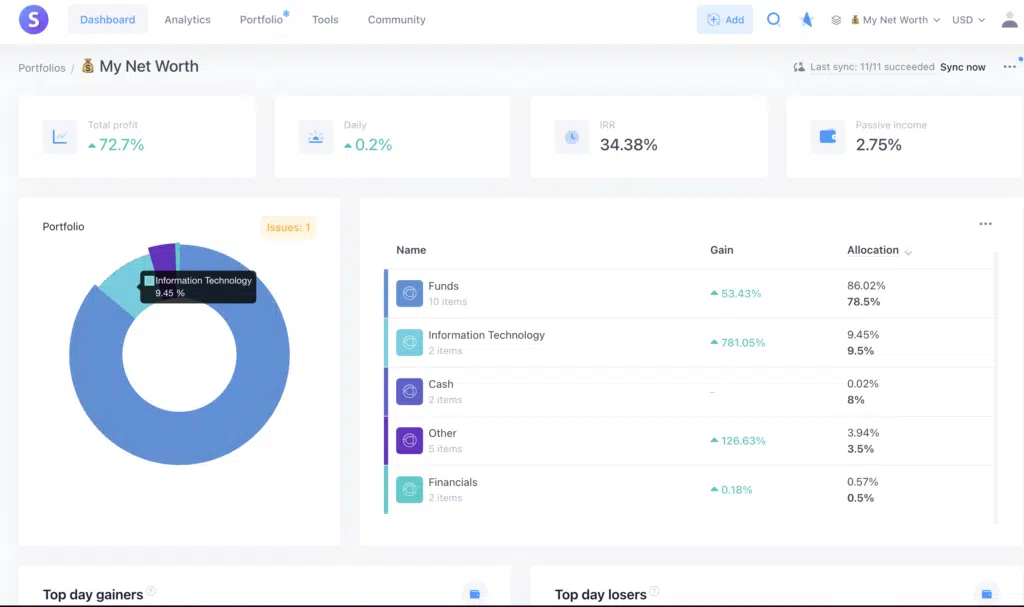
Snowball Analytics has rapidly gained traction among retail investors due to its intuitive layout and specialized focus on income-generating portfolios. The platform’s dashboard presents a clear breakdown of overall asset allocation, historical performance, current dividend yields, and forward-looking income projections.
Users can synchronize their brokerage accounts or manually input transaction histories to monitor incoming corporate actions, upcoming dividend payouts, and relevant market news. By combining robust dividend tracking with practical portfolio rebalancing tools, Snowball Analytics provides a balanced environment for long-term buy-and-hold investors who want clear visibility into their passive income streams.
6. Simply Wall St.
For individuals focused squarely on equities and ETFs, Simply Wall St. offers a visually driven tracking and analysis tool that translates complex financial data into digestible infographics. While the platform does not currently support traditional mutual funds, it connects seamlessly with over two thousand global brokers.
Once accounts are linked or portfolios are entered manually, the platform generates a comprehensive health check of the user’s holdings. The dashboard visualizes portfolio balances, historical returns, and expected dividend distributions over a twelve-month horizon, helping investors quickly identify concentration risks or valuation extremes within their stock selections.
7. Morningstar Investor
Morningstar has remained a cornerstone of independent investment research for decades, offering rigorous analytical tools that extend to portfolio management. Investors can utilize Morningstar’s database to evaluate mutual funds and ETFs against industry benchmarks, review stewardship grades, and access professional analyst reports.
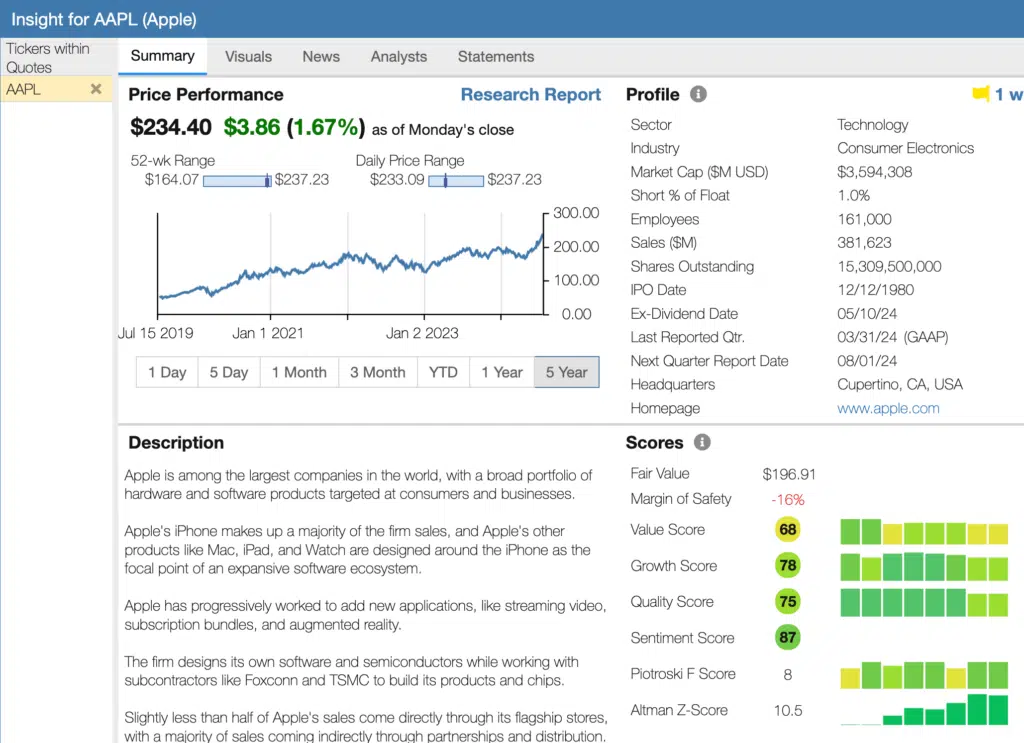
The platform’s primary limitation as a portfolio tracker lies in its account synchronization limitations; while users can link certain accounts for research purposes, comprehensive automated performance tracking typically requires manual transaction entry. Despite this administrative friction, the depth of fundamental data and portfolio X-Ray diagnostics make it a valuable companion for serious fund investors.
8. Quicken Premier
As one of the oldest surviving names in personal finance software, Quicken continues to evolve through its desktop-oriented Quicken Premier tier. Designed for users who prefer comprehensive local control over their financial data, Quicken tracks investment performance, realized and unrealized capital gains, and tax-lot accounting details.
Integrating data feeds from sources like Morningstar, Quicken assists investors in monitoring asset allocation and preparing for tax season. While it carries a recurring annual subscription cost and requires software installation rather than relying purely on cloud-based mobile access, it remains a durable option for traditional desktop finance managers.
How to Choose the Best Investment Tracking App
Selecting the appropriate investment tracking tool depends largely on the complexity of an individual’s financial structure. Investors who maintain a single retirement account—such as a workplace 401(k) or an individual IRA housed at a single brokerage—rarely need external tracking software, as their provider’s native interface provides sufficient visibility.
Conversely, individuals managing multiple accounts across different institutions, or couples combining separate retirement assets, benefit immensely from automated aggregation apps. When evaluating these platforms, investors should prioritize tools that offer clear visibility into asset allocation, fee structures, and long-term retirement readiness.
Choosing the right platform ultimately comes down to balancing desired feature sets against personal preferences for automation, security, and cost. By understanding the distinct strengths of each available tool, investors can maintain clear oversight of their financial futures without unnecessary administrative friction.







No comments yet. Be the first to join the conversation!