
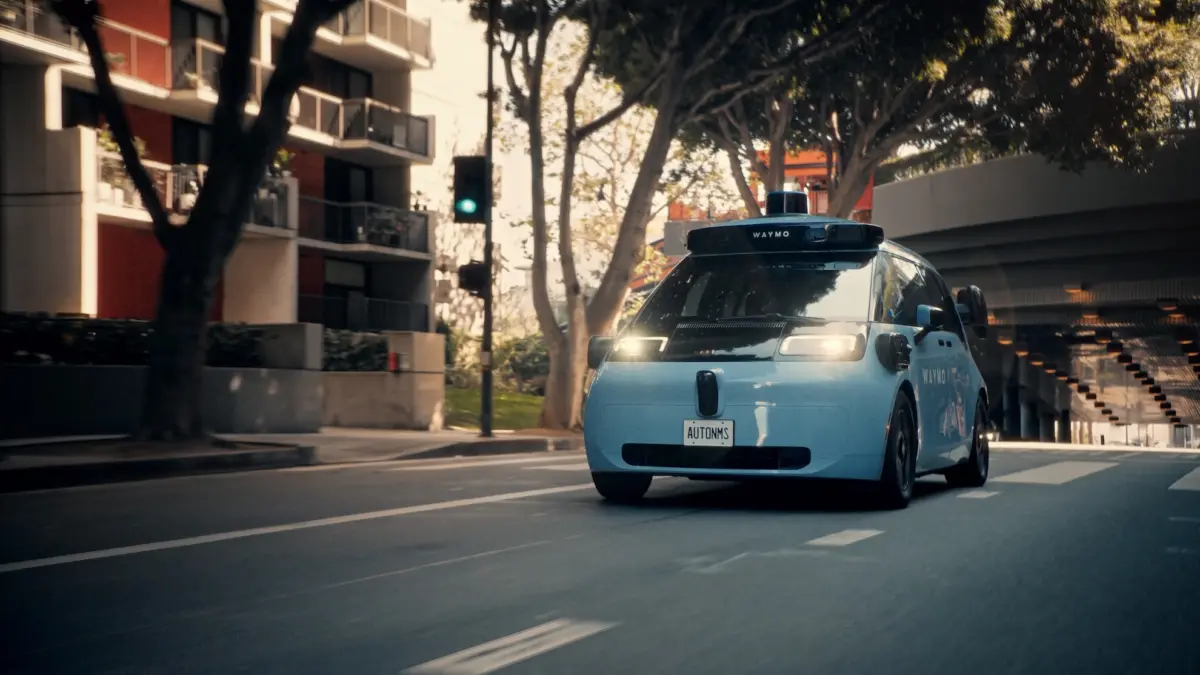
Waymo, the autonomous vehicle technology leader operating under Google parent company Alphabet, has successfully closed a massive $5 billion debt financing agreement. The substantial capital injection comes from a high-profile consortium of institutional lenders, marking a significant milestone for the robotaxi pioneer as it transitions from a heavily subsidized tech project into a fully scaling commercial enterprise.
The landmark debt financing—the first of its kind for Waymo—is designed to accelerate the company’s aggressive commercial expansion across existing domestic markets while laying the groundwork for upcoming international pushes into regions including Europe and Japan. Financial backing for the $5 billion loan was secured through a diverse group of prominent investment firms. PIMCO, Blackstone, and Sixth Street served among the key lenders driving the agreement, while Goldman Sachs acted as the sole lead bookrunner for the transaction.
Additional heavy-hitting participants in the funding include Capital Group, Loomis Sayles, T. Rowe Price, Apollo, Blue Owl, Diameter Capital Partners, Franklin Templeton, Fidelity Management & Research Company, HPS Investment Partners, and Oaktree. Waymo officially announced the successful closing of the loan, emphasizing that the arrangement provides crucial financial leverage during a pivotal growth window.
Until this debt financing agreement, Waymo’s financial strategy relied exclusively on capital infusions from its parent corporation and outside venture equity partners. The company’s equity fundraising has grown exponentially over the years, most recently highlighted by a massive $16 billion equity round in February that pushed Waymo’s total valuation to an astounding $126 billion. That equity round was led by prominent investment firms including Dragoneer Investment Group, DST Global, and Sequoia Capital, with Alphabet participating to maintain its position as the majority investor.
Alphabet’s self-driving subsidiary has a history of attracting massive external investments to fuel its technological development and operational scale. Prior to the 2026 equity round, the company secured $5.6 billion in a Series C funding round in 2024, following previous major capital raises of $2.5 billion in 2021 and $3.2 billion in 2020.
A spokesperson for Waymo explained in an email statement that the new debt financing provides the enterprise with essential financial flexibility. According to the company, the loan strengthens its balance sheet and strategically positions the organization to capitalize on significant commercial opportunities ahead. The spokesperson noted that the influx of capital arrives at a time when the business is experiencing proven commercial demand alongside measurable improvements in road safety outcomes across the communities where its vehicles currently operate.
The journey to this financial juncture has been long and deliberate. Waymo’s roots stretch back to the pioneering days of the Google self-driving car project, which spent years testing autonomous vehicle technology on public roads across Silicon Valley and the broader San Francisco Bay Area. During those early years, public interactions were largely limited to occasional demonstrations for media and select groups.
The first major geographical pivot occurred in 2016 when the company expanded operations to Phoenix, Arizona, establishing what would eventually become its foundational robotaxi testing and commercial market. For years, Phoenix served as the primary testing ground for refining the software, sensor suites, and operational safety protocols of the autonomous fleet.
A major strategic shift arrived in August 2023 when Waymo secured the final necessary regulatory permits to operate a commercial robotaxi service and charge fares for rides in California. That regulatory milestone kicked off a much more aggressive and rapid commercial playbook. Since obtaining those permits, Waymo has rolled out its driverless vehicle services across multiple major California municipalities, including Los Angeles, San Francisco, and more recently, San Diego.
Beyond its home state of California, the company has successfully introduced its robotaxi services to a growing list of key metropolitan areas across the United States. In Texas, Waymo launched operations in Austin, Dallas, and Houston. Meanwhile, in Florida, the autonomous fleet established a presence in Miami, Orlando, and Tampa. Today, Waymo operates its commercial robotaxi services across 15 distinct markets nationwide, transporting thousands of everyday passengers without safety drivers behind the wheel.
Building on its domestic momentum, Waymo is aggressively eyeing international expansion. The company has set its sights on bringing its autonomous ride-hailing services to global urban centers. Toward that goal, Waymo has already commenced physical testing of its autonomous vehicles in London and Tokyo, with concrete plans to launch commercial operations in both major international cities in the near future.
However, this rapid scaling and increased presence on public streets has not gone unnoticed by the public, local communities, or federal regulators. As Waymo vehicles log millions of autonomous miles in dense urban environments, the company has faced rising scrutiny, increased public attention, and regulatory investigations.
The National Highway Traffic Safety Administration’s Office of Defects Investigation recently opened a formal inquiry into instances of illegal behavior involving Waymo robotaxis maneuvering around stopped school buses. The federal safety regulator launched the investigation following specific incidents, including one notable event where a Waymo robotaxi struck a child near an elementary school in Santa Monica. The child, who sustained minor injuries, was struck while the autonomous vehicle was traveling at approximately six miles per hour.
Federal oversight has intensified on multiple fronts. Earlier in the year, the National Transportation Safety Board also announced the opening of its own independent investigation into Waymo. The NTSB action was prompted by multiple reports and observations of Waymo robotaxis illegally passing stopped school buses on numerous occasions across at least two different states. These regulatory challenges underscore the complex operational hurdles and high-stakes safety standards facing the autonomous vehicle industry as companies attempt to transition from localized testing programs into ubiquitous, scaling commercial transit networks.







No comments yet. Be the first to join the conversation!