

Receiving a financial windfall through an inheritance is an experience that rarely arrives in a vacuum of simple arithmetic. Instead, it is almost universally accompanied by a complex and often conflicting wave of emotions, including profound sadness and guilt over the loss of a loved one. What lands in a bank account is far more than a numerical figure; it represents a lasting legacy, a lifetime of labor, and a profound act of generosity that can easily feel overwhelming to the recipient. Naturally, most beneficiaries want to honor the memory and meaning of the person who passed away, ensuring that they do not waste what that individual worked so diligently to leave behind.
When managed with care and foresight, a substantial financial windfall can fundamentally alter a person’s economic standing. It can wipe out high-energy, high-interest debt, establish a robust emergency fund, or significantly boost retirement savings contributions. Conversely, when handled frivolously, that same windfall can vanish nearly as quickly as it arrived. Recent data from the U.S. Health and Retirement Study underscores this precarious reality, revealing that an alarming 42% of heirs manage to spend their entire inheritance within a single year.
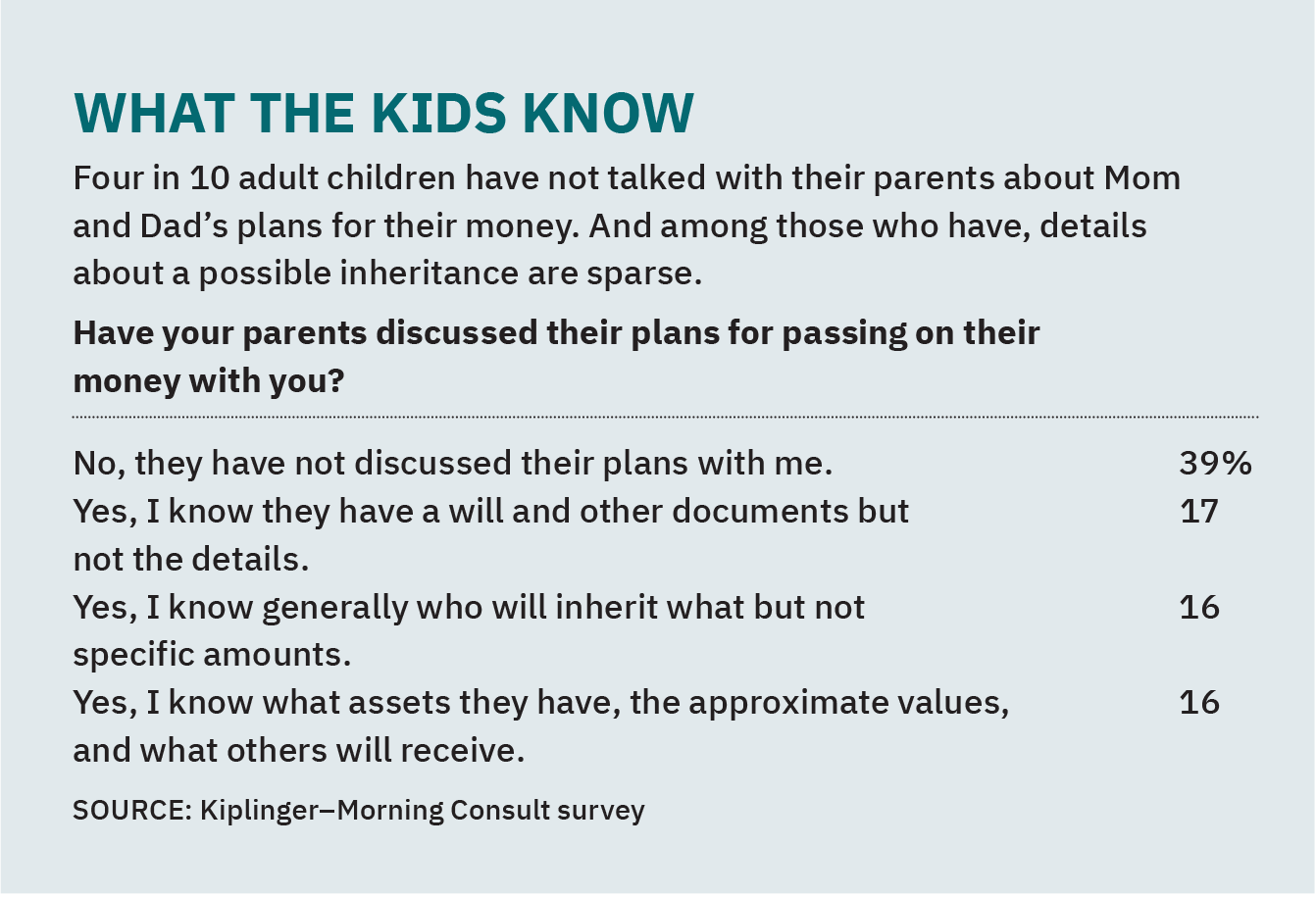
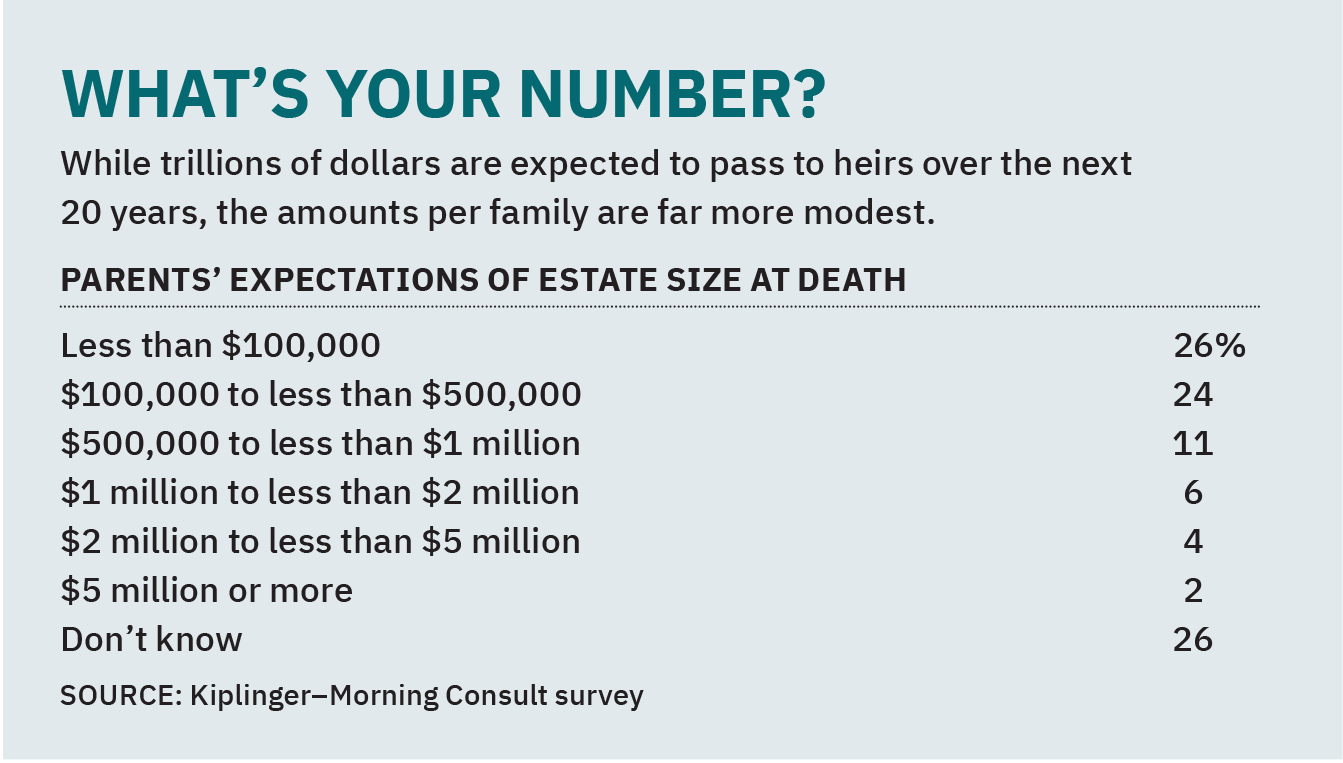
This financial vulnerability comes at a time when everyday economic pressures are mounting for millions of households. Recent research conducted by Morning Consult and Kiplinger highlights a notable disconnect between generations regarding expectations around inherited wealth. Adult children are far less likely to believe they will receive a meaningful inheritance than parents are to expect they will leave one behind. Specifically, 42% of younger respondents report that they do not expect to receive a sizable amount of money, while roughly twice as many parents maintain active plans to pass down a meaningful estate.
These differing expectations unfold against a backdrop of widespread financial strain. According to data from a Wealthvieu survey, between 60% and 65% of Americans currently live paycheck to paycheck, while another 56% lack the necessary savings to cover a basic $1,000 emergency. In such an economic climate, the sudden appearance of $100,000 in a bank account naturally feels like a life-altering sum of money. For anyone anticipating a windfall or grappling with the reality of a recently acquired large inheritance, understanding how to structure financial decisions is critical to ensuring the money provides long-term security rather than disappearing within twelve months.
Take time to breathe
The emotional turbulence following the loss of a loved one often clouds financial judgment. According to findings from Capital Group, two-thirds—or 65%—of Gen Xers and Millennials express regret over how they ultimately utilized their inheritance money, with nearly two in five wishing they had directed more of those funds into investments. While only 18% of millennials sought guidance from qualified financial professionals, 27% were significantly more inclined to turn to social media and unregulated online figures, often referred to as finfluencers, for financial direction when coming into money.

Experts warn against rushing into immediate financial maneuvers. Srbuhi Avetisyan, a research and analytics specialist at Owner. One, emphasizes the psychological weight accompanying these funds. "Don’t rush to make the money productive," Avetisyan advises. "Give yourself permission to do nothing with it for a while. An inheritance is unusual money because it arrives together with emotion." She notes that depending on the specific circumstances, heirs frequently experience a volatile mix of grief, relief, guilt, and an urgent, internal pressure to do something sensible immediately. "That’s not a great state in which to make a $100,000 decision."
For individuals receiving a substantial cash sum, a prudent initial step involves depositing the funds into an FDIC-insured high-yield savings account or a secure money-market fund. Leaving the money parked temporarily allows time to process the emotional landscape of loss while figuring out long-term priorities. Coping with grief is challenging enough on its own; attempting to navigate complex financial decisions simultaneously only complicates matters further.
Don’t treat a promise like a payday
While forward-looking planning is generally a sound strategy in many areas of life, treating an anticipated inheritance as a guaranteed future payday can prove reckless. Making concrete spending plans for funds that have not yet arrived leaves individuals vulnerable to shifting life circumstances. The reality is that the financial standing and needs of the person leaving the money can change dramatically over time.
A relative or friend might eventually require admission to an expensive long-term care facility or a nursing home, rapidly depleting their accumulated assets. Alternatively, they may ultimately choose to distribute their wealth entirely to charitable organizations, leaving beneficiaries with a financial future that could never be guaranteed. As Thomas Jefferson famously observed, individuals should never spend money before they actually possess it. Consulting with a qualified inheritance planning advisor can help families navigate these sensitive discussions and formulate realistic short-term and long-term financial strategies that account for all existing assets and obligations.
There is nothing inherently wrong with enjoying a portion of an inherited sum. The true mistake lies in allowing a meaningful financial opportunity to dissipate entirely through uncoordinated spending without ever defining what the money is meant to achieve.
Focus on debt reduction first
Directing inheritance funds toward paying down existing debt may lack the immediate excitement of other financial moves, but it remains one of the most valuable strategies available. Credit cards frequently carry interest rates of 20% or more, which can quietly devour even a substantial inheritance over a relatively short period. Consequently, eliminating high-interest balances provides a guaranteed return on investment.
Clearing these balances also frees up vital monthly cash flow, making it significantly easier to save or invest whatever funds remain. Paying down student loan obligations or reducing a home mortgage can also provide immense psychological and financial relief, particularly for individuals whose primary goal is achieving complete freedom from debt.
Consider investing the money
For those who choose to invest their inheritance, partnering with a financial planner can help establish a disciplined approach. Professionals generally recommend diversifying investments across a range of asset classes with varying risk tolerances, tailored to the individual’s comfort level and financial literacy. Rather than deploying the entire lump sum at once, many advisors advocate for phased investing strategies, such as dollar-cost averaging, to mitigate market volatility over time.
Boost your contributions
An inheritance can also serve as a strategic enabler for boosting contributions to retirement accounts or college savings plans, such as 529 plans. While inherited cash cannot be deposited directly into traditional retirement accounts because it does not constitute earned income, possessing a cash cushion provides the psychological security needed to increase paycheck deferrals.
By increasing the percentage withheld from a paycheck for a 401(k) and using the inherited cash in a bank account to cover daily living expenses like rent, groceries, and utilities, individuals can maintain their standard of living while rapidly building their retirement nest egg. Workers can contribute up to $24,500 annually to a 401(k), with additional catch-up contributions permitted for those aged 50 and older, alongside limits for individual retirement accounts and health savings accounts.
Understand the tax implications
Unless an individual inherits an extraordinary fortune, federal estate taxes typically do not present an immediate concern, given current exemption thresholds. However, specific assets carry distinct tax rules that require careful tracking. For instance, individuals who inherit securities should document their market value on the exact date of the original owner’s death to establish the correct cost basis if those assets are eventually sold.
Similarly, tax rules governing individual retirement accounts vary widely depending on whether the account was inherited from a spouse or another individual, as well as whether the account is traditional or Roth. While beneficiaries generally do not owe income tax merely upon inheriting an IRA, withdrawals from traditional IRAs remain fully taxable upon distribution. Roth IRAs, conversely, usually offer tax-free withdrawals, though they are typically subject to strict rules requiring the account to be fully depleted within a limited timeframe.
Ultimately, whether an heir chooses to allocate a portion of the funds toward personal enrichment or long-term security, the ultimate responsibility rests with the recipient. Jason Stephens, founder and managing partner of Evertern Wealth, highlights the balanced approach taken by a client who inherited approximately $150,000 from a grandparent. The client used a portion of the funds to take a long-desired trip to Europe, eliminated lingering student debt, and invested the remainder. According to Stephens, that represented a thoughtful and balanced utilization of the asset, combining a memorable life experience with durable financial protection.











No comments yet. Be the first to join the conversation!