
As the 2026 midterm elections draw closer, healthcare costs continue to rank among the chief economic anxieties for American voters. Campaign trails are once again saturated with familiar phrases, heavy promises, and sweeping declarations about how to fix a fractured medical system. To help voters cut through the political noise, this installment continues a special series examining the specific slogans, catchphrases, and policy buzzwords appearing in campaign advertisements and media coverage in the weeks leading up to the election.
Recent polling underscores just how central this issue remains to the electorate. According to an October 6 KFF Health Tracking Poll, roughly 6 in 10 voters report that they are worried about their ability to afford healthcare. Furthermore, nearly half of all surveyed voters indicate that the cost of healthcare is an extremely important topic that candidates must address during their campaigns.
Mirroring previous election cycles, candidates in 2026 are framing healthcare challenges through a populist lens. The prevailing argument centers not merely on whether Americans can physically access medical care, but whether they can afford it—and critically, who benefits financially from these notoriously high costs. Rather than getting bogged down in complex legislative mechanics early in the race, politicians are leaning heavily on concise, emotionally resonant messaging.
Campaign platforms generally cluster around three primary messages addressing coverage, affordability, and corporate power. While these phrases are ubiquitous in television ads, debate stages, and digital flyers, their definitions and underlying policy proposals vary wildly depending on who is speaking. A closer examination of these core phrases reveals what candidates actually mean when they use them.
What Does “Medicare for All” Mean?
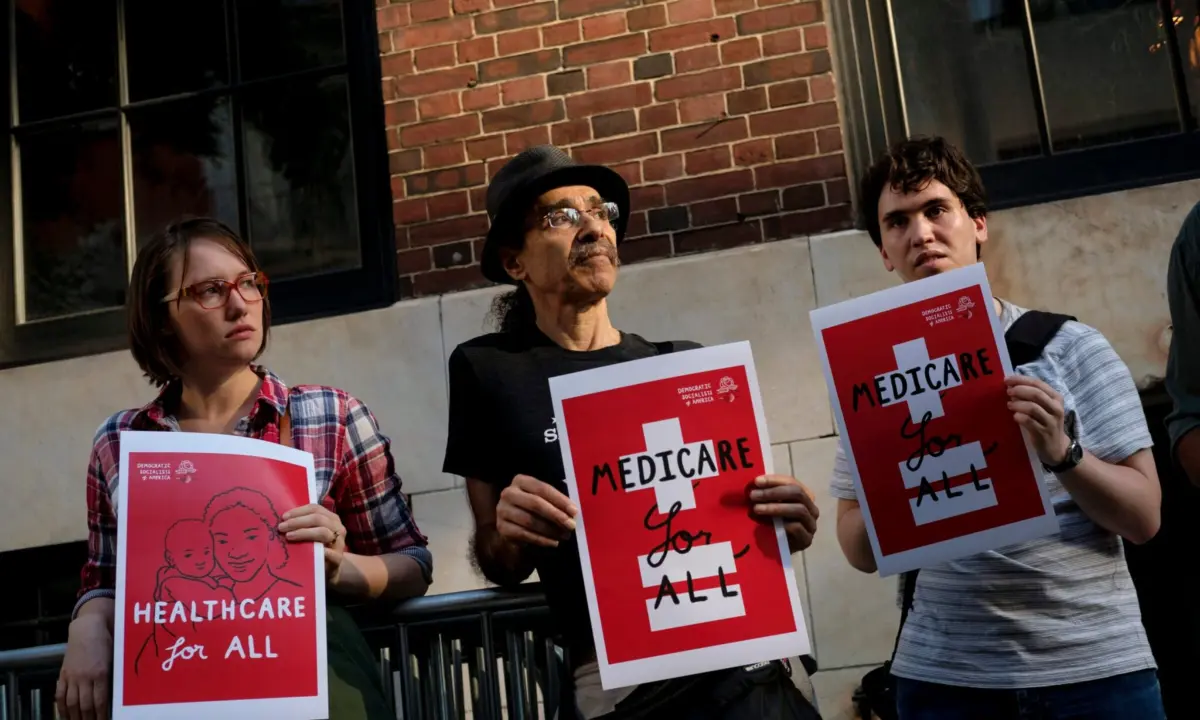
Among the most prominent and debated phrases on the political landscape is “Medicare for All.” The slogan refers to a single-payer or universal government-sponsored system designed to provide universal health coverage through a public program modeled directly on Medicare. Currently, Medicare serves primarily older Americans alongside other specific eligible groups, but a single-payer expansion would extend this coverage model to the entire population.
Public support for the concept remains exceptionally high. According to the KFF poll, two-thirds, or 66%, of Americans support Medicare for All, marking an all-time high since the polling organization first began tracking public sentiment on the issue in 2016. However, opinions break down starkly along partisan lines. Support is overwhelmingly highest among Democrats, at 84%, followed closely by independents at 72%, while dropping significantly among Republicans to 34%.
Specific proposals put forward by various candidates during the 2026 election cycle vary in their scope and implementation details, but the typical vision offers comprehensive medical coverage featuring low or no premiums, deductibles, or copays. Additionally, under such a system, the federal government would possess significantly more market leverage to negotiate prescription drug prices directly with manufacturers.
Supporters argue that transitioning to a Medicare for All system could radically simplify the medical billing ecosystem, making healthcare vastly more affordable and universally accessible for all citizens. Conversely, opponents contend that such a sweeping overhaul would require drastic tax increases, severely disrupt or entirely dismantle the private health insurance industry, and potentially lead to longer wait times for specialized medical care due to an influx of newly covered patients. Despite these polarizing debates, several prominent candidates have made Medicare for All a cornerstone of their 2026 platforms.
What Does the Promise to “Lower Healthcare Costs” Mean?
In contrast to the structural overhaul implied by single-payer proposals, the promise to “lower healthcare costs” serves as a much broader, more flexible campaign slogan. This phrase allows candidates to focus heavily on immediate affordability measures without necessarily calling for the complete dismantling or replacement of the existing healthcare system.
Because the slogan is broad, the specific policy proposals packaged underneath it can differ significantly from one candidate to another. Common initiatives often include proposals to lower monthly insurance premiums, reduce out-of-pocket expenses, and rein in spiraling prescription drug prices. Candidates may also point to measures such as increasing price transparency across hospitals and insurers, expanding the utility of health savings accounts to help families shoulder medical burdens, or directly targeting insurers and healthcare middlemen, such as pharmacy benefit managers, to eliminate hidden fees.
By emphasizing cost reduction rather than systemic restructuring, candidates using this slogan often aim to appeal to a broader, more moderate coalition of voters who are primarily concerned with monthly household budgets rather than ideological debates over the future of the American health insurance market.
What Does “Take on Big Pharma” Mean?
Another populist mainstay on the campaign trail is the phrase “Take on Big Pharma.” This slogan acts as shorthand for proposing aggressive legislative and regulatory measures aimed at lowering the exceptionally high costs that Americans pay for prescription drugs. The underlying intent of the message is to reel in the immense financial and lobbying power that large pharmaceutical companies hold over both consumer pricing and the political process.
Several candidates specifically incorporate the pledge to take on the pharmaceutical industry as a central pillar of their platforms. By framing drug manufacturers as adversaries profiting off of patient illness, candidates attempt to build a unified voter coalition around the idea that lowering medication costs is a matter of corporate accountability. Proposed tactics often involve allowing Medicare to negotiate a broader swath of drug prices, capping out-of-pocket costs for seniors, penalizing companies for excessive price hikes, and encouraging the import of lower-cost medications from peer nations.
How to Learn More About What You’re Voting For
With a dizzying array of slogans, promises, and competing policy platforms dominating the airwaves, navigating healthcare issues ahead of the election can feel overwhelming for voters trying to separate political rhetoric from actionable policy.
To find comprehensive, nonpartisan information about what will actually appear on local ballots, voters can start by reaching out to their state or local election offices. Official directories provided by the U.S. Election Assistance Commission and the National Association of Secretaries of State through resources like Can I Vote connect citizens directly to official state election portals, sample ballots, and registration details.
Additionally, voters looking to research the specific stances, voting records, and proposed platforms of candidates running in their districts can utilize tools such as VOTE411, a comprehensive voter education resource provided by the League of Women Voters. By consulting these official and nonpartisan resources, voters can look past the catchy campaign slogans and make fully informed decisions at the ballot box.








No comments yet. Be the first to join the conversation!