
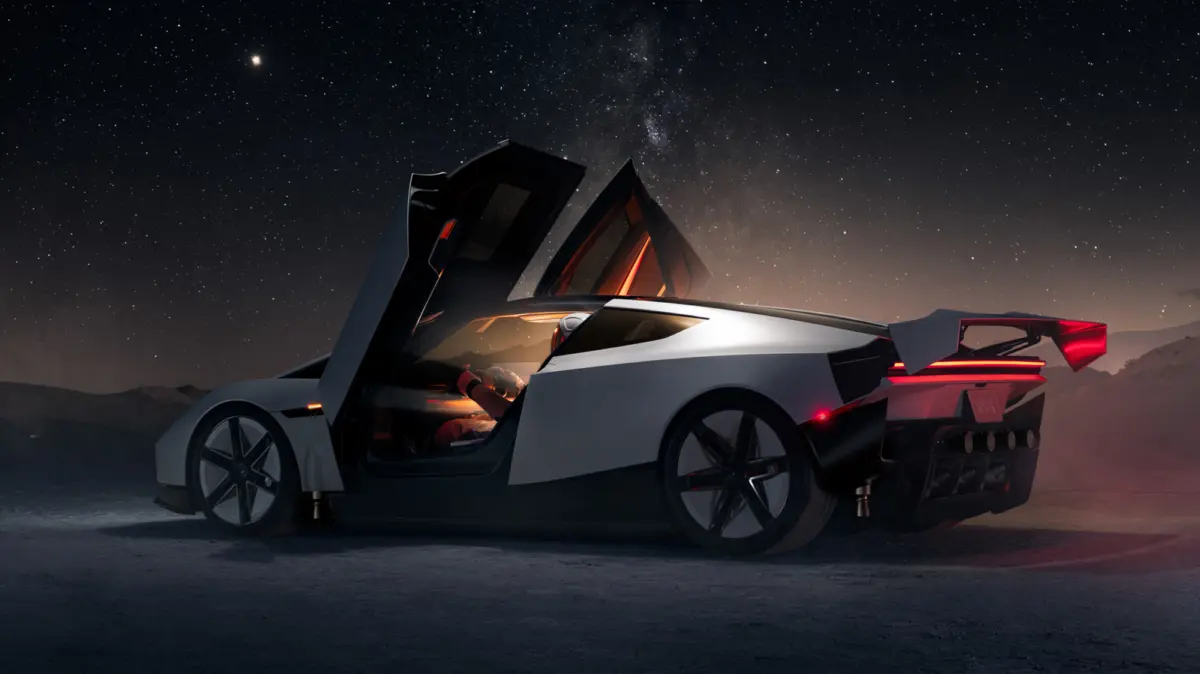
The saga of the second-generation Tesla Roadster has taken yet another dramatic, science-fiction-adjacent turn. First introduced to the public in a surprise reveal back in 2017, CEO Elon Musk originally boasted about the exotic sports car’s breathtaking specifications: a sub-two-second zero-to-sixty-miles-per-hour time and a staggering 620 miles of driving range. For years, eager customers handed over millions of dollars in pre-order deposits to secure a spot in line for what was supposed to be the ultimate battery-electric grand tourer.
Now, prospective buyers and automotive enthusiasts can effectively throw those original expectations out the window. The vehicle those thousands of people spent their money to reserve years ago has essentially been replaced. Tesla has introduced a heavily modified, second-generation Roadster concept—one that leans far more heavily into the company’s corporate and technological ties to SpaceX than it does on mundane automotive metrics like driving range. Welcome, supposedly, to the new age of flying cars.
According to Musk and the dynamic demonstrations broadcast during a recent livestreamed re-reveal event, the updated Roadster is designed to fly. Alongside this head-turning capability, Tesla outlined a jaw-dropping zero-to-sixty time of just 0.81 seconds, a fan installation positioned beneath the vehicle to generate intense ground-effect downforce, and a radically altered physical architecture. The new production timeline points toward a 2028 release date, with Musk assuring skeptics on stage that this target is firmly set for production: "Actually."
The New Design
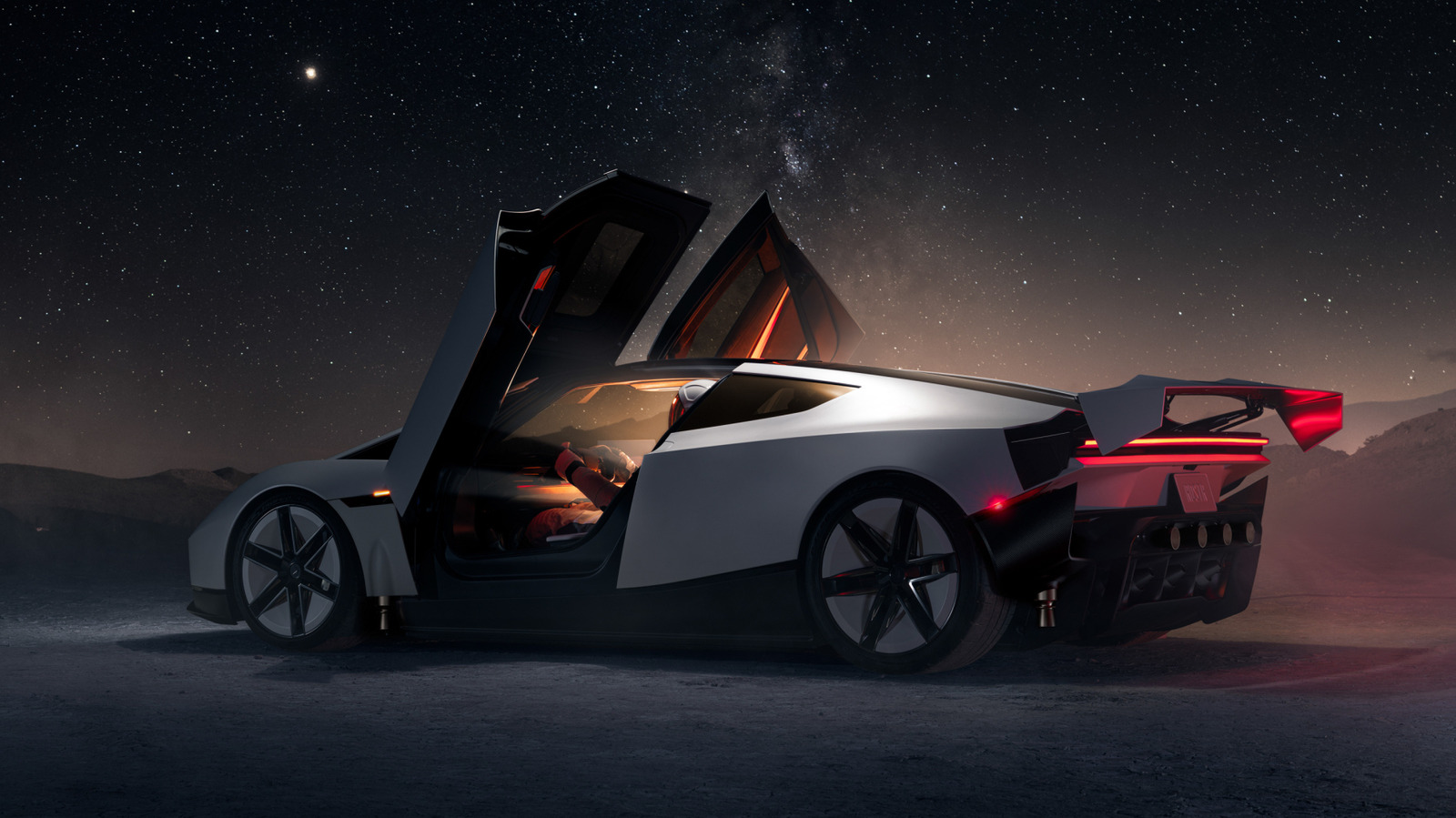
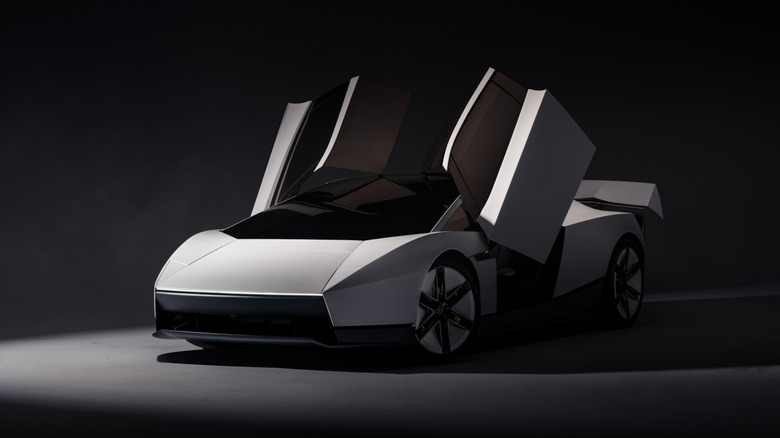
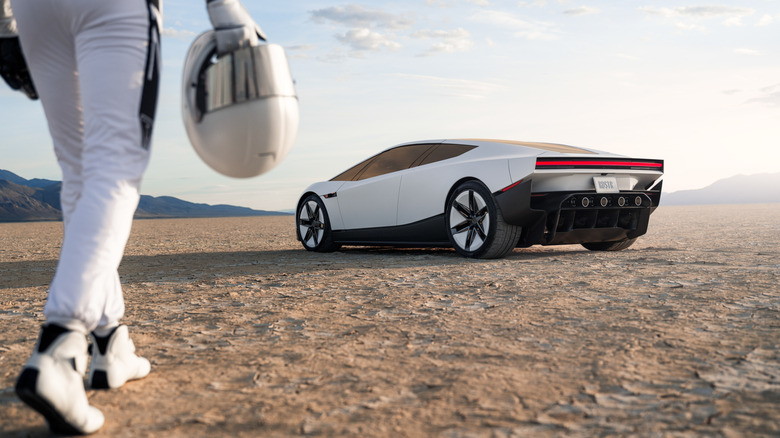
Before delving deeply into the dizzying array of thruster technology and performance claims, the physical transformation of the Roadster demands attention. The vehicle bears almost no resemblance to the smooth, conventional lines of the concept shown in 2017. Tesla’s design team explicitly cited aeronautical influences as the primary inspiration for the new look, pointing toward advanced military aircraft like the F-35 and SR-71 spy plane. Eagle-eyed automotive observers may also spot similarities to Wet Nellie, the amphibious Lotus submarine driven by James Bond in "The Spy Who Loved Me."
Most prominently, however, the revised aesthetics are heavily informed by space exploration. The exterior is coated in a stark, futuristic white paint, complemented by gold-tinted windows designed to explicitly evoke the appearance of Apollo-era space suits.
Beneath the striking exterior panels, structural changes are equally sweeping. The car features an active rear wing, a design element that lines up precisely with patent drawings discovered earlier. Much like active aerodynamics found on various hypercars, this wing is engineered to extend both upward and outward to manipulate airflow dynamically. Furthermore, the front suspension has been shifted inboard, a packaging adjustment that automotive engineers suggest was likely necessary to carve out physical space for an intricate network of new air hoses and pressure lines.
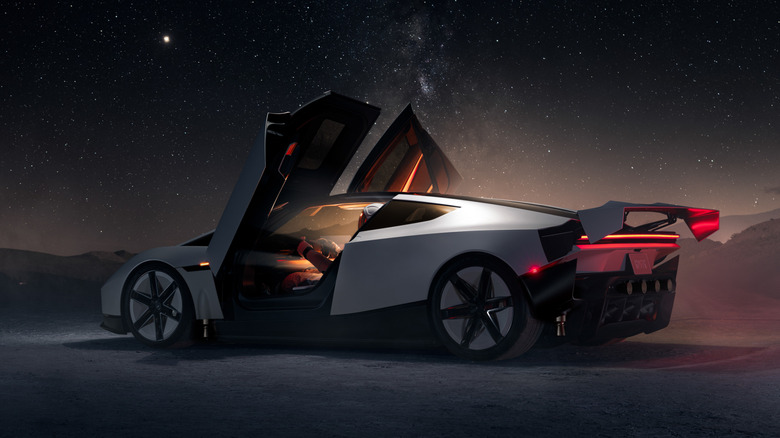
The interior layout has also undergone a radical departure. The original Tesla Roadster was envisioned as a 2+2 grand tourer capable of carrying four passengers in a pinch. The new iteration, by contrast, is strictly a two-seater. Its seats are molded directly into the structure of the car, bearing a closer resemblance to the cabin configuration of a mid-engine supercar like the Ford GT than a traditional Tesla sedan or crossover.
Okay, the Flying Car Thing
The most contentious and widely discussed element of the re-reveal event was, naturally, the demonstration of flight. The livestream kicked off with footage showing a prototype Roadster engaging in legitimate airborne maneuvers. The foundation of these wild capabilities is a newly developed cold-thruster system. Housed behind the cabin is a massive, carbon-wrapped 158-gallon tank that compresses air before expelling it rapidly through a network of ten distinct exhaust ports.
According to Tesla’s presentation layout, these ports are strategically placed across the car: one in each corner to exert upward lifting force, one integrated into each front fender for lateral movement, and a cluster of four at the rear to propel the vehicle forward with immense velocity. During the event’s demonstrations, Tesla showcased test vehicles utilizing these systems to stick to an inverted, upside-down track, right themselves dynamically in midair after launching off ramps, and even execute a complete standing flip.
The system relies on cold gas thrusters that can only fire for brief durations, meaning the vehicle is technically capable of dramatic, short-range hops rather than sustained, cruising flight. Nevertheless, the physical force generated by these thrusters is immense. Tesla quoted the rear thrust output at "over 80 kilonewtons," which translates to approximately 4,500 pounds of force per thruster.
Interestingly, the baseline Performance trim level appears to omit the thruster system entirely. In this base version, the massive space normally occupied by the central compressed air tank is likely repurposed for conventional cargo utility, though the vehicle still retains the under-car fan system. Stepping up to the limited Thrust trim introduces the four rear thrusters, while the exclusive, invite-only Rocket trim incorporates all ten exhaust ports. Tesla notes that the Rocket trim features seating for only a single occupant and an undefined "full flight system," leaving open questions about whether the passenger footwell houses additional air storage or entirely separate hardware.
Performance Specs
When it comes to acceleration and velocity, Tesla’s figures venture deep into the realm of the unbelievable. The automaker initially played a recorded video showing the Roadster completing a run to sixty miles per hour in roughly one second. This was followed by a live demonstration during the event where company representatives claimed, without the benefit of official on-screen timing equipment, that the car hit sixty miles per hour in an astonishing 0.81 seconds.
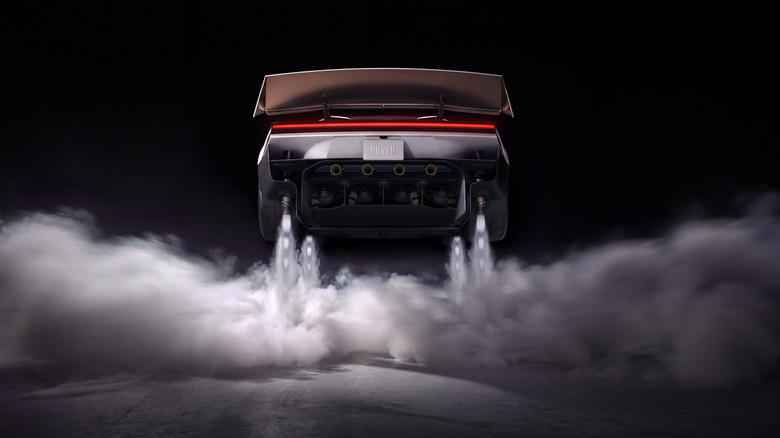
This blistering acceleration is credited directly to the rear-facing cold thrusters. Notably, the test vehicle used for the live acceleration run appeared to be configured as the Thrust trim, given the absence of visible downward-firing thrusters near the front wheels—ports that were clearly visible on the separate stunt vehicle used for the jumping demonstrations. Musk suggested on stage that the final, finalized production version will likely shave even more time off that 0.81-second benchmark.
Beyond straight-line acceleration, Tesla laid out equally ambitious handling and top-speed metrics. The company claimed the production vehicle will be capable of cornering forces exceeding two Gs of lateral acceleration. When the conversation turned to top speed, Musk pushed past the initial slide deck figures of over 230 miles per hour, suggesting on stage that the production model should aim to "crack halfway to the speed of sound. Mach 0.5, maybe higher." Reaching Mach 0.5 translates to roughly 383 miles per hour, which would outpace the current world record for a production car by over one hundred miles per hour.
Does Any of This Matter?
Even Elon Musk seemed to acknowledge the extraordinary nature of the promises being made, noting candidly during the presentation that success was not guaranteed. "It’ll probably work, but if it doesn’t work, we’re at a safe distance," he remarked to the audience. Tesla has a long-standing corporate history of introducing vehicles packed with headline-grabbing party tricks, but these new additions arguably introduce compromises to the everyday usability of the car. Many drivers rely heavily on trunk space, an amenity that takes a significant hit when a massive compressed air tank and thruster plumbing occupy the rear of the cabin. Furthermore, company representatives made a point of noting that no human drivers were strapped inside the test vehicles during the more extreme flight and flipping demonstrations, as the G-forces and violent movements would likely cause severe physical harm to an occupant.
Throughout its history, Tesla has frequently announced futuristic features, showcased concept prototypes with unverified performance metrics, and opened reservation books long before engineering hurdles were cleared. The vehicles utilized for the latest demonstrations appeared to be specialized engineering shells built exclusively to execute specific stunts, rather than fully realized production prototypes. With no independent verification of the record-setting acceleration runs, the automotive community is left waiting to see whether these physics-defying concepts can ever be translated into a road-legal, mass-producible reality.
In the wake of the event, Tesla has officially reopened its order books for the Roadster, once again collecting fully refundable or non-refundable reservation checks from customers willing to lock in capital for a car theoretically scheduled for assembly two years from now. The company has yet to clarify how it intends to handle the thousands of reservation holders who originally put down money for the completely different grand tourer first promised nearly a decade ago. As Tesla continues to solicit funds under the iconic Roadster banner, the broader automotive world watches with a mixture of intense fascination and profound skepticism.









No comments yet. Be the first to join the conversation!