
Managing personal finances often feels like an exercise in fragmentation, requiring individuals to log into multiple bank portals, credit card sites, and investment accounts just to get a basic read on their financial standing. To combat this financial scatter, platforms like Empower—formerly known as Personal Capital—have emerged to aggregate disparate accounts into a unified digital ecosystem. Having been utilized by long-term financial commentators and everyday investors alike for years, the platform operates as a comprehensive financial dashboard designed to provide a real-time snapshot of net worth, cash flow, investment performance, and retirement readiness. Available completely free of charge for its core software, the tool bridges the gap between basic budgeting apps and institutional-grade portfolio analysis.
Quick Take
Empower delivers a complete view of your finances in one place by automatically syncing checking, savings, credit card, loan, investment, and mortgage accounts. This automated syncing provides a real-time snapshot of an individual’s net worth and overall financial health. The platform offers core functionalities centered around cash flow tracking, net worth monitoring, investment analysis, and retirement planning. Notably, its investment tracking suite includes deep-dive capabilities such as asset allocation breakdowns, investment fee analyses, and comprehensive investment checkups. Supported by strong user ratings across major platforms—including a 4.8 out of 5-star rating with hundreds of thousands of reviews on the Apple App Store and a 4 out of 5-star rating on Google Play—the core dashboard services remain entirely free to use.
Getting Started with Empower
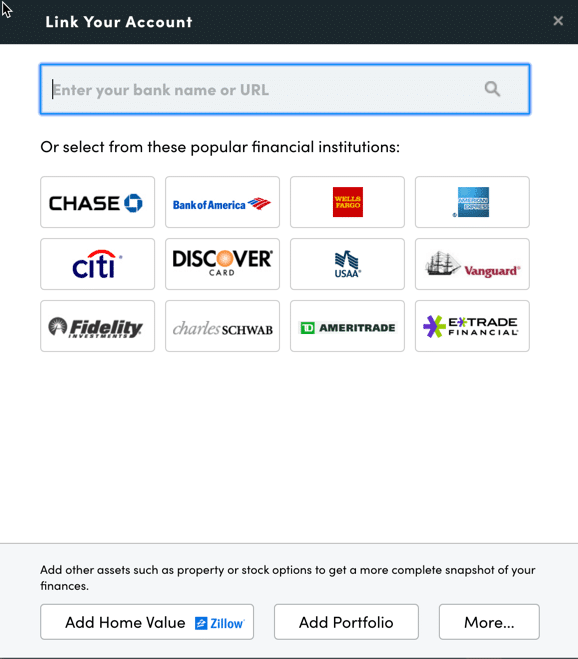
Beginning the journey with Empower requires signing up for a free account and subsequently linking all relevant financial accounts. While the platform has historically gained renown for its robust investment analysis and tracking capabilities, users frequently connect traditional bank accounts, credit cards, loans, mortgages, and even physical property. For real estate assets like a primary residence, Empower pulls in estimated market values directly from Zillow to ensure net worth calculations reflect up-to-date property valuations.
Linking accounts is straightforward, requiring online credentials for each respective financial institution. Users search for the name of their bank or credit union—or input the specific web address—within the linking dialog box found on the dashboard. In the rare event that a financial institution cannot be automatically linked, users retain the option to enter account details manually. Connecting multiple accounts is essential because the platform’s utility extends far beyond simple investment monitoring, allowing users to track overall net worth, spending habits, cash flow, and recurring bills from a centralized interface.
Once accounts are connected, configuring the settings and profile sections is a critical administrative step. The settings menu grants users granular control over email subscriptions—such as daily or weekly updates summarizing income, spending, and investment movements—as well as preferences regarding whether investment income and dividends should be factored into cash flow calculations. Security features are prominently housed here, featuring multi-factor authentication setup and optional alerts triggered by login attempts originating from foreign countries. Furthermore, the platform displays a transparent log of authorized devices and their last sign-on dates, allowing users to routinely purge outdated hardware connections. The profile section captures personal and household demographic data, income sources, savings rates, and investment objectives, which directly feed into the platform’s advanced long-term planning tools like the free retirement planner.
Dashboard Overview
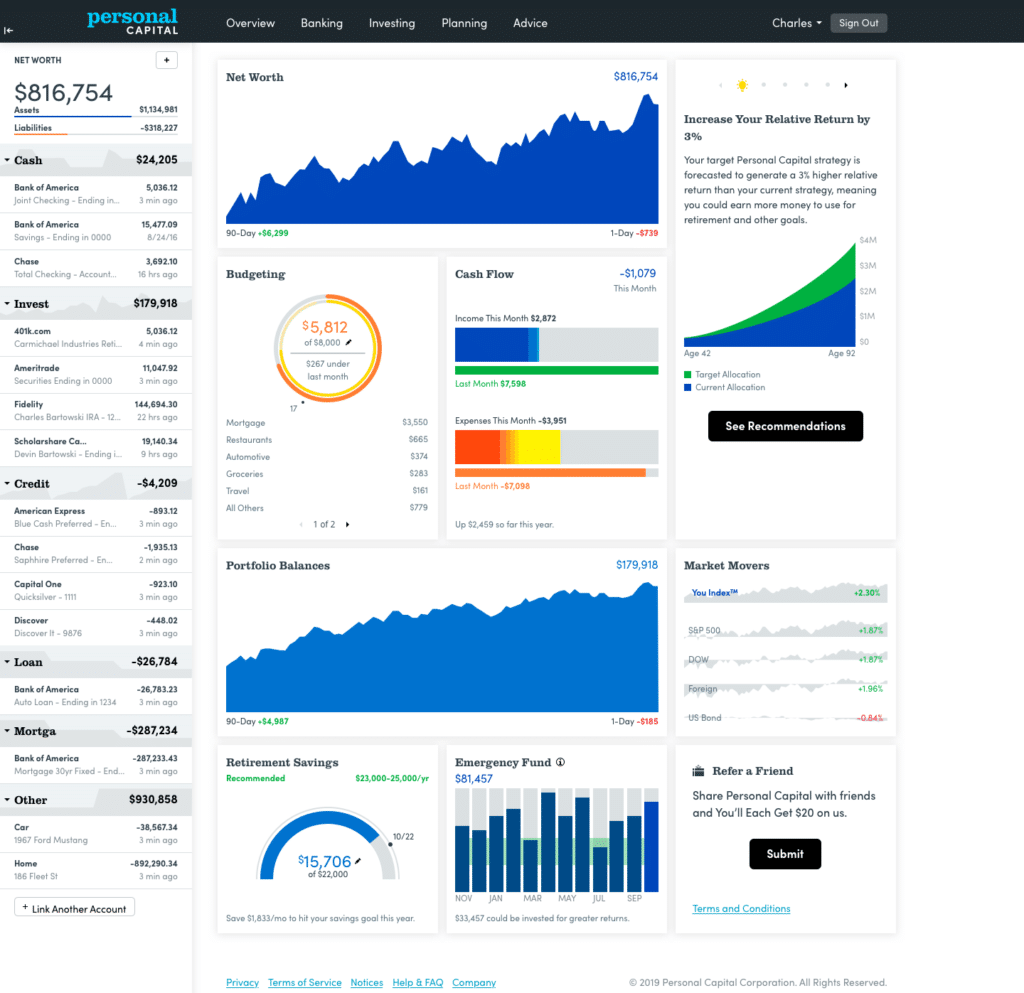
The Empower dashboard serves as the central command center, aggregating all linked accounts into a single, cohesive visual display. Upon logging in, users are greeted with an immediate snapshot of their net worth, monthly budget performance, cash flow trends, investment holdings, and ongoing progress toward critical financial milestones, including emergency savings and retirement goals.
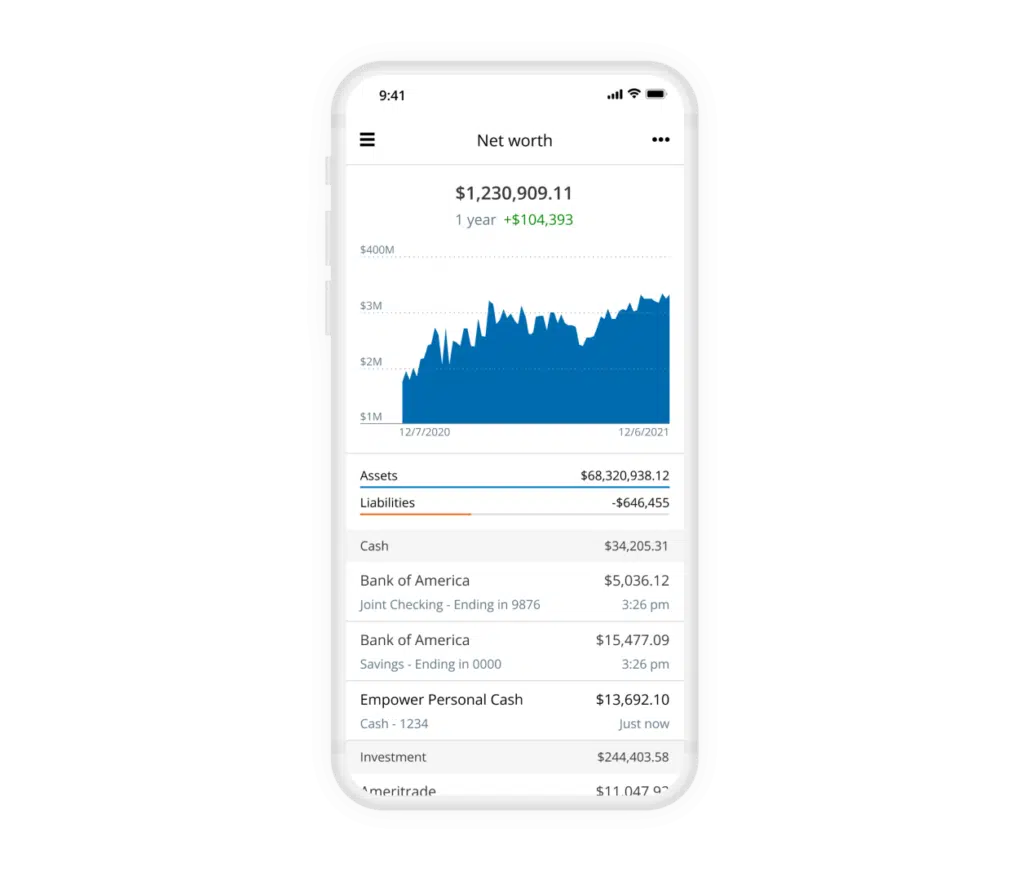
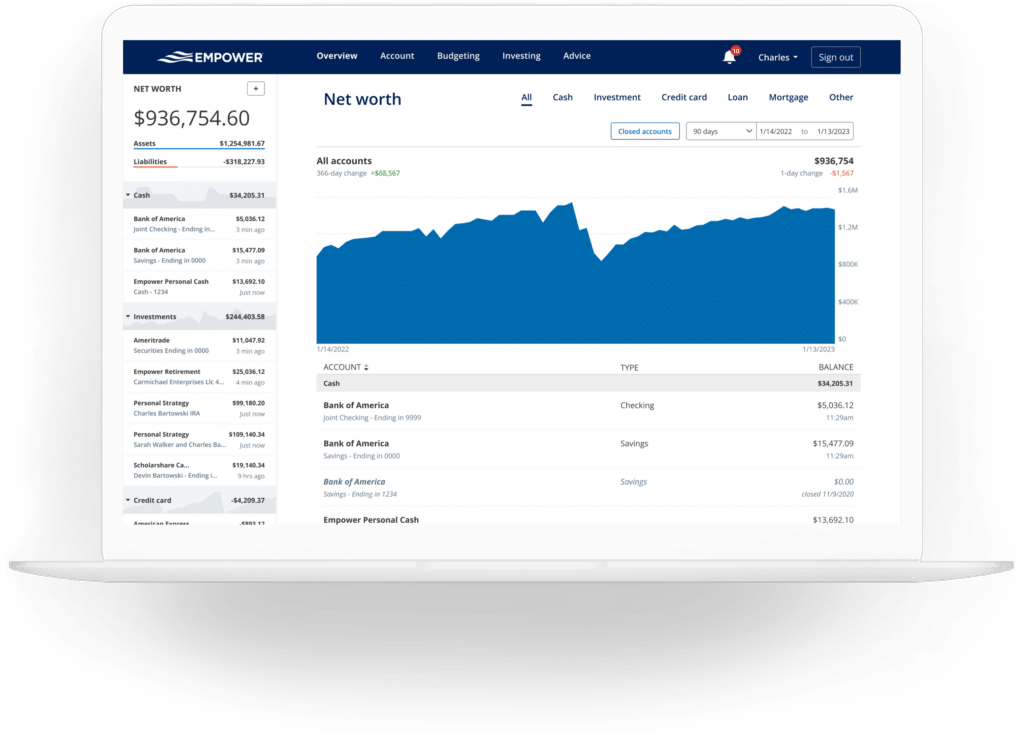
Tracking net worth remains a cornerstone of long-term financial health. While many dedicated savers maintain traditional spreadsheets for this purpose, Empower automates the process completely once all asset and liability accounts are successfully integrated. The net worth module plots historical growth alongside current asset-to-liability ratios, giving users a clear, unambiguous view of their overall financial trajectory over time.
Empower Banking, Cash Flow, and Budgeting
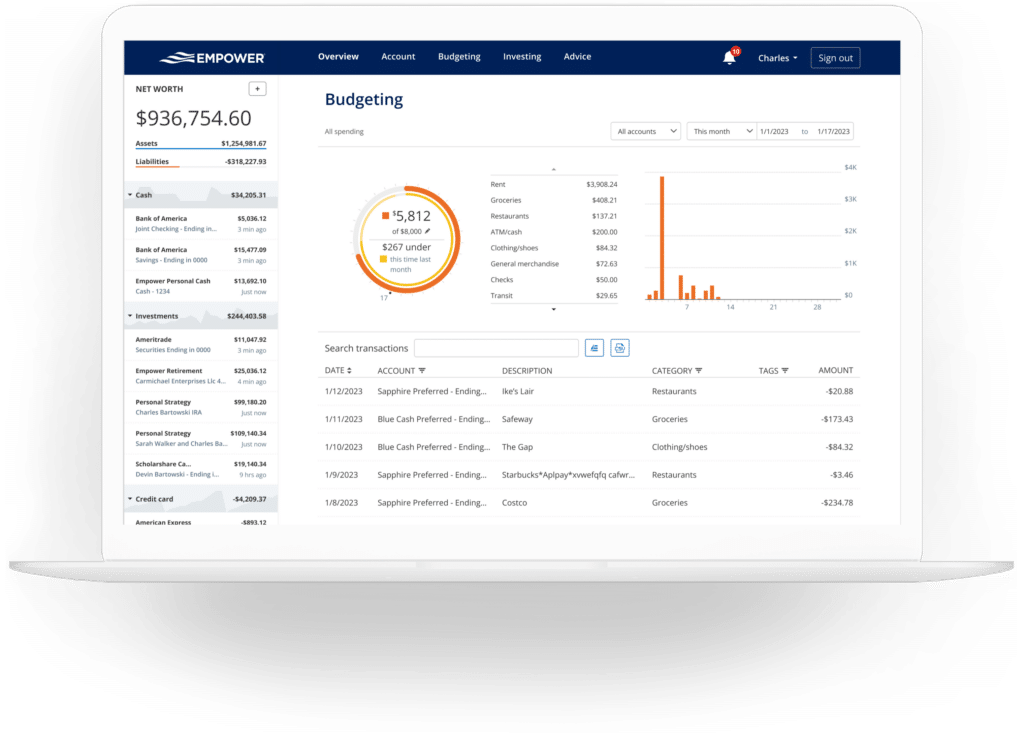
Beyond its investment pedigree, the platform offers robust banking and cash flow features that provide deep visibility into day-to-day financial operations. The cash flow tool monitors income and expenses at the granular transaction level, automatically sorting purchases into predefined categories. Users can isolate specific accounts to run targeted reports, such as analyzing business expenses separately from personal spending, or filtering strictly for income generated by investment portfolios to evaluate monthly dividend and interest production.
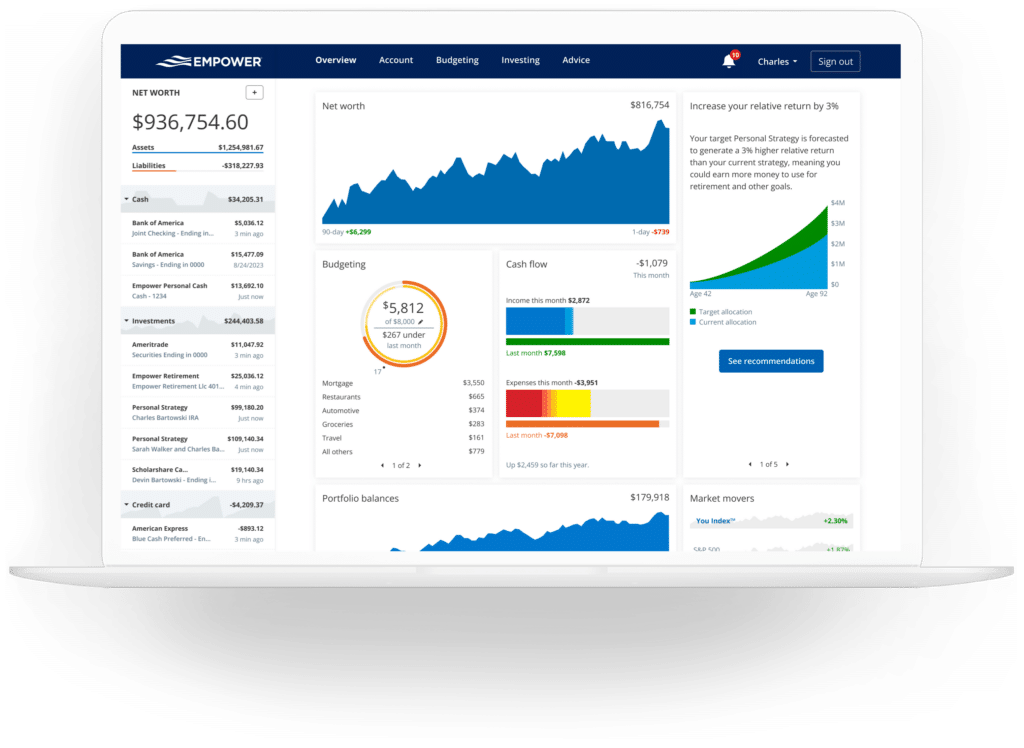
The budgeting functionality functions differently than traditional envelope-style budgeting applications. Rather than enforcing strict spending caps across dozens of micro-categories, Empower focuses on establishing an overarching monthly spending goal while delivering exhaustive visibility into where money actually goes. Transactions imported from linked accounts are categorized automatically, though users can spend a few minutes each month making manual corrections or utilizing custom tags. For instance, rather than creating a standalone category for minor household repairs, a user might apply a specific tag to easily isolate and track expenditures without cluttering the primary budget view.
Additionally, the platform incorporates a bills management feature. By connecting credit cards, mortgages, and various installment loans, Empower monitors upcoming payment due dates, helping users avoid late fees and manage monthly liquidity effectively.
Empower Investing and Crypto Tracking
Investment tracking is widely regarded as the platform’s standout capability. Once retirement accounts, brokerage portfolios, and other investment vehicles are linked, prices update continuously throughout the trading day. The system monitors mutual fund expenses, evaluates asset allocation, and provides diagnostic tools designed to stress-test portfolio health.
The holdings overview breaks down individual investments by share quantity, current price, daily gain or loss, total return, and overall portfolio weighting. Performance graphs allow investors to visualize historical returns across varying market conditions, ranging from bull markets to severe economic downturns.
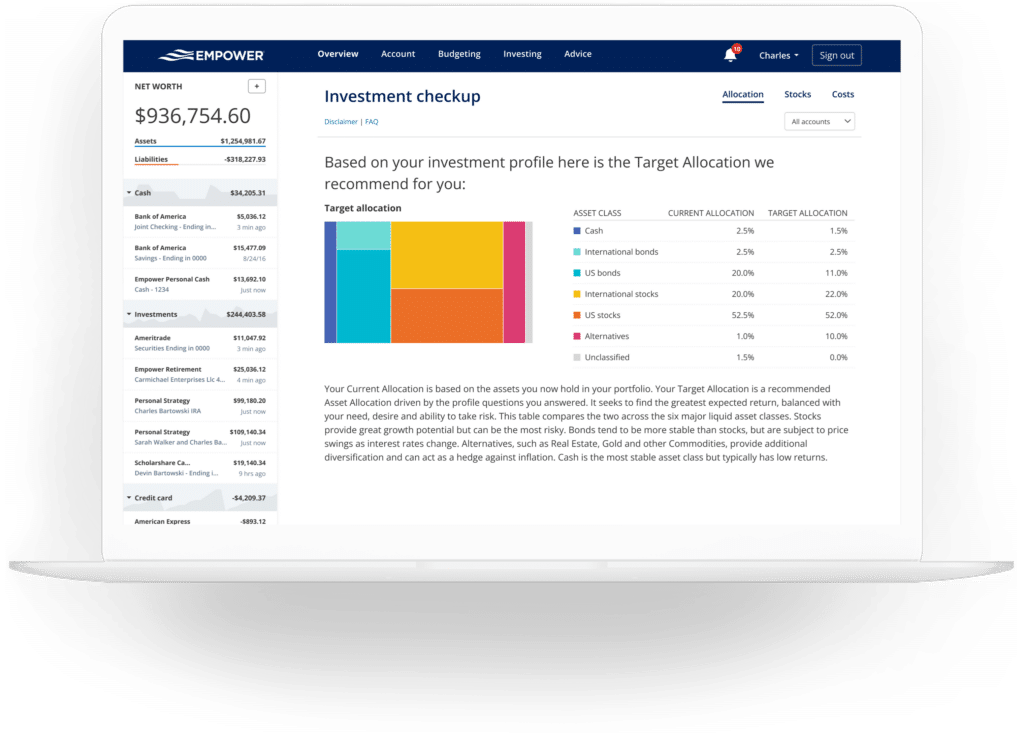
Asset allocation tools evaluate whether a portfolio maintains an appropriate balance between stocks and bonds, drilling down further into U.S. equities, international equities, and alternative asset classes. Interactive graphical representations allow users to inspect the underlying investments within each category. Notably, the allocation engine accounts for cash positions held not just in dedicated money market accounts, but also the uninvested cash reserves held inside stock mutual funds.
For digital asset investors, the platform supports the tracking of major cryptocurrencies such as Bitcoin, Ethereum, and Litecoin. To maintain security, investors are not required to link crypto wallets or share private passwords. Instead, users can establish manual tracking accounts by simply entering the token symbol, exchange, and total quantity owned. The platform is capable of tracking thousands of distinct tokens across hundreds of global exchanges.
Empower Planning Tools
While monitoring historical performance and current balances provides valuable context, the platform’s forward-looking planning tools represent its most sophisticated offerings.
The retirement planner utilizes data from all linked investment accounts to evaluate retirement readiness under various modeled conditions. Users can construct multiple scenarios side-by-side—comparing traditional retirement timelines against early retirement paths, testing the inclusion or exclusion of future Social Security benefits, and adjusting assumptions regarding inflation, effective tax rates, and projected life expectancy.
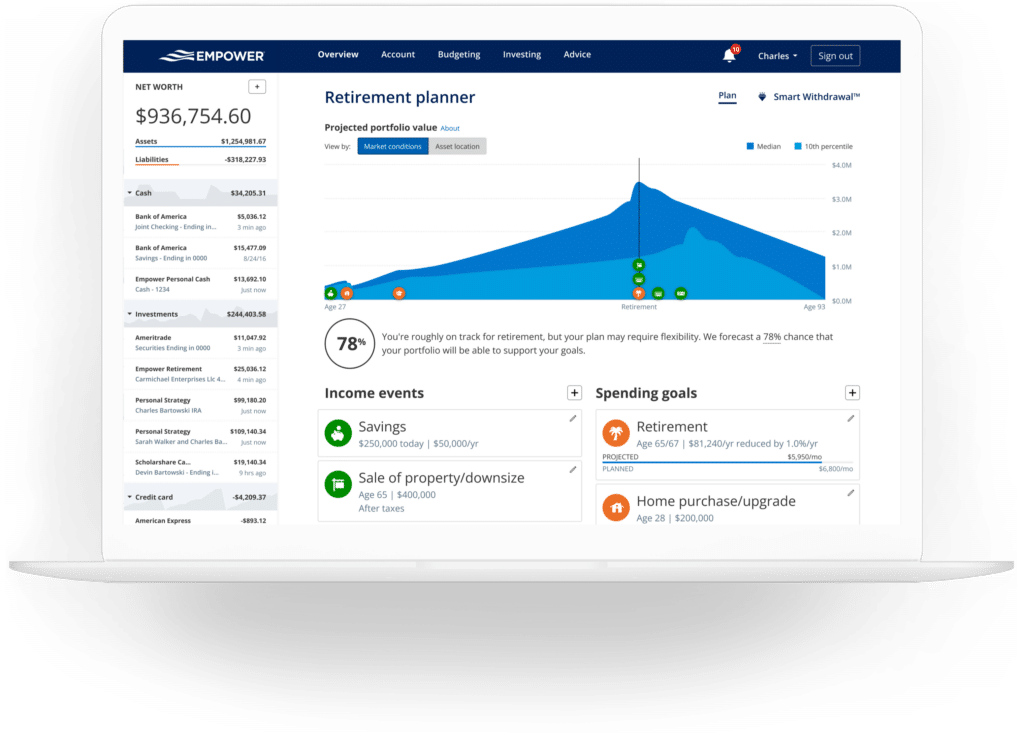
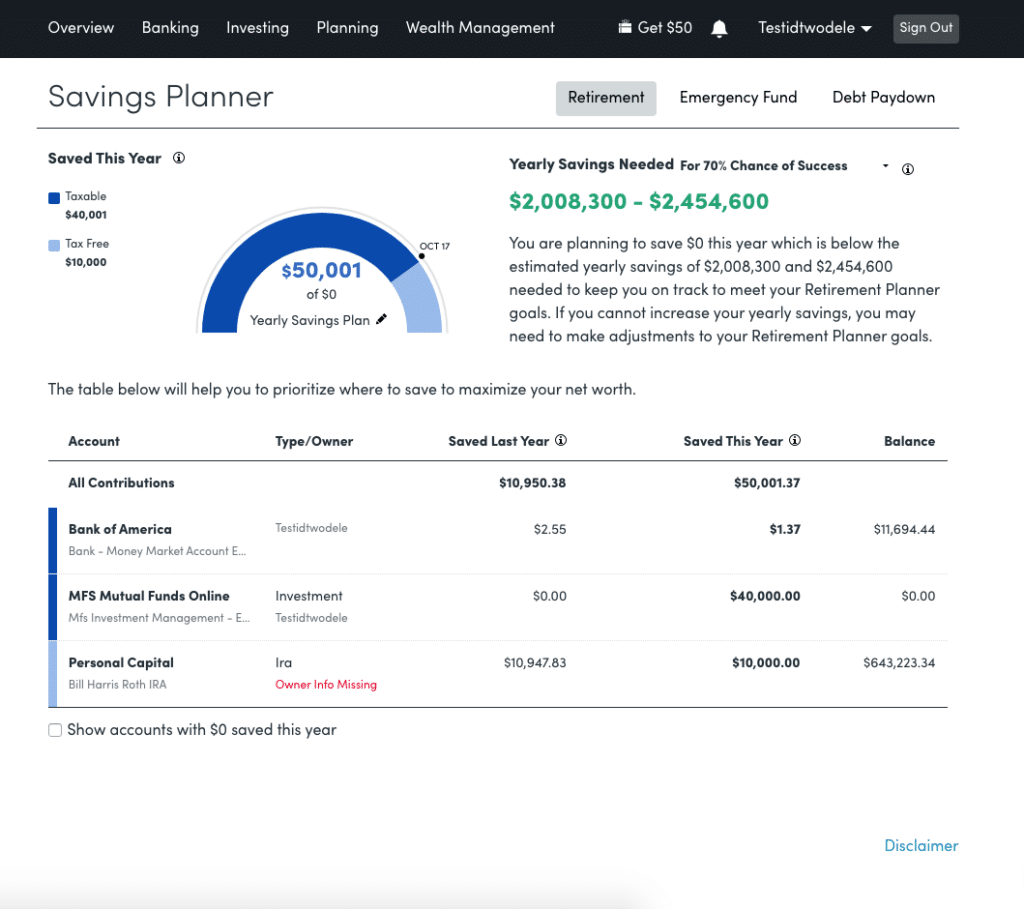
The savings planner integrates three distinct focus areas: retirement savings, emergency fund accumulation, and debt paydown. The retirement savings planner tracks annual contributions made to workplace plans like 401(k)s, IRAs, and taxable brokerage accounts, tying directly into the broader retirement calculator. The emergency fund planner evaluates total liquid cash across linked bank accounts against a recommended target of three to six months’ worth of living expenses, pulling directly from the user’s established monthly budget. Meanwhile, the debt paydown planner catalogs installment loans, mortgages, and any credit card balances that consistently carry interest from month to month, displaying current balances, annual percentage rates, and year-to-date balance trajectory charts.
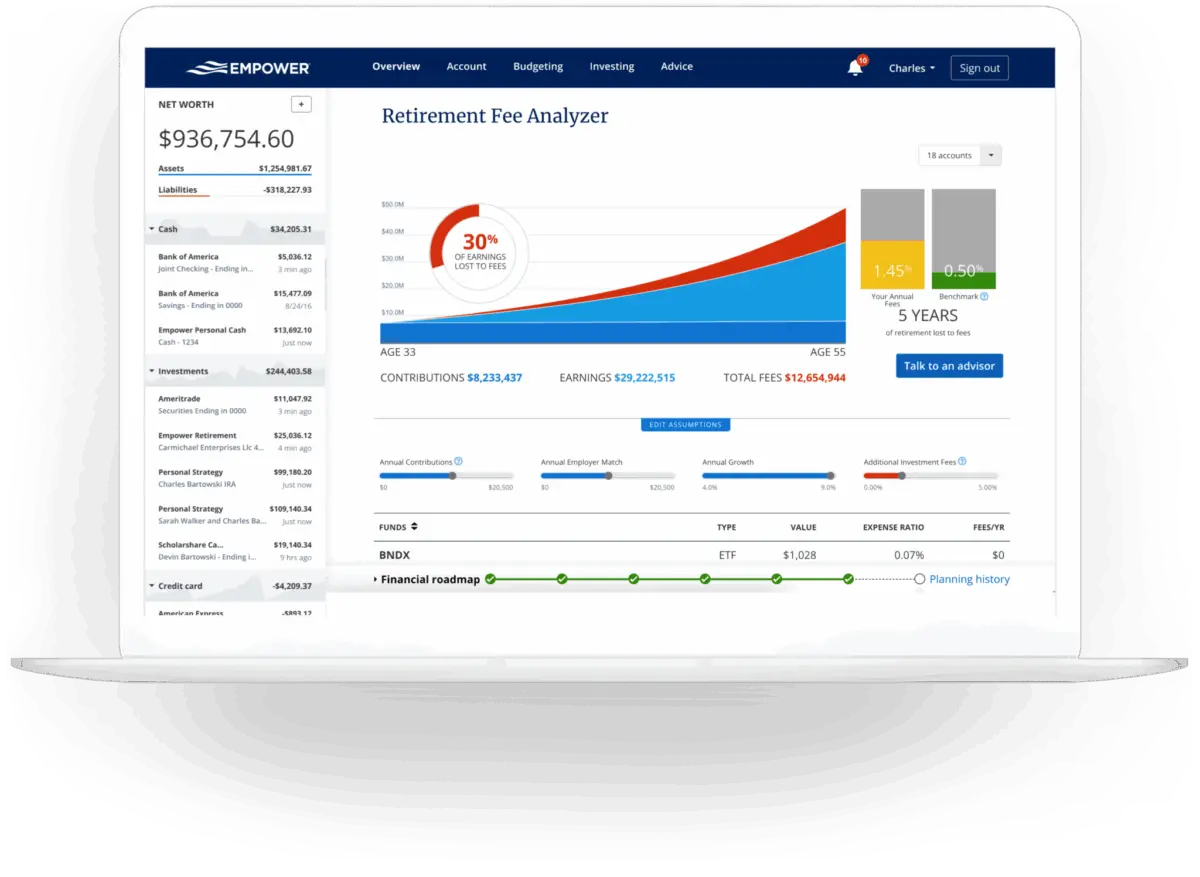
Perhaps one of the most impactful features is the retirement fee analyzer. Recognizing that seemingly minor investment management fees can erode hundreds of thousands of dollars in wealth over decades of compounding, the tool calculates a weighted average expense ratio across all linked accounts. By translating basis points into projected dollar losses over multi-year horizons, the fee analyzer underscores the long-term cost of fund management and advisory expenses. Complementing this is the investment fee checkup, which compares a user’s actual asset allocation against a recommended model tailored to their age, risk tolerance, and target retirement date, identifying specific asset classes that require rebalancing.
Frequently Asked Questions
Security remains a primary consideration for users linking sensitive financial data to any digital platform. Empower employs robust security measures, including AES-256 data encryption backed by multi-layer key management, rotating user-specific keys, and rigorous salts. Individual employee access to user credentials is strictly prohibited, and every device attempting to access an account must undergo multi-factor authentication confirmation via phone call, email, or text message.
Regarding cost, the core financial dashboard and its extensive suite of tracking and planning tools are entirely free. The company monetizes its platform by offering optional, premium wealth management and investment advisory services to high-net-worth individuals. These advisory fees start at 0.89% annually for the first million dollars under management and scale downward to 0.49% for portfolios exceeding ten million dollars. Users utilizing the free dashboard are not obligated to sign up for advisory services, nor is investment with the firm required to access the software. Because the dashboard serves as a marketing channel for the firm’s advisory business, users may occasionally receive outreach calls from financial representatives, though users can request to be removed from contact lists.







No comments yet. Be the first to join the conversation!