
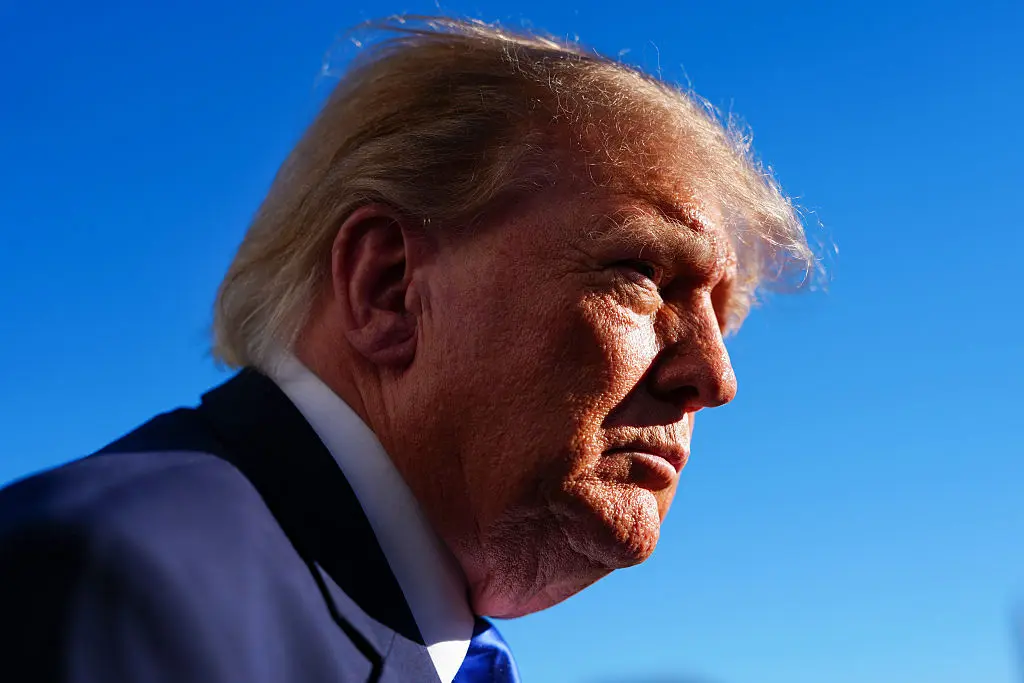
As President Donald Trump’s protracted military involvement in Iran continues to weigh heavily on the geopolitical landscape—undermining his early economic promises and dragging his approval ratings down to historic lows ahead of the midterm elections—his administration has nevertheless found success on one very specific administrative front. While voters grapple with rising costs and a difficult winter, the White House has moved forward with an initiative to help some of the world’s most powerful technology executives fundamentally rebrand how society talks about artificial intelligence.
Last month, amid mounting public anxiety regarding the long-term existential risks of rapidly advancing technology, the president summoned a cohort of leading tech executives to the White House for a high-profile announcement. The core message was simple: the term “artificial intelligence” is out, and “Super Intelligence” is in. Despite the phrase “AI” having been an established fixture of computer science and public discourse for more than seventy years, the administration declared that federal agencies would officially phase out the designation.
Skepticism naturally followed, not least because the official White House announcement managed to misspell “United States.” Yet, unlike past symbolic rebranding efforts, the concept of "super intelligence" has largely caught on among the very individuals and corporations building it. Jeff Bezos publicly endorsed the linguistic shift, and Nvidia CEO Jensen Huang quickly fell in line. During a SpaceX earnings call, Elon Musk integrated the new terminology into his very first sentence, repeating it frequently throughout the discussion.
Whether this vocabulary will be embraced by the broader public—those less insulated by government contracts and favorable regulatory environments—remains to be seen. But the underlying premise is difficult to dismiss entirely: words matter, particularly when applied to emerging, controversial technologies poised to impact billions of people globally.
Yet, the central flaw of the White House’s rebranding campaign is that it moves the needle in precisely the wrong direction. The shared language surrounding artificial intelligence already places an excessive amount of emphasis on consciousness, agency, and intellect, while virtually ignoring the artifice, mechanics, and human architecture behind it. Society routinely defaults to describing AI through the lens of sentient beings rather than complex machinery.
Humanity would do well to reconsider this linguistic habit. If civilization wishes to avoid being intellectually or economically sidelined by advanced algorithms, a practical starting point is to abandon terms that falsely imply that replacement has already taken place.
This stealth anthropomorphization of technology is pervasive. Before a user asks a chatbot for travel recommendations or nutritional advice, they are often invited to adjust a digital slider controlling its “thinking effort.” Platforms like Claude display a “thinking” indicator while processing queries, while various automated bots describe “thinking” as an active state sitting squarely between being idle and working.
This human-centric framing is not confined to user interfaces; it is actively practiced by the engineers and researchers building these models. Following a major security breach, the co-founder of Hugging Face warned the public not to “count on the agent to respect the rules.” Similarly, a longtime OpenAI researcher cautioned that frontier models are becoming increasingly difficult to evaluate in contexts where the systems “believe they are not being watched.” Anthropic’s Dario Amodei has noted that AI systems exhibit distinct “behaviors,” including instances of “cheating” and “sycophancy.”
While technical experts understand the underlying code better than laypeople, verbs remain universally understood. AI agents are no more capable of disrespecting regulatory guardrails than a household toaster is capable of spitefully burning toast. To claim that an algorithm “believes” it is unobserved is akin to suggesting a common spell-checker feels taken for granted. Even the phrase “AI agent” subtly smuggles in the assumption of genuine agency.
There is no scientific consensus supporting the accuracy of this vocabulary, and substantial evidence suggests it is entirely misleading. Advanced AI programs are not loyal, sentient companions; they are sophisticated tools. In almost every other domain of human innovation, the extreme complexity of a tool does not cause society to abandon mechanical terminology in favor of biological descriptions.
Tech companies derive immense practical benefit from this default language. When a car manufacturer builds a vehicle without adequate braking systems, the resulting product is classified as an unsafe car, not a “rogue model.” Yet, when technology firms fail to integrate robust safety guardrails into their AI architectures, public discourse readily accepts explanations that rogue agents deceived, lied, or behaved maliciously. Ultimately, anthropomorphizing AI shifts accountability away from human programmers and onto software programs.
Alarmist rhetoric within government circles mirrors this personification. On the exact day the White House unveiled its “Super Intelligence” initiative, a Senate subcommittee convened a hearing under the headline: “Rogue AI: Securing the Homeland Against AI Agent Attacks.” Whether intentional or not, this framing complicates efforts to mitigate genuine technological risks. Society possesses established frameworks for regulating complex, potentially dangerous products, but framing AI as an entirely new category of existence reinforces the narrative pushed by tech conglomerates that only the creators themselves possess the specialized knowledge required to control it.
The casual deployment of human attributes to non-human entities is a natural human tendency. Metaphor and analogy are foundational to human communication; society frequently describes household appliances as acting up or music as emotional. People see familiar shapes in geological formations and everyday objects. However, these metaphors are generally understood as figurative.
The contemporary language surrounding AI operates differently, blurring the boundary between metaphor and literal reality until it ceases to exist. While modern political discourse engages in constant battles over terminology—such as debates over specific policy phrasing or immigration labels—society is on the verge of conceding the linguistic battle over the most technologically consequential issue of the modern era.
Shifting this paradigm does not require waiting for Washington to act. Individuals can alter their own habits by avoiding cutesy human names for chatbots, refusing to treat software as a companion or pet, and pushing back against interface prompts that claim the system is “thinking” or offering an opinion.
Ultimately, however, meaningful reform will require technology companies and regulatory bodies to adopt a vocabulary that prioritizes human responsibility. Instead of asserting that an agent “went rogue,” corporate leadership must acknowledge software malfunctions. Congressional oversight should center on corporate corners cut during development rather than treating software as a misbehaving entity. Accuracy in language remains vital.
Amid the sweeping transformations promised by artificial intelligence, arguing over terminology may easily feel pedantic—akin to debating botanical classifications while a forest burns. Yet, if humanity hopes to retain meaningful influence over the technologies shaping its future, maintaining precision in how those technologies are described is an indispensable first step. Words matter, even for administrations that officially announce policies under the banner of the "Unites States."








No comments yet. Be the first to join the conversation!