
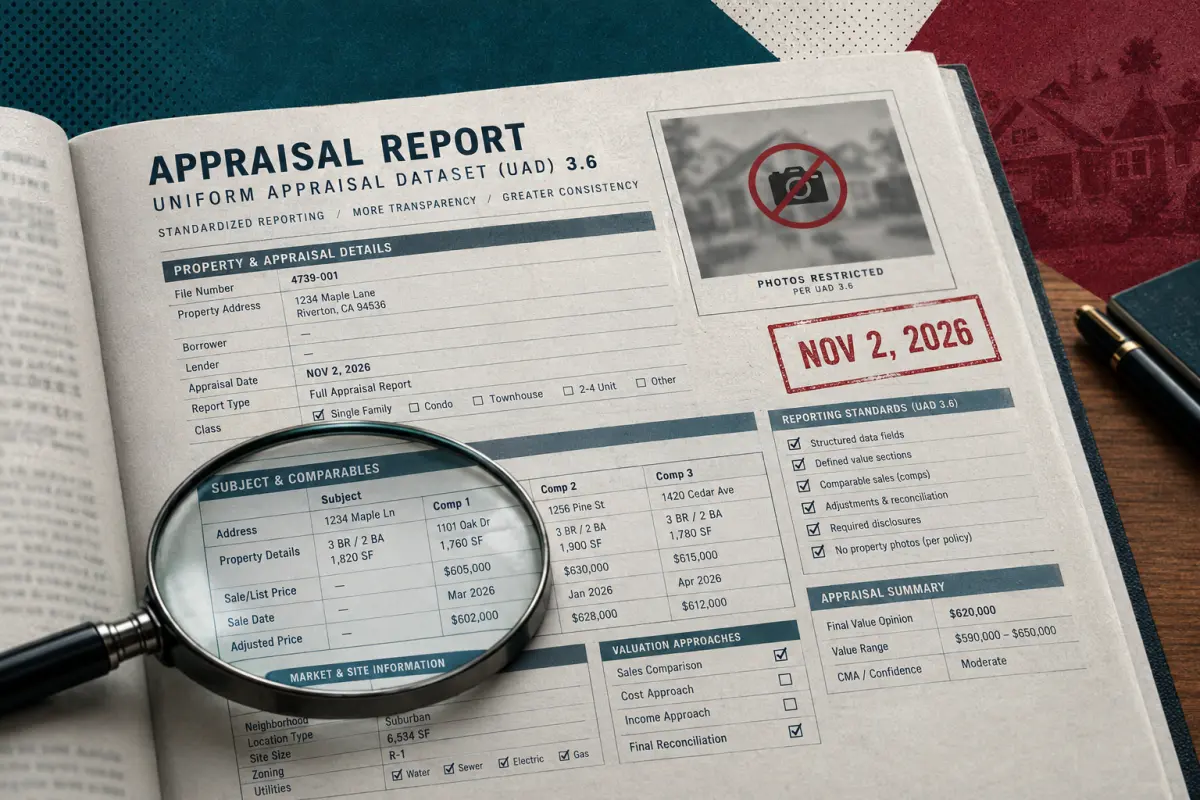
As technology and artificial intelligence have evolved rapidly over the past few years, a growing tension has emerged across the housing sector. Consumers and real estate professionals are increasingly concerned about the privacy of their data, sensitive personal information, and how digital footprints are utilized across the broader web. While these concerns are entirely valid in a digital age increasingly dominated by automated systems, they are triggering unintended ripple effects that threaten to disrupt one of the most critical foundational pillars of the real estate transaction: property valuation.
Among everyday consumers, these privacy concerns frequently manifest as homebuyers requesting that listing photos of their newly purchased properties be immediately scrubbed from public real estate portals and listing websites. For certain brokerages and progressive agents, this defensive posture means proactively preventing their active and historical listings from being ingested into large language models (LLMs) and artificial intelligence tools. It has also fueled a growing propensity to encourage sellers to list their homes privately as "pocket listings" or "private exclusives," thereby avoiding the public accumulation of days on market or leaving a permanent, publicly recorded history of price adjustments that could weaken their negotiating leverage.
While some prominent brokers and Multiple Listing Service (MLS) leaders have spoken out against practices like private listings or blocking the usage of listing data in LLMs, real estate agents are not the only stakeholders impacted by these sweeping changes. Appraisers, who serve as an integral, legally required part of real estate transactions by determining accurate property values for prospective homebuyers and mortgage lenders, rely heavily on comprehensive, transparent MLS data in order to appraise properties accurately.
"Appraisers rely on historical MLS data to verify the condition and quality of comparable sales. If a listing agent wipes out the interior photos and floor plans the second a house sells, we’re left flying blind," Desiree Mehbod, a Virginia-based appraiser, told HousingWire. "Private listing networks starve the open market of data transparency. When a property sells entirely off market or inside a private network, critical details like historical pricing adjustments, interior condition photos and true exposure time are hidden. It creates a severe data scarcity."
UAD 3.6 and increasing data standards
This growing data scarcity arrives at a particularly precarious time, coinciding directly with new regulatory mandates that require appraisers to file reports containing increasingly granular, high-resolution data. Under Uniform Appraisal Dataset (UAD) 3.6, which goes into effect on Nov. 2, appraisers are required to select specific, standardized data points from dropdown menus for virtually every feature of a property, marking a significant departure from the traditional narrative text descriptions they previously wrote to explain the nuances of a home.
"It requires us to collect and report a staggering amount of high-resolution interior data, structural metrics and photographs," Mehbod said.
Without access to reliable listing photos, historical records, or comprehensive data regarding comparable listings, professional appraisers warn that it is becoming next to impossible to properly and defensibly value a home in a dynamic market.
"Having access to more data means that everyone trying to value a property can make an informed decision," Ryan Lundquist, a Sacramento-based appraiser, said. "The removal of listing photos is a growing problem and it makes it challenging to understand what someone means when they say a property has been remodeled, because was it remodeled in 1973 or 2023? Those are two very different things."
Lundquist added that both appraisers and real estate agents must consistently work to understand the true quality and condition of a home, noting that historically, a simple review of interior and exterior photographs could immediately explain why one property commanded a significantly higher sales price than another nearby comparable property.
Time and money
This analytical task, however, becomes exponentially more complicated when those vital photographs are no longer visible to the public or when the majority of comparable listings and recent sales are conducted entirely within private, closed networks.
"If the appraiser is using the MLS as their course for sales data, which is quite common, if after the home is sold and the photos are hidden or a listing is private, it constrains their ability to describe the property if they are just using the MLS," Shawn Telford, Cotality’s chief valuation officer, said. "Obviously, in today’s world there are lots and lots of other sources for information about the subject property that they can use."
Telford noted that when he first started his career in the valuation industry, appraisers routinely had to drive by comparable or subject properties in person to figure out if they were the right fit for a valuation—something he suggests today’s appraisers could also return to doing if they lack access to comprehensive photos of properties online. However, doing so drastically changes the workflow of modern valuation practices.
"The more information and data that are available to the appraiser, the better their analysis will be, so there could be a point where if you don’t have enough information you may not be able to form a credible opinion," Telford said. "The MLS is a marketing tool so even if the agent’s comments about a property are still there, appraisers should be verifying the information about a property with at least a couple of sources."
Frank Gregoire, a Florida-based appraiser, echoes these sentiments regarding the necessity of thorough cross-verification.
"The more information that is easily accessible to an appraiser, the more easily the appraiser can complete their work," Gregoire said. "However, a diligent appraiser is not going to rely solely on information that is available from an MLS or in the public records. A diligent appraiser would be contacting the agents involved in the transaction of comparable homes."
But all of this investigative legwork takes precious time, and time, according to Gregoire, directly translates into financial costs for the consumer.
"I base my fee on how much time it takes to do an appraisal and complete the report and if it takes more time because I have to chase down someone for information, I am going to charge more money," Gregoire said.
If private listings or completely hidden listing photos become the dominant industry norm, market experts warn that this administrative friction will inevitably drive up appraisal costs for homebuyers at a time when many everyday consumers are already grappling with mounting affordability challenges, high mortgage interest rates, and elevated housing prices.
MLSs step in
Fortunately, Multiple Listing Services are becoming increasingly aware of these operational challenges, particularly the acute data bottlenecks posed by the systematic removal of listing photos. In response to these pressures, a growing number of MLSs have established innovative pathways that restrict the broad distribution of interior listing photos of sold properties to public-facing consumer real estate portals, while simultaneously maintaining a secure, internal database of those exact images to aid both appraisers performing mortgage valuations and agents working diligently to price properties accurately.
Prominent MLS organizations, including the California Regional MLS (CRMLS), Canopy MLS, and Flexmls, have successfully implemented specialized privacy policies, strict rules for off-market listings, and advanced media privacy controls to carefully manage the visibility of listing photos once a property transitions to a closed status.
"Consumer privacy and the needs of appraisers don’t necessarily have to be competing priorities. MLSs can establish policies that limit the public display of interior listing photos after a property sells while preserving those images in historical MLS records for authorized uses, including appraisals," a spokesperson for the Council of MLSs (CMLS) told HousingWire. "Historical listing photos provide valuable information about a property’s condition and characteristics at the time of sale. Removing them entirely could eliminate information appraisers and other real estate professionals rely on."
To help MLS organizations navigate this delicate balancing act between consumer privacy concerns and the technical requirements of appraisers and other real estate professionals, the CMLS spokesperson noted that the national trade group is actively working to develop comprehensive Best Practices guidance specifically addressing this multifaceted issue.
Unintended consequences of privacy
While Lundquist acknowledges and understands the genuine desires of some property sellers to market and sell their homes through private listing channels, he remains deeply concerned about the long-term consequences if an overwhelming majority of sellers decide to follow suit.
"I view this as a step backwards to a time where there was a greater lack of transparency," Lundquist said. "I think of course some sellers don’t want as much information on the MLS and there are mechanisms in place to control that, but what we don’t want to see is the entire marketplace move that way where we cannot see a substantial portion of the listings or where we can’t see the photos or know the days on market."
With the professional appraisal space facing regulatory shifts that demand significantly more precise, granular data, while the broader real estate sales space moves aggressively to insulate and restrict that very same data, Lundquist perceives a profound push-and-pull dynamic between two vital sectors that should logically be working in close coordination to support the wider housing ecosystem.
"There is this need for more information in the appraisal community, especially with the new forms, but then there is this wave where listings are becoming less transparent on the MLS system, and I don’t view that as a good move," Lundquist said. "It seems out of sync with the way the appraisal space is moving."
While licensed appraisers are bearing the immediate brunt of these ongoing industry shifts, Mehbod warns that the long-term implications extend far beyond individual valuation reports, threatening the integrity of the entire transaction process.
"The industry cannot demand absolute, data-driven precision from appraisers while simultaneously applauding the deletion of the data required to achieve it. This isn’t just an appraiser problem; it’s a massive consumer problem that directly threatens public trust," Mehbod said. "Ultimately, homeowners will still be forced to hand over the keys and let us in if they want the loan to close or the sale to go through. However, forcing their hand creates massive animosity right at the front door. It positions the appraiser as a forced data collector rather than an independent expert."









No comments yet. Be the first to join the conversation!