
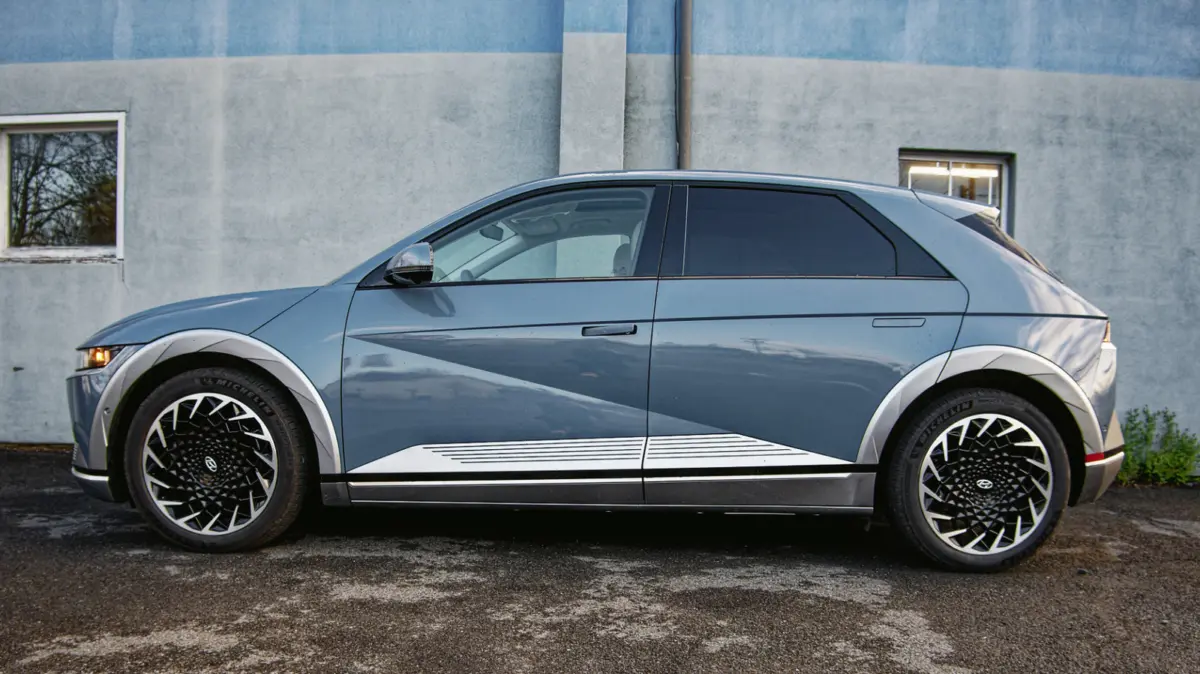
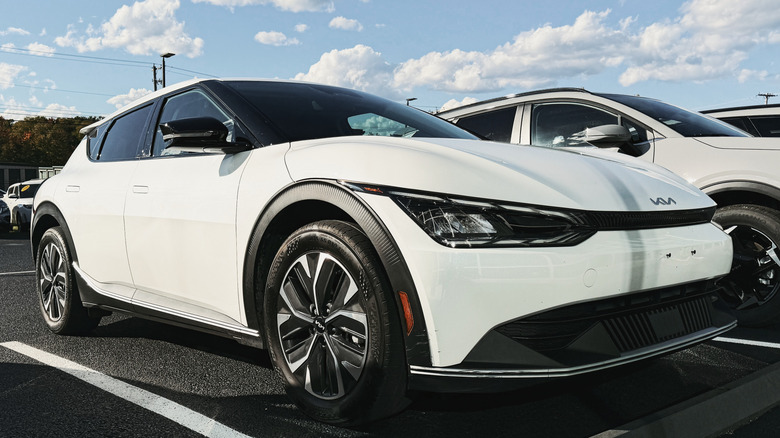
Back in 2024, long before the $7,500 federal tax credit for electric vehicles faced shifting political landscapes in Washington, my wife and I managed to lock in an extraordinarily favorable car lease. We put down about $4,000 and secured a Kia EV6 for an astounding $137 a month—a rate that essentially matched our household cell phone bill at the time. That initial two-year lease was eventually extended for another six months, maintaining a completely manageable payment of $148 per month.
Several unique market factors worked in our favor to make that deal possible. Alongside the $7,500 federal incentive available at the time, New York State provided an additional $2,000 discount. Furthermore, when we finalized the paperwork, automakers had fundamentally miscalculated consumer demand, creating a significant inventory glut that began building through 2023. By September 2024, dealerships were struggling to move electric vehicles off their lots, holding onto EVs for an average of more than three months compared to a much healthier 79-day turnover rate for internal-combustion vehicles.
Because dealers must finance their lot inventories, unsold cars lingering on asphalt eat directly into profitability. Consequently, even though our Kia EV6 Light Long Range Wind carried a sticker price of $51,845, we were able to drive it away for pennies on the dollar in lease payments.
That was then. As fall arrived and our lease approached its expiration, I began surveying the market for a new electric vehicle, quickly realizing that pricing had shifted. According to Cox Automotive data from September, the average sticker price for a new electric vehicle had climbed to a striking $55,879. Even so, with traditional fuel costs remaining a constant household consideration, we were determined to stay in the electric vehicle ecosystem.
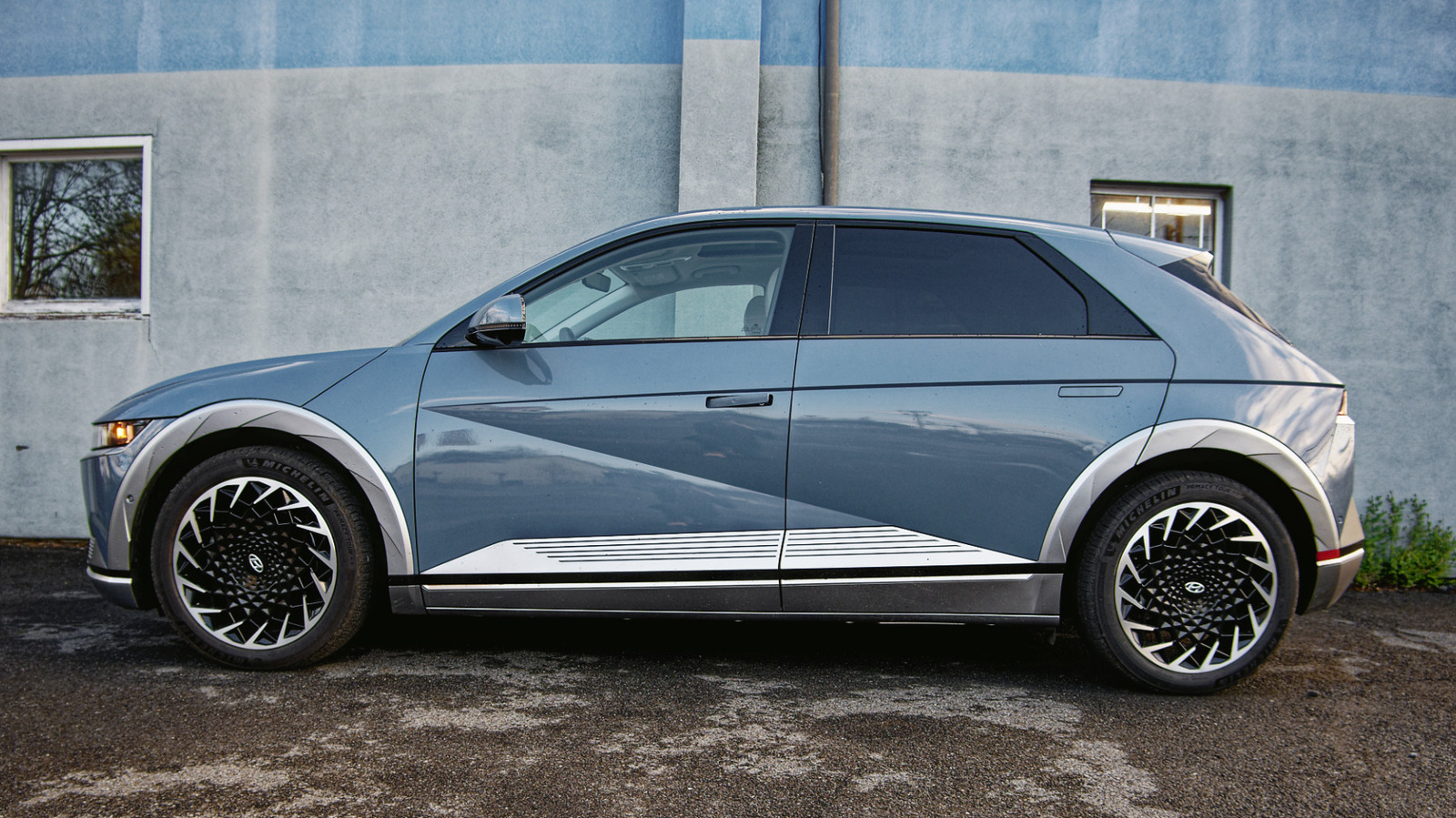
Fortunately, the pre-owned market offered a vastly different financial landscape. Industry tracking from CarGurus indicated that a used 2023 Chevrolet Bolt was commanding an average price of $20,518, while a 2024 Kia EV6 sat around $27,846, and a 2023 Hyundai Ioniq 5 averaged $27,436.
Why You Can’t Spend Too Much More to Drive Electric
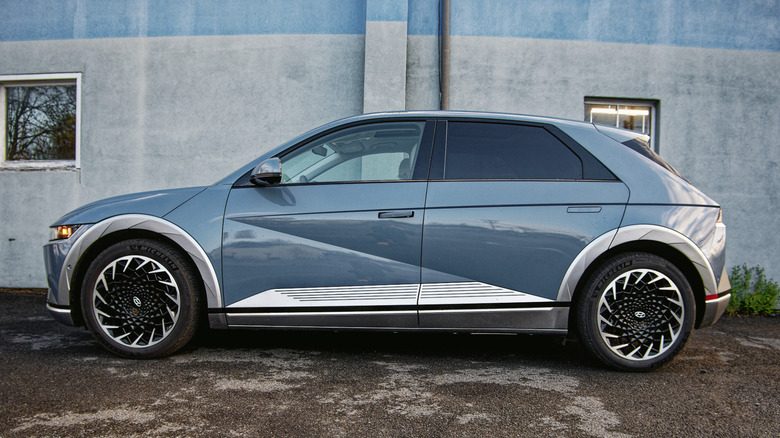
My primary objective was tracking down a suitable used Hyundai Ioniq 5. That was actually the vehicle we originally wanted back in 2024, but superior leasing incentives steered us toward the EV6 instead. We certainly harbored no complaints about the Kia—we genuinely loved the car—but the Ioniq 5’s retro-futuristic exterior design appealed to us more, and its slightly shorter overall footprint made it a much better fit for our remarkably cramped home garage.
The primary hurdle was financial constraint. We were firm on not spending significantly more than what a comparable pre-owned Honda Civic would cost. At the time of my market analysis, CarGurus pegged a used 2023 Honda Civic at $23,967. With a 2023 Ioniq 5 averaging $27,436, that represented a $3,469 average price premium over the Honda. While the 2023 Chevy Bolt was already priced lower than the Civic, we preferred the larger physical dimensions of the Ioniq 5 and the added utility of all-wheel drive.
Buyers with greater financial flexibility might view things differently, but for the average household budget, transitioning to an electric vehicle requires achieving close price parity with a gasoline-powered equivalent for the overall economics to make sense. As I have examined previously, daily energy operating costs often matter more than headline-grabbing drops in EV manufacturing prices. Even though retail gasoline prices have historically experienced sharp upward spikes while home residential electricity rates have risen at a much slower pace, shelling out thousands of dollars extra upfront for an electric car means it will take years of driving to recoup that initial capital outlay.
I had no desire to take on a heavier financing burden on an expensive vehicle only to realize microscopic savings per mile thanks to the comparatively lower cost of electricity. Understanding the true cost burden of a pricier electric vehicle—even one that proves cheaper to fuel day-to-day—requires running some straightforward math.
EVs Are Cheaper to Fuel—But You Need to Do Some Real Math
The most straightforward way to evaluate an apples-to-apples comparison of fueling costs, and by extension the payback period for spending extra on an electric vehicle, is to measure expenditures over a standard benchmark of 100 miles.
For a conventional gasoline vehicle, that calculation involves dividing 100 by the vehicle’s miles-per-gallon rating and multiplying the result by the prevailing price of a gallon of gas. This formula reveals both the total fuel consumed and the financial cost to purchase it. For an electric vehicle, the calculation requires the kilowatt-hour-per-100-mile rating, a metric readily available through federal resources like fueleconomy.gov. Multiplying that rating by the local cost of electricity per kilowatt-hour yields a direct financial equivalent for comparison against a gas-powered car.
An all-wheel-drive 2023 Hyundai Ioniq 5 consumes approximately 34 kilowatt-hours to travel 100 miles. Using the national average electricity cost of 18.3 cents per kilowatt-hour, that distance costs $6.22. By comparison, a 2023 Honda Civic burns roughly 2.9 gallons of fuel over the same 100 miles. At a national average gasoline price of $4.33 per gallon, that trip costs $12.55.
Put simply, fueling the Civic is roughly twice as expensive as powering the Ioniq 5. Driving 10,000 miles accumulates about $622 in electricity costs for the Ioniq 5, compared to $1,255 in gasoline for the Civic. However, saving $633 annually still means it would take driving over 54,000 miles just to pay back the $3,469 higher upfront purchase price of the Ioniq 5.
This dynamic helps explain why a large segment of American car buyers has remained hesitant to adopt electric vehicles, even in periods of elevated pump prices. Another critical variable in this financial equation is the significantly higher cost associated with public charging infrastructure. Installing a Level 2 home charger when we first acquired our EV6 cost us roughly $600. While that represents an additional out-of-pocket expense—and one that underscores the inherent privilege of single-family homeownership with off-street parking—it remains a fundamental requirement for making electric vehicle economics pencil out.
This Math Only Works If You Charge at Home
A closer examination of fueling dynamics reveals that the financial advantage of an electric vehicle relies heavily on home charging access. According to data from Kelley Blue Book, public DC fast charging averages closer to 55 cents per kilowatt-hour, a sharp contrast to the 18.34 cents typically paid for residential power. That means public fast charging can cost nearly three times as much as plugging in at home. If public charging stations form the backbone of a driver’s routine, justifying any premium price paid for an electric vehicle becomes exceptionally difficult.
Financing compounds this challenge. Borrowing money for a more expensive vehicle means higher total outlays over the life of the loan. Even when spending less money at the pump, those marginal savings are inevitably chipped away by a heavier monthly loan payment.
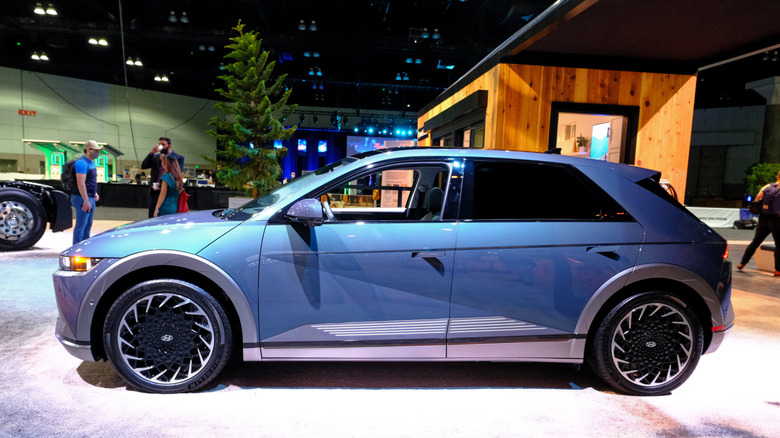
According to credit reporting agency Experian, the average consumer financing a new vehicle faces an interest rate of 6.35%, while used car buyers confront an average rate of 11.19%. New car buyers are currently financing a daunting average amount of $43,610 over a term spanning nearly 70 months.
Even within the used vehicle market, the average purchaser forks over a monthly payment of $542. Avoiding that tier of long-term debt and high interest terms was a top priority for our household. We wanted to finance as little of the vehicle as humanly possible to dodge the burden of an oversized monthly obligation. Furthermore, because we were exiting a lease rather than trading in an owned vehicle, our down payment had to come strictly from existing savings.
Used EV Sales Are Ticking Up
As our lease expiration date drew closer, market anxiety began to set in. Geopolitical tensions and subsequent spikes in gasoline prices pushed many American drivers to reconsider electric options. According to market intelligence from CarGurus, new electric vehicle sales experienced a sharp decline compared to the previous year, whereas used EV sales trended upward by 19 percent.
Basic economic principles of supply and demand quickly took over. Heightened demand for pre-owned electric vehicles resulted in slower depreciation curves and, in some cases, outright price increases. The Manheim Used Vehicle Value Index, which tracks wholesale transaction prices at dealer auctions, recorded a 4.3% jump for used electric vehicles in a single month.
This market pattern was clearly reflected in CarGurus pricing research. The average price of a used 2024 Hyundai Ioniq 5 ticked upward by a modest half-percent over a 30-day window, while the average price of a 2023 Tesla Model 3 inflated significantly over the course of the year.
Driven by the impending lease deadline and growing concern that used electric vehicle prices were climbing, my search routine became a daily habit. I relied heavily on listings platforms like Cars.com because they integrate battery health data provided by Recurrent. While modern electric vehicle batteries prove far more resilient than skeptics often suggest, avoiding a vehicle with compromised energy storage capacity was a top priority.
Casting a wide net, I established a 500-mile search radius, demonstrating a willingness to travel across state lines to secure the right vehicle at the right price. My focus centered on model years 2022 through 2024 for the Ioniq 5. Beyond its styling, one of the interior features that appealed to us most in these model years was the retention of physical control inputs, including a real volume knob and a dedicated climate control interface rather than menus buried deep within a primary touchscreen.
You Can Find Used EVs at Good Prices If You’re Diligent
The Hyundai Ioniq 5 SE I ultimately located carried a price tag of $21,900—a reasonable figure for a vehicle that originally retailed for $49,255 when new. We financed a portion of the purchase, resulting in a monthly payment of $360 at an interest rate of 7.69%. While that is more than 2.6 times the exceptionally low $137-a-month lease payment we enjoyed with the Kia, it represents a manageable financial commitment on a vehicle we will actually own outright. Crucially, Hyundai’s factory warranty covering the high-voltage battery for 10 years or 100,000 miles transferred directly to us as the second owner, and a year remained on the vehicle’s basic bumper-to-bumper warranty.
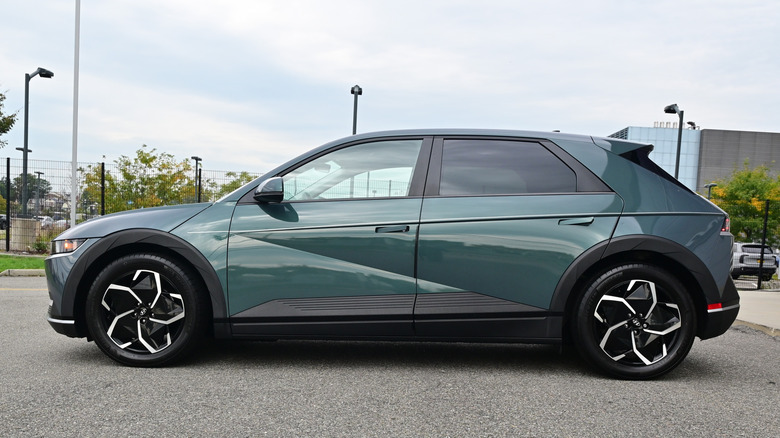
Securing this Ioniq 5 close to CarGurus’ $21,831 average used price was aided in part by a broader wave of off-lease electric vehicles helping to offset climbing used market valuations. Earlier reporting highlighted how waves of depreciating leased electric vehicles could trigger complex financial dynamics for automakers. Generous federal tax credits and aggressive manufacturer production led countless consumers—much like our household with the Kia—to lease electric vehicles during the market peak.
Projections indicate that a significant percentage of all off-lease vehicle returns will consist of electric models, with the wave expected to peak as hundreds of thousands of vehicles cycle back to franchise dealers. Even amid prevailing upward cost pressures across the broader automotive sector, diligent shoppers who comb through inventory can still uncover strong values.
While our newly acquired Ioniq 5 SE may not be entirely flawless, it represents a practical fit for our garage and lifestyle. With 36,000 miles on the odometer, it is two years older than the Kia we returned with a mere 15,000 miles, and it soon required a wheel alignment—likely a casualty of navigating rough suspension-testing roads in Queens. Even so, we finally secured the electric vehicle we set out to own, arriving at our destination just a few years later than anticipated.








No comments yet. Be the first to join the conversation!