
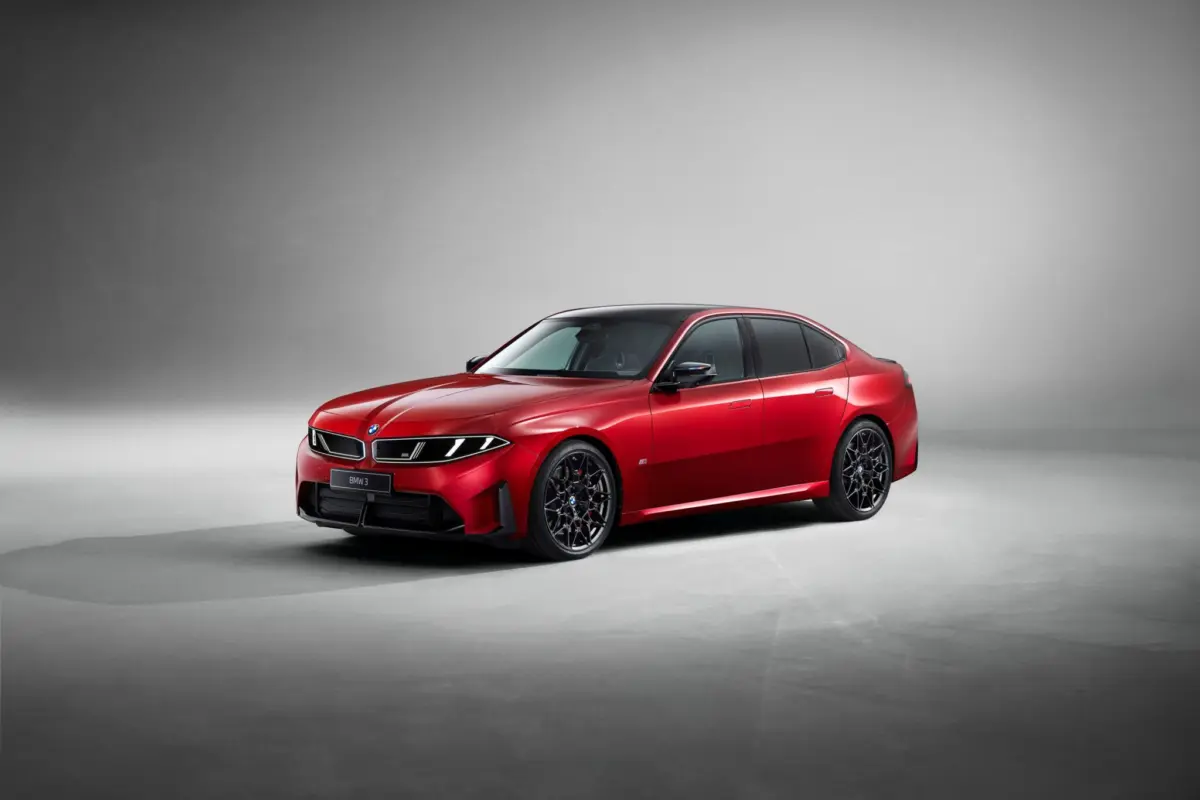
The BMW 3-Series has leaped through seven generations over half a century, but this upcoming iteration feels fundamentally different from anything that has come before it. BMW is marking this monumental evolutionary break by bestowing the eighth-generation car with the historic "Neue Klasse" nameplate. This is the very moniker that not only established the German automaker as the global benchmark brand for enthusiast-first sports sedans in the early 1960s, but also famously saved the company from financial ruin. Needless to say, the new vehicle has some exceptionally big shoes to fill as it steps onto the world stage.
The venerable 3-Series hasn’t undergone a redesign this radical since BMW launched the polarizing E90 generation for the 2006 model year under the watchful eye of design chief Chris Bangle, a vehicle that famously drew intense online rage from traditionalists early on. This time around, the new G50 generation’s design direction comes from Adrian van Hooydonk. When asked about the specific influences and inspirations behind the upcoming 2027 3-Series, van Hooydonk makes it clear that his team’s principal objective was to walk the precarious tightrope between the future and the past without getting bogged down by the crushing weight of tradition and heritage. As the design boss notes, as much as the company loves its history, respects it, and takes inspiration from it, designers must ensure that what they build remains fully relevant in the future.
A Striking Exterior Design Grounded in History
With narrow kidney grilles, distinctive hash-mark lighting elements, short overhangs, and a remarkably simplified side profile, the new 3-Series marks a dramatic departure from BMW’s most recent design language. It represents a clear, unapologetic step forward while still retaining subtle callback elements from historically significant models of the brand’s past.
The new 3-Series showcases a sharp, aggressive shark-nose front-end aesthetic that immediately reminds automotive enthusiasts of the iconic E24 6-Series from the 1970s and 1980s. Furthermore, its overall proportions are heavily reminiscent of the stubby yet wonderfully athletic 2002, a car that cemented BMW’s reputation for building nimble driver’s cars. This careful blend of old-school proportions and futuristic detailing gives the car a road presence that is both nostalgic and avant-garde.
A Cabin Where Cutting-Edge Tech Meets Classic Cues
This past-meets-future theme continues unabated inside the cabin, where Munich’s latest technological marvels meld seamlessly with trademark BMW design cues. The most significant interior update is the introduction of the brand’s groundbreaking Panoramic Vision digital display. This innovative system projects essential driver information onto a thin, continuous strip of light that spans the entire width of the dashboard at the base of the windshield, running pillar to pillar.
Complementing this sweeping display is a large 17.9-inch touchscreen mounted centrally on the dashboard. In a nod to ergonomic driver focus, the screen cants noticeably toward the driver—a classic 3-Series hallmark dating back to an era when physical climate controls, analog clocks, and cigarette lighters occupied this exact real estate.

Underpinnings, Powertrains, and Performance
Though its battery-electric sibling, the i3, utilizes the dedicated NCAR platform that BMW developed specifically to take advantage of its sixth-generation battery technology and advanced 800-volt electrical architecture, the gas-powered 3-Series takes a different mechanical route. It rides on the heavily upgraded CLAR II underpinnings, a versatile architecture also found beneath the skin of the X3, the high-performance M5, and several other models in the stable. BMW asserts that this upgraded chassis benefits from numerous mechanical improvements over the previous generation, including a quicker steering ratio and wider front and rear tracks. Together, these enhancements promise to make the new 3-Series an even sharper, more engaging driver’s car than its highly regarded predecessor.
For American buyers, the lineup will offer a diverse array of choices ranging from accessible efficiency to outright performance. Aside from the M350 xDrive, which effectively takes the place of the outgoing M340i xDrive, BMW will also offer more budget-friendly variants in the form of the 330 and 330 xDrive. These entry-level models are powered by a refined, turbocharged 2.55-liter inline-four engine producing 255 horsepower.
Relative to the departed M340i, the newly minted M350 packs an extra dose of visual presence courtesy of its muscled-up bodywork, wider stance, and striking yellow daytime running lights. The new performance model features dynamic hardware to match its aggressive looks, boasting a standard equipment list that includes adaptive dampers and an electronically controlled limited-slip differential to optimize traction and handling agility.
Underneath the sculpted hood lies the newest iteration of BMW’s renowned B58 turbocharged 3.0-liter inline-six family. The powertrain’s stable now houses an extra 51 horsepower compared to the outgoing M340i. Up to 17 of those ponies are contributed directly by a 48-volt hybrid system’s electric motor integrated neatly inside the eight-speed automatic transmission, bringing the total combined output to a robust 437 horsepower.
Although the M350 comes exclusively equipped with all-wheel drive, it will actively allow drivers to engage in rear-wheel-drive, tail-out antics courtesy of its clever Drift Moment feature, which can electronically decouple the front axle on demand. BMW claims that the substantial extra grunt of this new powertrain brings noticeable improvements to straight-line acceleration, estimating a blistering 3.6-second sprint from zero to 60 mph. Given that the previous M340i xDrive regularly hit that benchmark in 3.7 seconds during independent testing, that claim appears entirely credible. Buyers with an even greater, unyielding need for speed will simply have to wait just a bit longer for the introduction of the next-generation M3, which BMW has confirmed will be offered in both traditional internal-combustion and pure battery-electric guises.
Pricing and Market Availability
The redesigned 2027 BMW 3-Series is officially scheduled to go on sale in the global market during the first quarter of 2027, and it will arrive at U.S. dealerships shortly thereafter. When it hits showroom floors, the entry-level four-cylinder version will start at an MSRP of $51,250, with all-wheel drive adding a modest $2,000 premium to the bottom line. Meanwhile, enthusiasts looking for the high-performance, six-cylinder thrills of the M350 xDrive will find that model starting at $67,250.











No comments yet. Be the first to join the conversation!