
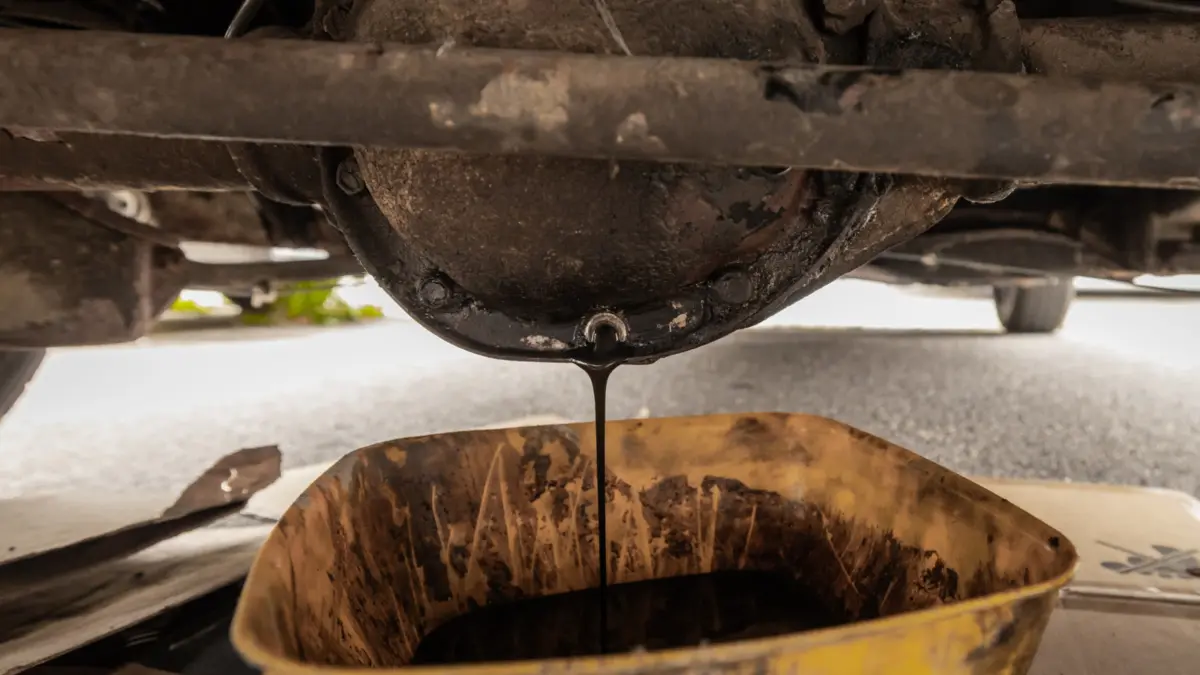
With the vast array of specialized fluids required to keep a modern automobile operating at peak performance, it is only natural for drivers and DIY mechanics to wonder whether a single, versatile lubricant could potentially handle multiple mechanical duties. However, if vehicle owners hope to keep their engines, transmissions, and differentials functioning properly for the long haul, hypoid gear oil must be strictly scratched off that list of interchangeable fluids. While all automotive fluids share the broad responsibility of reducing friction and managing heat, the severe mechanical realities inside a vehicle’s differential demand a chemistry that would spell disaster for an engine or a standard transmission.
To understand why this fluid must remain entirely separate, it helps to examine how hypoid gearsets actually operate. Typically situated within the heavy-duty differential positioned directly between the rear wheels—or occasionally the front wheels—hypoid gears are exceptionally common on tow-oriented pickup trucks, heavy-duty utility vehicles, and traditional body-on-frame SUVs. Furthermore, many modern all-wheel-drive configurations feature a hypoid gear setup housed inside the power transfer unit, a crucial component tasked with directing torque backward to the rear axle when traction demands it.
Originally referred to in engineering circles as hyperboloidal gears, the term hypoid is a modernized descriptor for a specific gear arrangement where the driving pinion gear meets the larger ring gear offset from the center axis. This ingenious design allows the driveshaft to sit lower in the chassis, which in turn lowers the overall center of gravity and frees up valuable cabin and cargo floor space by minimizing the mechanical tunnel hump.
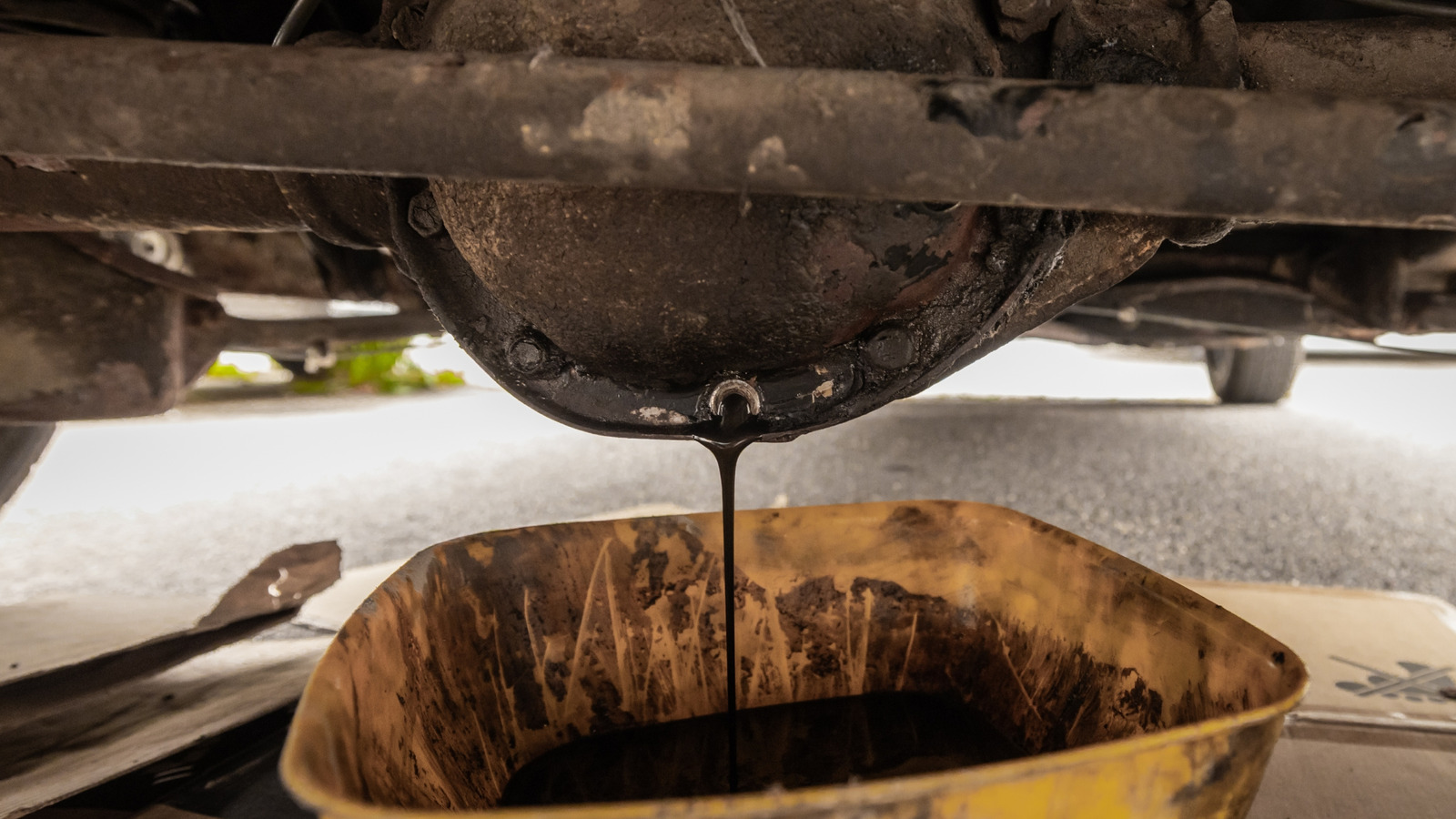
Yet, this geometric advantage comes with a significant physical tradeoff. Because of the offset design, the gear teeth do not simply roll past one another; instead, they rub against each other in a continuous, high-pressure sliding motion. This violent rubbing action tends to squeeze the lubricating fluid completely away from the contact points, leaving the bare metal surfaces temporarily exposed and devoid of a traditional, full-thickness oil film—a challenging operational state known in mechanical engineering as boundary lubrication.
To prevent catastrophic metal-on-metal wear, these systems require a highly specialized lubricant packed with extreme pressure, or EP, additives. Once the standard fluid film is squeezed out from between the gear teeth, these chemical additives react with the metal surfaces to form a protective sacrificial layer. Lubricants engineered for these demanding hypoid differentials typically carry the American Petroleum Institute, or API, GL-5 designation. Examining how these specialized properties clash with other automotive fluids highlights why fluid compartmentalization is non-negotiable.
Hypoid gear oil vs. engine oil
When looking under the hood, engine oil faces an entirely different set of operational challenges compared to a rear differential. Two of the most critical responsibilities assigned to engine oil include lubricating thousands of fast-moving internal components and safely managing the harsh chemical byproducts of the internal combustion process. Maintaining proper oil pressure ensures that a continuous film covers most moving engine parts, but certain heavily loaded components—such as the camshaft lobes and valve lifters—still operate under boundary lubrication conditions similar to gearsets.
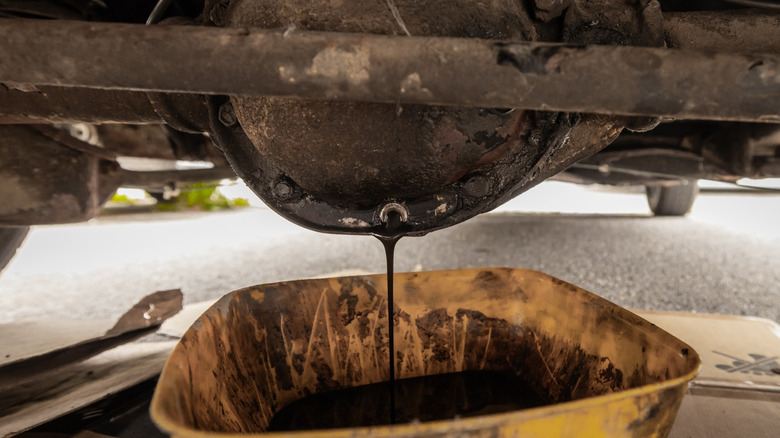
To protect these specific areas, engine oils rely on milder anti-wear additives, most notably zinc dialkyl dithiophosphate, rather than the heavy, aggressive EP formulations found in gear lubricants. Simply put, the heavy-duty EP additives engineered into gear oil are entirely unsuitable for use inside a combustion engine. These specialized sulfur-phosphorus formulations begin to break down and become actively corrosive to various soft metals found within an engine when operating temperatures climb to around 200 degrees Fahrenheit. Additionally, the presence of phosphorus-based additives in engine oils must be kept to strict minimum thresholds to prevent the premature chemical fouling and destruction of modern vehicle catalytic converters.
Meanwhile, internal combustion engines constantly contend with soot, unburnt fuel, moisture, and carbon sludge, requiring high concentrations of detergents and dispersants to keep internal pathways clean. Differentials, thankfully, operate in a sealed environment free from combustion byproducts and do not have to manage these types of chemical contaminants. Instead, differential gear oil must focus entirely on maintaining a resilient barrier between heavily loaded hypoid gears, whether the vehicle is cruising down the highway, slogging through mud, or pulling a massive trailer up a steep mountain grade. Engine oil simply lacks the robust extreme pressure chemistry required to support this kind of severe gear-on-gear loading.
Fluid viscosity and thickness also represent a major point of divergence. Engine oils and gear oils utilize entirely different rating scales established by the Society of Automotive Engineers—the J300 standard for engine oils and the J306 standard for gear oils. Because these scales operate independently, the numeric values do not line up directly. For instance, a 90 viscosity-grade gear oil falls into roughly the same physical thickness range as a much lighter SAE 40 or 50 engine oil, rather than being twice as thick as an engine oil as the raw numbers might suggest. Nonetheless, modern internal combustion engines are deliberately designed to utilize much lighter-weight, low-viscosity oils to maximize fuel economy, creating a vast gulf between engine requirements and heavy gear lubricants.
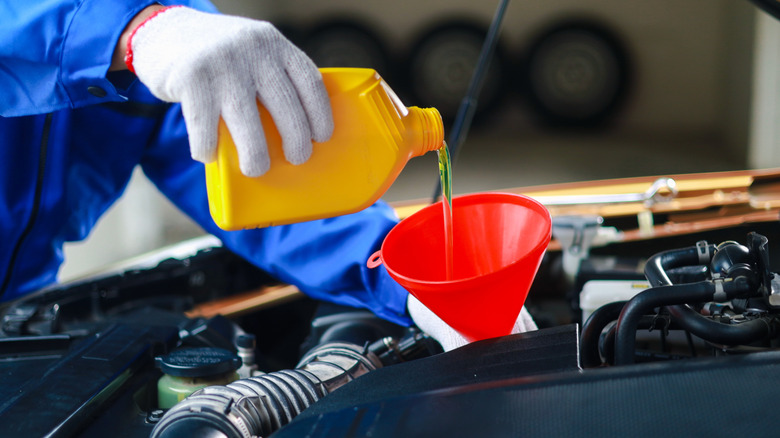
Hypoid gear oil vs. transmission fluid
Given that both hypoid differentials and manual transmissions consist of complex collections of rotating metal gears, it might initially seem logical to assume that gear oil and transmission fluid could be swapped interchangeably. However, manual gearboxes largely utilize helical or spur gears rather than hypoid gears, meaning they experience far less extreme sliding friction. Furthermore, many traditional manual transmissions explicitly require a GL-4 lubricant, which typically contains roughly half the concentration of extreme pressure additives found in a heavy-duty GL-5 oil.
The high concentration of sulfur-phosphorus EP additives in a GL-5 lubricant can aggressively corrode the delicate brass synchronizer rings utilized in many manual transmissions, a destructive chemical reaction that accelerates significantly as operating temperatures rise. Other yellow metals, including brass and bronze components found throughout certain manual gearboxes, face a similar risk of chemical degradation when exposed to aggressive differential oils. Friction characteristics also play a vital role, as manual transmission synchronizers rely on specific frictional properties to grip and match speeds before engaging a gear. Many differential oils are specifically formulated to be extremely slippery to reduce friction and heat, which can ultimately lead to poor, sluggish shifting performance in manual gearboxes that were never designed to accommodate GL-5 chemistry.
Of course, automotive engineering rarely presents absolute boundaries, and certain exceptions exist within the industry. A select group of vehicles equipped with manual gearboxes explicitly call for GL-5 transmission lubrication, with certain legacy Subaru models serving as prominent examples. Additionally, specialized aftermarket fluid manufacturers produce unique GL-5 gear oils specifically formulated to protect yellow metals in manual transmission applications. Even so, these edge cases highlight the importance of consulting factory service manuals, as traditional manual and automatic transmission fluids remain entirely non-interchangeable across standard automotive applications.











No comments yet. Be the first to join the conversation!