
The fundamental math behind tracking personal wealth has always been remarkably straightforward: sum up everything you own, subtract everything you owe, and the remaining figure represents your net worth. For generations, individuals managed this equation manually using pen and paper or basic desktop spreadsheets. However, the modern financial landscape has shifted dramatically, giving rise to sophisticated digital platforms designed to automate the process and provide a holistic view of an individual’s financial ecosystem.
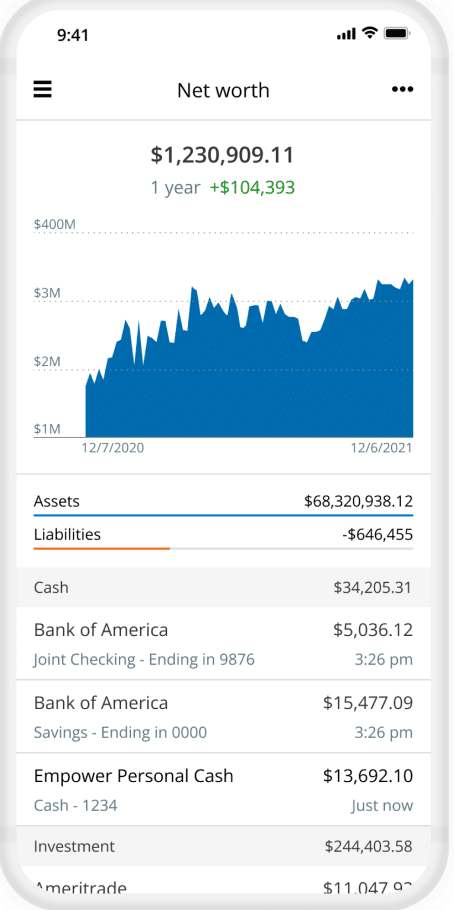
Modern net worth tools have evolved far beyond simple calculators that rely on manual data entry. Today’s leading applications securely connect directly to financial institutions, automatically pulling in real-time data from checking accounts, savings portfolios, credit cards, investment vehicles, retirement funds, and real estate valuations. By maintaining continuous synchronization, these platforms update an individual’s balance sheet dynamically, allowing users to observe wealth fluctuations and long-term trends without the friction of manual bookkeeping.
With dozens of options populating the digital marketplace, choosing the right platform depends heavily on individual priorities, whether a user seeks deep investment analytics, comprehensive budgeting features, or specialized spreadsheet integration. Financial analysts and tech-savvy consumers alike have increasingly gravitated toward a select group of applications that consistently stand out for their reliability, security infrastructure, and feature sets.
The Top Contenders in Wealth and Budget Management
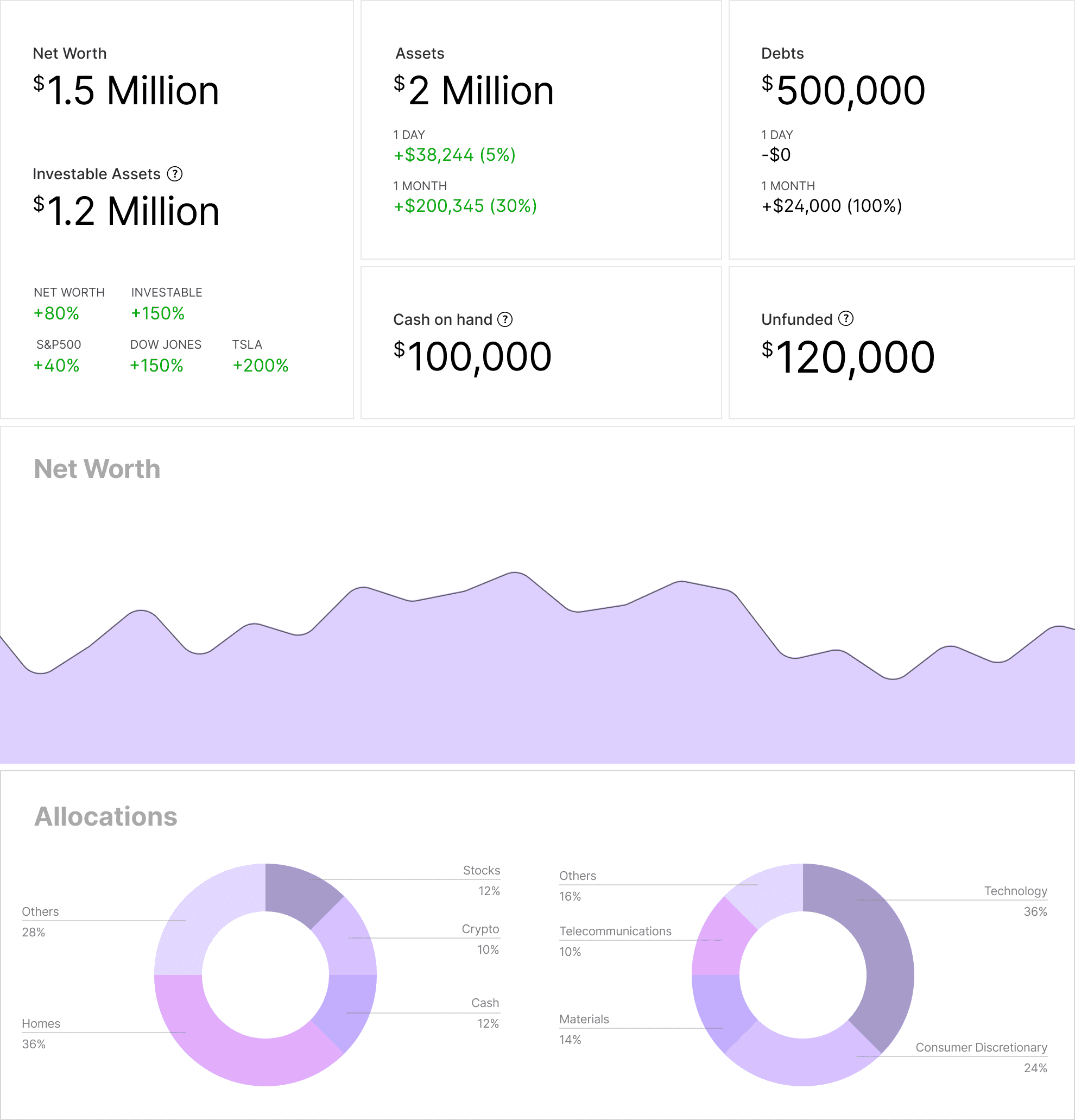
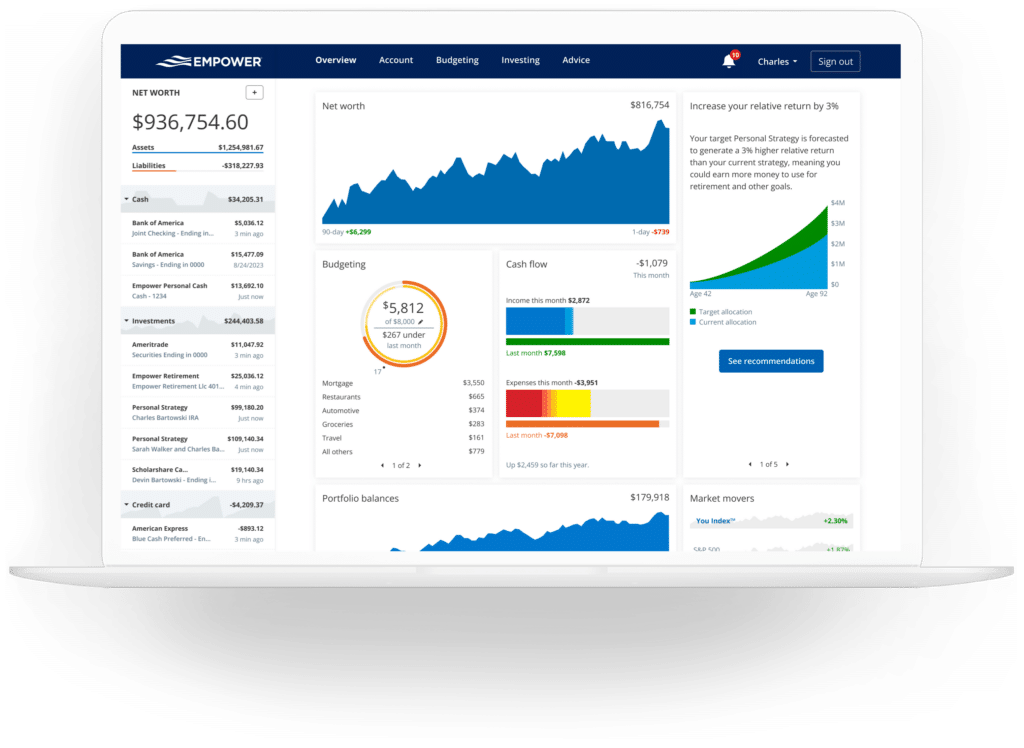
The market offers a diverse array of tools tailored to different aspects of financial oversight. Among the frontrunners, Empower—formerly known as Personal Capital—remains a dominant force for individuals seeking robust investment management alongside straightforward net worth tracking. Operating as a free platform, Empower utilizes high-grade AES-256 encryption to protect user data while aggregating checking accounts, credit cards, mortgages, loans, cryptocurrency holdings, and real estate values via integrations like Zillow. Beyond the basic balance sheet, the platform provides advanced analytical charts, an asset allocation inspector, a fee analyzer, and an integrated retirement planner.
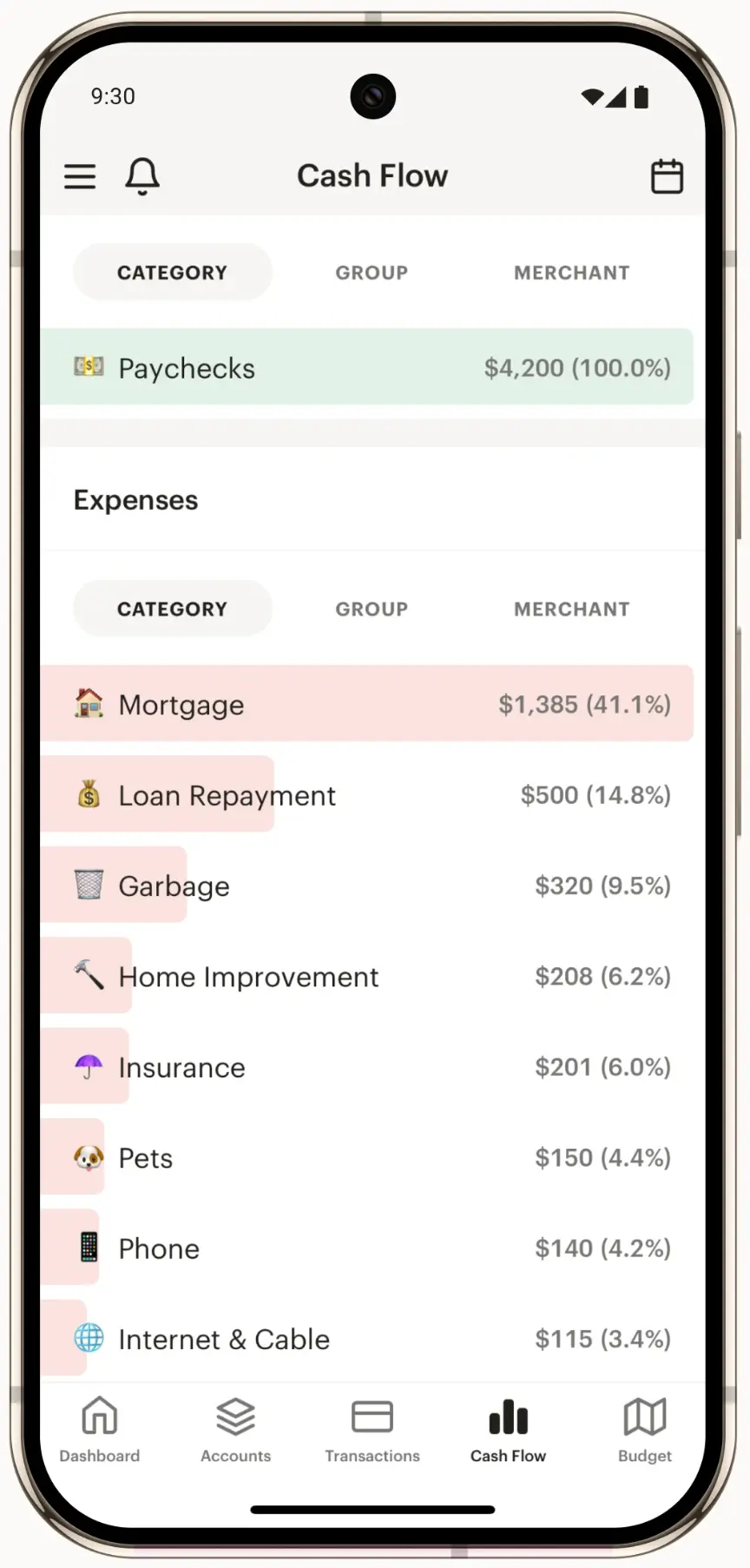
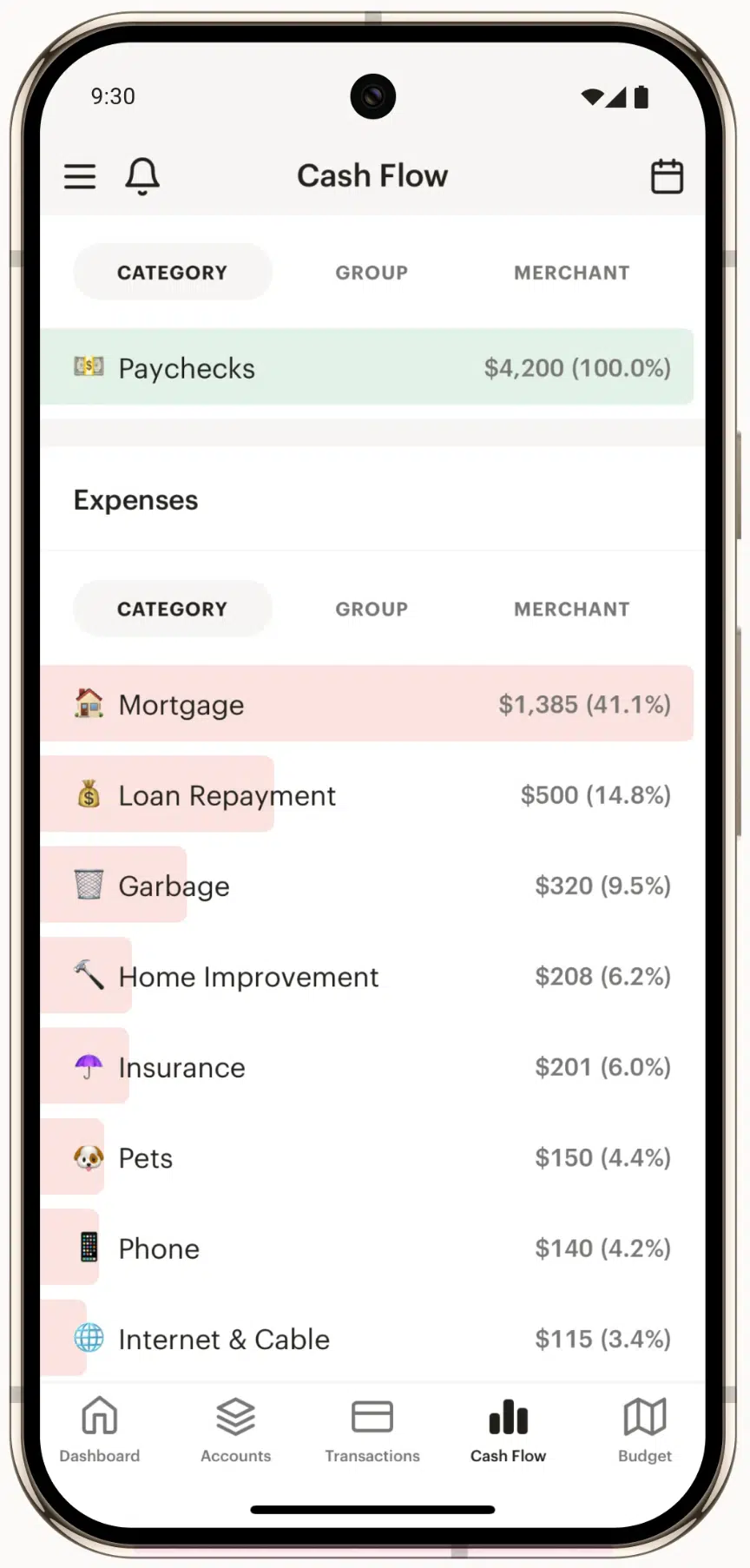
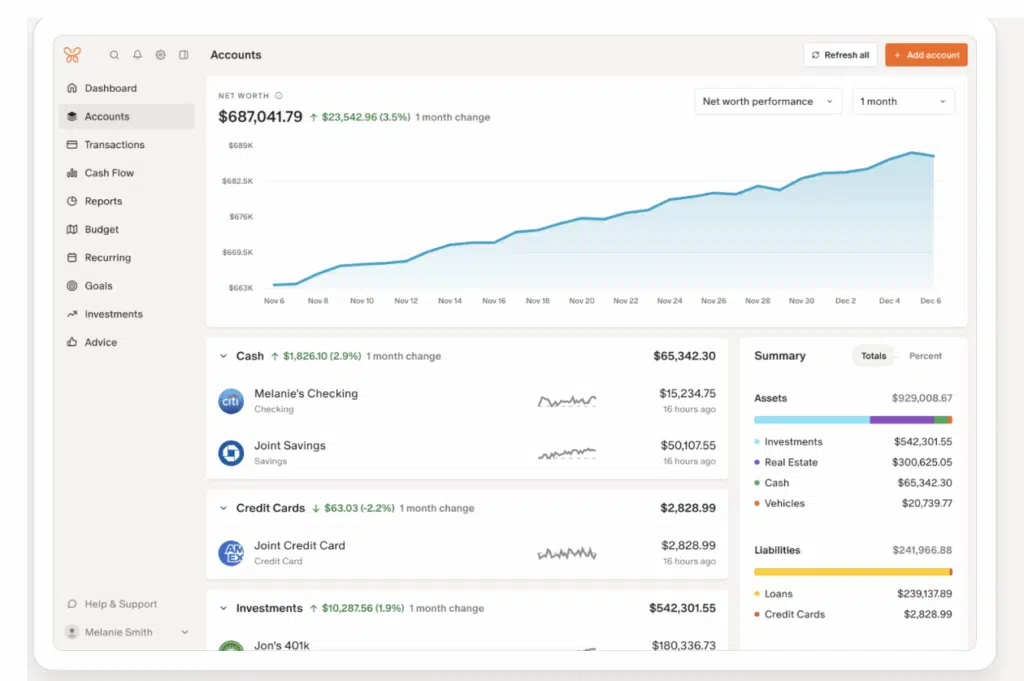
For households prioritizing daily cash flow management alongside net worth monitoring, Monarch Money has emerged as a widely adopted option. Originally designed as a comprehensive budgeting and subscription-management tool, Monarch incorporates a robust net worth dashboard that syncs seamlessly with a broad spectrum of financial accounts, including investment portfolios, loans, and real estate assets. Users can also manually input unique assets, connect with platforms like Coinbase, track vehicle valuations using a vehicle identification number, and sync specialized accounts like the Apple Card. Recent platform updates have further expanded its capabilities by introducing an artificial intelligence assistant to query financial data and a receipt scanner that automatically matches documents to corresponding transactions.
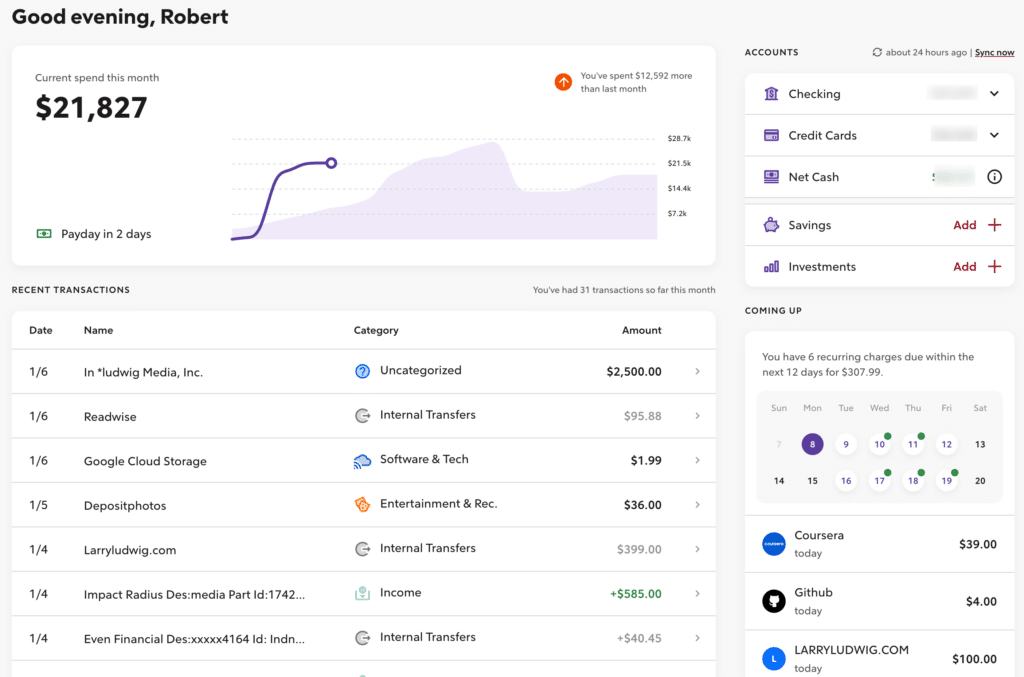
Rocket Money has similarly captured a significant share of the personal finance market by focusing heavily on subscription tracking, automated expense categorization, and streamlined budgeting. Functioning as a versatile alternative to legacy platforms like Mint, Rocket Money offers a clean, user-friendly interface across both web and mobile platforms. While its primary appeal lies in identifying recurring charges and helping users trim unnecessary expenses, it also supports investment account integration for a broader financial snapshot.
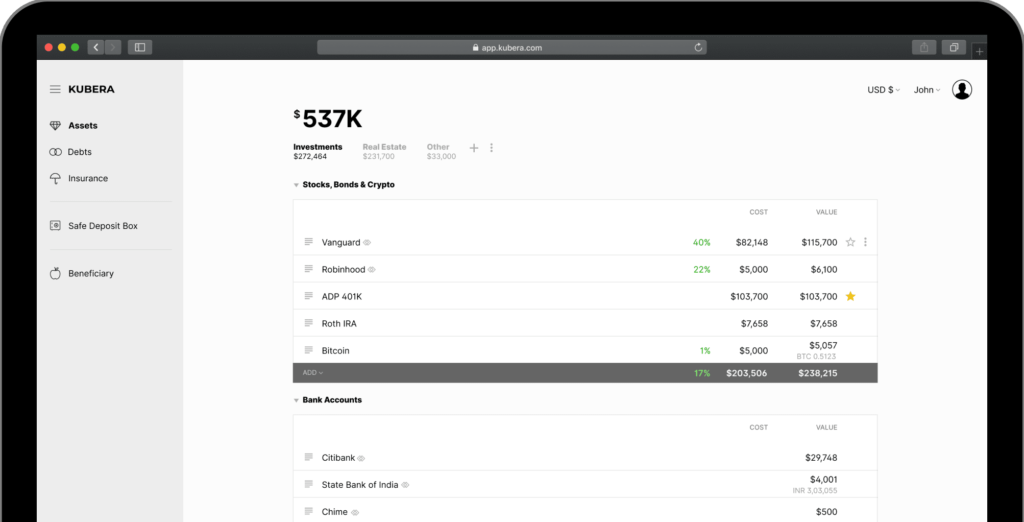
For individuals who prioritize wealth tracking over day-to-day expense budgeting, Kubera offers a specialized approach. Positioned as an advanced net worth tracker, the platform allows users to link virtually any type of asset or liability, ranging from traditional brokerage accounts to physical assets such as domain names, automobiles via VIN lookup, and real estate values. In addition to balance sheet monitoring, Kubera provides document storage solutions, insurance policy tracking, and baseline insights into asset allocation, catering primarily to users managing complex financial portfolios.
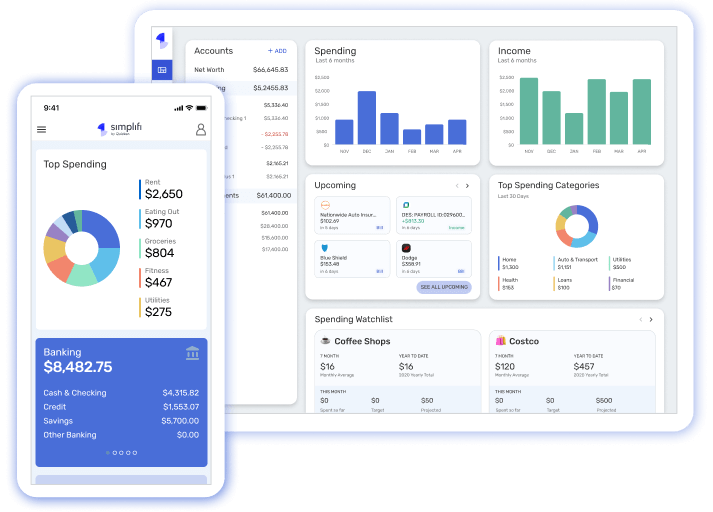
Other alternatives cater to specific workflow preferences. Simplifi, developed by the creators of Quicken, offers a visually polished interface accessible on both desktop and mobile devices. It bridges the gap between budgeting and net worth monitoring, allowing users to establish savings goals, track spending habits, and monitor investment growth within a unified dashboard. Meanwhile, Tiller caters specifically to individuals who prefer managing their finances through traditional spreadsheet software like Google Sheets and Microsoft Excel. By automatically downloading transaction data into customizable spreadsheet templates, Tiller provides complete data ownership for users who prefer custom formulas and offline analysis over mobile applications.
Evaluating the Modern Financial Toolkit
As digital tools continue to redefine how people interact with their money, the core principle of wealth tracking remains unchanged. Whether an individual utilizes a sophisticated platform with artificial intelligence capabilities, a dedicated investment dashboard, or a customized spreadsheet template, the objective is to gain clarity over assets and liabilities. While manual spreadsheets remain a viable option for the meticulous accountant, modern financial applications have significantly lowered the barrier to entry, transforming what was once a tedious chore into an automated, continuous process of financial evaluation.








No comments yet. Be the first to join the conversation!