
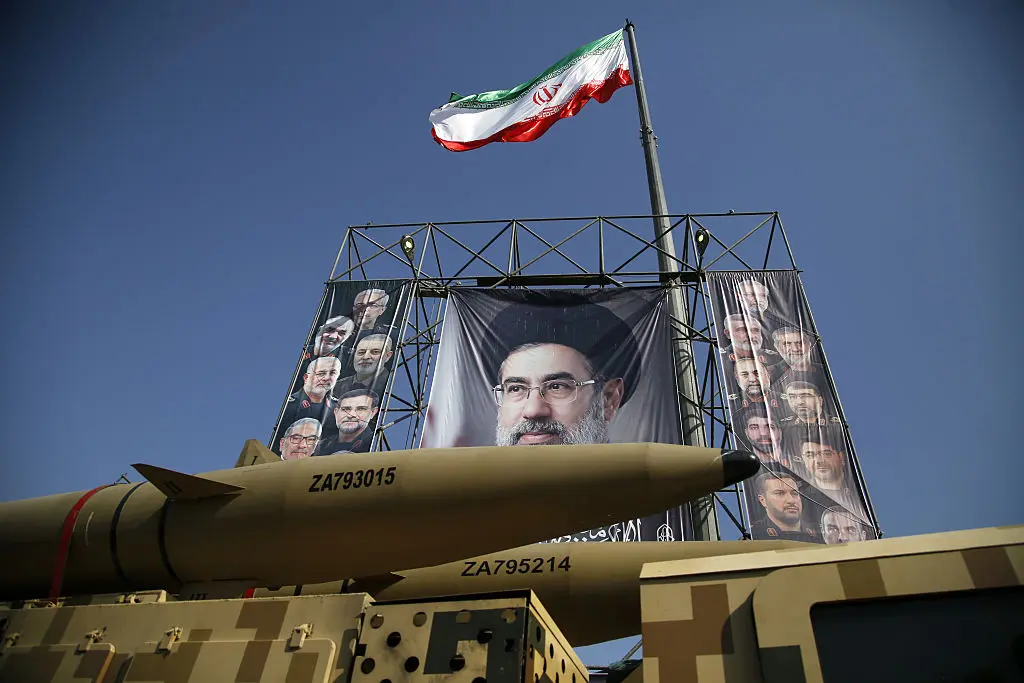
President Donald Trump’s ongoing conflict with Iran has steadily transformed into a critical political liability for his administration, casting a long shadow over domestic political calculations as the November midterm elections approach. Since the last wave of United States military strikes against Iranian targets occurred on September 8, President Trump has publicly ruled out launching any new military offensives ahead of the upcoming elections. Furthermore, the administration has offered assurances that it intends to wind down and ultimately resolve the conflict in the aftermath of the midterms.
Despite these public assurances, tensions in the region have only intensified behind the scenes. Rumblings quickly grew across Washington and foreign capitals that U.S. and Israeli military planners had drawn up a fresh suite of strike options against Iran. Among the most controversial proposals reportedly under consideration is the possible deployment of the largest non-nuclear weapon in the American military arsenal: the GBU-43/B, widely known as the Massive Ordnance Air Blast, or more colloquially dubbed "the Mother of All Bombs."
According to these intelligence and military reports, the primary targets for such a devastating strike would be Iran’s heavily fortified nuclear facilities and critical energy infrastructure. However, military analysts have raised persistent doubts regarding whether the massive bomb could successfully penetrate Iran’s most deeply buried underground sites, such as the fortified nuclear installation near Natanz. Within this context, reports suggest that President Trump has seemingly sought a targeted military action that his administration could package and present as a definitive military victory. By doing so, the White House could theoretically bring an end to the active phase of the war without appearing to back down in the face of Iranian defiance.
Nevertheless, pursuing such an aggressive strategy carries profound risks, potentially triggering a far wider and more destructive regional war than Washington intends. Tehran remains thoroughly unlikely to allow the United States to dictate a quick or painless end to the conflict. Fearing an imminent preemptive attack from Washington, Iranian leadership could decide to strike first. Either scenario threatens to ignite a new round of hostilities that would undoubtedly dwarf previous exchanges in scale and destructiveness.
Before the Mother of All Bombs
Reports of military contingency plans involving the massive weapon emerged against the backdrop of two other deeply worrying developments that have brought diplomacy to a standstill and heightened operational friction in the Persian Gulf. First, Iran has noticeably escalated its naval operations and attacks in the region, a response widely attributed to increased maritime traffic and security flows through the critical Strait of Hormuz. This sharp uptick in maritime violence was starkly illustrated when two UAE-owned cargo ships, the GFS Pride and the Cape Dao, were struck by projectiles while navigating the strategic waterway.
Secondly, high-level diplomatic efforts aimed at de-escalating the crisis have completely stalled. In late September, President Trump formally rejected a comprehensive diplomatic proposal put forward by Tehran on the sidelines of the United Nations General Assembly. That proposal envisioned a cessation of fighting across all active fronts, including Lebanon; the immediate lifting of the U.S. naval blockade and crippling oil sanctions; the release of billions of dollars in frozen Iranian financial assets; and the full reopening of the Strait of Hormuz within a span of seven days.
Instead of accepting the roadmap, Washington insisted that Tehran must immediately take concrete, verifiable steps regarding its nuclear enrichment program as an indispensable part of any diplomatic package. Iranian leaders have steadfastly rejected this demand, maintaining that adjustments to their nuclear program are concessions they are only willing to discuss at a much later stage in negotiations.
The precise timing of any potential U.S.-Israeli military action remains shrouded in uncertainty. While President Trump publicly stated that he would not authorize a resumption of attacks prior to the U.S. midterms, Israel held its own closely watched national election on October 27, a week earlier than the American vote. Reports indicated that Israeli Prime Minister Benjamin Netanyahu had actively sought renewed military engagement before both electoral contests concluded.
Naturally, American and Israeli strategic objectives diverge in several key areas. President Trump appears primarily driven by the desire for a high-profile military event that he can frame as a spectacular victory, allowing him to avoid the political drag of a prolonged, expensive war. In contrast, Prime Minister Netanyahu’s aggressive rhetoric regarding "finishing the job" points toward far more ambitious and maximalist goals, which could potentially include attempting to topple the governing Islamic Republic entirely. In anticipation of either outcome, Tehran has aggressively prepared its forces for a worst-case scenario: a protracted, region-wide war explicitly designed to impose devastating economic and military costs on its adversaries.
Denying Trump a Short War
The dominant strategic perspective within military and political circles in Tehran is that any upcoming conflict must be waged in a manner so brutally costly that no future U.S. president would ever dare contemplate another war against Iran. Hossein Mohebbi, a spokesperson for the Islamic Revolutionary Guard Corps, articulated this hardline stance in late September, declaring that Iran would not halt its operations until it had successfully driven the United States out of the region, punished the aggressor, and established permanent deterrence so that no foreign power would ever dare threaten the nation again.
This uncompromising logic entirely rules out a symbolic, limited, tit-for-tat exchange of strikes. From Tehran’s viewpoint, a limited American attack on Pickaxe Mountain—the heavily fortified nuclear site near Natanz that President Trump has repeatedly referenced—followed by a modest and symbolic Iranian response, would communicate the exact wrong message to Washington. It would signal to the White House that it can attack critical Iranian nuclear infrastructure, harvest domestic political gains ahead of an election, and pay only a minimal, entirely acceptable price. Consequently, Iranian officials have issued severe warnings that even a symbolic, non-lethal strike would instantly trigger a broad and punishing response, effectively denying Trump the quick exit he may have requested from his military planners.
Under this comprehensive counter-strategy, Iran would shift its primary focus toward devastating regional energy and economic infrastructure. Emphasizing the absolute nature of this deterrence, Iranian Parliament Speaker Mohammad Bagher Ghalibaf warned that in a region where Iran is prevented from selling its oil, no other nation will be permitted to sell its oil either.
The United Arab Emirates is viewed by Tehran as particularly exposed to these retaliatory measures. Mohsen Rezaei, secretary of Iran’s Supreme National Security Council, sharply accused the UAE of engaging in oil smuggling near the Gulf in active coordination with the U.S. Central Command. Furthermore, Rezaei identified entirely new categories of potential high-value targets, including undersea internet cables, massive data centers, and advanced artificial intelligence infrastructure across the region, which he publicly claimed possess a cumulative economic value exceeding $2 trillion. Speaker Ghalibaf subsequently broadened these threats to encompass all regional governments and foreign investors, warning that any entity providing financial funding, equity, land, or energy infrastructure to AI companies facilitating military aggression against Iran would face severe coercive action.
If raising the immediate financial and operational cost of war is the first pillar of Iran’s military calculus, preserving the duration of the conflict is the second. Ali Balali, a senior adviser to the Aerospace Force commander of the Islamic Revolutionary Guard Corps, suggested that Iran would deliberately conserve its advanced missile and drone arsenals to sustain a prolonged confrontation, rather than expend its strategic inventory in the early stages of fighting. Echoing this sentiment two days later, Iranian Army spokesperson Mohammad Akraminia argued that the ultimate structural weakness of the enemy lies precisely in its vulnerability to a protracted war of attrition.
Timing constitutes the third vital dimension in strategic planning within Tehran. Iranian military officials have increasingly raised the realistic possibility of launching preemptive strikes if circumstances warrant. Akraminia explicitly stated that if Iran’s intelligence concludes an attack by the United States or Israel is genuinely imminent, the armed forces will certainly engage in preemptive warfare to disrupt adversary planning. Mehdi Mohammadi, a strategic affairs adviser to Parliament Speaker Ghalibaf, expanded on this doctrine, arguing that a successful national defense strategy requires not only striking first but delivering a decisive, overwhelming blow capable of fundamentally altering the strategic balance of power. Consequently, military analysts recognize a distinct possibility that Iran might initiate hostilities early and sustain them for a very long period.
This dangerous potential for preemption stems largely from the high risk of military miscalculation driven by ambiguous signaling from Washington and Jerusalem. Leaked strike plans, aggressive aircraft carrier and amphibious deployments, and warplanes flying dangerously close to, but not formally crossing, Iranian airspace create a volatile operational environment. Iranian military planners view these patterns as a calculated effort by the U.S. and Israel to normalize provocative military activity and covertly regain the element of surprise. Consequently, Tehran might easily misinterpret routine military signaling as the precursor to an actual, imminent attack, prompting them to launch a preemptive strike despite formally wishing to avoid a new round of total war.
The fourth major element of Iran’s strategic posture involves the expanding circle of entities it will hold directly accountable in the event of an outbreak of hostilities. On October 5, Major General Ali Abdollahi, chief of staff of the Iranian armed forces, issued a stark warning declaring that if the United States acted against Iran either directly or indirectly through Israel, Iranian military forces would retaliate directly against United States assets and personnel.
This warning carries immense gravity in the wake of President Trump’s public decision to openly back Prime Minister Netanyahu ahead of Israel’s closely contested election. Many analysts and officials in Tehran interpreted this unconditional political support as an explicit green light from Washington allowing Israel to carry out destructive strikes against Iran immediately after the U.S. midterms. As a result, Tehran has made it unambiguously clear that even if Israel were to execute the initial military strike entirely on its own, regional U.S. forces, bases, and assets would still face immediate and severe military retaliation.
Widening the Map
This uncompromising strategic interpretation strongly suggests that the actual geographical and operational scope of Iran’s response to a U.S. strike would be exponentially wider than previous engagements. Iran’s aggressive maritime conduct in the Strait of Hormuz since late September offers a clear preview of how the nation intends to broaden any future conflict.
When the UAE, backed by the operational protection of the U.S. Central Command, attempted to maintain steady oil flows through a southern shipping corridor running along the Omani coast, the Islamic Revolutionary Guard Corps immediately adapted. The IRGC shifted its targeting focus away from small shuttle tankers, striking larger supertankers instead and formally declaring that any commercial vessels utilizing the designated "illegal corridor" would be aggressively pursued, intercepted, and interdicted across the entire region. Subsequent missile and projectile strikes off the coast of the UAE and near Qatari waters demonstrated the immediate operational reality of this threat. Any further military escalation in the region could easily compel Iran to unleash widespread attacks against vital energy installations, shipping lanes, and critical infrastructure across the entire Persian Gulf basin.
Furthermore, Iran’s loose network of regional allies and proxy groups could independently widen the conflict, even in instances where Tehran does not exercise absolute operational control over their day-to-day decisions. In Yemen, Houthi forces have already established a formidable second maritime front across the Red Sea and the Bab el-Mandeb strait, continuously threatening international commercial shipping and dramatically increasing security pressure on neighboring Saudi Arabia. In Iraq, Kataib Sayyid al-Shuhada, a prominent Iran-backed militia faction, has explicitly threatened to enter the fight if the Islamic Republic ever faces an existential military threat. Beyond the Middle East, the conflict could potentially manifest through indirect or covert operations in Europe.
Evidence of such long-range threats may have already surfaced. British Prime Minister Andy Burnham stated publicly that a suspected security plot uncovered in September near Royal Air Force Fairford—a strategic British military base frequently utilized by American heavy bombers—was "almost certainly" directed by the Islamic Revolutionary Guard Corps. While Tehran has officially denied any involvement in the incident, the development underscores the looming threat of asymmetric, covert operations targeting American and allied military assets far beyond the immediate Middle Eastern theater.
Simultaneously, Tehran is vigorously preparing for the difficult possibility of a ground-level military incursion inside Iranian territory. According to Brigadier General Ali Jahanshahi, commander of Iranian Army Ground Forces, more than 50 combat and support units have been heavily deployed along the nation’s borders, stretching from the rugged northwest down to the strategic Makran coast. Furthermore, military engineers have identified abandoned or secondary airfields that could potentially serve as landing sites for enemy airborne troops.
In tandem with these external defensive preparations, Iranian domestic security forces have carried out sweeping preemptive operations targeting armed Baluch militant groups in the southeast. They have also executed targeted drone and artillery strikes across Kurdish border regions amid lingering fears that separatist or insurgent factions might attempt to open a destructive internal front during the chaos of an external foreign attack.
A War Meant to Be the Last
Ultimately, both the United States and Iran run profound risks of severe strategic misjudgment. Washington may enter a new military confrontation operating under the comforting assumption that it can entirely control the scope, intensity, and duration of the war, only to discover belatedly that Tehran holds the ultimate keys to the conflict’s trajectory. This inherent leverage ensures that Iran is under no obligation to let the conflict terminate quickly or without exacting a punishing toll.
For its part, Tehran—having successfully survived the intense military exchanges that began in late February, persisted through April, and steadily evolved into a deeply regionalized crisis—may convince itself that launching a wider conflict will once again establish a permanent and effective regional deterrence. However, the underlying political and geopolitical conditions that made this aggressive strategy relatively effective in the past have fundamentally shifted, partly as a direct consequence of Iran’s own escalatory actions.
The more Tehran expands its list of targets and broadens its asymmetric attacks across the region, the greater the risk that it will alienate neighboring states that initially sought desperately to stay entirely neutral in the conflict. In a notable diplomatic shift, Saudi Arabia and the United Arab Emirates have reportedly agreed to closely coordinate their military and financial support on behalf of anti-Houthi forces in Yemen. Meanwhile, Egyptian President Abdel Fattah el-Sisi has publicly offered tangible assistance to help defend Saudi Arabia against ongoing Houthi drone and missile attacks. For the conservative Gulf monarchies, the stakes have rapidly transformed into an existential question: either Iran’s disruptive regional leverage must be decisively broken, or their future access to world economic markets will remain permanently dependent upon the unpredictable restraint of Tehran.
Through this dynamic, a war originally conceived by hardliners in Iran to deter future American attacks could instead forge a powerful, unified regional consensus among Arab states that the Islamic Republic must be met with decisive force rather than diplomatic accommodation or economic bargaining.
Ultimately, sustained diplomacy remains the only viable path to prevent the widening chasm between American and Iranian perceptions, risk calculations, and strategic goals from triggering another devastating round of military confrontation. Without meaningful diplomatic engagement, Washington could launch a limited military strike expecting a quick political exit, or Tehran could execute a preemptive attack fearing an imminent assault. Either dangerous scenario could easily spiral into a prolonged regional war that the United States deeply wishes to avoid, accelerating the formation of a hostile regional alliance against the Islamic Republic for which Iran would pay an exceptionally heavy price.









No comments yet. Be the first to join the conversation!