
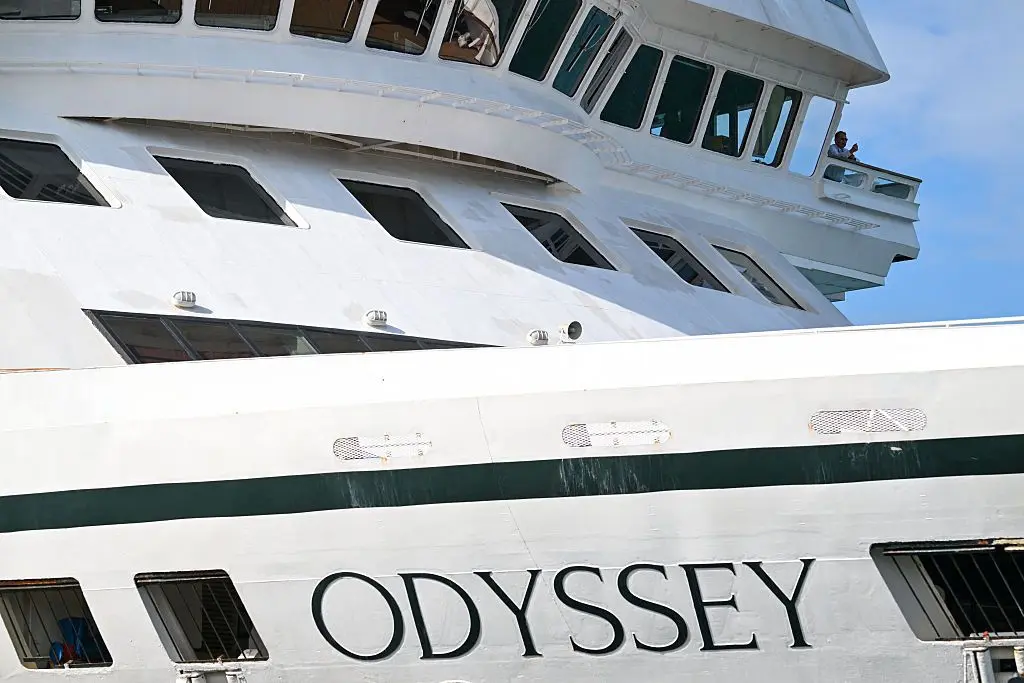
What was supposed to be a dream of a lifetime—cruising around the world endlessly in retirement—came to an abrupt and disruptive halt when Florida-based Villa Vie Residences announced the sudden suspension of its global voyage operations.
For more than 200 passengers aboard the luxury vessel Villa Vie Odyssey, the announcement meant that their floating home, and the unconventional retirement lifestyle they had invested heavily in, vanished almost overnight. The ship, which embarked on a first-of-its-kind continuous global journey from Northern Ireland in October 2024, was forced to cut its ambitious itinerary short while docked in Cambodia. Passengers were reportedly given a mere seven hours to pack up everything they owned, secure their belongings, and disembark onto land, bringing a shocking conclusion to a voyage that had only been underway for a fraction of its intended multi-year lifespan.
The abrupt termination of the cruise leaves behind a trail of financial and logistical uncertainty for retirees who had traded traditional bricks-and-mortar homes for a life on the high seas. Just two years prior to the shutdown, these individuals had been sold a compelling vision of the future: pay roughly $100,000 to purchase an inside cabin or up to $350,000 for permanent residency status, granting them the right to sail around the globe for the rest of their natural lives. Instead of a peaceful, perpetual vacation, those who bought into the dream found themselves abruptly stranded in Southeast Asia, scrambling to figure out their next steps without immediate refunds or secured financial backing from the operator.
Rising Fuel Costs and Unsustainable Finances
According to the cruise operator, the decision to suspend operations was forced upon them by rapidly escalating operational expenditures, driven primarily by an unprecedented surge in fuel costs. In statements released by Villa Vie Residences, the company explained that the financial models underpinning the continuous cruise had been severely disrupted by market realities in Asia.
Historically, monthly fuel expenses for the voyage averaged about $1,800 per cabin—a manageable figure built into the company’s long-term budgeting and operational forecasts. However, regional market pressures in parts of Asia recently caused those expenses to skyrocket dramatically, pushing monthly fuel costs to between $6,000 and $8,000 per cabin. For a company operating a residential cruise model, cost increases of that magnitude represent an insurmountable financial burden.
"The company cannot simply pass increases of that scale on to residents, and the resulting shortfall has placed its current operating model under unsustainable financial pressure," Villa Vie wrote when formally announcing the suspension of operations.
In response to the crisis, company leadership stated that they were utilizing an immediate 60-day operational pause to explore comprehensive corporate restructuring or potential filings for Chapter 11 bankruptcy protection. However, events on the ground quickly outpaced initial corporate timelines. Subsequent reports from news organizations, including CBS News, revealed that the ship’s primary financial lender had intervened and officially taken control of the vessel. According to messages sent directly to the stranded residents, the ship—which remains docked in Cambodia—is expected to be relocated to Singapore in the near future. Passengers were given a strict weekend deadline to return to the vessel and collect whatever remaining personal property they had left behind during the chaotic initial disembarkation.
The rapid deflation of the residential cruise venture exposed the vulnerabilities inherent in pioneering alternative retirement models. According to shipping and passenger data, the Villa Vie Odyssey had a maximum passenger capacity of roughly 650 residents, but its actual occupancy peaked well below that figure. Bloggers and residents documenting the journey noted that passenger numbers never reached the critical mass originally anticipated by the business model. Official Cambodian government figures indicated that when the ship arrived in the country on October 23, it carried 203 residents alongside 156 crew members, leaving the vessel operating significantly under capacity even before the financial crisis forced its total shutdown.
Left on Land, Now What?
The sudden cessation of the cruise has left more than 200 passengers grappling with a disorienting reality. Having spent tens or hundreds of thousands of dollars to secure their accommodations, these retirees had made monumental life changes to transition to the ship. Many sold their traditional suburban homes, liquidated vehicles, and disposed of the vast majority of their physical possessions. They traded the stability of land-based living for the promise of waking up in a new international port week after week, viewing the endless cruise as a modern, adventurous alternative to traditional retirement communities or assisted living facilities.
The appeal of continuous residential cruising has grown in recent years as a subset of retirees looks for novel ways to stretch their savings while experiencing foreign cultures. In theory, an all-inclusive floating community can offer a streamlined lifestyle that eliminates property taxes, home maintenance costs, and utility bills, potentially rivaling or even undercutting the expenses associated with upscale retirement villages on land. Yet, because these ventures often operate outside the heavily regulated consumer protections governing traditional cruise lines or land-based real estate purchases, passengers face unique financial risks when things go wrong.
With no immediate refunds or guaranteed corporate safety nets in place, the stranded passengers have been forced to absorb the unexpected out-of-pocket costs of emergency airfare, temporary hotel accommodations, and long-term logistical planning.
Randy Cassingham, a resident who has chronicled the entirety of the voyage on his blog, ResidentialCruising.com, captured the emotional and physical limbo experienced by many of his fellow travelers. Along with his wife, Cassingham sold his house, parted with his car, and shed nearly all earthly possessions to embrace the floating lifestyle. While they maintain a legal residential address in the United States for administrative purposes, they no longer view it as a true home.
"We are effectively homeless. Which is not to say we must live on the streets. We could live indefinitely in a 5-star hotel in S.E. Asia for significantly less than we were paying to live on the ship," Cassingham wrote in a recent blog post detailing the aftermath of the shutdown. "But living forever in a hotel is not our idea of home either. We need time to figure out where we will go, and there is a slight chance we could rejoin the ship. We must wait and see."
As the legal and financial fate of Villa Vie Residences remains tangled in restructuring talks and creditor interventions, the former passengers of the Villa Vie Odyssey find themselves scattered across Southeast Asia and beyond. Whether the ambitious dream of endless global cruising can be salvaged under new management or if it has reached a permanent end remains uncertain, leaving retirees to weigh their options as they pick up the pieces of a disrupted retirement.









No comments yet. Be the first to join the conversation!