
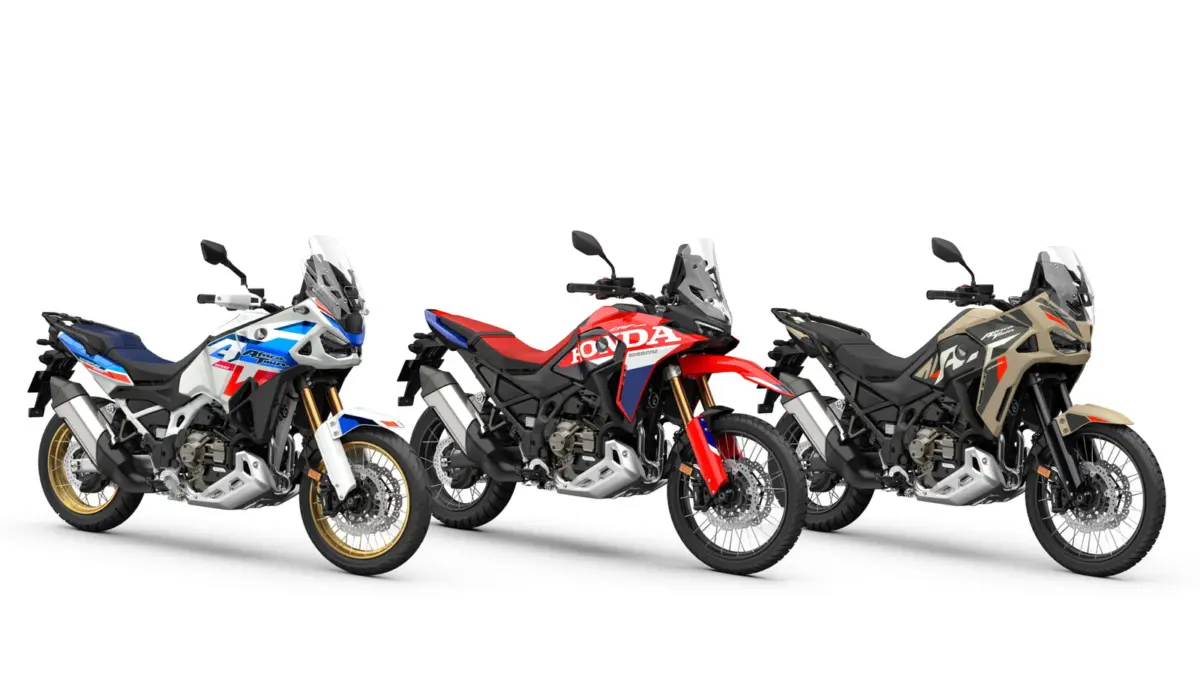
Honda has long established the Africa Twin as one of the most capable and well-rounded adventure motorcycles on the market, but the Japanese manufacturer is far from resting on its laurels. Unveiled at the EICMA trade show, Honda introduced a comprehensively overhauled next-generation platform for its flagship adventure lineup. The updates transition the machine from the outgoing CRF1100L designation to the CRF1150L, bringing substantial updates to technology, styling, comfort, and mechanical engineering. Alongside the standard model and the long-distance touring variant, Honda has introduced an entirely new third sibling to the lineup: the Africa Twin Enduro Sports.
The foundation of this new generation is a larger engine, expanding the platform’s capabilities while keeping pace with modern regulatory and performance demands. The updated power plant is a 1,131-cc parallel-twin engine, which is widely expected to retain the characteristic 270-degree crankshaft offset that has become immensely popular across the adventure and mid-weight motorcycle segments for its distinct power delivery and rear-wheel traction feel. Honda’s global figures for the new mill claim an impressive 117 horsepower and 88 pound-feet of torque. Because these figures originate from the European-spec presentation, riders in the United States should anticipate potential adjustments to power output and tuning to comply with local emissions and noise regulations.
This revised engine is housed within an entirely new frame architecture. Notably, engineers have tucked the fuel tank beneath the rider’s seat to significantly lower the motorcycle’s center of gravity. This engineering trick is a proven method for improving low-speed handling and stability—a strategy successfully employed on older adventure platforms like the BMW F800GS. By redistributing the fuel mass lower in the chassis, the new Africa Twin is expected to feel noticeably smaller, more agile, and more manageable underneath the rider, regardless of its ultimate wet weight, which has yet to be formally announced for the global market.
The New Sibling
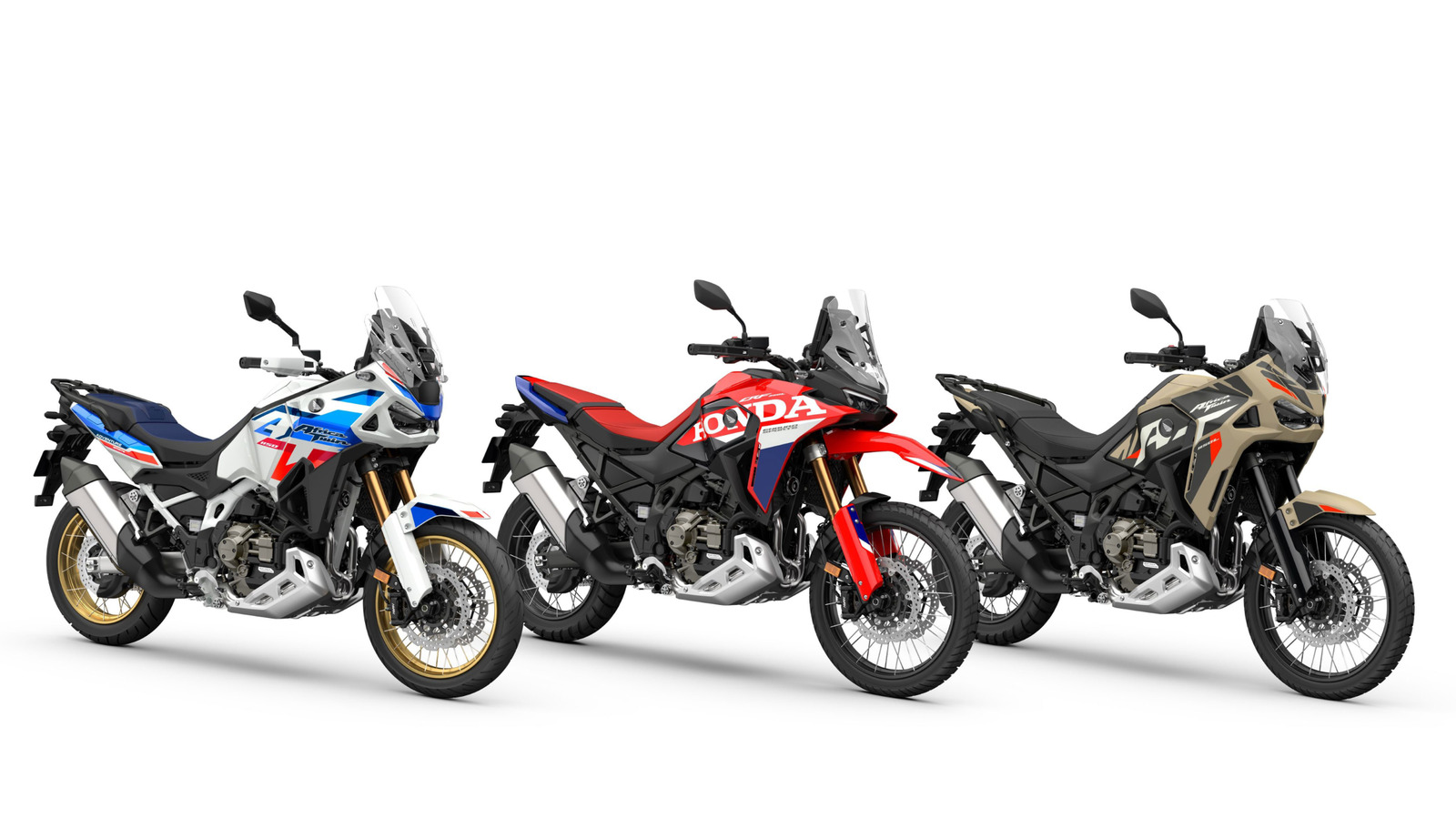
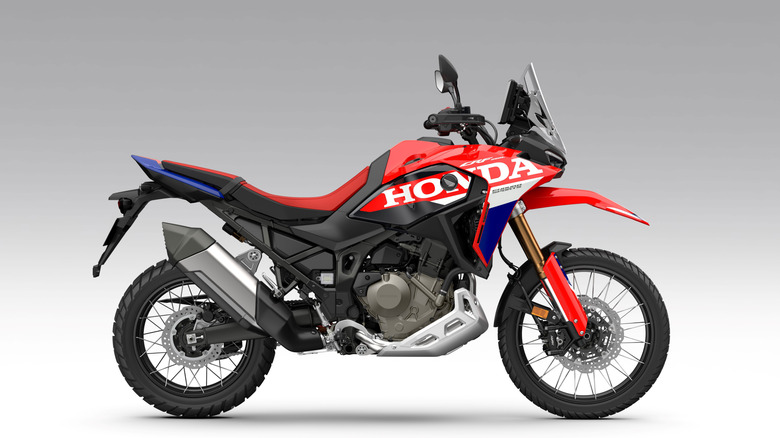
The most intriguing announcement within the refreshed Africa Twin lineup is the addition of the Enduro Sports variant. Honda is positioning this new model as a larger, more rugged big brother to its competition-bred CRF450 dirt bike. According to official manufacturer specifications, the Enduro Sports features front suspension component specifications that are described as "equivalent" to the brand’s dedicated off-road machines. While translating factory promotional language directly to a heavy multi-cylinder adventure motorcycle involves distinct compromises due to differing frames, dimensions, and intended riding dynamics, the intent is unmistakable. Honda is signaling that the Enduro Sports is designed to be the most aggressive, dirt-focused member of the Africa Twin family—pushing the envelope of what is realistically possible on a large-displacement adventure motorcycle.
The adventure motorcycling community has long maintained a healthy sense of irony regarding riders hauling heavily accessorized, luggage-laden adventure tourers through demanding backcountry routes that would challenge even a lightweight dual-sport machine. With the Enduro Sports, Honda appears to have built a machine tailored directly for riders who want to tackle deep sand and aggressive dirt terrain with a high-displacement engine. Whether a multi-hundred-pound adventure motorcycle is the ideal tool for conquering sand dunes is an open debate among purists, but the platform seems tailor-made for riders who push heavy machinery to its absolute limits, perhaps channeling the spirit of elite stunt and rally riders like Pol Tarres.
New Features
While the Enduro Sports carves out a new niche for the dirt-oriented crowd, Honda has heavily invested in updating the standard Africa Twin and the Adventure Sports variants for long-distance touring comfort and road composure. Both traditional variants receive an advanced semi-active suspension system that Honda officially calls the Showa Electronically Equipped Ride Adjustment electronically controlled suspension with Honda Skyhook control—a mouthful that highlights the sophisticated engineering packed into the hardware.
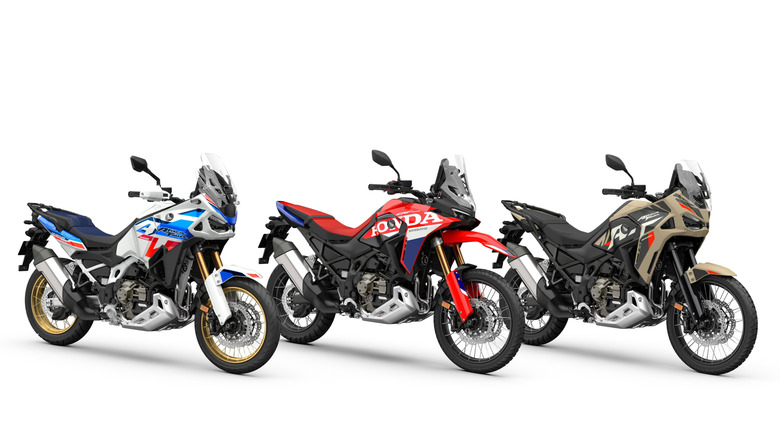
The core function of this system is to adapt damping forces in near real time, actively insulating the rider from the varied textures of the road surface. This emphasis on touring comfort and high-speed compliance suggests that the standard and Adventure Sports models are leaning slightly more toward road-oriented touring capabilities than previous generations, even though the base Africa Twin maintains its traditional, off-road-capable 21-inch front wheel.
This sophisticated electronic suspension is integrated with a comprehensive suite of modern rider aids. The motorcycle features lean-sensitive anti-lock braking systems, advanced traction control, and electronic stability control, all configurable across six distinct riding modes to suit varying terrain and weather conditions. Furthermore, Honda’s proprietary dual-clutch transmission—a signature technology that has carved out a dedicated following among adventure riders over the years—remains a prominent option, likely available across all three variants in the expanded lineup.
Adventure Sporting
True to form, the Adventure Sports model retains its position as the premier long-distance, road-touring machine in the family. It features an enlarged fuel tank holding 6.34 gallons, providing extensive range between fill-ups, alongside a unique, wind-cheating fairing design. (Honda has not yet released the exact fuel capacity figures for the base and Enduro Sports models.) The Adventure Sports preserves the 19-inch front wheel of its predecessor, utilizing a cross-spoked wheel design that allows for the convenience of tubeless tires.
Perhaps the most technologically advanced addition to the Adventure Sports is the introduction of automotive-grade safety features usually reserved for luxury touring motorcycles like the Honda Gold Wing. Select variants equipped with the dual-clutch transmission now feature Honda Sensing Ride, a comprehensive safety ecosystem utilizing front and rear radar units to continuously monitor the surrounding traffic and environment.
The front-facing radar enables adaptive cruise control, but Honda has pushed the technology further by allowing the system to bring the motorcycle to a complete stop in heavy traffic and automatically resume moving when the vehicle ahead pulls away. Additionally, the radar hardware powers forward and rear collision warning systems, integrated brake assist, and a specialized group ride mode designed to maintain safe spacing during staggered group riding scenarios.
The next-generation Honda Africa Twin represents a meaningful evolution over the outgoing CRF1100L platform. By combining increased engine displacement, a lower center of gravity, and advanced semi-active suspension, the updated lineup promises enhanced performance on both the asphalt and the trail. Whether touring the highways with advanced radar safety systems or kicking up dust aboard the Dakar-inspired Enduro Sports, the expanded Africa Twin family offers a specialized machine for nearly every style of adventure rider.







No comments yet. Be the first to join the conversation!