
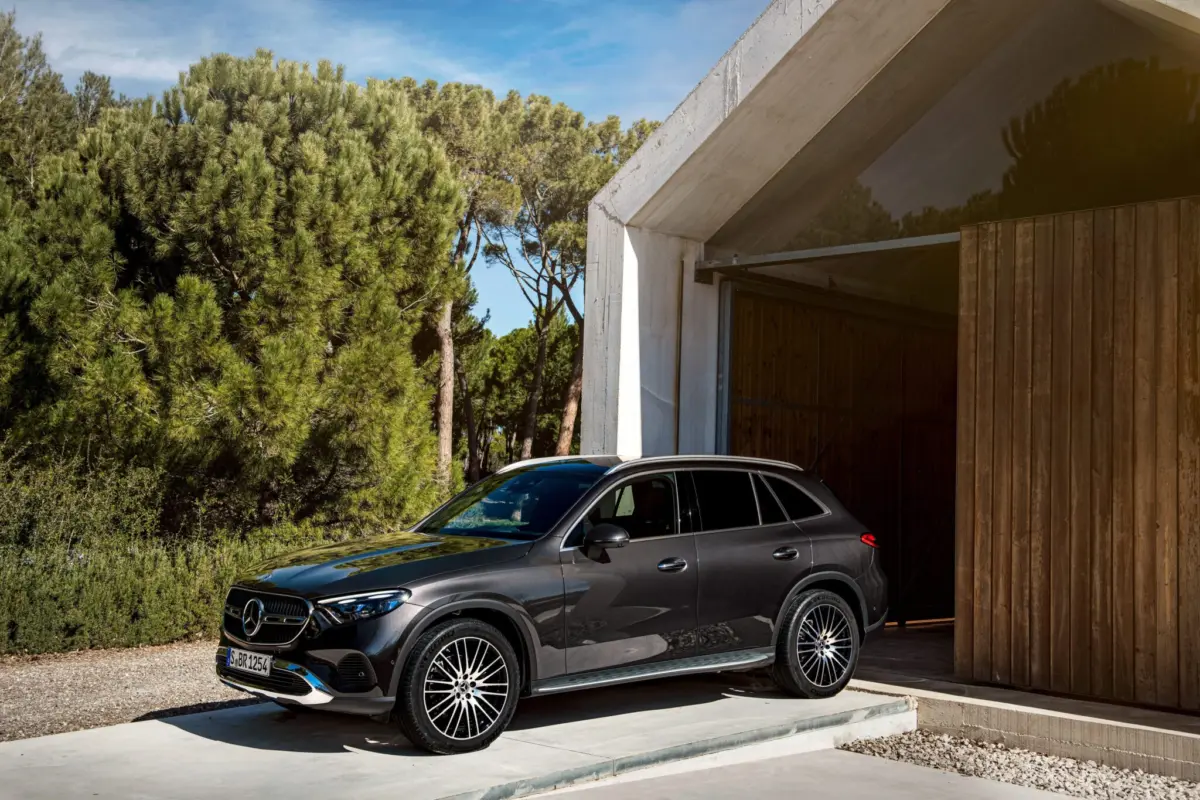
Mercedes-Benz has reportedly adjusted its long-term manufacturing timeline for the United States, pushing back the domestic production start date for its popular GLC-class crossover. According to a report by Automotive News citing industry sources, the luxury automaker has delayed the start of GLC assembly at its Vance, Alabama, facility from the originally planned late 2017 timeline—subsequently updated to late 2027—out to the year 2030. When U.S. assembly finally does get underway, it will take place at the brand’s established manufacturing hub in Vance, a plant that already anchors a significant portion of Mercedes-Benz’s North American operational footprint.
The strategic decision to postpone local production of one of its highest-volume vehicles stems primarily from product life cycle planning and the impending arrival of future vehicle architectures. Industry analysts point out that initiating production of the current-generation GLC under a compressed timeline would create immense financial inefficiencies. Sam Fiorani, vice president of global vehicle forecasting at AutoForecast, highlighted the economic rationale behind the delay in his comments to Automotive News. Investing heavily in retooling the Alabama assembly line for a vehicle that would only occupy the latter half of its current life cycle before requiring yet another extensive overhaul for the next generation simply does not make sound financial sense for the automaker.

By aligning the U.S. manufacturing shift with the eventual debut of the next-generation GLC-class, Mercedes-Benz can streamline factory investments and transition the assembly lines more seamlessly. The current iteration of the GLC-class received a comprehensive mid-cycle refresh for the 2023 model year, establishing a steady cadence that positions a completely redesigned next-generation model right around the turn of the decade.
Until that production shift happens in 2030, however, the delay leaves the GLC-class exposed to ongoing financial headwinds, particularly those tied to international trade policies and import tariffs. The GLC remains one of the single most important and highest-volume volume drivers for Mercedes-Benz in the United States market, making its continued importation a significant factor in the brand’s North American logistics and pricing strategies. Mercedes-Benz has previously committed to a substantial capital expenditure of roughly $4 billion dedicated to its Alabama production complex. The core objective of that massive investment program has been to localize the assembly of its highest-volume vehicles, thereby insulating them from external trade friction. Currently, models imported into the United States from overseas production lines remain subject to a 15 percent import tariff, adding a layer of cost complexity that local assembly is ultimately designed to mitigate.
The broader macroeconomic and regulatory landscape surrounding automotive imports continues to be a moving target for global manufacturers operating in the United States. While Mercedes-Benz navigates its long-term manufacturing roadmap, shifting federal policies could introduce new variables to the equation. Reports have suggested that the administration may evaluate adjustments to tariffs on European automotive imports—potentially considering a reduction to a 10 percent rate under specific conditions, such as incentives aimed at encouraging major foreign automakers to establish or expand domestic manufacturing footprints within the country.

As the automotive industry closely watches how trade policies and corporate investments intersect, the timeline for localized production remains a critical component of Mercedes-Benz’s North American strategy. Car and Driver reached out to corporate representatives at Mercedes-Benz for official confirmation and further clarification regarding the Automotive News report concerning the 2030 production shift, but a response had not been received at the time of publication. Further updates will be provided as additional details regarding the Vance plant’s long-term production schedule emerge.







No comments yet. Be the first to join the conversation!