
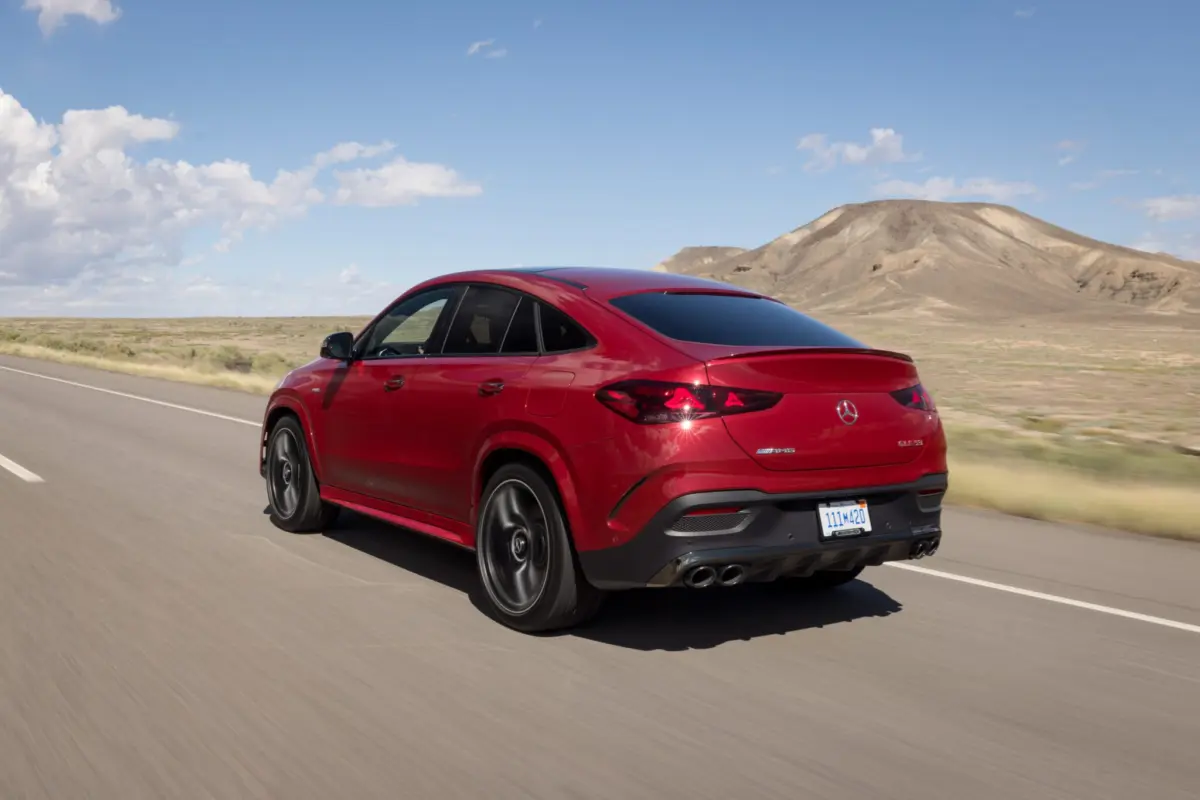
Mercedes-Benz and its high-performance AMG division have long lived by the philosophy of offering something for every type of driver. Whether buyers are looking for a standard luxury cruiser, a muscular SUV, or a sleek coupe variant, the German automaker typically provides multiple powertrain choices and endless configuration options. Once a model is selected, the decision-making process continues inside the cabin, where passengers can interact with the vehicle through touchscreens, touchpads, voice commands, steering wheel controls, or simply by pushing down on the right pedal.
For the 2027 model year, Mercedes-AMG is rolling out a comprehensive refresh for its high-performance utility vehicles. This update spans the SUV and Coupe variants of the GLE53 and GLE63 S, alongside the massive three-row GLS63. Bringing these performance flagships up to date with their Benz-badged counterparts, the revisions introduce a modernized interior interface designed to streamline user interactions, alongside heavily revised powertrains that give buyers even more performance-oriented reasons to upgrade.
Same Athletic Profile, Updated Style
The extra-sporty utility vehicles that form the backbone of the AMG performance lineup have received a visual nip-and-tuck to keep them looking fresh in an increasingly competitive luxury market. The styling updates mirror those applied across the standard, non-AMG versions of the GLE and GLS classes.
At the front and rear, both the bumpers and grilles have been entirely redesigned to project a more assertive road presence. Fresh wheel designs add a dynamic new look to the side profile, while the distinct AMG head- and taillights now feature the signature three-pointed-star graphic motif. This subtle yet effective lighting signature ties the high-performance models visually closer to the rest of the modern Mercedes-Benz family, ensuring that onlookers can immediately identify the refreshed lineage from day to night.
Beneath the updated sheet metal lies a thoroughly modernized electrical architecture. Upgraded to match the high-tech specifications of the flagship S-Class sedan, this new electrical backbone supports the latest generation of the MBUX infotainment system as well as robust over-the-air update capabilities. Mercedes has indicated that these over-the-air pathways will soon enable Level 2 hands-free driving capabilities, pushing the brand further into the realm of advanced driver assistance.

For front-seat occupants who appreciate screen real estate, the cabin now accommodates an optional second touchscreen dedicated entirely to the front passenger. Measuring 12.3 inches diagonally, this passenger display matches the dimensions of both the driver’s instrument cluster and the central infotainment interface. While the expansive display cannot perform miracles, it does visually indicate when the vehicle’s AI assistant is actively listening. Furthermore, the system is intelligent enough to discern whether a voice command originated from the driver or the front passenger, automatically projecting its digital avatar onto the respective screen.
During early testing, the voice recognition system occasionally stumbled when asked complex questions—such as an explanation of quantum physics—regardless of whether the request came from the left or right seat. However, engineers note that such limitations are far more likely the result of spotty cellular network coverage in remote test areas rather than any fundamental lack of artificial intelligence. For traditionalists who prefer to make adjustments away from screens and voice prompts, a familiar touchpad remains positioned on the center console for subtle climate and audio tweaks.
Inside the cockpit, interior designers have thankfully re-evaluated some of the more controversial touch-sensitive controls previously mounted on the steering wheel. While not every capacitive button has been banished, welcoming changes have been made to improve tactile feedback. A physical rocker switch now handles adaptive cruise control speed modulation, while a traditional roller manages audio volume. These adjustments arrive as a welcome relief in an automotive landscape where human-machine interfaces frequently lean toward unnecessary complexity. Fortunately, the steering wheels themselves remain reassuringly round.
Mighty Morphing Power Ranges
While the interior and exterior updates are substantial, the most significant changes for 2027 occur beneath the skin, where the powertrains undergo a massive and complex evolution. Last year’s conventional GLE53 is officially replaced by the new GLE53 Hybrid, a high-performance plug-in hybrid that drastically alters the vehicle’s character.
Previously, the GLE53 relied on a turbocharged 3.0-liter inline-six engine churning out 429 horsepower and 413 pound-feet of torque. In the 2027 model, that powerplant is replaced by a heavily revised version of the same inline-six, designated as the M256 Evo engine featuring a new block and cylinder heads. Working in tandem with a massive electric motor integrated directly where the torque converter used to sit, the combined system output skyrockets to an impressive 577 horsepower and 553 pound-feet of torque. This powertrain shares a familial relationship with the upcoming 2027 Mercedes-Benz GLE500e, though the AMG version retains its giant exhaust-driven turbocharger. Rather than relying on an electric auxiliary compressor to build boost, the large electric motor steps in immediately to eliminate turbo lag right off the starting line.

Given the massive power increase, a name like GLE58 might have more accurately reflected the vehicle’s capabilities, but Mercedes opted to retain the historic 53 moniker—a designation first attached to this plug-in hybrid setup when it was initially teased back in 2023. On pure electric power, the GLE53 Hybrid can travel an estimated 45 miles without ever firing up its internal combustion engine. Drivers can glide along in near silence at speeds up to approximately 87 mph without needing to tread lightly on the accelerator pedal. For recharging, 9.6-kilowatt AC charging comes standard, alongside a 60-kilowatt DC fast-charging capability that offers rapid replenishment on the go.
At the upper end of the performance spectrum, the V-8-powered 63 models continue to represent the pinnacle of AMG excess. The twin-turbocharged 4.0-liter V-8 sees its output figures remain steady at 603 horsepower and 627 pound-feet of torque, placing it surprisingly close to the power levels of the new six-cylinder hybrid. Despite identical output figures, the engine undergoes a major mechanical shift by swapping from a traditional cross-plane crankshaft to a flat-plane crankshaft.
Mercedes engineers implemented this overhaul to reduce tailpipe emissions while simultaneously improving engine response and overall refinement. From the driver’s seat, those claims hold up exceptionally well. The engine delivers all the traditional benefits of a flat-plane crankshaft—including sharper throttle response and an exotic exhaust note—without introducing any obvious increase in cabin vibration. Furthermore, the 63 models feature a newly designed selectable exhaust system that transitions seamlessly from a subdued purr to a deep, guttural thrum depending on the selected drive mode.
Throttle response across both powertrain options is virtually seamless during normal driving conditions. Drivers who prefer a more aggressive, tactile shift feel can dial up the engagement by switching into Sport or Sport+ modes, which introduce firmer, more pronounced gearchanges. There is virtually no hesitation at initial throttle tip-in, and the various thrust-enhancing systems hand off power delivery to one another smoothly, avoiding any abrupt clunks or unexpected accelerative surges.
For drivers looking to tap into maximum performance, AMG has introduced a dedicated launch control function to the GLE and GLS lineups for the first time. Exclusive to Sport+ mode, launch control is activated via the rotary dial and button cluster situated on the lower right quadrant of the steering wheel. Upon activation, the system automatically tightens the seatbelts in preparation for a hard launch.

The resulting acceleration feels less like a violent physical assault and more like an authoritative, sustained shove deep into the seatback, though the active belt pretensioners admittedly take a small fraction of the raw fun out of the experience. Manufacturer-estimated acceleration times to 60 mph stand at 4.1 seconds for the GLE53, 3.9 seconds for the GLS63, and 3.6 seconds for the GLE63 S. Historically, independent track testing by automotive publications has often proven Mercedes’ figures to be conservative, pointing toward even quicker real-world performance.
A Classy Chassis
To handle the extra power and weight, every model in the refreshed lineup receives an updated Electronic Stability Program (ESP) system alongside upgraded braking hardware. For buyers seeking ultimate stopping power, high-performance carbon-ceramic brakes remain available as an option exclusively on the 63 models.
Steering calibration remains largely unchanged, offering a direct feel with a modest amount of road feedback. The GLE53 continues to rely on steel-sprung air suspension paired with adaptive dampers, featuring revised software calibration to accommodate the heavier plug-in hybrid hardware. However, the previously optional active roll stabilization system has been dropped from the GLE53’s options list.
Both 63 models receive active roll stabilization as standard equipment. This system differs fundamentally from the E-Active Body Control suspension found on standard, non-AMG GLS models. While the standard Benz setup can actively lean the heavy SUV into corners and manage vertical body motion, the GLS63’s performance-oriented suspension prioritizes keeping the cornering attitude strictly flat. The result is an athletic demeanor that feels composed without the occasionally unusual sensations associated with body-leaning systems. Though more stiffly sprung than their non-AMG counterparts, the high-performance AMGs remain remarkably comfortable and placid in Comfort mode, while sportier drive settings transmit sharper impacts into the cabin when pushing hard on imperfect asphalt.
The luxury of choice and high performance naturally commands a significant financial investment. Reflected against its substantial power upgrade, the GLE53 SUV’s price increase of $7,100—amounting to roughly $48 per additional horsepower—remains relatively reasonable, while the GLE53 Coupe sees a more modest price bump of $5,950. The GLE53 SUV starts at $98,450, with the Coupe commanding a $1,000 premium for its sweeping roofline and reduced cargo utility. Stepping up to the V-8 models pushes the entry point to $138,550 for the GLE63 S SUV, $140,550 for the GLE63 S Coupe, and $156,800 for the sprawling three-row GLS63.

Ultimately, the new powertrain options added to the GLE53 introduce a compelling duality: the ability to enjoy signature AMG performance and luxury without needing to fire up the internal combustion engine for daily commutes. Meanwhile, the V-8-powered 63 models make an even louder, more visceral case for higher spending. Both tiers benefit from a modernized technology interface that is significantly easier to live with on a daily basis, yet the most persuasive argument for any of these high-performance machines still arrives simply by applying pressure to the right pedal.








No comments yet. Be the first to join the conversation!