
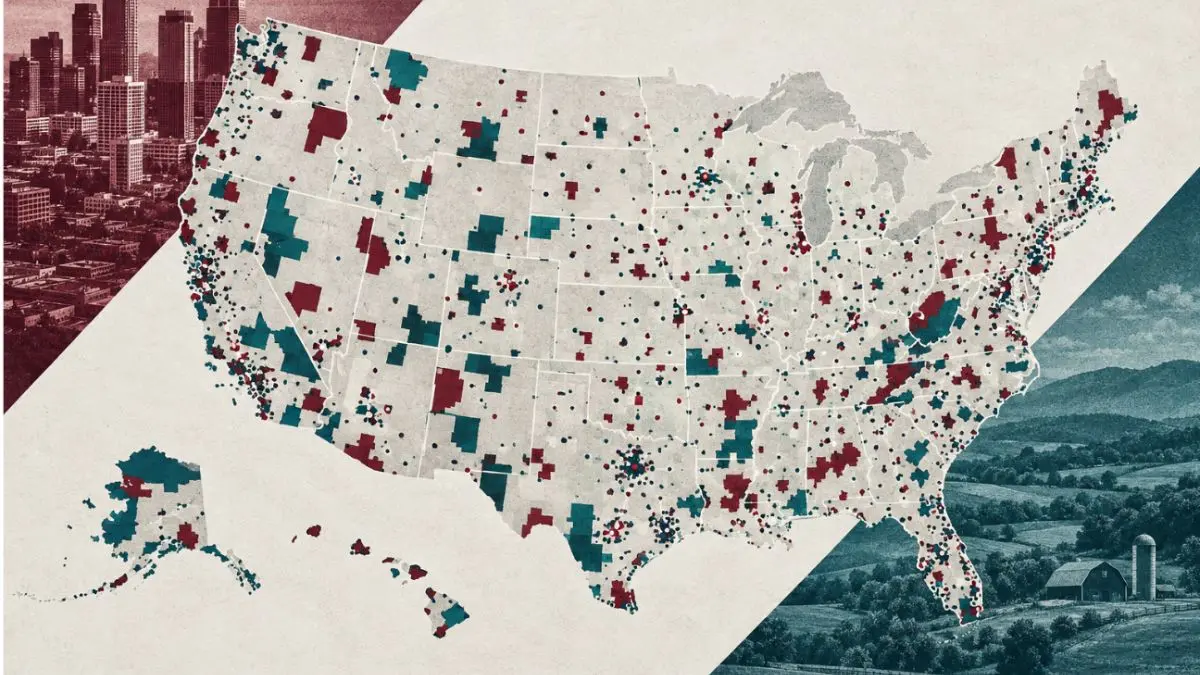
The U.S. Department of the Treasury and the Internal Revenue Service (IRS) have officially designated 6,576 census tracts across all 50 states, U.S. territories, and the District of Columbia as newly minted Qualified Opportunity Zones, marking a major milestone for long-term community development and economic investment financing.
The sweeping federal action, which is scheduled to take effect on January 1, 2027, permanently renews the federal Opportunity Zone tax incentive while introducing enhanced, targeted benefits designed to stimulate private investment in eligible rural communities. In addition to securing the permanence of the program, the announcement establishes a formal, recurring process to redesignate opportunity zones every 10 years. This ensures that the newly released map will remain firmly in place through the end of December 2036, providing real estate developers, investors, and local municipalities with an unprecedented decade of planning certainty.
Weighing in on the announcement, IRS Chief Executive Officer Frank J. Bisignano emphasized the transformative potential of the updated framework in a press release. He noted that the permanent extension and thoughtful expansion of the initiative will give states a reliable, powerful mechanism to attract sustained, long-term capital into underserved, rural, and economically distressed regions. Bisignano added that through these updates, the IRS and the Treasury Department are actively enabling targeted investment and tangible economic growth in the exact communities where financial resources are needed the most.
Originally established as a cornerstone provision of the Tax Cuts and Jobs Act of 2017, the Opportunity Zone program was explicitly designed to incentivize private investment in economically disadvantaged communities. The mechanism works by allowing eligible investors, including corporate entities, individual investors, homebuilders, and commercial developers, to defer or reduce their capital gains tax liabilities when they channel funds into qualified projects within designated zones.
For housing developers, residential homebuilders, and commercial real estate investors, the unveiling of the updated map and the permanent statutory extension of the incentive provide welcome clarity. Navigating the complex landscape of eligible locations has historically involved short-term horizons, but the new framework enables participants to engage in long-term strategic planning for the next decade without the looming anxiety of sudden program expirations.
This newfound regulatory and financial certainty stems directly from critical legislative changes enacted through the Working Families Tax Cuts, a major economic package that President Trump signed into law in 2025. The legislation formally codified the Opportunity Zone program into a permanent fixture of the federal tax code, established newly enhanced tax incentives specifically tailored to benefit rural communities, and created a structured, predictable process to review and redesignate eligible census tracts at the conclusion of every decade.
In its accompanying rollout announcement, the Treasury Department highlighted that the Working Families Tax Cuts build directly upon a massive foundation of more than $110 billion in private-sector investment that has flowed into Opportunity Zones since the initiative was first launched in 2017.
To refine the impact of the program, the new legislation deliberately narrowed the pool of eligible zones down from the previous total of 8,764 tracts to the newly announced 6,576 tracts, while simultaneously strengthening incentives aimed at rural regions. Although urban areas will continue to represent a significant and vital share of the newly designated zones, the targeted changes are widely expected to encourage a substantial surge of capital investment into rural markets that have historically struggled with severely limited access to housing capital and traditional financing.
These structural improvements complement a major policy provision included in the 21st Century ROAD to Housing Act. That separate legislative measure grants the U.S. Department of Housing and Urban Development (HUD) the administrative authority to favor competitive grant applications if a proposed housing development is physically located within or primarily serves a federally designated Opportunity Zone. The overarching public policy aim of that specific provision is to spur a much-needed expansion of housing supply in economically distressed neighborhoods across the nation.
The Opportunity Zone program applies to both market-rate and below-market affordable housing developments, making it exceptionally popular among residential real estate developers seeking viable financing solutions. The tangible impact of the initiative on the housing sector is well-documented by recent empirical research. For instance, a comprehensive 2025 analysis conducted by the Urban Institute revealed that an impressive 64% of all Opportunity Zone capital deployed in Ohio went directly toward supporting residential real estate development.
Furthermore, a separate 2025 analysis published by the Economic Innovation Group concluded that the Opportunity Zone program has successfully rough-doubled the overall housing supply within eligible participating zones, underscoring its efficacy as a catalyst for community revitalization and neighborhood growth as the initiative transitions into its next decade under the newly established map.










No comments yet. Be the first to join the conversation!