
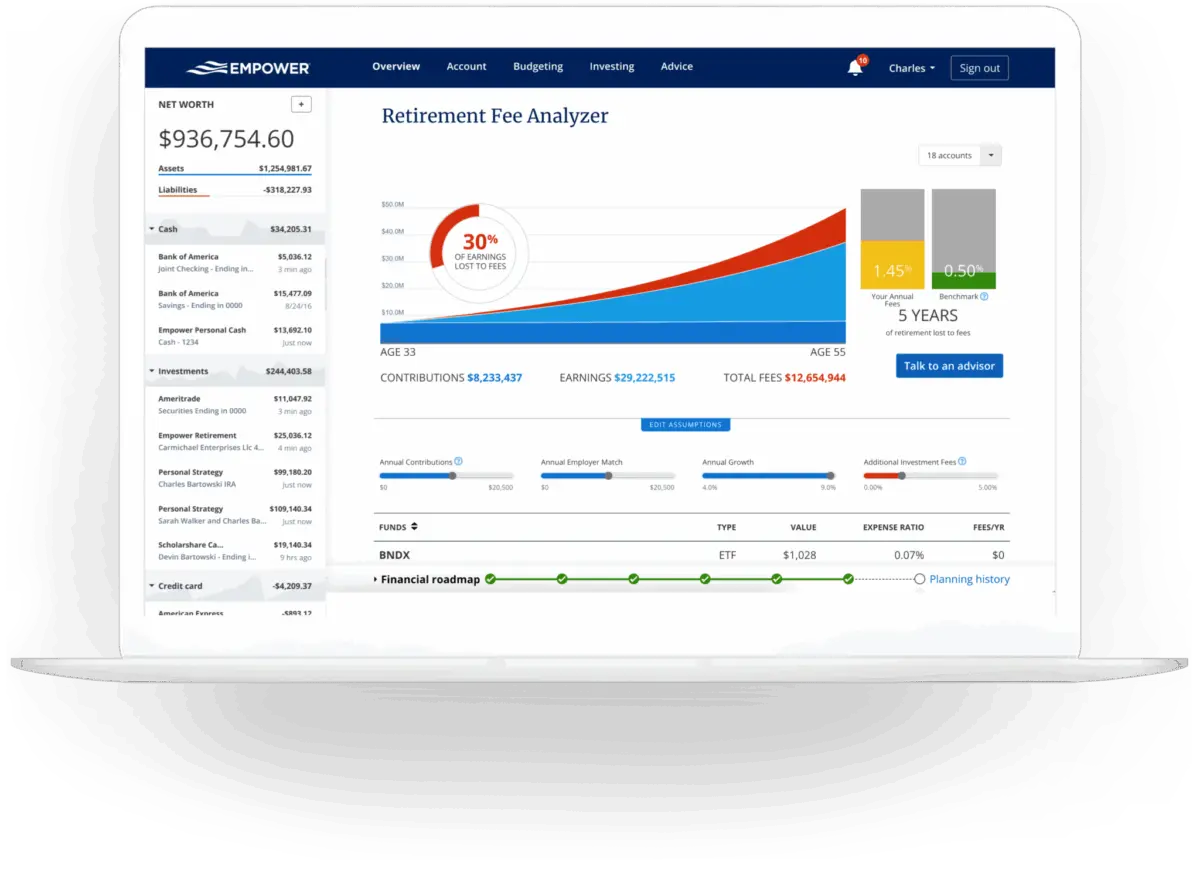
For years, users navigating the complex landscape of personal finance have sought a unified solution to oversee their complete economic standing without toggling between dozens of different banking, credit, and investment applications. Formerly known as Personal Capital, the Empower financial tool has long served as a prominent fixture in the digital wealth management space. Designed to consolidate 100% of an individual’s finances onto a single, comprehensive dashboard, the platform bridges the gap between everyday banking and sophisticated portfolio analysis.
Empower delivers a complete view of your finances in one place by automatically syncing checking, savings, credit card, loan, retirement accounts like 401(k)s and IRAs, and even mortgage accounts. This automated synchronization provides a real-time snapshot of an individual’s net worth and overall financial health. Beyond basic account aggregation, the platform offers robust cash flow and net worth tracking, investment tracking, and retirement planning capabilities. Notably, its investment analysis suite includes asset allocation monitoring, investment fee analysis, and a comprehensive investment checkup—all provided completely free of charge for users of the dashboard.
Getting started with the platform involves signing up for a free account and systematically connecting all relevant financial institutions. While Empower has built its reputation on analyzing and tracking investments, experienced users often emphasize the value of connecting everyday bank accounts, credit cards, loans, mortgages, and even physical property. Real estate assets, for instance, can be integrated by adding a home address, which allows Empower to automatically pull in estimated market valuations directly from Zillow.
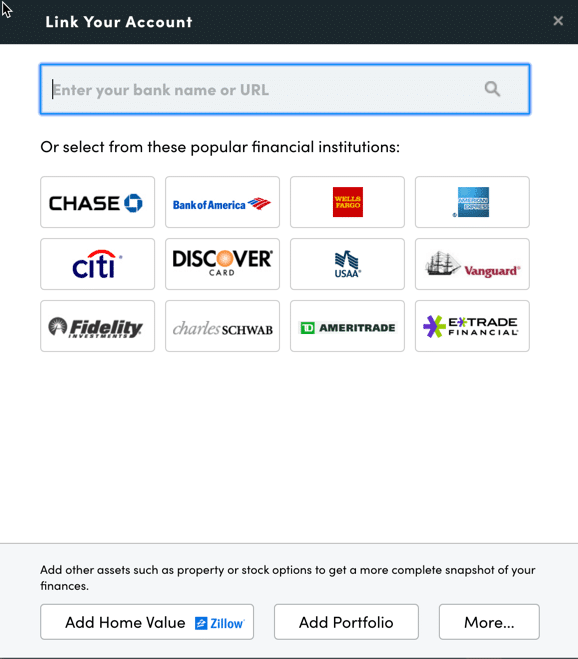
Linking accounts requires online access credentials, such as a username and password, for each specific financial institution. Users navigate to the "Link Your Account" dialog box on the Empower dashboard by clicking a plus icon near the top left of the interface. Financial institutions can be searched by name or by website URL. In the rare event that a specific asset or institution cannot be linked automatically, the platform permits manual entry. Connecting multiple accounts is crucial because the software extends far beyond basic portfolio monitoring, compiling budget metrics, cash flow summaries, bill tracking, and net worth calculations into a centralized hub. Although users must connect at least one account to initiate the service, subsequent accounts can be entered manually, though omitting certain accounts diminishes the depth of the platform’s investment tracking features.
Once accounts are successfully linked, completing the settings and profile sections is critical for maximizing the software’s utility. Accessible by clicking the user’s name in the top right corner of the screen, the settings menu offers control over email subscriptions—such as daily or weekly updates detailing income, spending, and investments—as well as preferences regarding whether investment income and dividends should be factored into cash flow calculations. Users can also configure essential security measures, including multi-factor authentication and automated login alerts triggered by access attempts from foreign countries. Furthermore, the security dashboard displays a roster of authorized devices and their last sign-on timestamps, allowing users to remove outdated hardware connections.
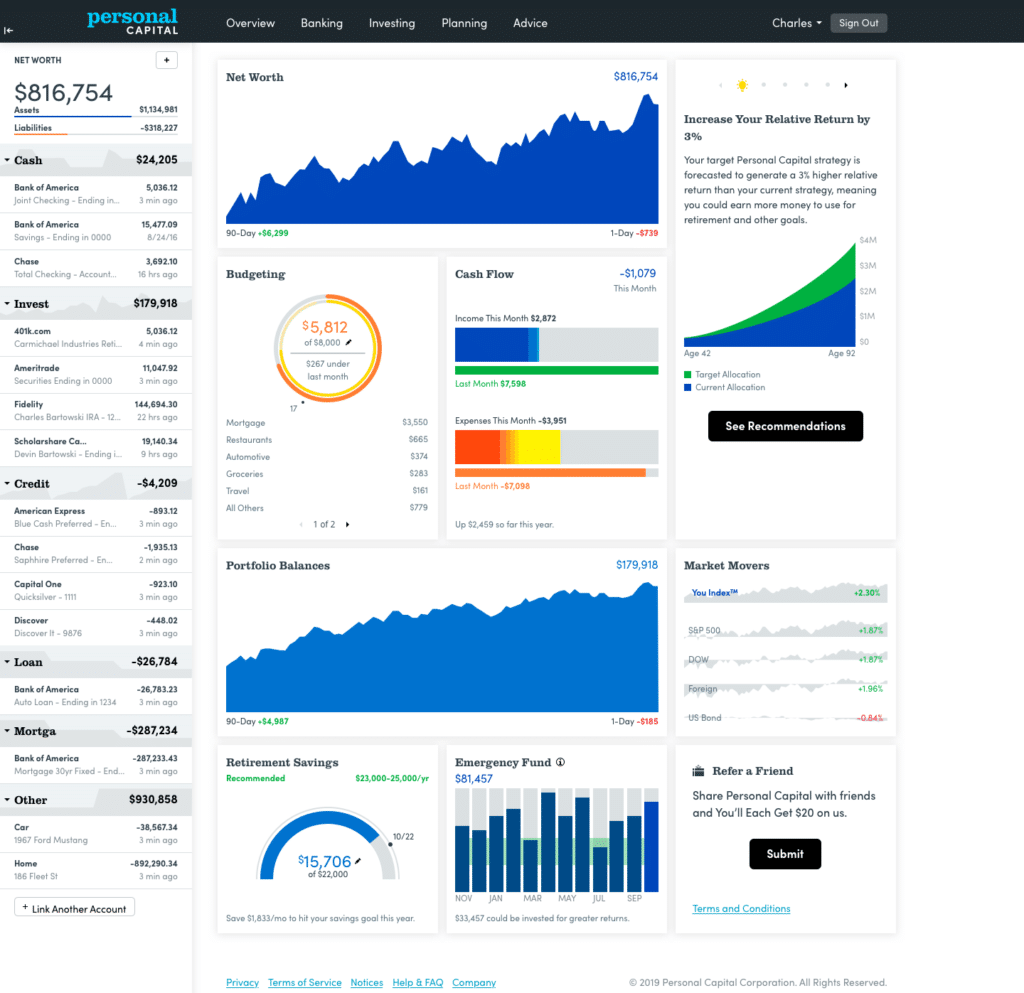
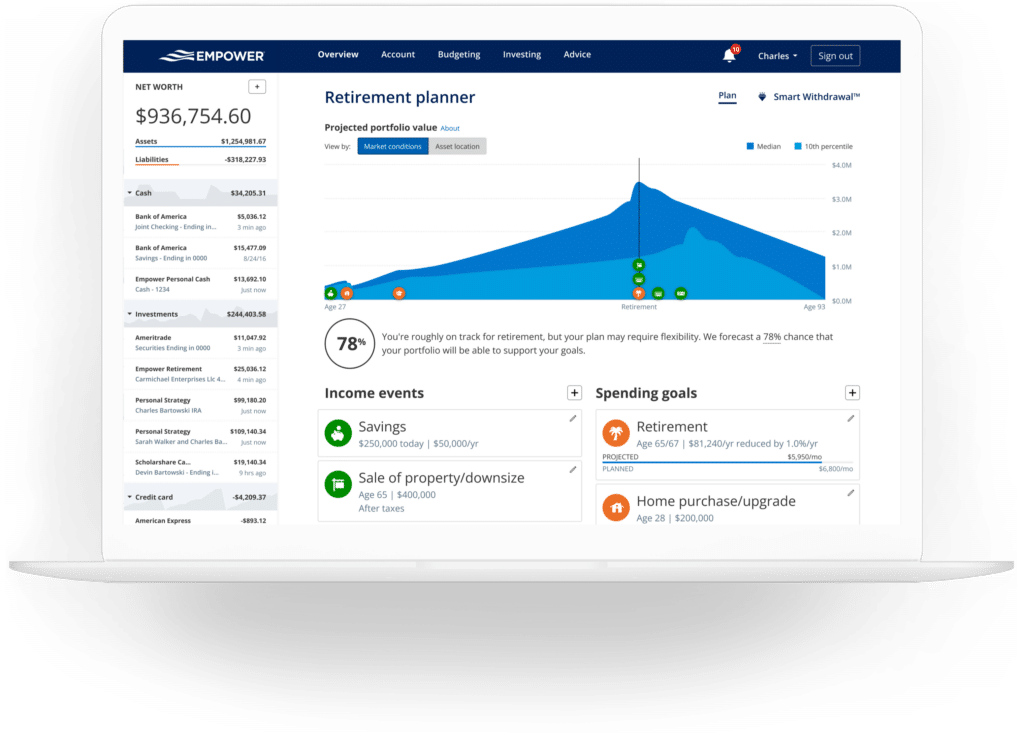
The profile section captures vital personal data, including information regarding spouses, savings rates, primary income sources, and long-term investment objectives. These inputs feed directly into the platform’s advanced forecasting tools, most notably its complimentary retirement planner. After configuration, the main dashboard aggregates all incoming data to present a holistic financial snapshot, highlighting net worth, monthly budgets, cash flow patterns, investment performance, and steady progress toward long-term savings goals.
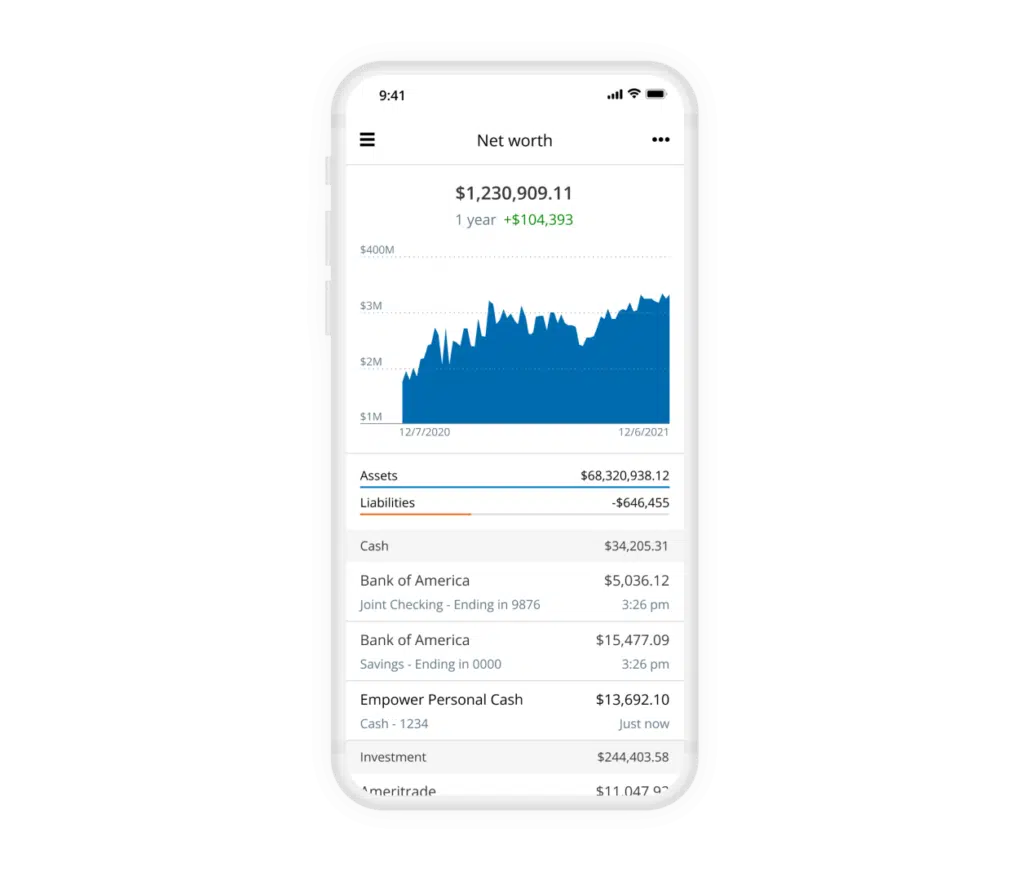
Tracking net worth remains a cornerstone of achieving financial independence. Empower automates this calculation continuously across all linked assets and liabilities. The net worth interface provides a clear, longitudinal view of how an individual’s total wealth evolves over time, complementing traditional spreadsheet methods by eliminating the need for manual data entry.
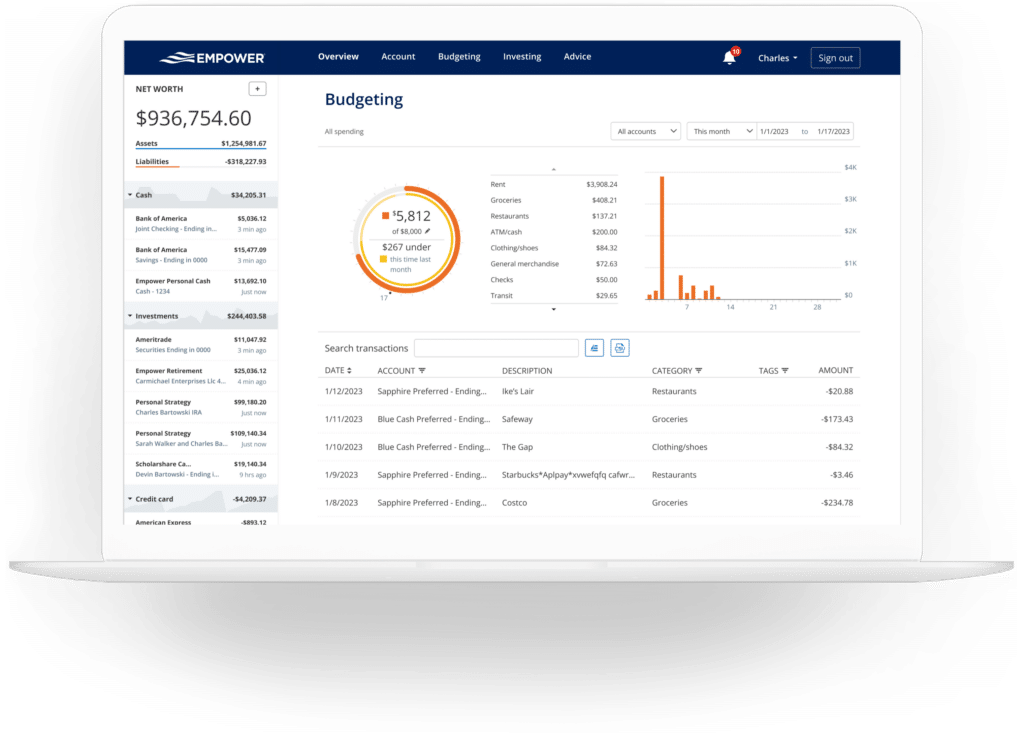
Beyond investment tracking, the platform’s banking and cash flow features offer substantial utility for monitoring daily economic habits. The cash flow module outlines income and expenses at the granular transaction level, automatically categorizing expenditures while permitting detailed drill-downs. Users can selectively include or exclude specific accounts, a feature frequently leveraged by business owners tracking enterprise checking and credit card activity separately from personal finances. This segmentation also allows investors to isolate income generated exclusively through dividends and interest across their portfolios.
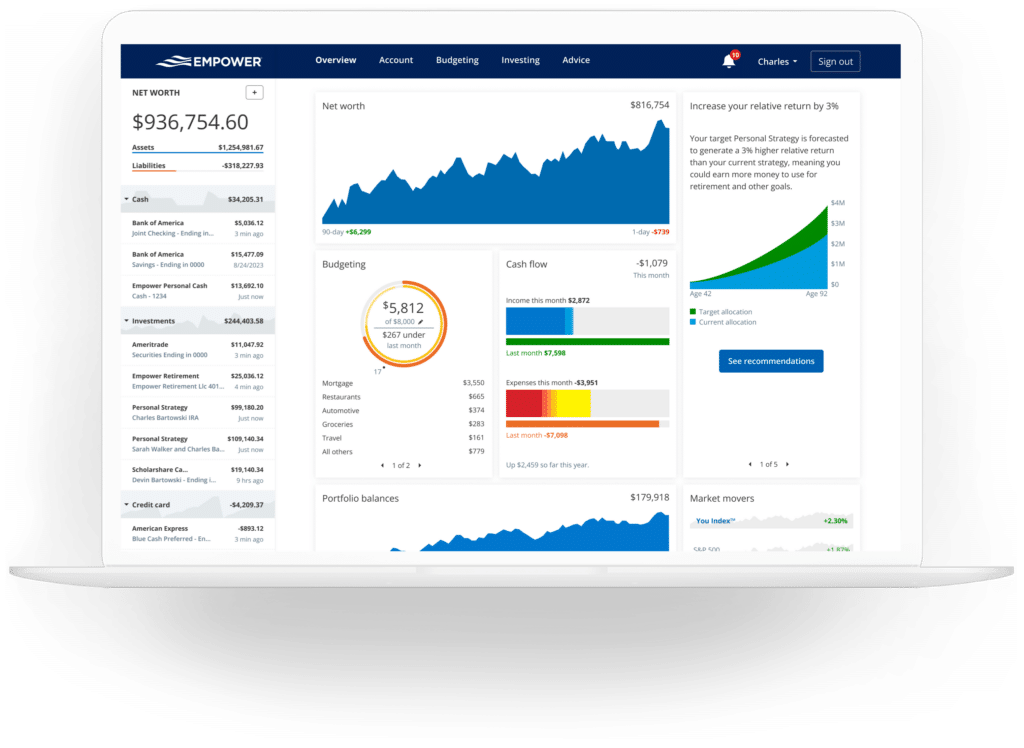
The platform’s budgeting features approach spending visibility differently than traditional envelope-style applications. While users can establish an overarching monthly spending goal, the tool does not currently support granular, category-specific budgeting limits—a function better served by dedicated software like YNAB. Instead, Empower excels at categorizing and importing spending from all linked accounts automatically. Although the system generally classifies transactions accurately, users typically spend a few minutes each month refining categories and applying custom tags. For instance, rather than creating a dedicated category for occasional expenses, users can tag specific transactions to monitor niche expenditures effortlessly.
Additionally, linking credit cards, mortgages, and loans activates a bill-tracking function that monitors payment due dates across accounts, helping users avoid late payments and plan cash flow throughout the month.
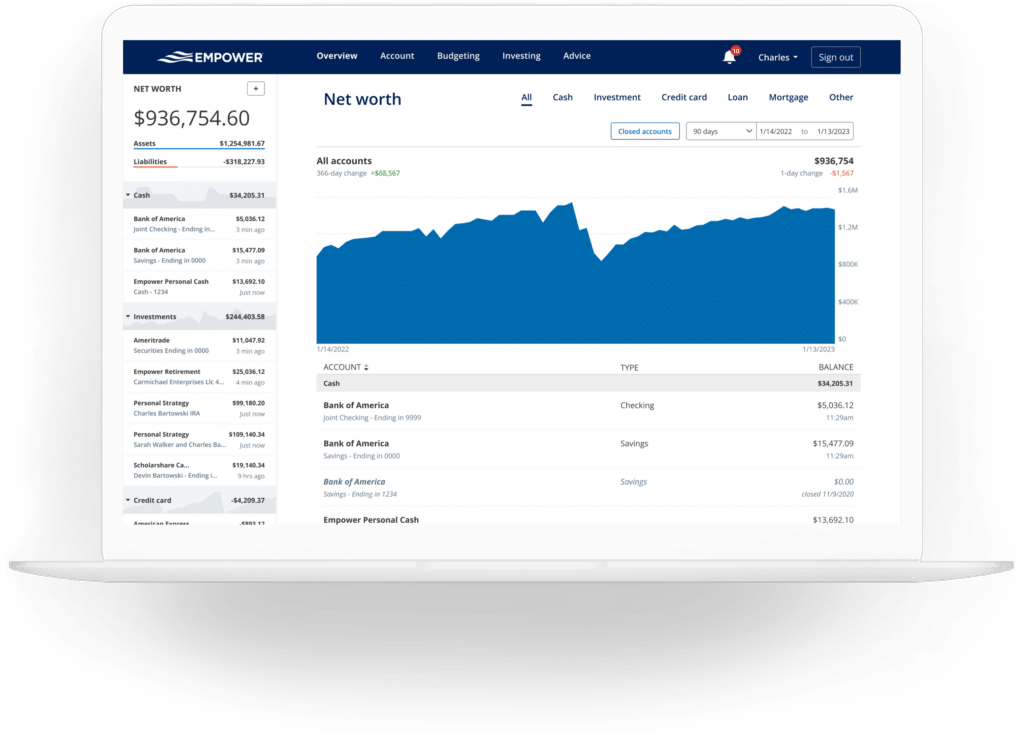
Where Empower truly distinguishes itself is in its investment tracking suite. Once retirement and taxable brokerage accounts are connected, the platform updates asset valuations throughout the trading day, monitors mutual fund expenses, evaluates asset allocation, and provides diagnostic portfolio tools. The holdings module presents an exhaustive breakdown of individual investments, detailing market values, cost bases, daily gains and losses, and overall performance metrics even through volatile market conditions such as historic bear markets.
Asset allocation tools automatically evaluate portfolio holdings to report exact weightings across stocks, bonds, and alternative asset classes, further subdividing equities and fixed income into domestic, international, and cash categories. An interactive graphic interface allows users to explore the underlying investments within each asset class, even identifying cash holdings embedded within stock mutual funds.
In a significant expansion for modern portfolios, Empower now supports the tracking of cryptocurrencies such as Bitcoin, Ethereum, and Litecoin. Crucially, investors are not required to link crypto wallets or surrender private keys or passwords. Instead, users can establish manual tracking accounts by specifying the token symbol, exchange, and holding amount, enabling the platform to monitor thousands of digital assets across hundreds of exchanges.
The platform’s planning tools elevate the software from a simple aggregation dashboard to an analytical advisory suite. The retirement planner utilizes data from all linked investment accounts to project retirement readiness under various conditions. Users can construct multiple scenarios—comparing traditional retirement timelines against early retirement models, toggling Social Security estimates on or off, and adjusting assumptions related to effective tax rates, future inflation, and life expectancy—and analyze them side-by-side.
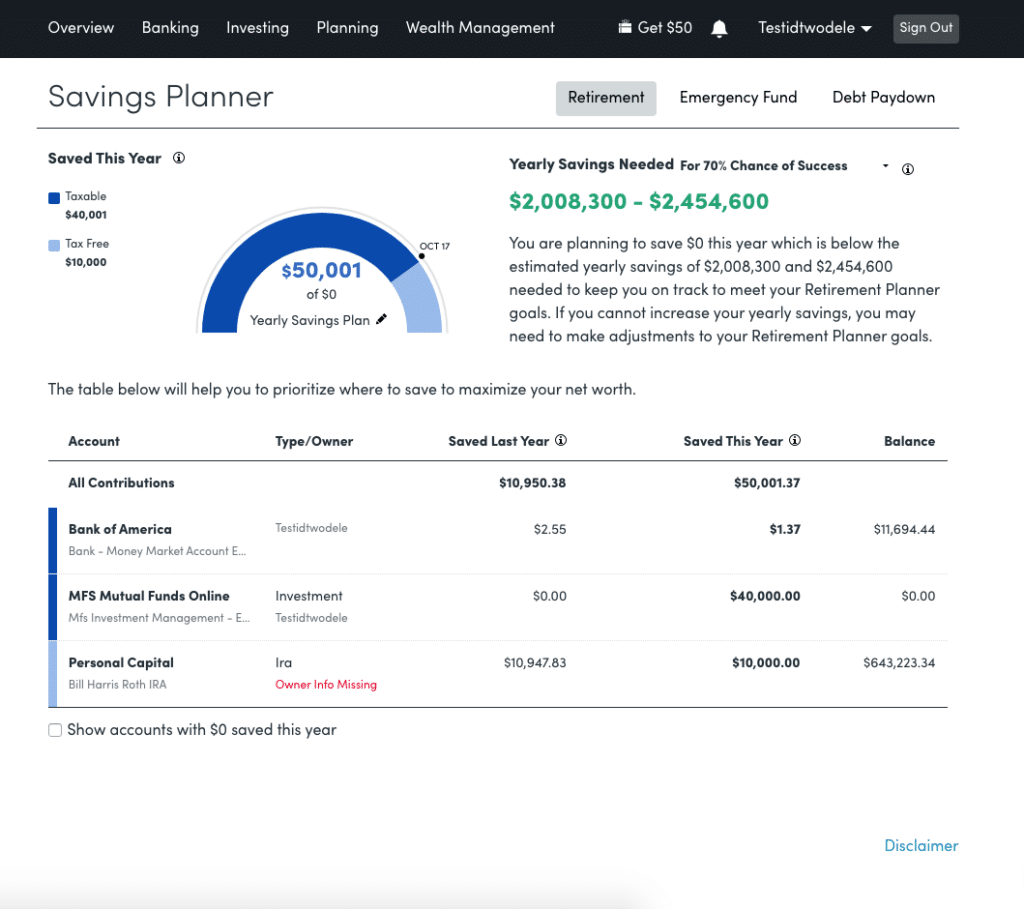
Complementing the retirement planner, the savings planner integrates three core functions: retirement savings goals, emergency fund targets, and debt paydown tracking. The retirement savings planner monitors annual contributions across tax-advantaged accounts like 401(k)s and IRAs alongside taxable accounts, synchronizing directly with the primary retirement calculator. The emergency fund planner aggregates linked bank account balances and recommends maintaining three to six months’ worth of living expenses based on established budget metrics. Meanwhile, the debt paydown planner aggregates mortgages, auto loans, personal loans, and credit cards that carry active interest balances, tracking annual interest rates, year-to-date balance changes, and overall reduction progress.
Among the platform’s most lauded analytical features is the retirement fee analyzer. Because seemingly minor investment advisory and mutual fund fees compound significantly over decades, a seemingly modest 1% fee can ultimately cost an investor hundreds of thousands of dollars in lost wealth. Empower calculates a weighted average expense ratio across all linked accounts, translating those basis points into projected dollar amounts lost over multi-year horizons. For many users, the visibility provided by this fee analyzer alone justifies utilizing the software.
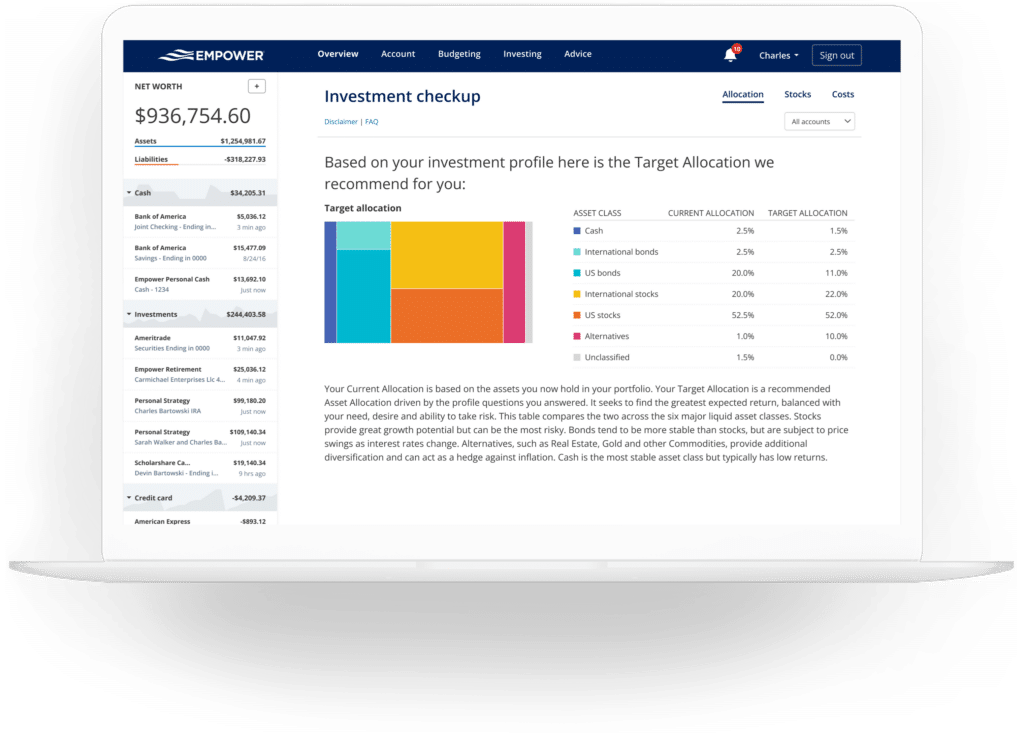
Furthermore, the investment checkup tool compares a user’s actual asset allocation against a model portfolio recommended based on age, time horizon, and risk tolerance. The tool outlines historical performance, projected returns, risk metrics, and precise rebalancing instructions for asset classes requiring adjustment.
Security remains a primary consideration for users linking sensitive financial data. Empower employs AES-256 encryption supported by multi-layer key management, including rotating user-specific keys and salts, ensuring that no individual employee has direct access to user credentials. Additionally, device authorization protocols require users to confirm their identity via automated phone calls, emails, or text messages when signing in from unrecognized hardware.
While the financial dashboard and its associated planning tools are provided free of charge, Empower operates its core business as a wealth management advisory firm. Consequently, users frequently receive outreach calls from financial advisors marketing the company’s paid advisory services, which feature tiered management fees starting at 0.89% for the first million dollars under management and scaling down to 0.49% for assets exceeding ten million dollars. However, users are under no obligation to utilize these paid advisory services, and account holders who prefer not to be contacted can request that outreach cease. The financial dashboard remains fully functional and accessible regardless of whether a user engages with the platform’s paid investment management services.










No comments yet. Be the first to join the conversation!