
As lawmakers prepare for the new legislative session, members from both sides of the political aisle face a defining test over the future of American public health governance. While Democrats and Republicans in the incoming Congress are virtually guaranteed to clash on a wide array of broader health policy initiatives, a growing consensus suggests they may find common ground on a foundational principle: the Centers for Disease Control and Prevention must operate as an objective scientific agency whose expert judgments remain insulated from the shifting political tides of the White House. When Congress convenes in January, it will encounter a rare opportunity to write that principle directly into federal law.
For decades, the scientific autonomy of the nation’s premier public health institutions relied on a long-standing, bipartisan understanding. Although successive presidential administrations frequently disagreed on healthcare philosophy and regulatory approaches, their respective health secretaries generally respected the professional expertise, institutional norms, and established review processes of agencies like the CDC and the Food and Drug Administration. While earlier administrations of both major political parties—including those under Republican Health and Human Services Secretary Alex Azar and Democratic Secretary Xavier Becerra—occasionally faced accusations of political interference, particularly during the unprecedented crucible of the COVID-19 pandemic, these interventions pale in comparison to recent developments.
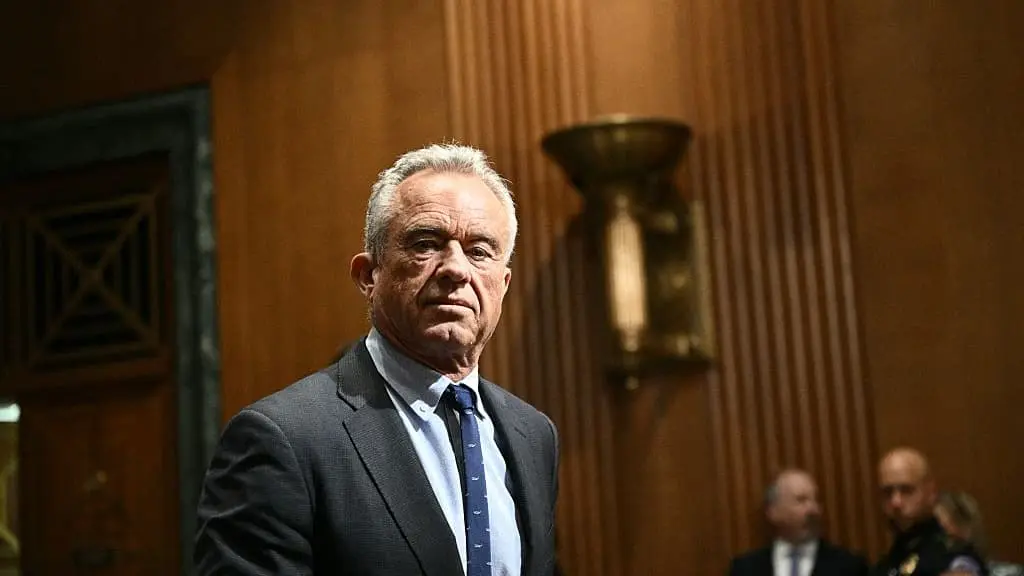
The safeguards that historically protected federal public health decisions were largely administrative policies rather than statutory mandates, leaving them vulnerable to unilateral dismantling by incoming leadership. This vulnerability became starkly apparent when Robert F. Kennedy Jr. enacted sweeping changes across the public health apparatus. In June 2025, Kennedy dismissed all 17 members of the CDC’s Advisory Committee on Immunization Practices, abruptly replacing them with his own handpicked appointees. No prior secretary had taken such a drastic step with the agency’s primary expert advisory body. For generations, Congress had granted U.S. Department of Health and Human Services secretaries broad statutory authority, relying heavily on institutional restraint. The events of the past year have demonstrated definitively that relying on unwritten traditions of restraint is no longer sufficient.
To prevent further erosion of public trust and institutional stability, lawmakers are now examining a series of legislative priorities aimed at permanently safeguarding the nation’s health infrastructure.
First, Write Scientific Independence Into Law
Elected political leaders undoubtedly hold a legitimate and necessary role in establishing national health priorities, allocating federal resources, and holding public agencies accountable to the American people. However, that authority must end where objective scientific judgment begins. Congressional leaders have been urged to draw a firm, unmistakable line in federal statute, establishing clear boundaries that separate political policymaking from scientific evaluation.
These statutory rules must be designed to bind every future health secretary, regardless of political affiliation or which party happens to hold power in Congress at any given moment. Legislative protections that are crafted to target or restrain only one party’s appointees inevitably fail to endure the test of time. Establishing a permanent framework requires a durable, bipartisan commitment that transcends short-term political cycles.
Rebuild the CDC’s Workforce and Expertise
Beyond legislative guardrails, the agency faces an internal crisis of capacity. The CDC has suffered catastrophic brain drain, losing more than a quarter of its total workforce since 2024. Among those who have departed are seasoned epidemiologists who rush to the front lines of dangerous disease outbreaks, laboratory scientists who work around the clock to identify emerging pathogens, specialized analysts who rigorously evaluate clinical evidence, and dedicated professionals whose daily work involves coordinating directly with state and local health departments. This level of institutional knowledge and technical expertise takes years—often decades—to develop and cannot be easily or quickly replaced.
To address this deficit, Congress should mandate an independent, comprehensive assessment of the CDC’s current operational capabilities. Lawmakers should then direct the agency to formulate and publish a transparent rebuilding plan, complete with measurable benchmarks for restoring core public health functions. Personnel protections must be reinforced to shield a professional scientific workforce capable of serving administrations of either political party with equal dedication. These recovery targets should be anchored strictly to the agency’s foundational mission, ensuring that staffing levels align with the demands of national health security.
Write the CDC’s Core Responsibilities Into Law, Starting With Data
The COVID-19 pandemic exposed profound structural confusion regarding the distinct roles and responsibilities of federal, state, and local governments during a national emergency. While the CDC was positioned to issue national guidance, actual implementation depended heavily on state and local officials operating under vastly different legal authorities, budgetary constraints, and intense political pressures.
Congress must clearly delineate what Americans can reliably expect from their national public health agency. This includes codifying the CDC’s core duties: investigating domestic disease outbreaks whenever state authorities request assistance, publishing transparent, evidence-based guidance, and operating a robust national data infrastructure that state and local health departments can seamlessly contribute to and draw from in near real time. Because federal public health guidance ultimately reaches everyday Americans through their local health departments, Congress must also ensure that these vital local partners receive adequate federal funding to participate fully in the national system.
Pair Independence With Accountability
Granting greater scientific independence to the CDC naturally invites heightened scrutiny from lawmakers, experts, and the public. Shielding the agency from political interference makes meaningful accountability more essential than ever. Congress should establish clear, public metrics to measure the agency’s performance on an ongoing basis.
Key questions must be systematically addressed: How effectively and rapidly does the CDC identify and investigate emerging health threats? How quickly does it disseminate reliable, actionable information to state and local partners? How transparently does it evaluate complex and evolving scientific evidence? How adeptly does it communicate uncertainty to the public and update its recommendations as new data emerges?
An independent oversight body should be established to evaluate these performance indicators, properly accounting for outcomes that inevitably depend on the performance of state and local partners. The overarching goal of this evaluation mechanism is not punitive, but rather designed to identify institutional weaknesses and drive continuous performance improvement.
With a Republican president currently occupying the White House, advancing sweeping health legislation will require deliberate, bipartisan collaboration. Congress can begin this critical work immediately through rigorous oversight hearings, targeted appropriations language, and independent investigations, while simultaneously building a broader coalition for lasting statutory protections. Lawmakers have a clear opportunity to pursue common-sense, common-ground policies that transcend partisan divides.
For eight decades, the CDC has stood as a bulwark protecting Americans from infectious diseases and a wide array of other health threats. The American public deserves a national public health agency whose science remains unquestioned, whose expert workforce is fiercely protected, and whose capacity to safeguard the nation’s health does not depend on who happens to occupy the White House.








No comments yet. Be the first to join the conversation!