
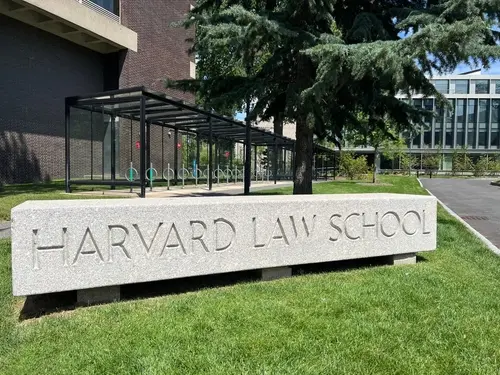
Harvard Law School has suspended the physical library access of at least 18 students for a period of two weeks, following their participation in a silent "study-in" demonstration held earlier in November in support of the school’s clinical instructors.
The disciplinary action, which came to light following a report by the Harvard Crimson, was communicated to the affected students via email on Friday, November 13. The demonstration in question took place on November 6 on the fourth floor of the law school’s library, where the participants gathered for approximately one hour in a quiet, organized show of solidarity with clinical teaching staff.
According to documentation reviewed by the Harvard Crimson, the notifications were sent by Amanda T. Watson, the assistant dean for library and information services at Harvard Law School. In the correspondence, Dean Watson explicitly cited the students’ involvement in an "organized demonstration" within the library premises as the underlying justification for the temporary restrictions placed on their campus privileges.
Under the terms of the disciplinary measure outlined in the emails, the students’ physical access to the main law school library has been suspended until November 27. Despite the restriction on physical entry to that
specific facility, the university has maintained certain academic accommodations for the affected individuals. The students retain the ongoing ability to borrow library materials through alternative arrangements, maintain full online access to digital library resources, and retain physical entry rights to other libraries across the broader Harvard University campus network. Furthermore, the administration specified in the notifications that these short-term suspensions will not be made a part of the students’ formal disciplinary records, distinguishing the administrative action from more severe punitive measures that could potentially impact future legal careers and bar admissions.
The demonstration itself, characterized by participants and observers as a silent study session rather than a disruptive protest, highlights ongoing tensions and discussions surrounding labor relations, clinical instruction, and campus expression within elite legal academia. Clinical instructors play a critical role in the practical, hands-on training of law students at institutions like Harvard, supervising student practice in real-world legal clinics that provide essential services to underserved clients while teaching vital advocacy skills. Advocacy and demonstrations supporting faculty and instructional staff have occasionally intersected with university facilities policies, leading administrators to balance the rights of student expression and assembly with institutional rules governing the proper use of academic spaces, quiet study environments, and campus libraries.
As universities across the United States navigate the complex landscape of campus policies regarding demonstrations, sit-ins, and protests, administrators frequently rely on time, place, and manner restrictions to regulate campus activities. The Harvard Law School library administration’s decision to implement a two-week suspension of physical entry while preserving digital access and borrowing privileges reflects a measured administrative response to a peaceful yet unauthorized demonstration inside a designated study facility. By ensuring that the temporary bans do not become part of the students’ permanent records and by allowing continued remote and alternative access to essential research materials, the law school has sought to address the policy infraction while mitigating long-term academic consequences for the individuals involved.
The incident underscores the delicate balance academic institutions must maintain between enforcing campus rules and fostering an environment where students feel empowered to advocate for faculty members and clinical programs that form an integral part of their legal education. As the suspension period draws toward its conclusion ahead of the late November expiration date, the situation continues to draw attention from the broader academic community regarding the boundaries of student activism within university libraries and educational spaces.









No comments yet. Be the first to join the conversation!