
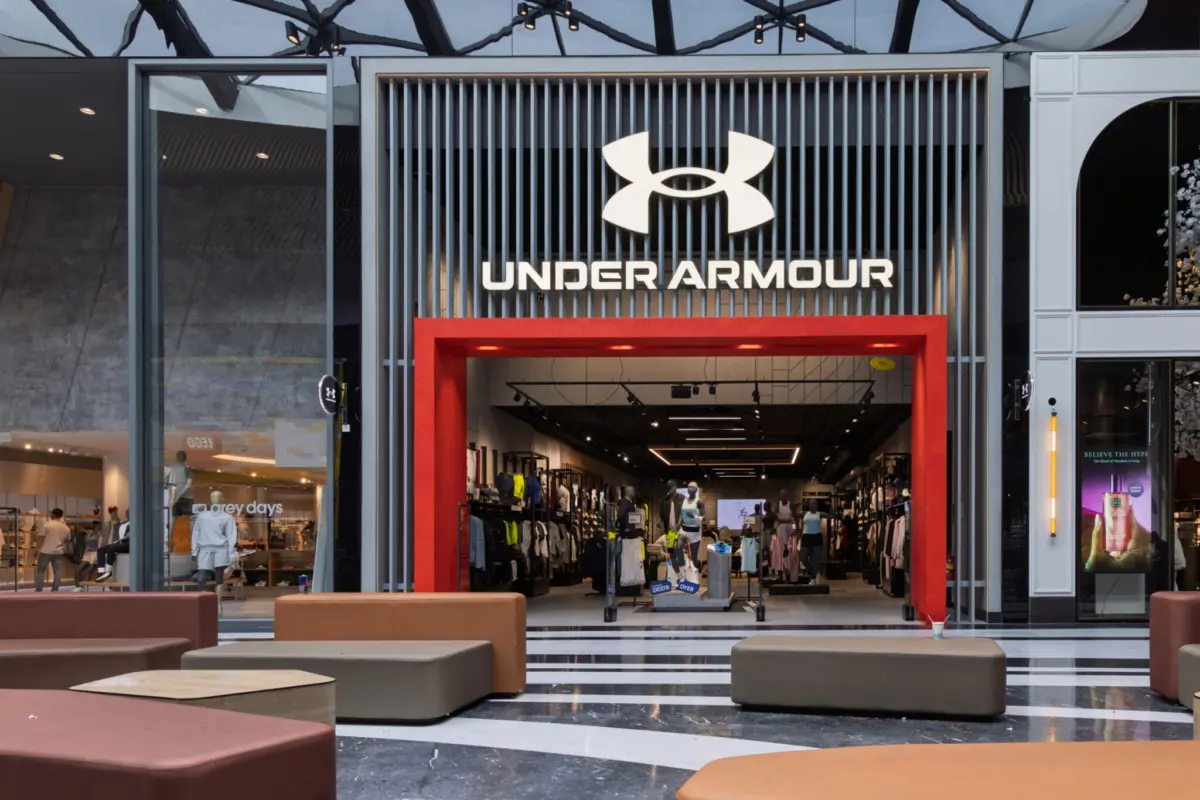
Under Armour CEO Kevin Plank is maintaining an optimistic outlook on the sports apparel and equipment giant’s strategic road ahead, even as the company navigates a challenging retail environment marked by a decline in net revenue. During the fiscal second quarter ended September 30, Under Armour reported that its net revenue fell 6.9% year over year, dropping to $1.24 billion. Despite the top-line contraction, executive leadership pointed to operational resilience and disciplined execution as key stabilizing forces while the brand works through a multi-year turnaround.
"We delivered against our revenue expectation and exceeded our operating income outlook," Plank stated in the company’s official earnings announcement. "As we progress in this transformation, we are driving greater efficiency across our business, sharpening our product offering, and amplifying global marketing to strengthen our brand and improve financial performance."
As part of these ongoing strategic changes, Under Armour disclosed that it incurred a total of $13 million in costs during the second quarter directly linked to its Fiscal 2025 Restructuring Plan. Company executives noted that this comprehensive restructuring initiative is expected to be "substantially complete" by the end of calendar year 2026. Looking at the broader fiscal outlook, Under Armour anticipates that its full-year revenue will ultimately decline on a year-over-year basis "at a mid-single-digit percentage rate" as the turnaround takes root.
In broader industry metrics, Under Armour holds the No. 158 position in the Top 1000 Database, which tracks North America’s largest online retailers by ranking them according to annual ecommerce sales and other performance metrics. Additionally, the company is ranked No. 285 in Digital Commerce 360 and ReFiBuy’s AI Commerce Rankings, a specialized evaluation set available within the Top 1000 Pro with AI Database.
Under Armour Wholesale and Ecommerce Sales in Q2
The financial performance breakdown for the second quarter highlighted pressure across multiple distribution channels, with both wholesale and direct-to-consumer segments experiencing downward pressure. Plank provided deeper context into these figures during Under Armour’s Q2 earnings call with investors and analysts.
"Wholesale revenue decreased 6% to $725 million, reflecting the impact of softer full-price sell-through and pressure in parts of the distributor business, partly offset by select accounts and markets," Plank told investors. At the same time, the direct-to-consumer division faced a steeper pullback, with revenue decreasing by 8% to $494 million. This segment-wide drop included a 7% decline in revenue from owned and operated brick-and-mortar retail stores and a more pronounced 12% decline in digital ecommerce sales.
When explaining the root causes behind these declines, Plank pointed directly to a reduction in overall customer traffic as the primary hurdle for the business.
"Traffic remained the primary challenge, particularly in North America, with better conversion and targeted digital initiatives providing some offset," he stated, highlighting that while fewer consumers are walking through doors or visiting digital storefronts, the shoppers who do engage are converting at healthier rates thanks to refined digital marketing strategies.
How Plank Expects Under Armour to Benefit from AI
Speaking further during the November 6 earnings call, Plank addressed the potential role that artificial intelligence will play as Under Armour attempts to finalize its corporate
turnaround and modernize its operations. As retail technology evolves, leadership believes that integrating advanced data systems and automated tools will be crucial for long-term recovery and efficiency.
"I think that our industry actually lines and maps up perfectly for the advantage of what AI brings for us," Plank stated to analysts on the call.
In order to realize tangible benefits from artificial intelligence initiatives, Plank emphasized that the company must concentrate its efforts on three foundational operational pillars: supply chain management, merchandising, and marketing. By leveraging predictive analytics and machine learning across these areas, Under Armour hopes to streamline inventory levels, better predict consumer fashion and performance preferences, and execute more personalized global marketing campaigns.
Nevertheless, Plank offered a pragmatic caution regarding technological solutions, emphasizing that advanced tools must ultimately support basic operational excellence. He noted that the answer to solving Under Armour’s operational problems must always come back to a fundamental fulfillment standard: "ship us everything that we ordered." In that context, he underscored that maintaining strict inventory accuracy and ensuring that orders are delivered complete and on time remain top priorities for the organization alongside broader technological modernization.







No comments yet. Be the first to join the conversation!