
Managing a complete financial portfolio often requires juggling multiple platforms, spreadsheets, and logins across various banking and investment institutions. For years, digital financial tracking tools have attempted to bridge this gap by centralizing personal finance data into a single, cohesive dashboard. Among the most prominent options in this space is Empower, formerly known as Personal Capital, which has established a long-standing reputation as a robust wealth-management application.
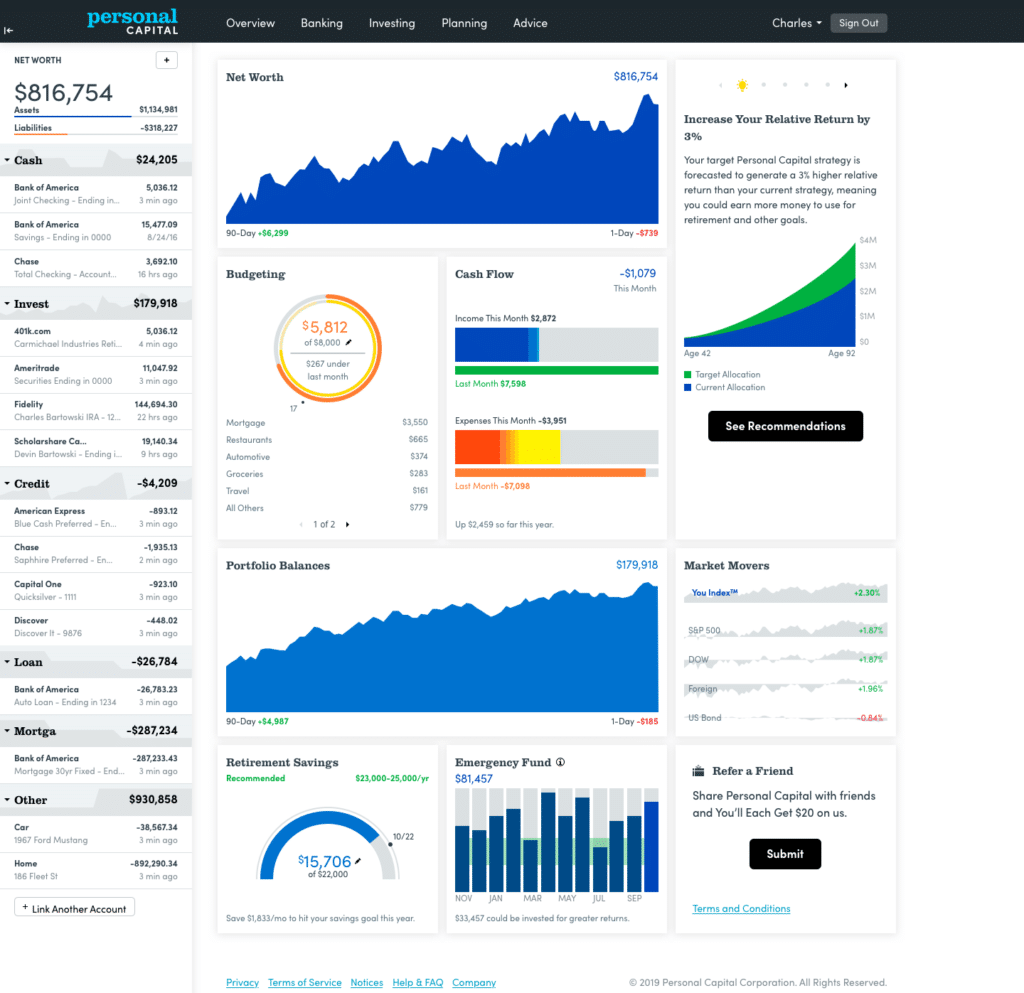
At its core, Empower is designed to enable users to manage 100% of their finances from a single, centralized dashboard. By automatically syncing checking accounts, savings accounts, credit cards, loans, investment portfolios including 401(k)s and IRAs, and even mortgages, the platform provides a real-time snapshot of an individual’s net worth and overall financial health. Offered as a free financial tool, the application has garnered significant user adoption, maintaining strong ratings across major mobile distribution platforms, including a high rating on the Apple App Store with hundreds of thousands of reviews and a solid standing on Google Play.
Getting started with Empower involves creating a free account and systematically connecting all relevant financial institutions. While the platform is widely recognized for its advanced investment tracking and analysis capabilities, users frequently connect traditional bank accounts, credit cards, loans, mortgages, and even residential real estate. For physical property, the platform integrates with valuation services like Zillow to automatically pull in estimated home values, incorporating them directly into the user’s overall net worth calculation.
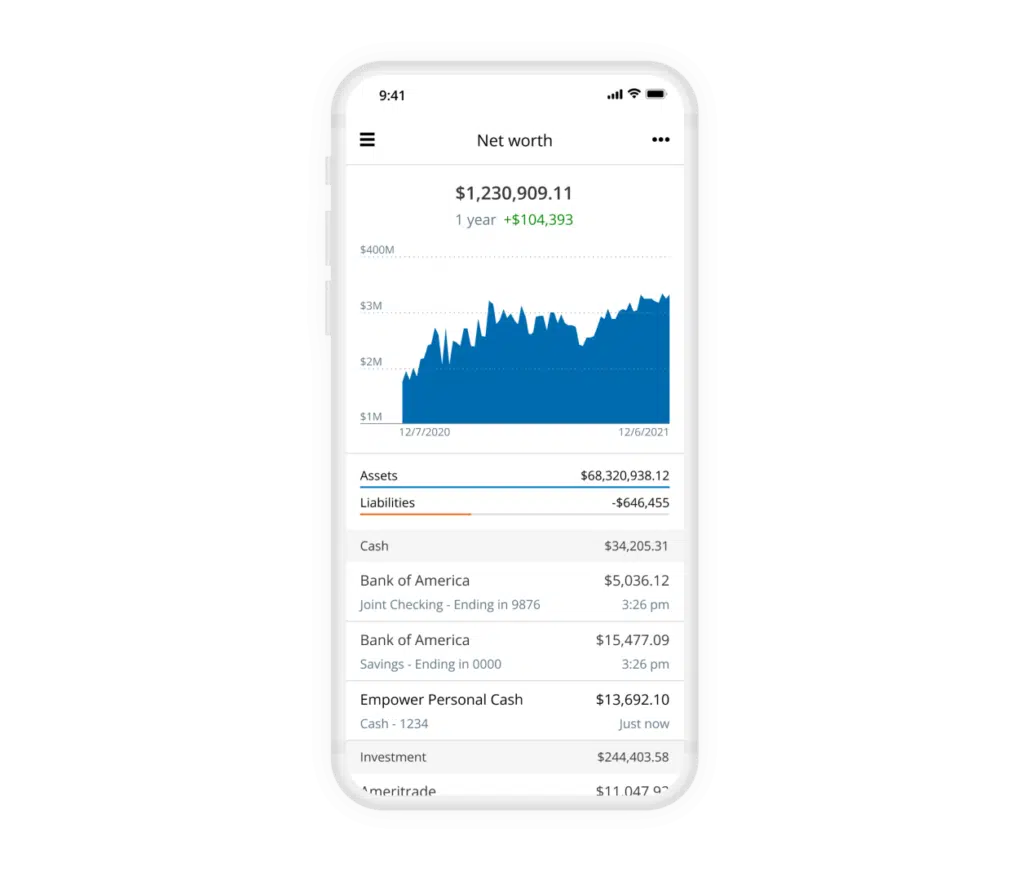
To link an account, users search for their financial institution or enter its web address within the platform’s secure interface, supplying the necessary credentials. For accounts that cannot be linked automatically, the application permits manual entry. Once accounts are established, configuring the settings and profile sections becomes a critical step. The settings menu controls email notification preferences, allowing users to receive daily or weekly updates concerning income, spending, and investment performance. Furthermore, it manages critical security features, such as multi-layer authentication and foreign login alerts, alongside a registry of authorized devices accessing the profile. The profile section captures personal data, spousal information, income sources, and long-term investment objectives, feeding vital data directly into the platform’s financial planning models, such as its retirement calculator.
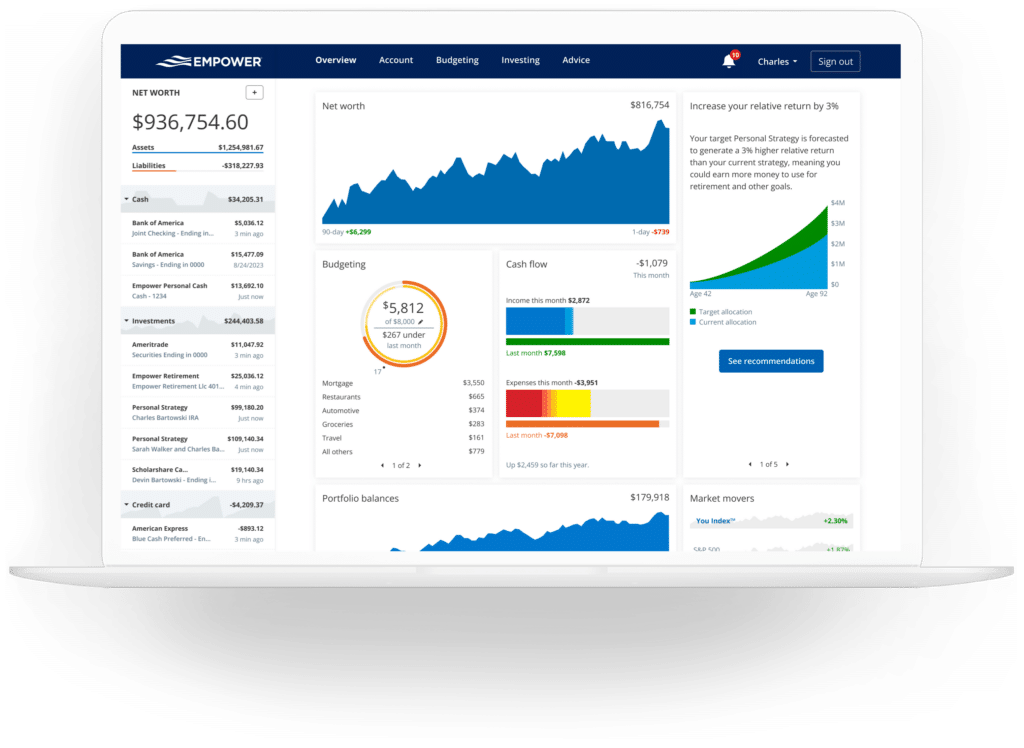
Once accounts and profiles are fully integrated, the primary dashboard aggregates all financial data to offer a comprehensive overview. The net worth tracker remains a central pillar of the platform, continuously updating asset values against liabilities to chart long-term financial progress. Alongside net worth, the banking and cash flow features provide transaction-level visibility into monthly income and expenses. Expenses are automatically categorized upon import, allowing users to review spending habits by category or isolate specific accounts, such as business checking accounts or dedicated investment portfolios. This granular tracking makes it straightforward to monitor recurring dividend and interest income generated across various investment holdings.

While the platform provides robust categorization and tagging capabilities—allowing users to add custom tags to transactions for specialized tracking without creating entirely separate budget categories—it operates differently from traditional budgeting software. Empower does not enforce rigid spending limits by category. Instead, it offers a high-level view of historical spending patterns and allows users to set an overall monthly expenditure goal, directing those who require detailed category-specific budgeting toward specialized applications like YNAB. Additionally, by syncing credit cards and loan accounts, the platform tracks upcoming bill due dates to help users avoid missed payments and assist with monthly cash flow planning.
Where Empower truly differentiates itself is in its investment tracking suite. Once retirement and taxable brokerage accounts are connected, the software automatically tracks investments, updates asset prices throughout the trading day, and monitors fund expenses. The holdings overview details individual assets, reporting share counts, market values, daily gains or losses, and overall performance metrics. Furthermore, the platform evaluates asset allocation, breaking down stock and bond distributions across U.S. and international markets, as well as alternative asset classes. An interactive graphical interface allows users to examine the underlying components of each asset class, even identifying cash positions held within mutual funds rather than solely in dedicated money market accounts.
For individuals with alternative asset holdings, the platform accommodates the tracking of cryptocurrencies such as Bitcoin, Ethereum, and Litecoin. Rather than requiring direct API access or login credentials for crypto wallets, users can manually add their digital assets by specifying the token symbol, exchange, and amount. This capability allows the system to monitor thousands of tokens across numerous exchanges alongside traditional financial accounts.
Moving beyond passive tracking, the platform incorporates sophisticated planning tools designed to evaluate long-term financial readiness. The retirement planner utilizes linked account data to model future financial scenarios, allowing users to test variables such as retirement age, social security estimates, effective tax rates, projected inflation, and life expectancy. Users can construct and compare multiple retirement scenarios side-by-side to understand the potential impact of early retirement or altered savings rates.
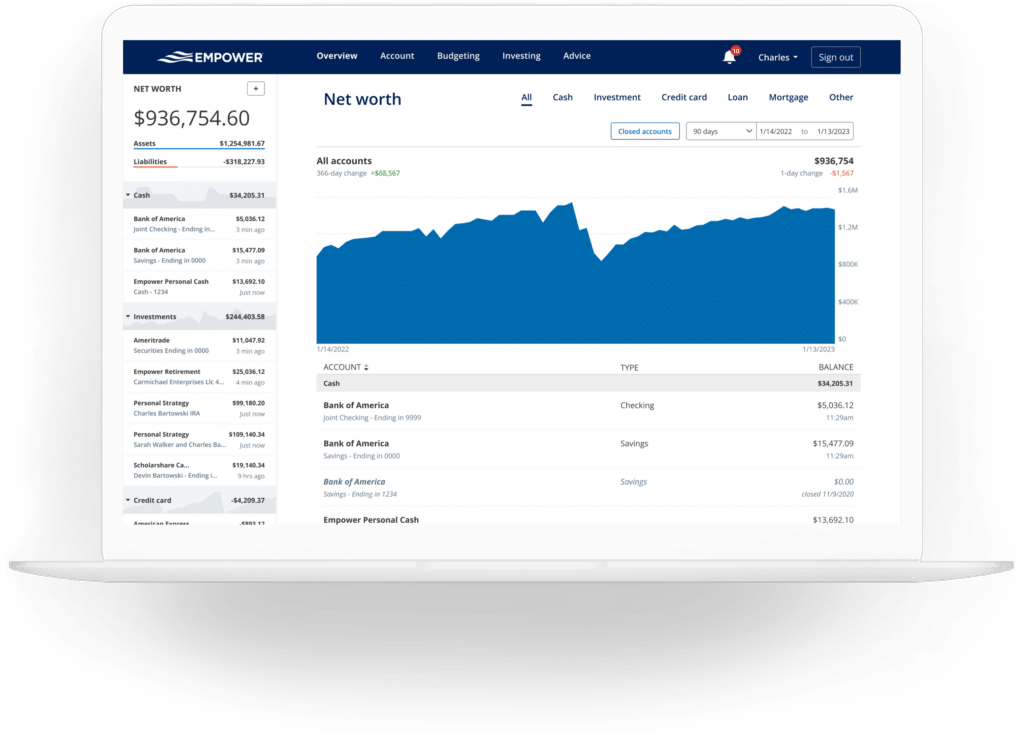
Complementing the retirement projections is a multi-faceted savings planner divided into retirement savings, emergency fund savings, and debt paydown components. The retirement savings planner monitors annual contributions across tax-advantaged and taxable accounts, synchronizing directly with the primary retirement calculator. The emergency fund planner evaluates linked bank balances against user-defined monthly expenses to recommend a financial buffer spanning three to six months. Meanwhile, the debt paydown planner tracks loans, mortgages, and qualifying credit cards that carry interest balances, displaying current figures, annual percentage rates, and year-to-date balance trajectories.
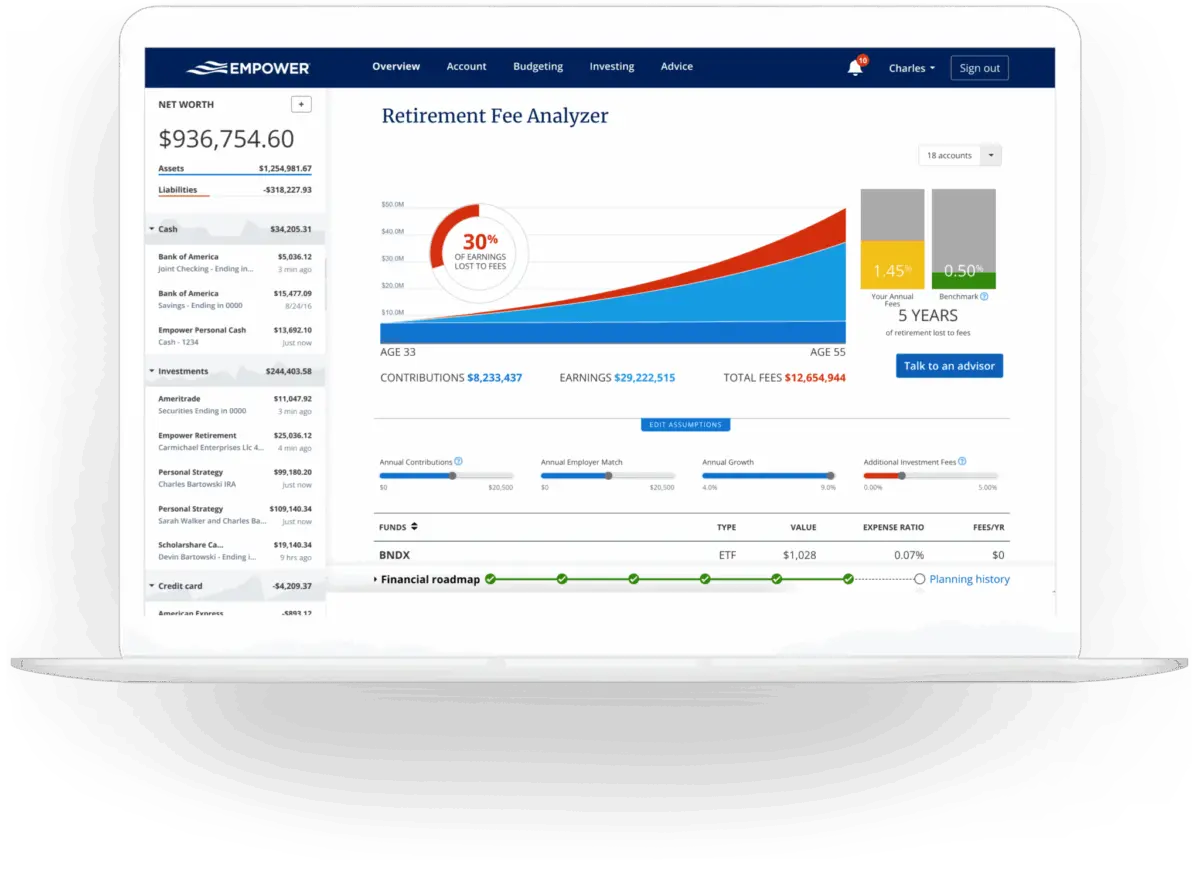
Among the platform’s most notable analytical features is the retirement fee analyzer. Investment fees, while often appearing deceptively small in the short term, can compound over decades to erode significant portions of an investor’s wealth. Empower calculates a weighted average expense ratio across all linked accounts, translating those percentages into projected dollar amounts lost to fees over future time horizons. This visibility underscores the long-term impact of portfolio costs. Similarly, the investment fee checkup compares a user’s actual asset allocation against a recommended target allocation derived from their stated risk tolerance, age, and timeline to retirement, providing clear guidance on which asset classes require rebalancing.
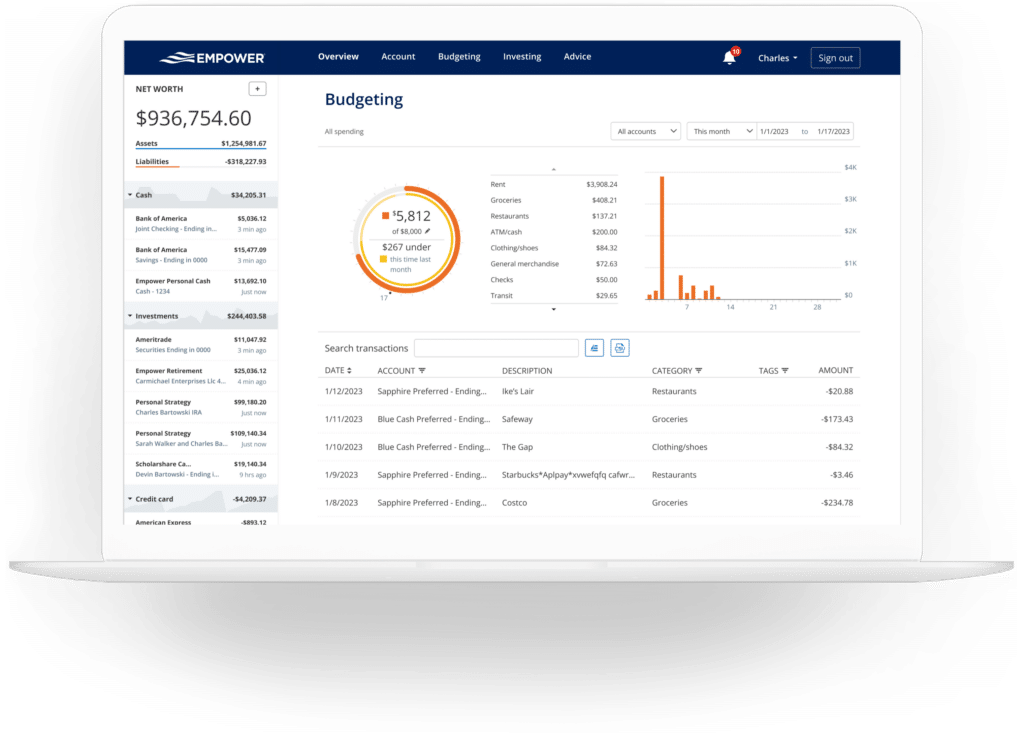
Security remains a foundational element of the platform, utilizing advanced encryption protocols and multi-factor authentication to protect sensitive user data without granting internal personnel direct access to credentials. While the financial dashboard and its associated planning tools are provided to users entirely free of charge, the platform operates as part of a broader wealth management business model, occasionally prompting users regarding optional, fee-based professional advisory services. However, utilization of these paid advisory services is entirely optional, and the comprehensive suite of tracking, budgeting, and planning utilities remains accessible to individuals managing their own financial portfolios independently.








No comments yet. Be the first to join the conversation!