
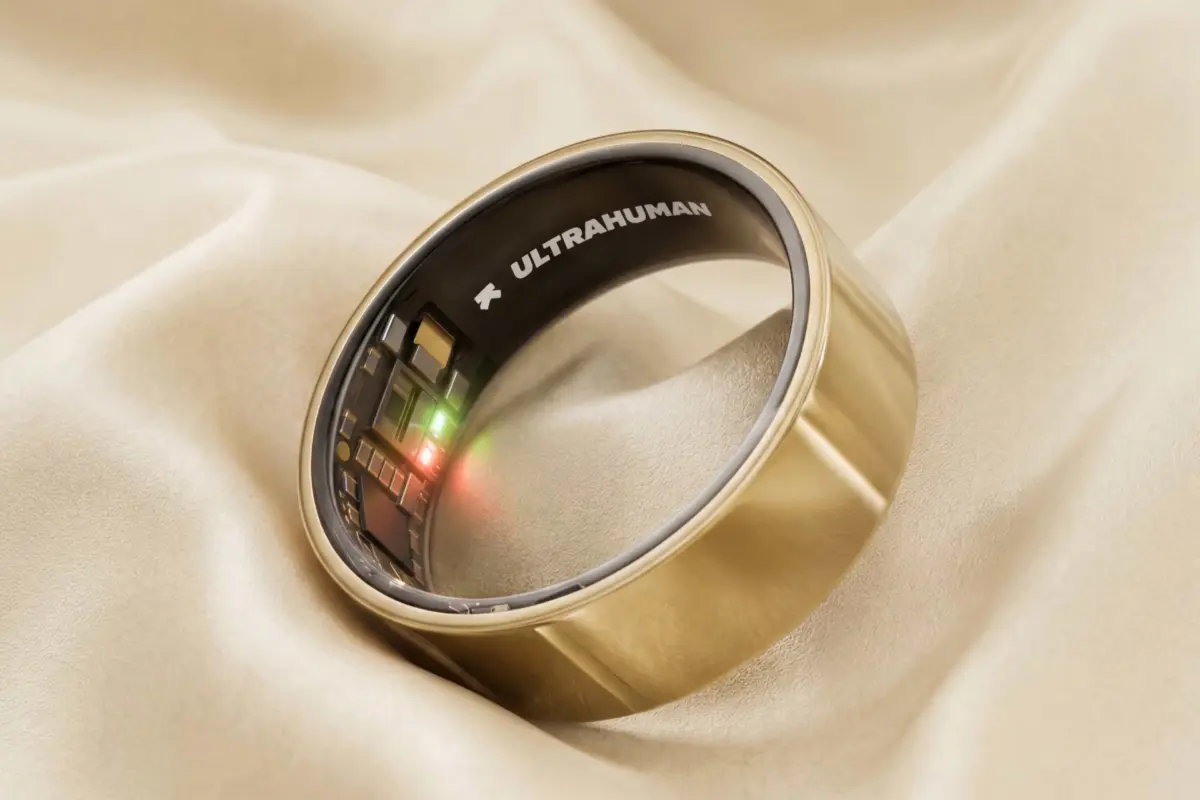
Bengaluru-based health tech startup Ultrahuman, widely recognized for its popular smart rings, has taken a major strategic step beyond consumer hardware by partnering with health authorities in Abu Dhabi to develop and deploy a comprehensive biological-age model. Under a newly signed two-year memorandum of understanding with the Abu Dhabi Public Health Center (ADPHC), the company aims to create a predictive health system that combines clinical biomarkers with continuous data streams from wearable devices to estimate individual biological aging and identify lifestyle factors that influence longevity.
The initiative marks a pivotal evolution for Ultrahuman as it transitions from a traditional hardware manufacturer into a data-driven health platform. While the startup has built its reputation on consumer-facing devices, its leadership increasingly views the physical form factor merely as a mechanism for gathering vital physiological data. By collaborating with government health agencies, Ultrahuman intends to scale its proprietary health algorithms well beyond its existing commercial customer base, eventually making the biological-age model accessible to residents across the entire United Arab Emirates.
Scaling Algorithms from Consumer Devices to Government Platforms
Since its inception, Ultrahuman has commercialized approximately 800,000 smart rings globally, establishing a strong footprint in international markets. However, CEO Mohit Kumar emphasized that the true long-term value of the company lies in the intelligence derived from the data rather than the hardware itself. In a recent interview, Kumar noted that while the Ultrahuman Ring serves as an efficient tool to acquire continuous biological signals from the human body, the ultimate objective is to leverage that data to power advanced algorithms centered on aging, metabolic wellness, and overall longevity.
Partnering with a regional government provides the startup with a unique opportunity to apply its technology to a vastly wider demographic than it could otherwise reach through direct-to-consumer retail channels. The biological-age model under development is designed to be entirely wearable-agnostic. This interoperability means that the system will not rely solely on data captured by Ultrahuman rings; instead, it will seamlessly ingest health metrics from a variety of devices, including wrist-worn trackers, straps, patches, and clinical-grade health indicators.
Once fully validated and implemented, individuals in the UAE will be able to access their personal health age metrics directly through established government digital-health platforms, including TAMM and Sahatna. The next two years will be dedicated to rigorous research, clinical validation, and phased rollouts managed jointly by Ultrahuman and the ADPHC, though specific timelines for the broader public release remain under discussion.
Expanding Market Presence and Demographic Reach
The United Arab Emirates represents one of Ultrahuman’s most robust international territories. Having operated in the region for nearly five years, the UAE currently stands among the startup’s ten largest global markets, accounting for roughly 4% to 5% of its total revenue. Furthermore, the region exhibits strong user engagement, with retention rates approximately 25% higher than those observed in many of the company’s other operating regions.
Despite this strong commercial foundation, the company’s traditional consumer base remains relatively narrow, typically skewed toward tech-savvy adults between the ages of 25 and 43. Integrating the biological-age model into the UAE’s public health infrastructure offers Ultrahuman unprecedented exposure to a much broader spectrum of ages and socio-economic profiles, enabling a more comprehensive assessment of population-level health trends.
The underlying biological-age model was initially constructed using historical data collected from Ultrahuman’s existing user base. By synthesizing chronological ages with continuous wearable signals and periodic blood-test markers, the system maps out how critical health indicators naturally shift over time and flags significant deviations from those normative patterns. Factors such as sleep architecture, daily physical activity levels, cardiovascular efficiency, and metabolic health are continuously evaluated to determine whether they accelerate or decelerate the biological aging process.
Data Privacy and Regional Governance
Addressing potential concerns regarding data sovereignty and privacy, Kumar clarified that the predictive model is not being trained using data sourced from the UAE. Instead, a pre-existing algorithmic framework will be deployed to analyze incoming data locally, ensuring that Ultrahuman maintains strict privacy boundaries and does not gain access to personally identifiable information belonging to UAE citizens or residents.
The collaboration in Abu Dhabi highlights a broader trend among major wearable technology companies seeking to integrate preventive health initiatives with regional government systems. In May, the Department of Health – Abu Dhabi announced a high-profile partnership with Oura, one of Ultrahuman’s foremost competitors in the global smart-ring industry. That initiative similarly aims to integrate wearable data with the emirate’s longitudinal health records, focusing initially on specialized areas such as women’s health and cardiometabolic risk factors.
While acknowledging that Abu Dhabi authorities collaborate with multiple entities across the health-tech sector, Kumar stated that Ultrahuman is not aware of any other commercial competitor working specifically on a population-wide biological-age model of this nature with the emirate. He declined to comment on the specific scope or operational details of Oura’s parallel projects in the region.
The simultaneous push into government-backed preventive health initiatives coincides with a period of aggressive technological advancement for Ultrahuman. The Bengaluru-based firm has been actively developing next-generation smart rings capable of executing sophisticated onboard software, laying the groundwork for features that extend from advanced artificial intelligence interactions to localized computing capabilities. As both Ultrahuman and its rivals navigate the competitive landscape of smart wearables, partnerships with government health authorities signal a concerted strategy to anchor consumer wellness devices firmly within official healthcare ecosystems.











No comments yet. Be the first to join the conversation!