
By Stephanie Francis Ward
October 12, 2026, 11:14 am CDT
A Michigan judge facing a heavy barrage of serious professional misconduct accusations, including returning to court after consuming alcohol, has formally agreed to retire from the bench. However, under the terms of a recent state supreme court order, he remains eligible to accept future appointments as a visiting judge.
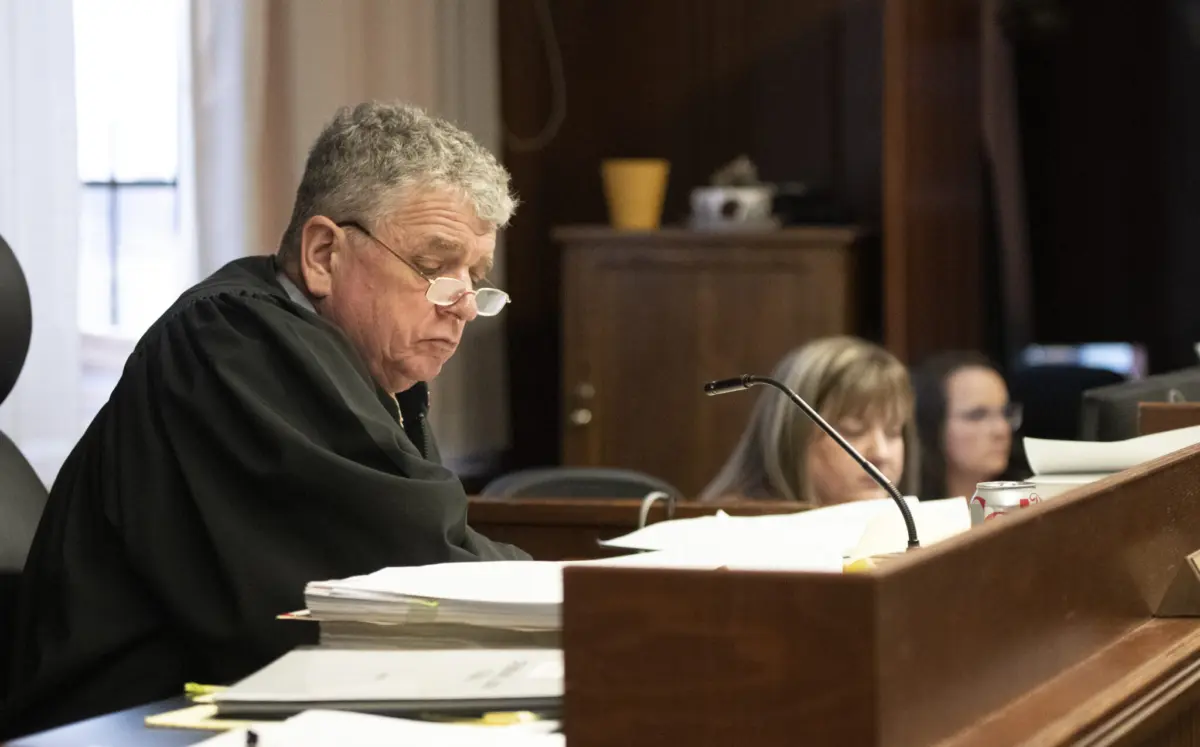
Thomas D. Wilson officially departed from his seat on the 4th Circuit Court in February, stepping down in the wake of a formal disciplinary complaint filed against him in 2025 by the State of Michigan Judicial Tenure Commission. The Michigan Supreme Court published an order detailing the resolution on October 9, shedding light on a protracted pattern of judicial misconduct, administrative obfuscation, and ethical lapses that spanned multiple years while Wilson presided in Jackson County.
According to the state supreme court’s published order, Wilson engaged in a pattern of alcohol abuse spanning a significant period, specifically between 2013 and 2021. The issue first attracted formal regulatory scrutiny in 2019, when the judicial commission directed Wilson to undergo a comprehensive substance abuse assessment administered by the State Bar of Michigan Lawyers and Judges Assistance Program. Records indicate that Wilson failed to comply with this directive at the time.
The commission renewed its request for an evaluation in 2024, and this time, Wilson cooperated with the mandate. Subsequent findings from the Lawyers and Judges Assistance Program assessment noted that Wilson was candid during his evaluation interview and concluded there was no immediate, present cause for concern regarding his fitness at that specific moment. However, the shadow of his past behavior caught up with him during subsequent proceedings. In the 2025 disciplinary complaint filed against him, Wilson admitted under oath to a troubling routine: he acknowledged that he would routinely leave the courthouse, return home to consume alcohol, and then head back to work to manage judicial responsibilities.
The alcohol-related allegations formed only a portion of the comprehensive disciplinary case brought against the longtime jurist. According to the supreme court order, the wide-ranging catalog of misconduct accusations included several instances of improper influence, ethical boundary violations, and administrative deception.
Among the specific charges, the order details an incident in 2016 where Wilson engaged in an improper ex parte approach directed at the judge presiding over his personal divorce case. The following year, in 2017, Wilson reportedly intervened to have a retail fraud case involving his own child transferred directly to Jackson County, the very jurisdiction where he sat as a judge.
The 2017 allegations also captured an instance of alleged intimidation. According to the state’s findings, Wilson threatened two local prosecutors with professional retaliation if they refused to dismiss a minor-in-possession case involving a relative of his.
Beyond personal and familial interventions, the complaints outlined a pattern of inappropriate workplace conduct. Between 2016 and 2018, Wilson reportedly made inappropriate remarks to female colleagues and courthouse staff. These comments included explicit descriptions of a sexual nature as well as unsolicited commentary regarding the physical appearances of individuals working within the judicial environment.
The disciplinary inquiry further revealed persistent failures regarding mandatory financial and professional disclosures. Between 2007 and 2022, Wilson routinely omitted crucial conflict-of-interest disclosures from the record. Specifically, he failed to disclose that three attorneys who regularly appeared before him in court were also his tenants. Furthermore, he neglected to disclose that five different lawyers appearing in his courtroom had previously represented him or various members of his family in ongoing legal matters.
Administrative integrity was another casualty of Wilson’s tenure, according to the state’s findings. From 2007 through 2025, Wilson systematically delayed issuing decisions in a variety of cases without providing any judicial explanation for the holdups. To conceal these extensive backlogs from public and administrative scrutiny, he actively instructed his courthouse staff to refrain from coding the delayed cases properly, effectively masking the stalled proceedings from state oversight metrics.
Legal representation for Wilson throughout the disciplinary proceedings was handled by the firm Miller, Canfield, Paddock and Stone, according to reports from Bloomberg Law. Representatives for the law firm did not immediately respond to inquiries from the ABA Journal seeking comment regarding the supreme court order and Wilson’s retirement.
Background records show that Wilson earned his law degree from Wayne State University Law School in 1988. Following his graduation, he established himself as a sole practitioner, maintaining a private practice until mounting a successful campaign for the bench in 2006, as documented by Ballotpedia. During his long tenure in Jackson County, Wilson also assumed the mantle of chief judge for the 4th Circuit, holding significant administrative authority over the local court system before the accumulation of disciplinary grievances ultimately brought his judicial career to a close.











No comments yet. Be the first to join the conversation!