
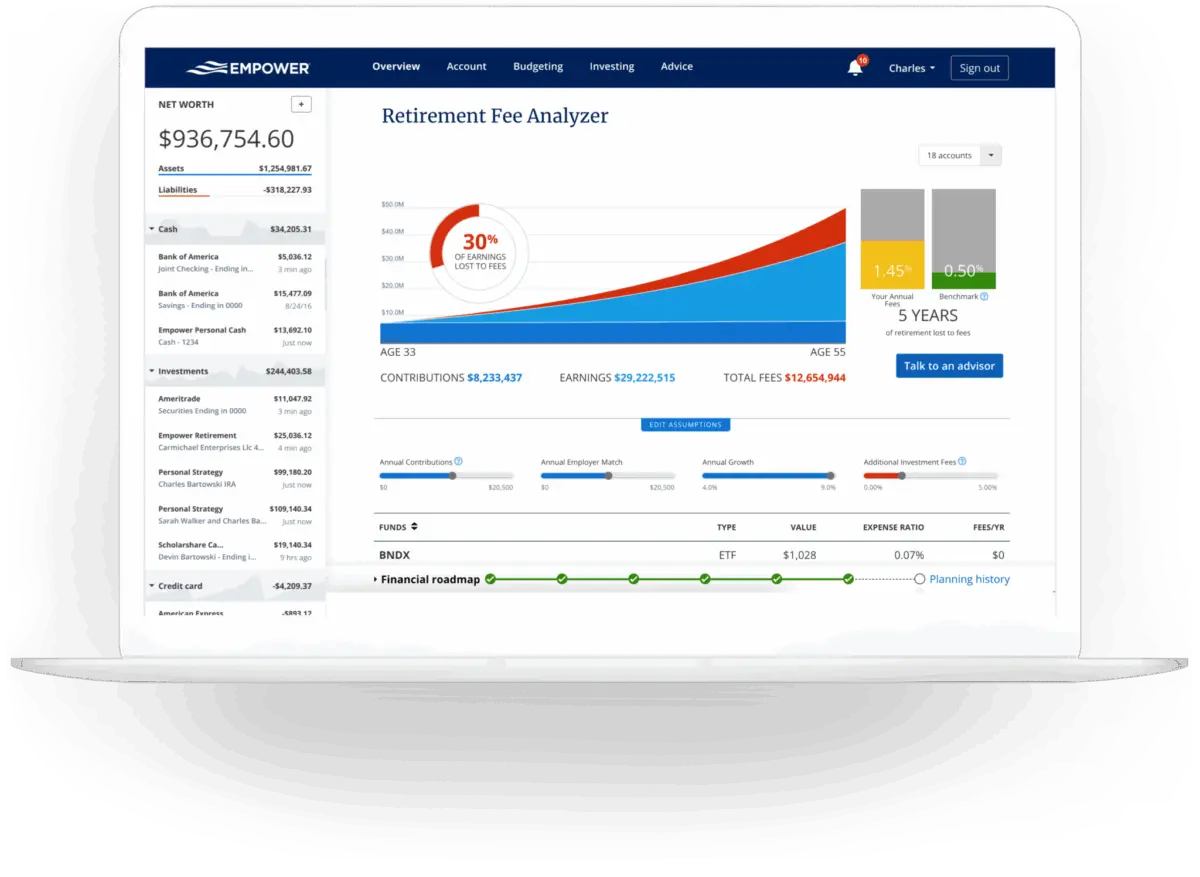
Empower, formerly known as Personal Capital, has long established itself as a prominent digital financial tool designed to help users manage their complete financial lives from a single, centralized dashboard. By aggregating checking, savings, credit cards, loans, investment vehicles like 401(k)s and IRAs, and even real estate assets, the application provides a real-time snapshot of overall financial health and net worth. Available for free, the platform has garnered significant user adoption, reflected by strong ratings on both the Apple App Store and Google Play.
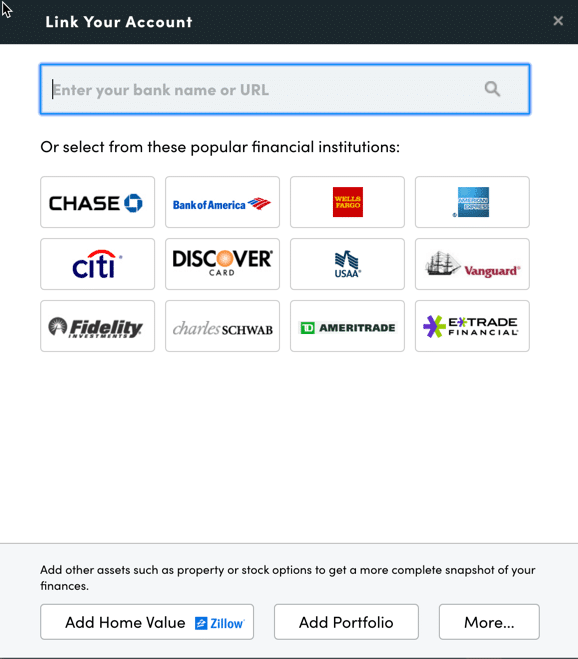
Getting started with the platform begins with establishing a free account and systematically connecting various financial institutions. While the software is widely recognized for its robust investment tracking capabilities, users frequently connect everyday banking accounts, credit cards, mortgages, and consumer loans. Real estate assets can also be integrated, with the system pulling property valuations directly from Zillow. Linking accounts requires online access credentials, typically a username and password, entered through the application’s account connection interface. Users unable to link a specific institution electronically retain the option to input accounts manually.
Establishing these connections unlocks far more than simple portfolio monitoring. Comprehensive integration allows the software to track net worth, cash flow, monthly budgets, and upcoming bills within a unified interface. While initial setup requires at least one connected account, subsequent additions can be managed manually. However, failing to link investment and banking accounts comprehensively limits the depth of analytical insights the platform can generate.
Following account integration, navigating the settings and profile sections is critical for tailoring the user experience. Accessible via the account menu, settings govern email notification preferences—such as daily or weekly financial summaries—alongside rules regarding whether investment income and dividends factor into cash flow calculations. Security configurations housed within this menu include multi-factor authentication and foreign login alerts, alongside an audit log of authorized devices. Meanwhile, the profile section captures personal data, spousal information, income sources, and long-term investment objectives, feeding directly into financial planning modules like the retirement calculator.
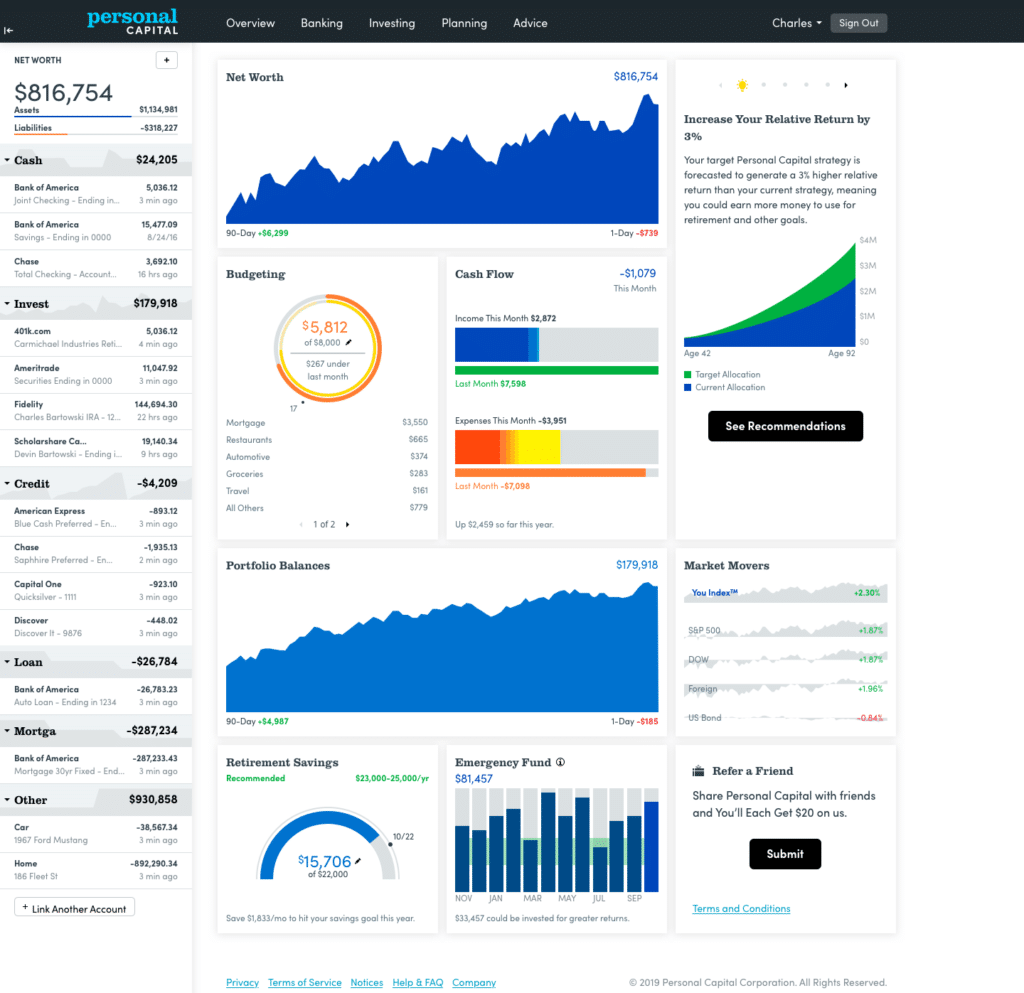
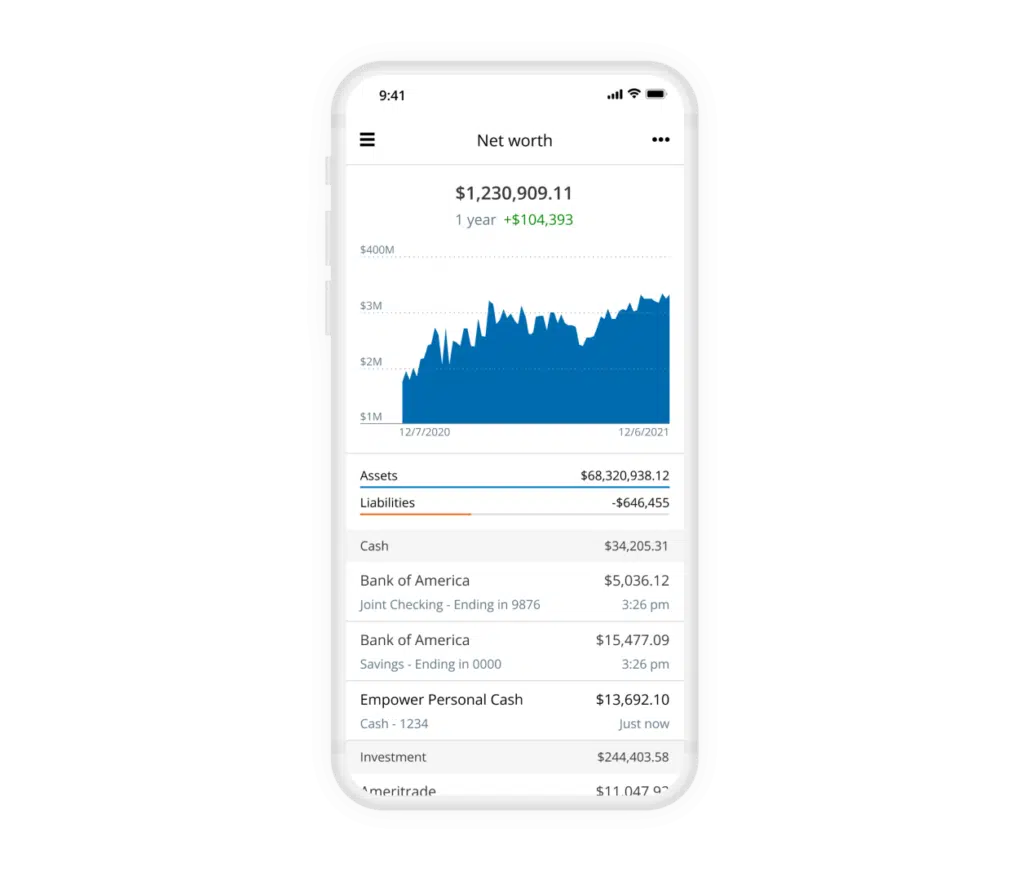
Once configured, the central dashboard aggregates all connected data into an intuitive overview. Users are greeted with high-level metrics covering net worth, monthly spending, cash flow velocity, investment performance, and progress markers toward emergency savings and retirement milestones. Tracking net worth remains a cornerstone of the platform, offering automated historical charts that eliminate the need for manual spreadsheet maintenance, though dedicated traditionalists often use both.
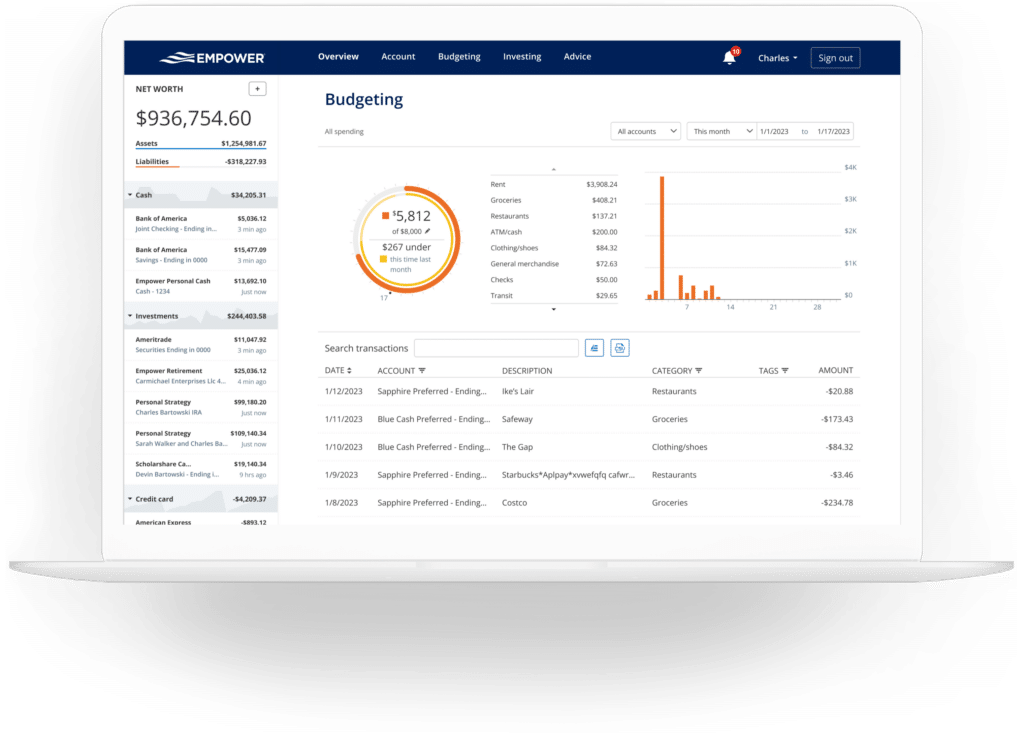
Beyond portfolio tracking, the platform incorporates substantial banking and cash flow features. The cash flow module details income and expenses at an individual transaction level, automatically sorting purchases into standard categories. Users can filter reports by specific accounts, enabling isolated reviews of business expenditures or portfolio-generated dividends and interest. Budgeting features operate differently from envelope-style applications like YNAB, focusing instead on overarching monthly spending goals and historical category breakdowns rather than granular, category-specific spending caps. While automated categorization handles the vast majority of transactions accurately, users typically spend a brief period each month reviewing and refining mislabeled entries or applying custom tags for specific projects.
Furthermore, integrating credit cards and loan accounts activates a bills tracker that monitors upcoming payment deadlines, helping users avoid late fees and manage short-term liquidity. Yet, it is within the realm of investing that the platform exhibits its most advanced capabilities. Connected retirement and taxable accounts update dynamically throughout the trading day, tracking mutual fund expenses, asset allocations, and overall portfolio health.
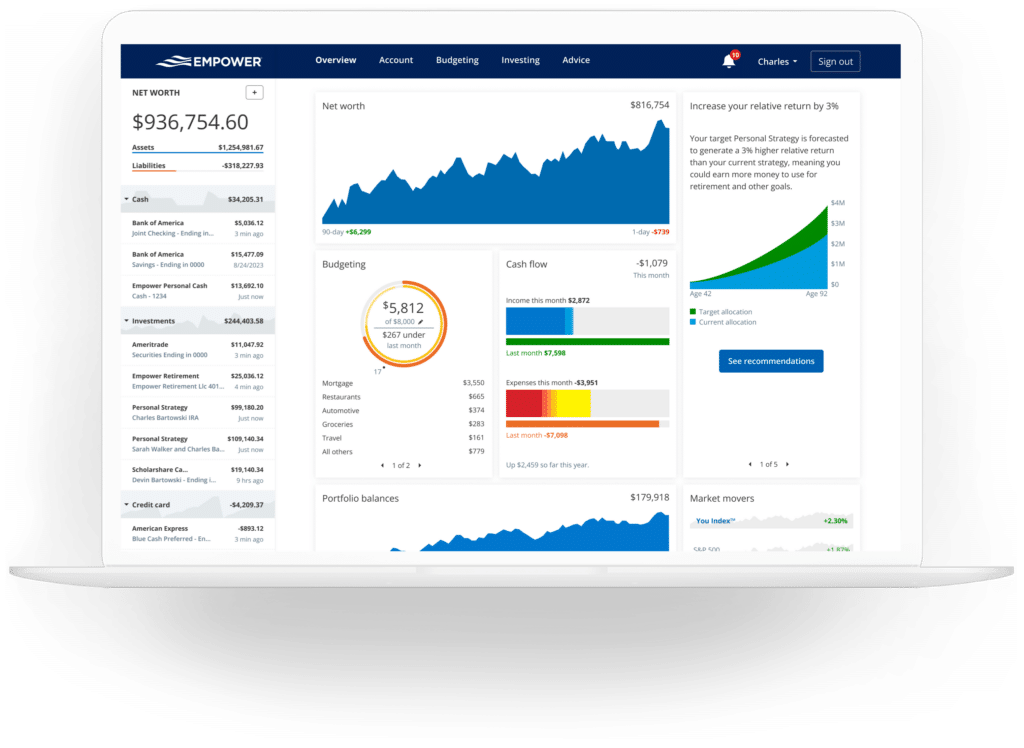
The holdings view displays vital metrics for individual securities, including market value, cost basis, daily gain or loss, and overall return percentages. Asset allocation tools automatically evaluate equity and fixed-income weightings, breaking down U.S. and international holdings alongside alternative asset classes. Interactive graphical representations allow users to inspect the underlying composition of their portfolios down to individual funds, even accounting for cash reserves held within mutual funds rather than dedicated money market accounts.
Recent platform updates have expanded tracking capabilities to include cryptocurrencies such as Bitcoin, Ethereum, and Litecoin. Rather than requiring direct API access or login credentials for external crypto wallets, users can manually add digital assets by specifying the token symbol, exchange, and quantity. The system supports thousands of tokens distributed across hundreds of global exchanges.
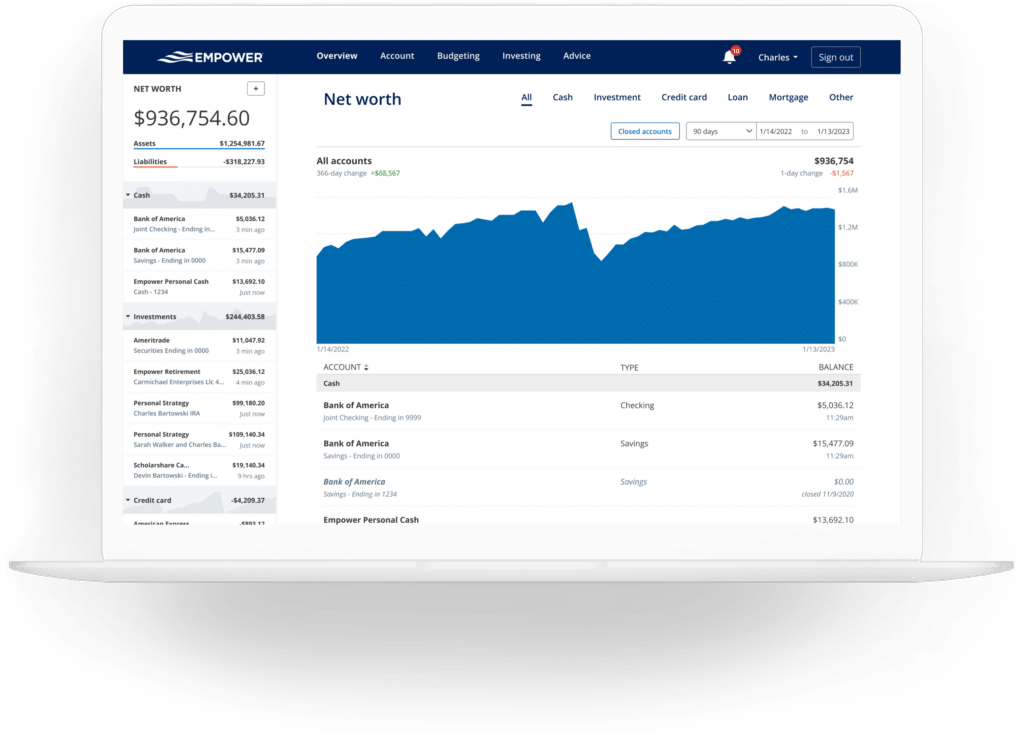
Planning features elevate the software beyond a passive viewing portal. The retirement planner utilizes aggregated investment data to model long-term financial readiness, generating probabilistic forecasts of retirement success based on current savings rates and expected expenses. Users can construct and compare multiple retirement scenarios, adjusting variables such as retirement age, Social Security integration, tax assumptions, inflation rates, and life expectancy to evaluate outcomes side by side.
Complementing the retirement projections, the savings planner consolidates three distinct goals: retirement contributions, emergency fund reserves, and debt paydown milestones. The emergency fund module evaluates total liquid bank balances against a recommended three-to-six-month expense threshold derived from user-defined budgets. Concurrently, the debt paydown planner aggregates mortgages, auto loans, personal loans, and interest-bearing credit card balances, displaying current interest rates, year-to-date balance changes, and repayment trajectories.
Among the platform’s most notable analytical tools is the retirement fee analyzer. Financial analysts frequently emphasize the corrosive long-term impact of advisory and mutual fund fees, which can compound over decades to cost investors substantial portions of their accumulated wealth. The tool calculates a weighted average expense ratio across all linked portfolios, translating basis points into projected dollar losses over future time horizons. For many users, this singular visibility into portfolio drag justifies regular use of the software.
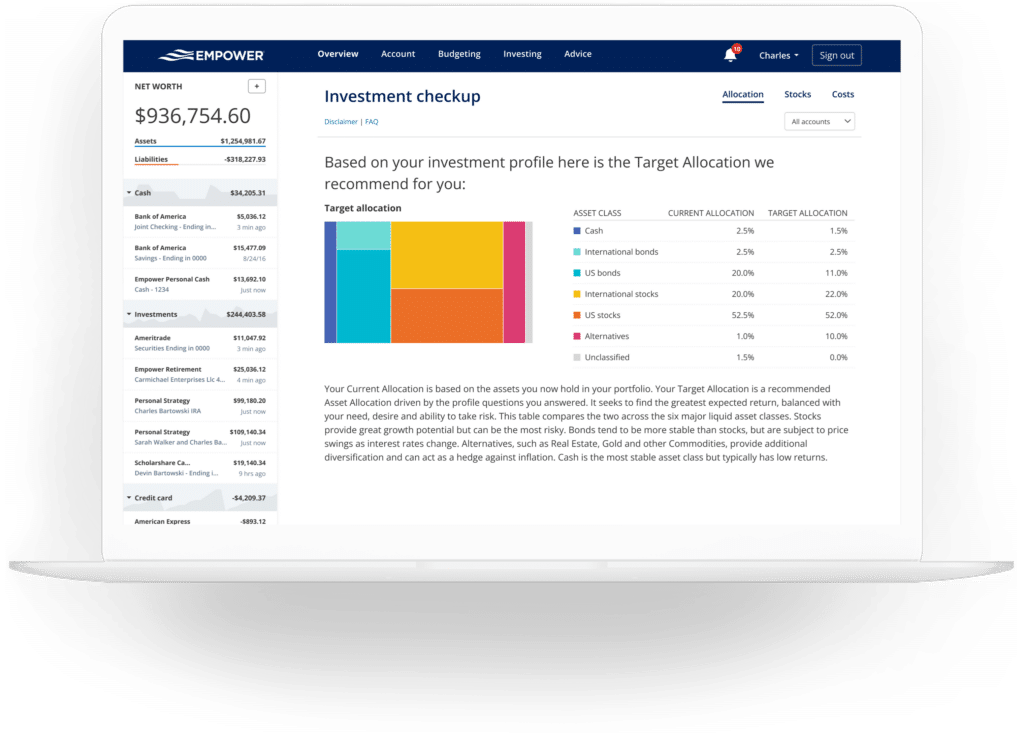
Additionally, the investment checkup feature benchmarks current asset allocations against a model portfolio tailored to the user’s age, risk tolerance, and timeline. The system outlines historical performance, risk-return characteristics, and specific adjustments required to align actual holdings with recommended weightings.
Regarding security, the platform employs AES-256 encryption alongside multi-layer key management and rotating user-specific salts, ensuring that internal personnel cannot access raw user credentials. Device authorization protocols require secondary verification via phone, email, or text message when unrecognized login attempts occur.
While the core digital dashboard and its analytical tools remain free, the company operates primarily as a wealth management firm. Users frequently receive outreach calls from financial advisors marketing paid advisory services. These investment management tiers carry asset-based fees beginning at 0.89 percent for the first million dollars under management, scaling down to 0.49 percent for balances exceeding ten million dollars. However, utilizing the advisory services is entirely optional, and the free financial tools remain accessible to account holders regardless of whether they choose to engage commercial wealth management.








No comments yet. Be the first to join the conversation!