
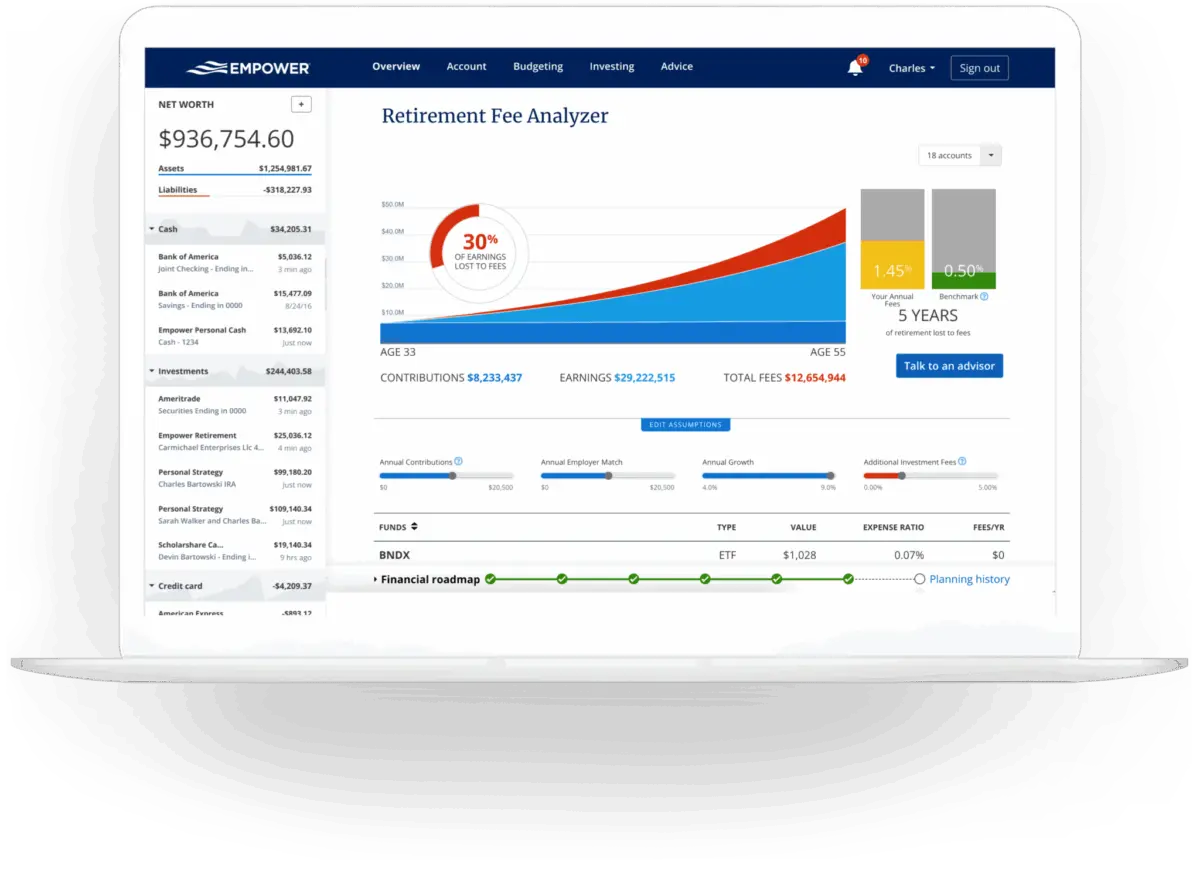
Managing personal finances often feels like a fragmented chore, scattered across numerous banking apps, credit card portals, retirement accounts, and loan providers. For years, users seeking a unified view of their wealth have turned to Empower—formerly known as Personal Capital—as a centralized financial tool capable of organizing an entire monetary portfolio from a single dashboard.
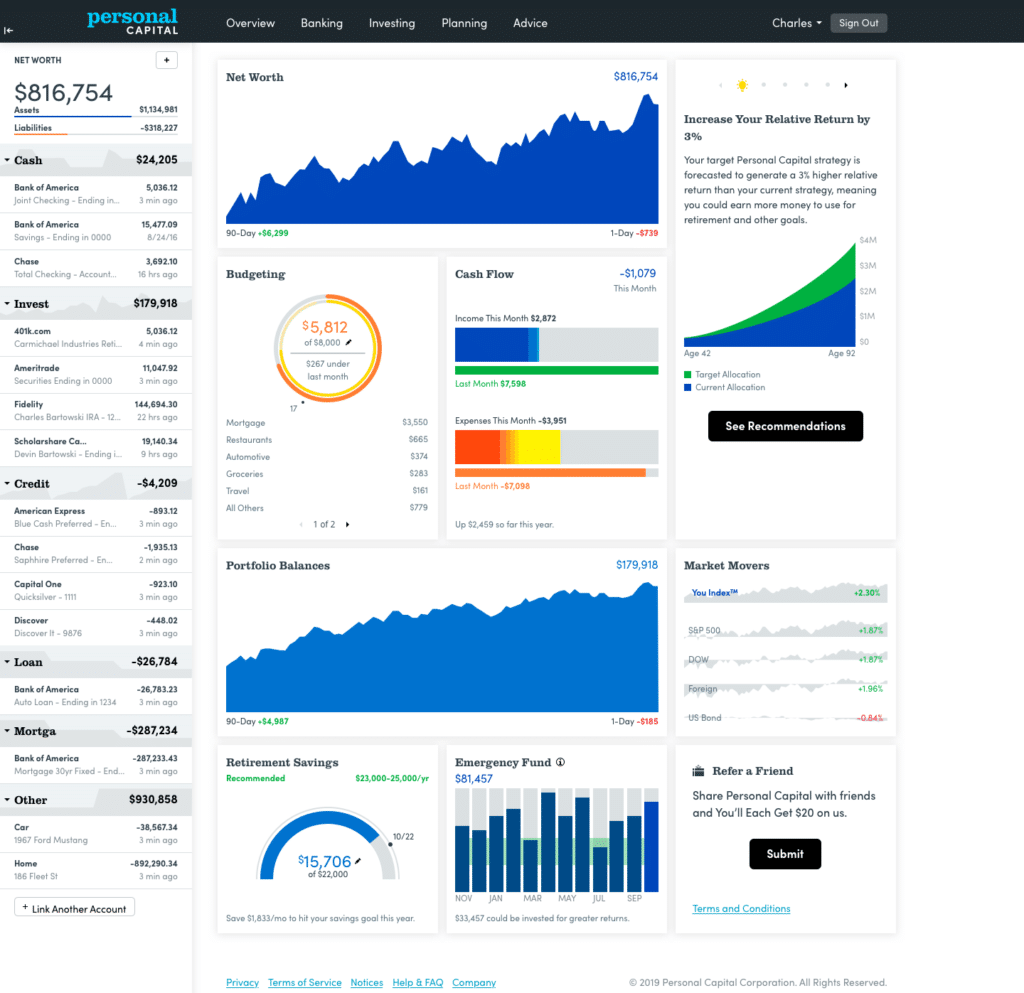
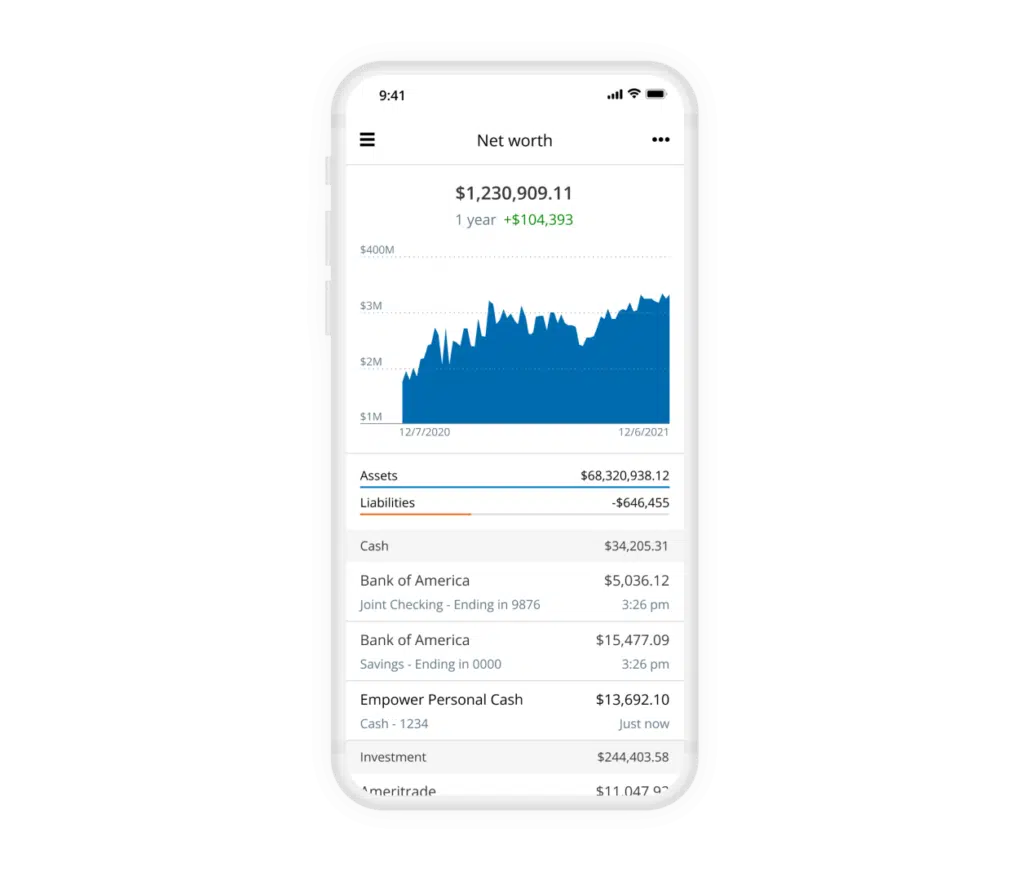
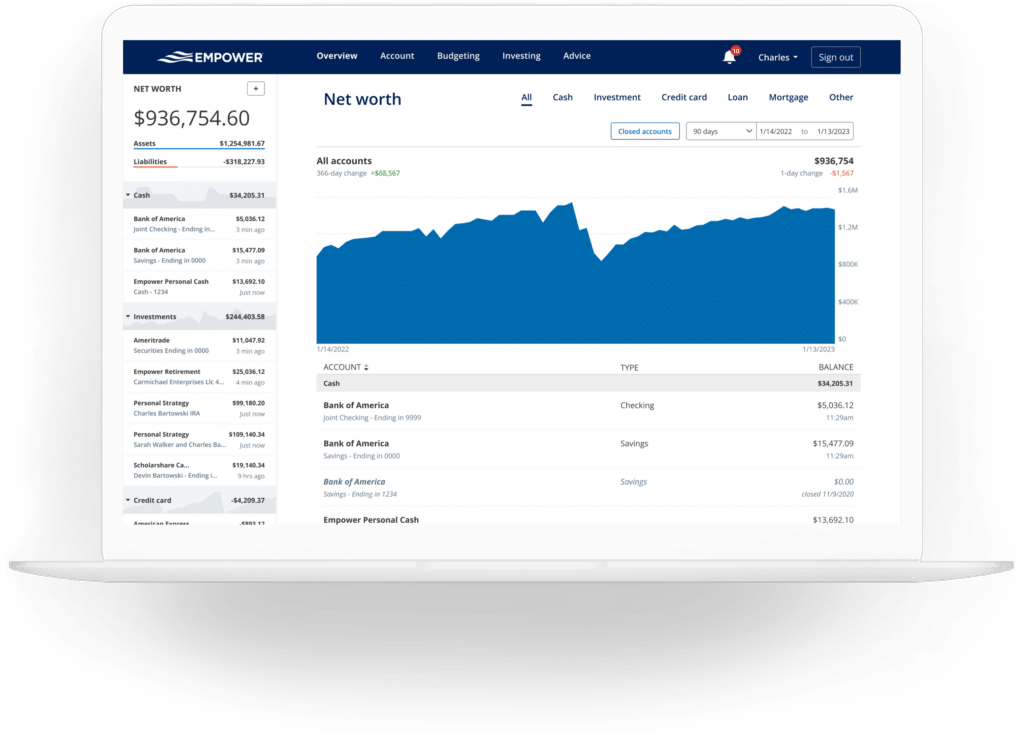
Delivering a complete snapshot of financial health in one place, the platform automatically synchronizes checking accounts, savings, credit cards, loans, investment vehicles such as 401(k)s and IRAs, and even mortgages. This real-time aggregation provides users with an instant calculation of their net worth alongside specialized tools for cash flow tracking, investment analysis, and retirement planning. Best of all, the core financial dashboard is entirely free to use.
Getting Started with Empower
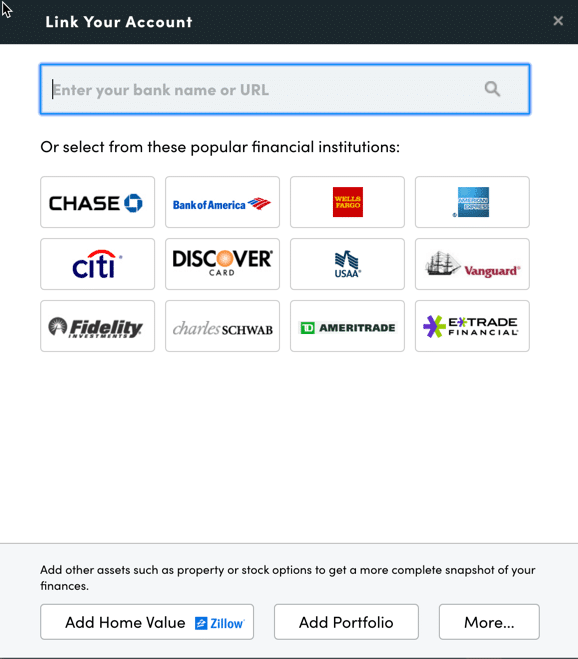
The foundation of the Empower experience begins with signing up for a free account and systematically linking all active financial profiles. While the platform has built a strong reputation over the years for its robust investment tracking and analysis capabilities, its utility extends far beyond the stock market. Users can integrate traditional bank accounts, credit cards, installment loans, mortgages, and even physical property such as a primary residence, which automatically pulls estimated market values directly from Zillow.
Connecting accounts requires basic online access credentials, including the username and password for each respective financial institution. By navigating to the dashboard and using the account linking tool, users can search for their bank or service provider by name or website address. In the rare instance that a specific financial institution cannot be linked automatically, the platform accommodates manual entries to ensure total portfolio completeness.
Establishing this interconnected web is essential because the platform’s primary value lies in its synthesis of multiple data points. While users must connect at least one account to initialize the system, subsequent accounts can be integrated gradually. However, failing to link all major accounts limits the depth of the platform’s advanced investment tracking features.
Once the accounts are connected, configuring the settings and user profile is a critical administrative step. Found by accessing the account menu in the upper right corner of the screen, the settings panel grants users granular control over email subscriptions, including daily or weekly updates summarizing income, spending, and investment activity. Users can also dictate whether investment income and dividends factor into general cash flow calculations and manage essential security protocols.
Multi-factor authentication and foreign login alerts are heavily emphasized within these security settings. The interface also displays a registry of all authorized devices that have accessed the account, allowing users to remove outdated or unused hardware easily. Meanwhile, the profile section collects baseline demographic data, spousal information, income sources, and long-term savings objectives, all of which feed directly into the platform’s predictive planning tools.
Empower Banking and Cash Flow Management
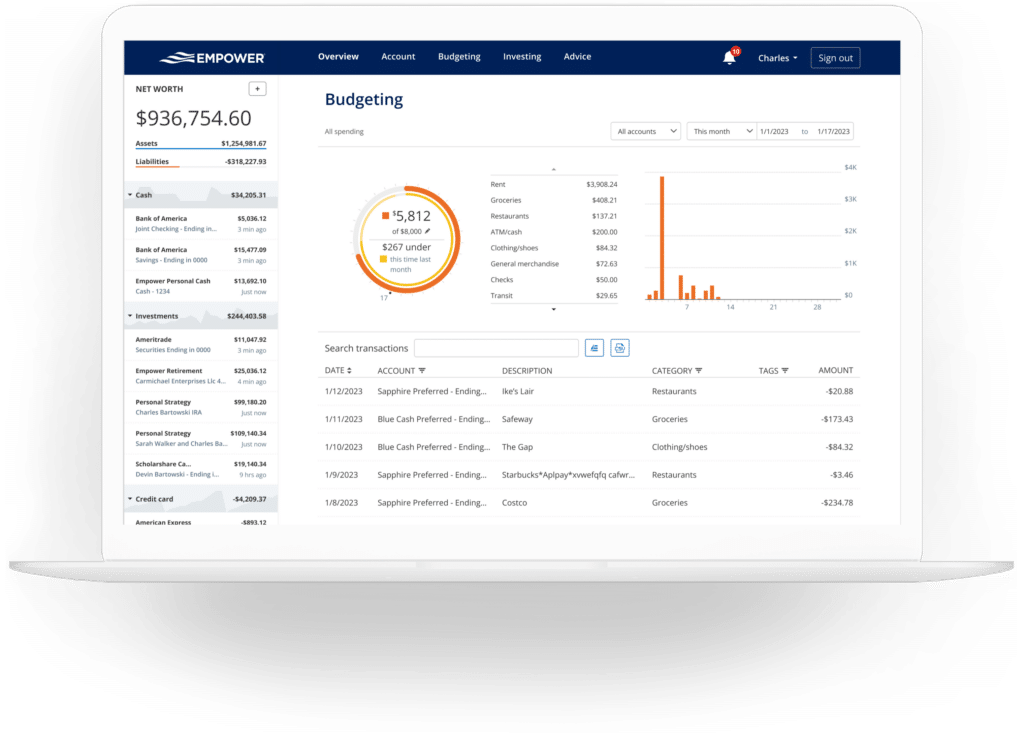
Beyond investment monitoring, the platform offers powerful banking and budgeting functions centered on cash flow analysis. The system tracks both income and expenses at the individual transaction level, automatically sorting purchases into predefined categories. Users can filter reports by specific accounts to isolate distinct financial activities, such as reviewing business checking and credit card transactions separately from household spending.
This filtering capability also extends to investment accounts, allowing users to instantly evaluate the monthly interest and dividend income generated by their portfolio. While the budgeting feature does not operate like traditional zero-based envelope budgeting software—meaning users cannot establish strict spending caps for individual subcategories—it excels at providing macro-level visibility into spending habits.
Transactions are automatically imported and categorized upon syncing, though users typically spend a few minutes each month refining categories for absolute accuracy. For finer organizational control, users can apply custom tags to specific transactions. For instance, rather than creating a dedicated category for occasional property repairs, a user might tag multiple expenses related to pool maintenance, enabling targeted tracking without cluttering the main budget structure.
Furthermore, by linking credit cards, mortgages, and other installment loans, the platform functions as an effective bill-tracking assistant. It monitors due dates across connected liabilities, helping consumers avoid missed or late payments while smoothing out cash flow forecasting throughout the month.
Comprehensive Investment Tracking
Investment management remains the flagship feature of the platform. Once retirement and taxable brokerage accounts are successfully integrated, the system tracks asset values automatically, refreshing prices continuously throughout the trading day, monitoring mutual fund expense ratios, and mapping overall asset allocation.
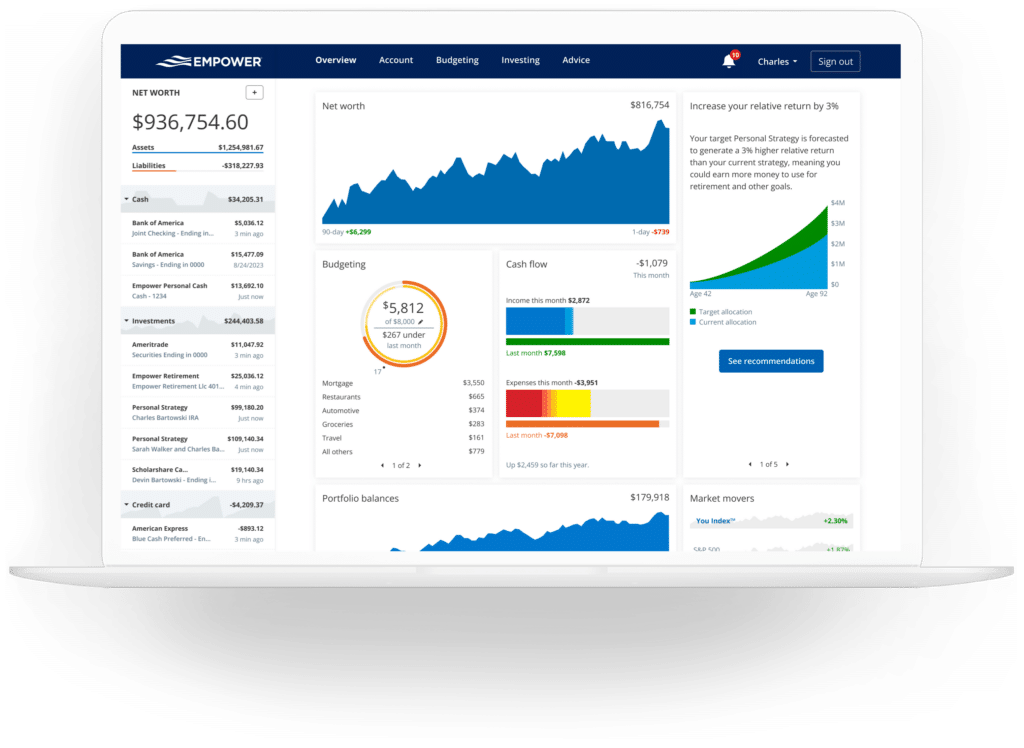
The holdings interface provides a detailed overview of individual investments, detailing cost bases, market values, daily fluctuations, and overall portfolio performance. This level of granular visibility allows investors to weather volatile market cycles, such as historical bear markets, with a clear understanding of their portfolio’s composition.
Asset allocation tools evaluate existing holdings and categorize them into stocks and bonds, with further breakdowns distinguishing between domestic and international equities, fixed-income products, and alternative asset classes. An interactive graphical representation allows users to click through specific asset classes to inspect underlying investments. Notably, the cash allocation tracking feature accounts not only for dedicated money market balances but also identifies uninvested cash held inside mutual funds.
In a significant update for digital asset investors, the platform now supports the tracking of major cryptocurrencies, including Bitcoin, Ethereum, and Litecoin. Rather than requiring users to surrender sensitive wallet credentials or private passwords, the system allows for manual entries where investors simply input the token symbol, exchange, and holding amount, enabling integrated tracking across thousands of digital assets.
Advanced Financial Planning and Retirement Tools
While asset aggregation provides a clear picture of current wealth, the platform’s planning suite translates raw data into actionable long-term strategies. The retirement planner utilizes data from all connected investment accounts to evaluate retirement readiness through dynamic modeling calculators.
Users can construct multiple financial scenarios and compare them side-by-side. One model might project a traditional retirement age, while another explores early retirement. Assumptions regarding social security estimates, projected tax rates, future inflation, and life expectancy can be toggled independently to test the resilience of a long-term financial strategy.
The savings planner consolidates three distinct objectives into a unified view: retirement savings, emergency fund accumulation, and debt paydown. The retirement savings planner monitors annual contributions across tax-advantaged accounts like 401(k)s and IRAs alongside taxable accounts, synchronizing directly with the primary retirement calculator. The emergency fund planner aggregates balances across all linked bank accounts and measures them against a recommended three-to-six-month expense baseline derived from the user’s monthly budget. Meanwhile, the debt paydown planner tracks installment loans, mortgages, and credit cards that carry active interest balances, mapping out year-to-date balance changes and effective annual percentage rates.
Investment Fee Analysis and Portfolio Optimization
Perhaps one of the most compelling features for cost-conscious investors is the retirement fee analyzer. Small investment advisory or mutual fund expense ratios are often overlooked, yet fractional fees compound significantly over decades, potentially costing portfolios hundreds of thousands of dollars in lost growth.
The analyzer calculates a weighted average expense ratio across all connected accounts. Users frequently discover that even low-cost portfolios incur substantial long-term costs when subjected to decades of compounding. By illuminating these hidden expenses, the tool provides a powerful incentive for portfolio optimization.
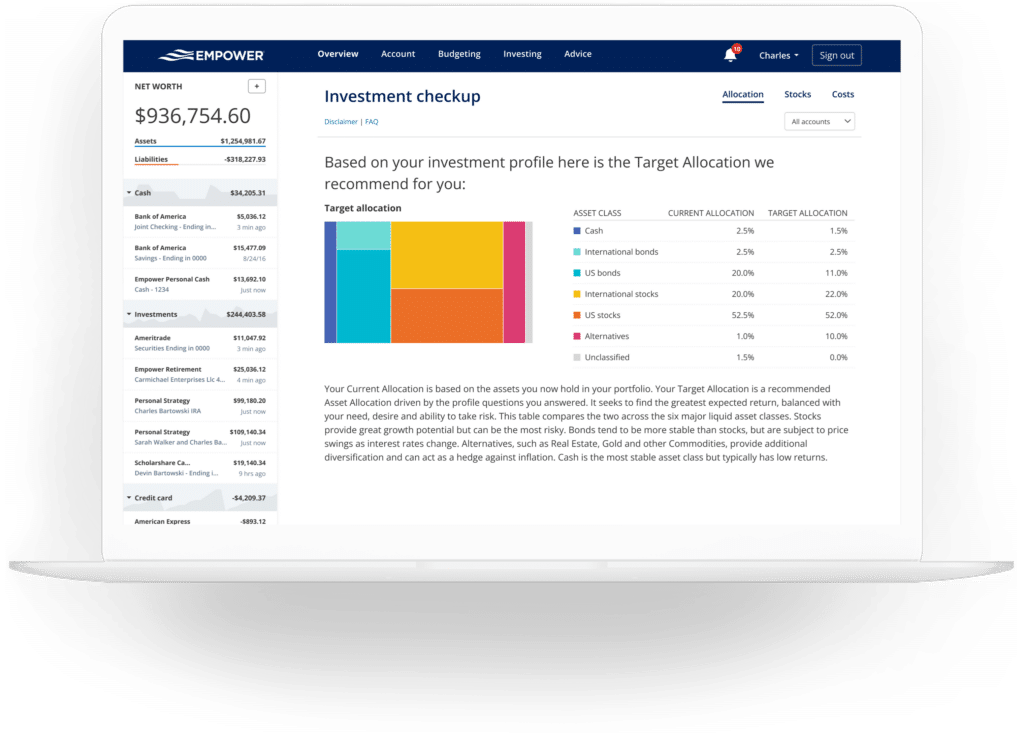
Complementing the fee analyzer is the investment checkup tool, which reviews existing asset allocations against a model portfolio recommended by the platform based on the user’s age, time horizon, and risk tolerance. The tool projects historical performance, future returns, and risk metrics for both the user’s actual portfolio and the recommended baseline, offering precise adjustments to rebalance asset classes as needed.
Platform Security and Pricing Model
Security remains a paramount concern for users granting financial aggregators access to multiple institutional accounts. The platform employs robust AES-256 encryption supported by multi-layer key management, including rotating user-specific keys and cryptographic salts. Crucially, employee access to user credentials is strictly barred, and any new device attempting to access an account must pass multi-factor authentication via automated phone calls, emails, or text messages.
The core financial dashboard remains free, supported commercially as a marketing tool for the company’s optional paid wealth management and advisory services. While users may occasionally receive outreach from financial advisors, advisory services are entirely optional and can be declined. For those who choose professional management, advisory fees scale downward based on assets under management, starting at 0.89% for the first million dollars and decreasing for larger portfolios, though utilizing the dashboard requires no financial commitment to the firm’s advisory branch.








No comments yet. Be the first to join the conversation!